

It was just another day when Sindhu ,a 21-year-old university student,was working on her assignments and had many tasks unfinished. She was under constant pressure and worried excessively about her academic performance. The stress was very overwhelming. All of a sudden, she felt helpless,could feel her heartbeat, and was breathless. She couldn’t focus, and her mind was blurred with coiled-up thoughts; everything seemed impossible and out of control at the moment. She was undergoing anxiety, which soon escalated into an episode of panic attack.
If you’re experiencing these symptoms when you are writing an exam, in a social gathering, or after a traumatic event, you’re not alone.
A lot of people experience mild anxiety, which is just being a little scared while starting something new, but as they start working, anxiety weans off . It is only problematic when the levels of anxiety rise , interfering in the day to day life.Anxiety level remains constant throughout the event, and comes back to normalcy either by avoiding the work, or procrastinating. When this anxiety is accompanied by the fear of an impending doom, it is known as a panic attack.
Decoding anxiety and panic attacks:
Anxiety

According to the American Psychological Association ,anxiety is defined as:
An emotion characterized by apprehension and somatic(bodily)symptoms of tension in which an individual anticipates impending danger, catastrophe, or misfortune. The body often mobilizes itself to meet the perceived threat: muscles become tense, breathing is faster, and the heart beats more rapidly.
Anxiety is a fear-related disorder.
Anxiety and fear are inter-related. Fear is the reaction to a threat at present, while anxiety is the reaction to a perceived futuristic threat.
Panic Attack

An acute, intense attack of anxiety accompanied by feelings of impending doom is known as panic disorder or panic attack. The anxiety is characterised by discrete periods of intense fear, that can vary from a few attacks during the year to several episodes of attack during a day.
Panic attacks are spontaneous and arise after 10 minutes of rapidly arising symptoms of extreme fear and a sense of impending death and doom. The source of fear is not clear. There is a lot of confusion and chaos in the mind, with troubled concentration. The physical manifestations are feelings of a rising heart rate, palpitations, breathlessness,sweating,tremors, feelings of loss of control.
Difference Between Anxiety and Panic Attacks
| Feature | Anxiety | Panic Attacks |
| Core Definition | A mental health condition causing fear,dread,or other symptoms that are out of proportion to the situation. | Sudden, temporary feelings of fear and strong physical reactions in response to ordinary, non-threatening situations. |
| Onset & Warning | Gradual. Manifests slowly upon exposure to a known trigger. | Sudden. Arises “out of the blue” without any warning. |
| Primary Cause | Arises from chronic worry regarding everyday life events. | Results from the built-up anxiety of everyday life events. |
| Nature of Fear | Known cause of fear that develops gradually; no fear of losing control. | Unknown or unexplainable intense fear; includes fear of losing control. |
| Heart Sensations | Palpitations/shortness of breath; feeling of a heart attack is absent. | Palpitations that create a feeling of a heart attack within minutes. |
| Duration | Usually lasts less than 20 minutes. | Typically lasts 20 to 30 minutes, up to an hour. |
| Resolution | Returns to normalcy immediately once the trigger is removed. | Returns to normalcy only after going through the full episode. |
| Avoidance Behavior | Controlled by avoiding situations or procrastination. | Return to normalcy after going through the attack. Despite procrastination or avoidance of task, no relief is found. |
| Depersonalization | The feeling of losing oneself is absent. | Present (feeling detached from oneself). |
| Cognitive Impact | Unable to focus; uncontrollable or obsessive thoughts. | Intense fear of impending death or choking/smothering. |
| Fear of another attack | Absent | Present |
| Psychological symptoms | Panicking, fear, dread, and uneasiness. Feeling on edge or irritable. Uncontrollable, obsessive thoughts. Difficulty concentrating. | Intense fear Choking or smothering Fear of impending death Losing control Depersonalization |
| Physical symptoms | Restlessness Palpitations Shortness of breath Muscle tension Cold or sweaty hands Dry mouth Nausea Numbness or tingling in hands or feet Difficulty falling asleep | Chest pain Racing heart Breathlessness Trembling or shaking Chills Nausea Sweating Tingling and numbness in fingers and toes |
Why do anxiety or panic attacks occur?
An estimated 4.4% of the global population currently experiences an anxiety disorder.
- Genetics: Anxiety has a strong biological component and is frequently passed down through first-degree relatives (parents or siblings).
- Environmental Factors: Sustained exposure to high-stress environments can physically alter the neurotransmitters that regulate mood.
- Chemical Imbalances: Disruption in “happy hormones”—specifically serotonin, dopamine, norepinephrine, and GABA—can trigger anxiety disorders.
- Psychological Trauma: Traumatic experiences during childhood can create deep-rooted mental health challenges that manifest as anxiety in adulthood.
Panic Disorder is a serious condition that around one out of every 75 people might experience.
- Genetic Heredity: There is a significant biological link; having a first-degree relative (parent, sibling, or child) with the condition increases an individual’s risk by 40%.
- Comorbidity: Existing mental health struggles, such as depression or other anxiety disorders, significantly increase the likelihood of experiencing panic attacks.
- Adverse Childhood Experiences (ACEs): Trauma occurring between ages 1 and 17—including abuse, domestic violence, or unstable environments—serves as a primary catalyst for adult-onset panic disorder.
Who is more likely to get anxiety and panic attacks?
- According to the World Health Organization (WHO), girls and women are more likely to experience anxiety, progressing to panic attacks, than men.
- However, anyone can have an anxiety disorder, but people who have lived through abuse, severe losses, or other adverse experiences are more likely to develop one.
- Panic attacks appear during teens and early adulthood, among the people who are undergoing major life-changing transitions, which are stressful, like loss of a loved one or moving to a new city.
- Individuals with first-degree relatives suffering from anxiety and panic attacks.
- People working in stressful environments are more prone to anxiety and panic attacks.
- The hereditary panic disorders are likely to be inherited by those with first-degree relatives suffering from the same.
Let’s get into the brain!
There are three important sites in the brain-
- Amygdala – the emotion and fear centre of the brain.
- Hippocampus- stores the memories associated with the emotion.
- Prefrontal cortex– the part of the brain which manages the emotion, and actually thinks.
In our ancestors, the brain was wired primarily for survival ,hence the amygdala was more evolved than the prefrontal cortex, as they had to constantly escape from predators to save themselves.
Over the course of evolution, the prefrontal cortex is more developed,since we do not have to save ourselves from predators now. But the amygdala still has the same response for survival. Hence the fear response is intact.
There are a lot of conversations between the prefrontal cortex and the amygdala in emotional situations.
Here’s how the circuit works:
For Anxiety-
Known cause of fear
↓
Activates amygdala
↓
Shuts down the prefrontal cortex
↓
Feeling of blank and numb
↓
Unable to think and focus on the task at hand
↓
Activation of the sympathetic nervous system
↓
Feeling helpless
↓
Palpitations, breathless, tremors and sweating
↓
Removal of the trigger
↓
Withdrawal of the amygdala response
↓
Pre frontal cortex active
↓
Return of normalcy- able to think and focus on the task at hand(feeling of relief)
For Panic attacks
- The fear network of the brain gets activated in situations which are non -threatening.
- Fear network of the brain involves structures like – pre frontal cortex,the amygdala,hippocampus,anterior cingulate cortex.
Amygdala perceives threat in a non – threatening environment
↓
Signal to brain stem
↓
Increased respiratory rate
↓
Release of nor-epinephrine(Inhibition of serotonin ,dopamine)
↓
Rise in heart rate, blood pressure, and generates fight or flight response
↓
Incomplete interpretation of the fear in a non-threatening environment
↓
Feeling of impending doom and loss of control
↓
Palpitation, breathlessness, nausea, and near-death feeling(Flight, fight, or freeze response)
Types of Anxiety disorders:
Anxiety disorders occur as a result of a particular stimulus which acts as the initiator of the event
1. Generalized anxiety disorders
2. Panic disorders
3. Agoraphobia
4. Specific phobia
5. Social anxiety disorder
6. Separation anxiety disorder
7. Post-traumatic stress disorder
1. Generalized Anxiety Disorders(GAD)

- Arises due to excessive worry or expectation of any negative outcomes of everyday life.
- The symptoms last for several months;they aren’t a manifestation of any other related disease, like hyperthyroidism.
- It is slow in onset. Presents mostly in females.
- Anxiety due to worry that something might happen to themselves or their loved ones,or to the world.
- Patients can also present to the doctor with physical symptoms when they are worried about their health, despite being healthy.
- Symptoms of GAD include:
- Muscle stiffness
- Nausea and abdominal discomfort
- Palpitations
- Difficulty concentrating
- Irritability
- Sleep disturbances
- Frequent need for reassurance
2. Panic disorders
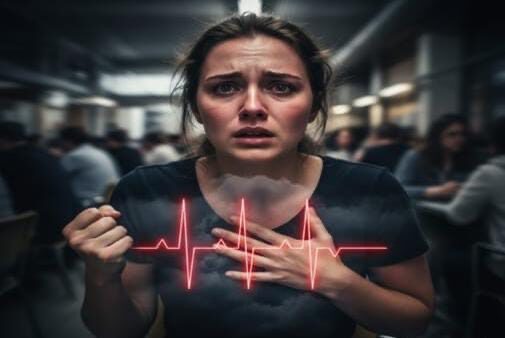
- Recurrent panic attacks, which are episodes of intense fear, accompanied by a sense of impending doom.
- Panic disorder runs in families. Can be inherited.
- Symptoms of panic disorder include:
- Increased heart rate
- Sweating
- Trembling
- Shortness of breath
- Feelings of choking
- Chest pain and tightness
- Light headedness and feeling dizzy
- Chills and hot flushes
- Depersonalization or “this doesn’t feel like me”
- Tingling of the extremities
- Fear of losing control
- Fear of imminent death
- Panic disorders come with no warning signals. They come “out of the blue”.
- They are followed by persistent worry about their recurrence and or any perceived negative significance.
- The individual feels as if they are going to die due to a heart attack the very next minute.
- There is always anxiety regarding the anticipation of the next panic attack.
3.Agoraphobia

- Marked and excessive fear or anxiety in anticipation of multiple situations where the escape might be difficult or help is unavailable-like standing in crowded theatres, shops, traffic signals or alone outside home.
- The individual requires the presence of a companion to enter the crowded area; else they end up getting anxiety.
- Symptoms include:
- Panic attacks
- Vomiting
- Dizziness
- Increased heart rate
- Going to places at specific time of the day
- Carrying medications or specific materials (like a towel), in case of feared negative outcomes
- Individuals are homebound
- Avoidance of crowded situations
- Trigger is the thought of being alone or being helpless.
4.Specific Phobia

- This is a normal phenomenon which does not come into notice, clinically.
- Involves avoidance of specific situations or objects, like spiders and snakes due to preconditioning.
- Require the presence of a companion when faced with such stimuli.
- Symptoms include:
- Fear of particular animals
- Fear of blood injury
- Fear of enclosed spaces
- Fear of darkness
- Fear of medical/dental procedures
- Specific phobia should be confirmed only if the fear of the specific phenomenon or object is excessive.
- Results due to increased exposure to the fearful environment at a young age.
5.Social Anxiety Disorder

- When there is excessive fear of being in a social situation or in social interactions.
- The individual feels being observed.
- Fear of performing or speaking in front of others and being judged or criticized.
- Symptoms include;
- Sweating, tremors, blushing, or trembling on interaction ith other people.
- Individuals may have substance use to attenuate the symptoms of anxiety.
- Avoidance of social situations.
- Personality trait of shyness is present on interacting with others
- Fear of being judged by others.
- Restricted social networks, lowered performance, educationally and vocationally.
- Social anxiety disorder can be experienced due to exposure to stressful conditions and prolonged humiliation of the individual.
- This condition can be diagnosed if the person experiences the above symptoms over several months.
6.Separation Anxiety Disorder

- The fear of separation from whom the individual is being attached.
- Characteristic in children and adolescents.
- In adults, it involves the separation of the partner, spouse or child.
- Symptoms include;
- Having thoughts of harm or some other unexpected event that may lead to separation.
- Reluctance or refusal to go to school or work.
- Distress on being separated from the person the individual is attached to.
- Nightmares of separation.
- Nausea, vomiting, stomach pain, headache during separation of the attachment figure.
- Lack of sleep.
- The symptoms last for several months together.
- This refers to a restrictive parenting style where constant control over minor details prevents children from developing their own decision-making skills.
7.Post-traumatic stress disorder(PTSD)
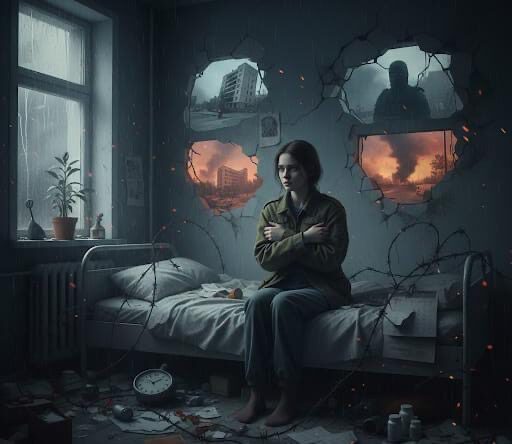
- Arises due to past experience of death of a loved one or a major accident,
- Life threatening experience of an individual, which can lead to a deep rooted traumatic memory.
- The triggers are the situation or any remembrance of the trauma.
- The symptoms start from 2 days to 1 month after the traumatic event.
- Symptoms of PTSD include-
- Exaggerated startle response .
- Avoiding places or things associated with the traumatic event or triggers of the remainder of the event.
- Nightmares and flashbacks of the event.
- Depersonalization on remainder of the traumatic event.
What it takes to go through anxiety and panic attacks:
- Often anxious individuals are restless.This is mainly because their brain is in a constant search of threat in the immediate environment.
- Increases the awareness and perception of the surroundings , constantly searching for danger in the environment.
- The attention span of an individual suffering with anxiety and panic disorders is poor, mainly because by trying to concentrate, they are processing the previous trauma .
- Increased distractibility, poor concentration and intrusive thoughts due to hyperactive threat detection mechanism of the amygdala, even in non – threatening environment.
- The short term memory is impaired more than the long term memory. Particularly the long term negative memory(memory of trauma) is intact.
- The decision making skills are affected , thereby leading the individual to be very cautious about each and every decision they make.
- The effect of anxiety and panic attacks cause the individual to procrastinate and delay the task at hand ,like avoiding social gatherings,etc.
Importance of addressing the myths of Anxiety and Panic Attacks:
Anxiety and panic attacks are deeply distressing experiences. A dangerous misconception is that because these issues are widespread, they are ‘normal’ and don’t require professional treatment.
If you are facing any of the above symptoms, it is advisable to get it checked.
Symptoms of anxiety and panic attacks must never be ignored,as they can lead to other mental illnesses.
- The patient often feels as if their life is going to be always filled with anxiety – which is false. The early diagnosis and proper treatment has led many people to lead normal, happy lives, and better at being able to tackle their everyday life problems without anxiety.
- Having anxiety means you are weak– this is not true. Having anxiety is a condition in which your nervous system is hyperactive and causes psychological and physical response to a perceived threat.
- Anxiety and panic attack levels come down when they are told to calm down-Anxiety and panic attack is resolved not only by telling the individual to calm down, but also proper treatment and addressal of the underlying cause.
- Avoiding an anxiety provoking situation is the solution for anxiety-This is a wrong notion , as the anxiety can be overcome only by facing the cues or triggers again and again , which causes the rewiring of the neural mechanism of the brain.
- Anxiety and Panic attacks always show up as physical manifestations such as nausea, palpitations,tremors-this is not true. The manifestations can vary from person to person. The individual may not show the symptoms , but might be experiencing anxiety and panic attacks.
Support from friends and family: Their role
Friends and family are the most common people of trust in one’s life.Being along with the people whom we trust can speed up the healing process of any mental issue.
If you are having anxiety or panic attacks, it is highly recommended to talk to any one of your close friends, or your parents or siblings. This reduces the burden of mental illness,and provides reassurance.
The neuroscience behind this,is that -during anxiety or a panic attack, the happy hormone levels are decreased and hormones of alertness are increased,such as norepinephrine. Talking to the people we love and trust, releases happy hormones in the brain,like serotonin and dopamine and calms the nervous system, by providing emotional safety. The brain stops searching for any threat in the environment as it perceives the people we trust as a potential source of safety.
Treatment and Management of Anxiety and panic attacks:
Anxiety and panic attacks can be treated well with both medical and non medical approach:
MEDICAL:
- Medications:
Such as antidepressants and antianxiety drugs are helpful to overcome this condition. Always consult a psychiatrist before taking the medications.
NON MEDICAL:
There are proven clinically significant reductions in self-rated panic disorder symptoms, anxiety, and depression after a 1-month CBT intervention. In this type of therapy, you discuss your thoughts and emotions with a mental health professional, such as a licensed counsellor or psychologist.
- Meditation:
Activation of the vagus nerve , which is the inducer of the parasympathetic nervous response.
- Practicing mindfulness:
Mindfulness and deep breathing help calm the mind and face the triggers causing the fear, leading to anxiety and panic attacks.
- Exercise and Yoga:
Exercise can be as simple as a 20-30 minute morning walk or stretching , which brings down the levels of anxiety .Lifting weights in the gym releases endorphins,which are a group of happy hormones, thus regulating the mood.
Anxiety and panic attacks are caused by an underlying fear that is not addressed. Fear occurs only when there is something unknown to the mind.When we bring the fear related trigger from unknown to known, the fear gradually diminishes.
- Practice deep breathing:
There are several deep breathing techniques, such as box breathing, the 784 technique,etc. Slow and regulated breathing , stimulate the parasympathetic nervous system.
- Give a small self talk:
The brain starts recognising the self and starts to feel a sense of safety,as if someone is there to help face the fear.
- Decrease the amount of caffeine intake:
Caffeine increases the alertness of the nervous system(stimulates sympathetic nervous system), thereby increasing the level of anxiety and panic attacks.
- Decrease the alcohol intake and smoking:
Alcohol and smoking make the panic attacks worse.Alcohol is the central nervous system depressant. Smoking increases blood pressure. These substances alter the neurotransmitter levels in the brain, leading to various mental illnesses.
- Fix your sleep:
Sleep plays a very important part in regulation of the mind and parasympathetic nervous system. Fixing sleep will decrease the anxiety and panic attacks levels. An irregular sleep cycle puts the body in a survival mode, which makes the sympathetic nervous system active, leading to more episodes of anxiety and panic attacks.
- Face your fears:
Don’t run away from them! Try to face them one at a time. Possibly name them and journal the thoughts. Journaling helps to a great extent in anxiety.
- Fix gut health:
Gut is also known as the second brain -fixing the gut health would help in fixing anxiety levels. Improving a diet rich in greens, vegetables and more fibre content.
- Watch your thought-name them -and replace them with the opposite:
This is tough initially, but eventually, when the mind starts replacing older thought patterns with newer ones,a new pattern of thoughts is formed.It takes at least 21 days to develop the new pattern.
Whom to consult, and when?
It is advisable to consult a doctor if the symptoms are prevailing in spite of trying out some of the above-mentioned manageable methods, The doctor to be consulted is a PSYCHIATRIST, for the medical treatment and a PSYCHOLOGIST , for the Cognitive behavioural therapy(CBT) .
The alarming symptoms include:
- Feeling of losing oneself
- Increased episodes of panic attacks in a day
- Having suicidal thoughts
- Interference of anxiety and panic attacks in daily life activities
- Feeling exhausted throughout the day.
Public Awareness:
In recent times, there is increased importance being given for mental health by the public.The signs of anxiety and panic attacks frequently go unnoticed in children and the elderly, as well as in rural and lower-income communities where resources and education are scarce.
There is often a stigma associated with anxiety and panic attacks, which make many people go unnoticed and unreported.Mental health illnesses are increasing these days due to constant work pressure , wrong food choices, lack of work -life balance, and increased social media usage.
It is important to develop awareness that Anxiety and Panic attacks are real and must not be ignored.With the right treatment, there are many people who have overcome this issue and are leading better lives.
SELF-ASSESSMENT OF ANXIETY:
Here is a questionnaire to assess your anxiety levels (would take about 2-3 minutes)
Conclusion:
Having anxiety or panic attacks does not mean that you are weak. In fact, it takes a lot of courage to question and face the situation-something that no one talks about. It takes quite a period of time to get over the fear triggering stimulus. Anxiety and panic attacks are an indication that there is something – an opportunity to work on something that bothers you.
Getting it clinically diagnosed and treated at the earliest ensures a good prognosis.
It is highly advisable to notice the mental state of the children to prevent anxiety and panic attacks in adolescence, by providing them emotional support and taking the necessary action. Also ,consulting a doctor or therapy sessions with a psychologist, doesn’t make you weak, but helps you handle your mental state faster and more efficiently.
References:
1. Clinical descriptions and diagnostic requirements for ICD-11 mental , behavioural and neurodevelopmental disorders-page nos:265 to 269
2. Panic attack and Panic disorder-
3. Anxiety disorders-
4. PubMed Central-
Investigating effective treatment in brief cognitive behavioural therapy for panic disorders-
Lim JA, Lee YI, Jang JH, Choi SH. Investigating effective treatment factors in brief cognitive behavioral therapy for panic disorder. Medicine (Baltimore). 2018 Sep;97(38):e12422. doi: 10.1097/MD.0000000000012422. PMID: 30235717; PMCID: PMC6160091.
5. What not to do in a panic attack – (video reference)
6. Anxiety and panic attacks levels assessment questionnaire-https://screening.mhanational.org/screening-tools/anxiety/
7. Definition of Anxiety- https://www.apa.org/topics/anxiety
8. Impact of anxiety disorders upon cognition-
9.Cognitive Behavioural Therapy for panic disoder-https://www.apa.org/pubs/videos/4310781?tab=1
10.Books referred-
- South Asian edition of Kaplan and Sadock’s Concise textbook of Clinical Psychiatry-4 th edition.
- A Primer of Clinical Psychiatry by-David J Castle, Darryl Bassett,Joel King,Andrew Gleason.
- Oxford textbook of Psychopathology(Third edition).