
How many of you pop in a dolo 650 on running a slight fever OR take a cetirizine for a runny nose? I’m sure half of us already have developed Azithromycin resistance for sore throat. Yes, precaution is definitely better than cure, doesn’t mean you take Amoxiclav the moment your colleague catches a cold.
When it comes to our loved ones, our first advice is seeking a doctor, well, are you practicing the same? Time to question yourself
Al Razi stated that the best state of health is the
medication- free state. Let’s start there and understand the dos and don’ts.
What do we mean by self medication?
Self-medication is defined as obtaining and
consuming drugs(medicines) without the advice of a physician, either for diagnosis, prescription or surveillance
of treatment. Something which we all practice, right?
What happens when you take unnecessary medicines?
Imagine this, you take a headache tablet when you don’t have a headache, you might think it ain’t that bad, but what really happens to that tablet?
An unnecessary tablet undergoes absorption into the bloodstream, distribution to organs, and metabolism by the liver, which treats it as a foreign substance. The body works to eliminate it through urine or sweat, but the medication may still cause side effects like nausea, diarrhea, or allergic reactions. This would just be a simple explanation, however the ill effects are more than what you might think.
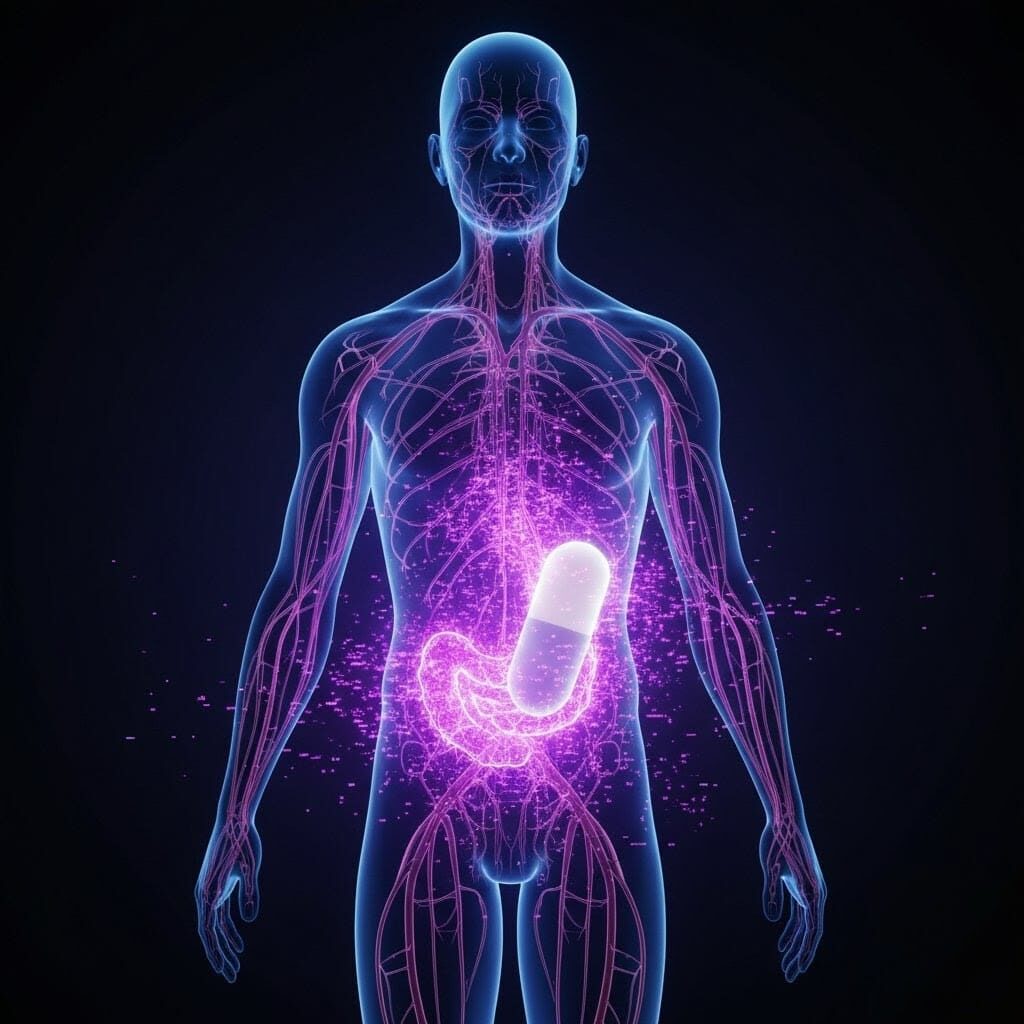
How antibiotics work
Antibiotics are prescribed for bacterial infections, including strep throat, ear infections, skin infections, abscesses, bladder infections and kidney infections. They work by killing the bacteria that cause these infections, going after the cell wall or membranes of bacteria or interfering with proteins in the bacteria and blocking bacteria reproduction.
However, most of the common infections like cold and Flu are of viral etiology which cannot be cured by antibiotics.
ANTIBIOTICS ONLY WORK ON BACTERIA
What are Over the Counter(OTC) drugs?
Over-the-counter (OTC) drugs are medications available directly to consumers without a prescription, regulated for safety and effectiveness for self-treatment of minor illnesses like pain, allergies, and cold symptoms. Common examples include paracetamol/ibuprofen (pain), antihistamines (allergies), and cough syrups. While accessible, they still carry risks if misused. These are regulated by National Health Authorities.
What misuse leads to?
Irrational medicine abuse leads to something called Antimicrobial Resistance.
Antimicrobial Resistance (AMR) occurs when bacteria, viruses, fungi and parasites no longer respond to antimicrobial medicines. As a result of drug resistance, antibiotics and other antimicrobial medicines become ineffective and infections become difficult or impossible to treat, increasing the risk of disease spread, severe illness, disability and death.
Its emergence and spread is accelerated by human activity, mainly the misuse and overuse of antimicrobials to treat, prevent or control infections in humans, animals and plants.
Dangers Of Self-Medicating
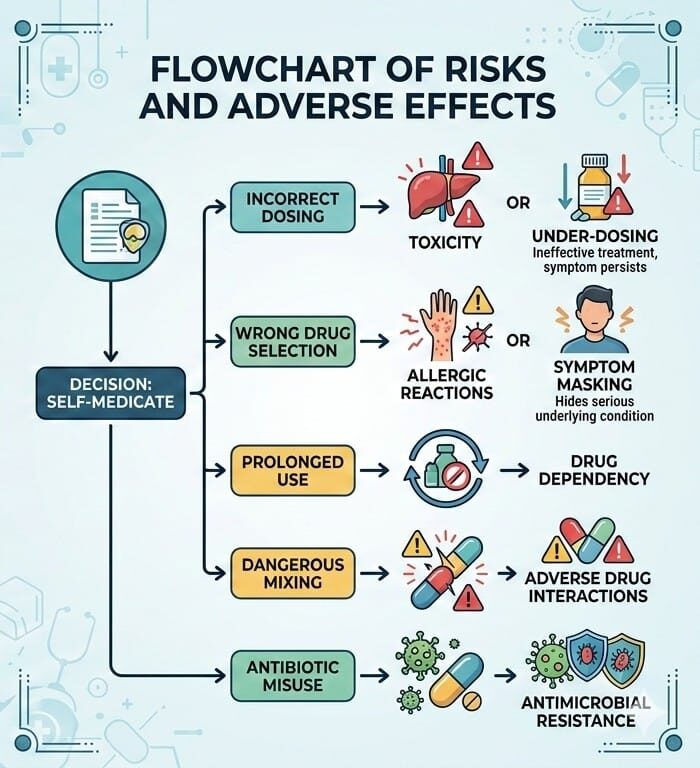
Dealing with stress by self-medicating is never a good idea, as it can lead to all sorts of unintended consequences. The dangers of self-medicating include the following:
1. Incorrect Self-Diagnosis
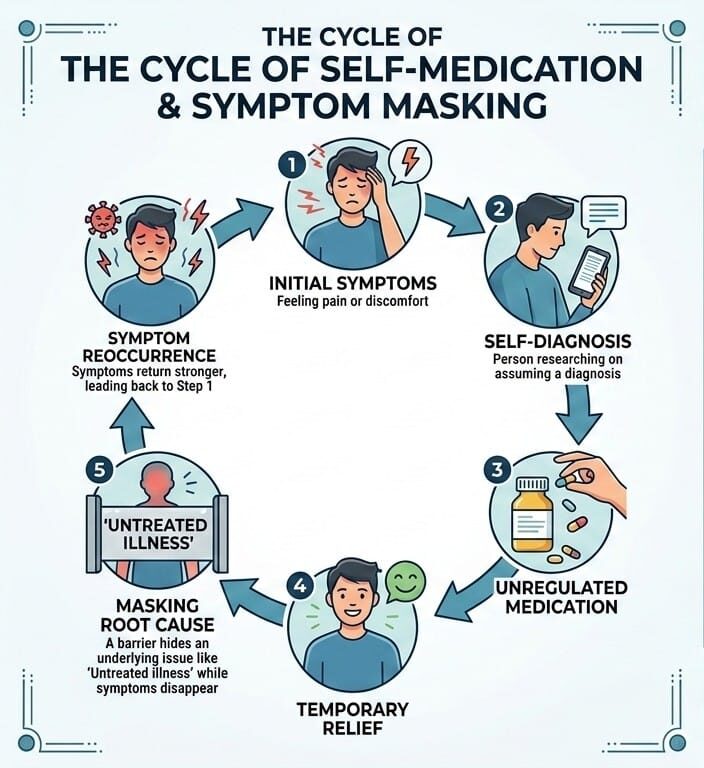
Nowadays, it is very common for people to search their symptoms, read about different conditions online, or take personality quizzes to confirm their worst suspicions. However, those articles and quizzes are not an official diagnosis and are far from reliable. An incorrect self-diagnosis may prompt an individual to buy over-the-counter pills for the wrong illness, thereby worsening one’s symptoms.
2. Adverse Drug Reactions
Before commencing treatment, a series of medical tests and psychological evaluations are performed at a rehab center. Doctors do not administer FDA-approved medications without properly evaluating the client’s case history. Otherwise, it might lead to adverse reactions and unwanted drug interactions that can even put one’s life at risk.
3. Incorrect Dosage
Some folks often misuse their prescription pills by altering the dosage or taking them more frequently than necessary. A pill may have mood-enhancing effects, and the individual may crave more and more of it. Unable to cope with the withdrawal symptoms, they may even turn to recreational drugs and develop an addiction.
4. Worsening One’s Condition
Ultimately, self-medicating doesn’t cure the person but only worsens their symptoms. It might lead to short-term benefits, with long-term negative consequences on one’s physical and mental health. With prolonged use, the initial symptoms worsen, and the individual may develop other co-occurring disorders.
5. Masking Deeper Issues
Those who self-medicate instead of reaching out to their local healthcare provider may be masking deeper issues. They may be in denial, unable to accept that they need professional help and guidance. They might even suffer from acute stress, repressing certain emotions and memories, having unresolved childhood trauma, or facing issues at the workplace or in relationships. A professional treatment program can help unmask the root causes of an illness and adequately address them.
How are these drugs(medicines) so easily accessible?
- Massive Generic Manufacturing & Low Costs : The industry is highly developed, with low production costs and a large skilled workforce, making drugs affordable and widely available.
- Weak Regulatory Enforcement (OTC Sales): Although many drugs are classified as “prescription-only” (Schedule H, H1, or X), in practice, even these are often sold over-the-counter (OTC) without a prescription. The regulatory system (CDSCO) has limited staff compared to the hundreds of thousands of pharmacies in the country.
- High Density of Pharmacies: There is a vast network of private retail pharmacies in India, and it is common for pharmacists to act as the first point of care for minor ailments, dispensing medication directly.
- Government Initiatives (Jan Aushadhi Scheme): The government has launched initiatives like the Pradhan Mantri Bhartiya Jan Aushadhi Pariyojana (PMBJP), which has over 10,000 stores nationwide selling generic drugs at 50-80% lower prices.
How can we prevent this
So the next time you wanna be your own doctor, pause and think how wrong things can go.
Here’s how you can have a better approach towards your health
1. Personal Habits & Mindset
The first line of defense is changing how you react when you feel unwell.
The “Wait and See” Rule: For minor discomforts (like a mild headache), try non-pharmacological remedies first—hydration, rest, or nutrition.
Stop “Dr. Google” Early: Use the internet for general knowledge, not for self-diagnosis or determining dosages.
Clear Out the “Pharmacy Drawer”: Avoid keeping leftovers from old prescriptions. If you have leftover antibiotics or painkillers, dispose of them properly so you aren’t tempted to use them for a different ailment later.
2. Professional Guidance
Leaning on experts reduces the guesswork that leads to self-medication.
Consult Your Pharmacist: If a doctor isn’t immediately available, talk to a pharmacist. They are trained to tell you if an over-the-counter (OTC) med is appropriate or if you must see a specialist.
Ask “Why” During Appointments: When a doctor prescribes something, ask exactly what it’s for and why that specific dose is necessary. Understanding the “why” makes you less likely to experiment with other pills later.
3. Systemic & Community Prevention
- Individual effort only goes so far; the environment plays a huge role.
- Education Public health campaigns focusing on the dangers of antibiotic resistance and liver damage from OTC misuse.
- Strict Regulation Pharmacies must enforce “prescription-only” rules for high-risk medications (steroids, antibiotics, stimulants).
Affordability
Improving access to healthcare so people don’t self-medicate simply because a doctor’s visit is too expensive.
Stopping self diagnosis and medication is more than just will power, it is an evolving approach for a better health
Most people don’t self-medicate because they want to be reckless; they do it because they are busy, the healthcare system is expensive or intimidating, or they simply trust a friend’s recommendation more than a clinical white paper.
We often treat symptoms (like a headache or fatigue) as “annoyances” to be silenced immediately. The human conclusion is that we should view symptoms as our body trying to tell us something. Masking the noise with a pill doesn’t fix the underlying conversation. Visit the doctor and get the root cause fixed because ultimately your health is what makes you be you.