

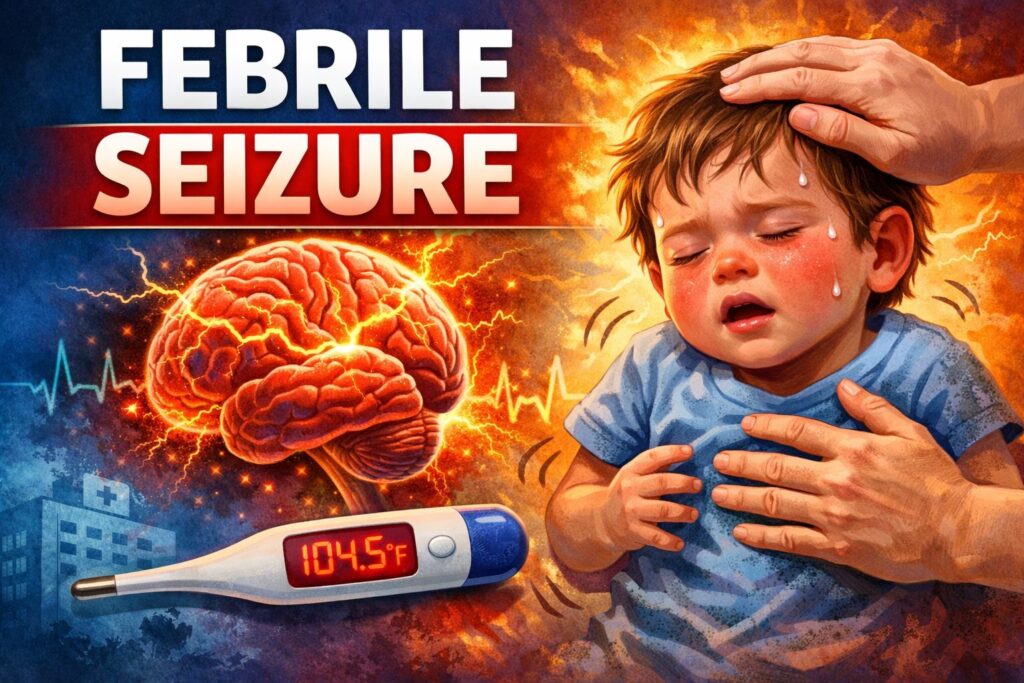
You must’ve heard of a case where a child has had a fit with a mild rise in temperature. Has it ever occurred to you what febrile seizures in children are and why they happen? If it has whacked your brain even a little then read on.
A febrile seizure is a type of seizure triggered by fever, usually in children between 6 months and 5 years of age. These seizures do not mean the child has epilepsy or even a brain issue, and in most cases, they do not cause brain damage.
Febrile seizures are common — they occur in 2–5% of children. Because they happen suddenly during a fever, they can shock parents, making them anxious and worried about the long term consequences of seizures.
UNDERSTANDING THE TYPES OF SEIZURES
| SIMPLE FEBRILE SEIZURES | COMPLEX FEBRILE SEIZURES |
| It is the most common type. | It is less common. |
| It lasts less than 15 mins. | It lasts more than 15 mins. |
| It does not happen again within 24 hours. | It is seen again within 24 hours. |
WHY DOES IT HAPPEN?
Today’s gen alpha kids may know more about electronic gadgets at a very young age but physiologically, their brains are not as developed as that of adults and are more sensitive to changes. When the body temperature increases quickly, it may overexcite the brain cells thereby causing a seizure. As children grow older, their brains become more mature and less sensitive to fever, which is why febrile seizures usually stop occurring after the age of 5 years.
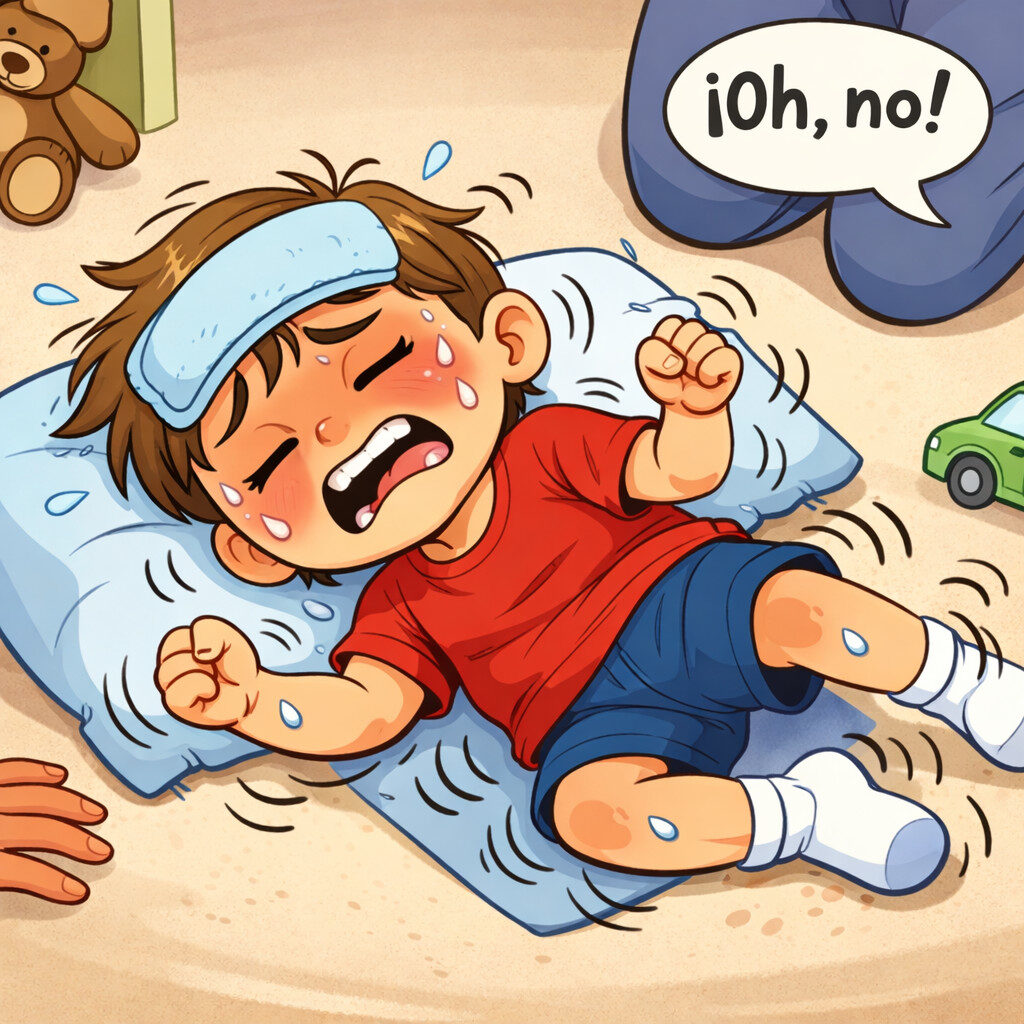
RISK FACTORS
- Young age—Children who have their first febrile seizure when they are younger than 18 months are at increased risk of having another one.
- Family history—Children whose family members had febrile seizures are more likely to have more than one seizure.
- First sign of illness—Children who have febrile seizures before showing other symptoms of an illness are at greater risk of having multiple seizures.
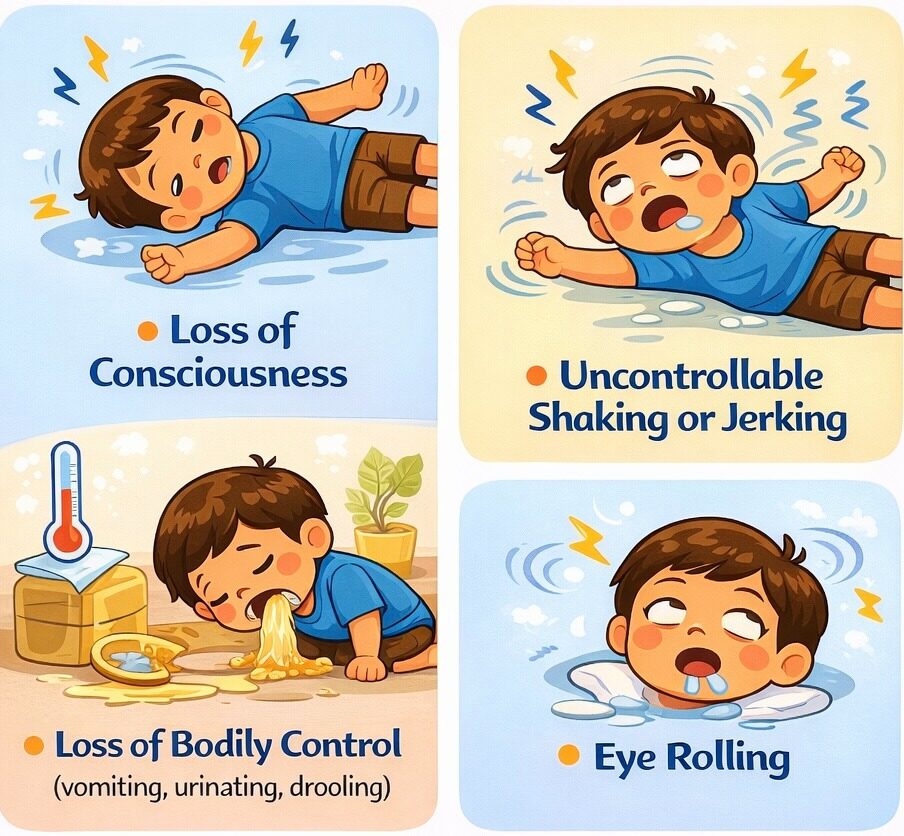
SIGNS & SYMPTOMS
- Loss of consciousness or passing out
- Uncontrollable shaking, jerking, or stiffening in the arms or legs (may be the whole body or only part of the body)
- Eye rolling
- Loss of bodily control (such as drooling, vomiting, urinating, or having a bowel movement)
WHAT CAN WE DO WHEN WE SEE A CHILD HAVING A SEIZURE ATTACK?
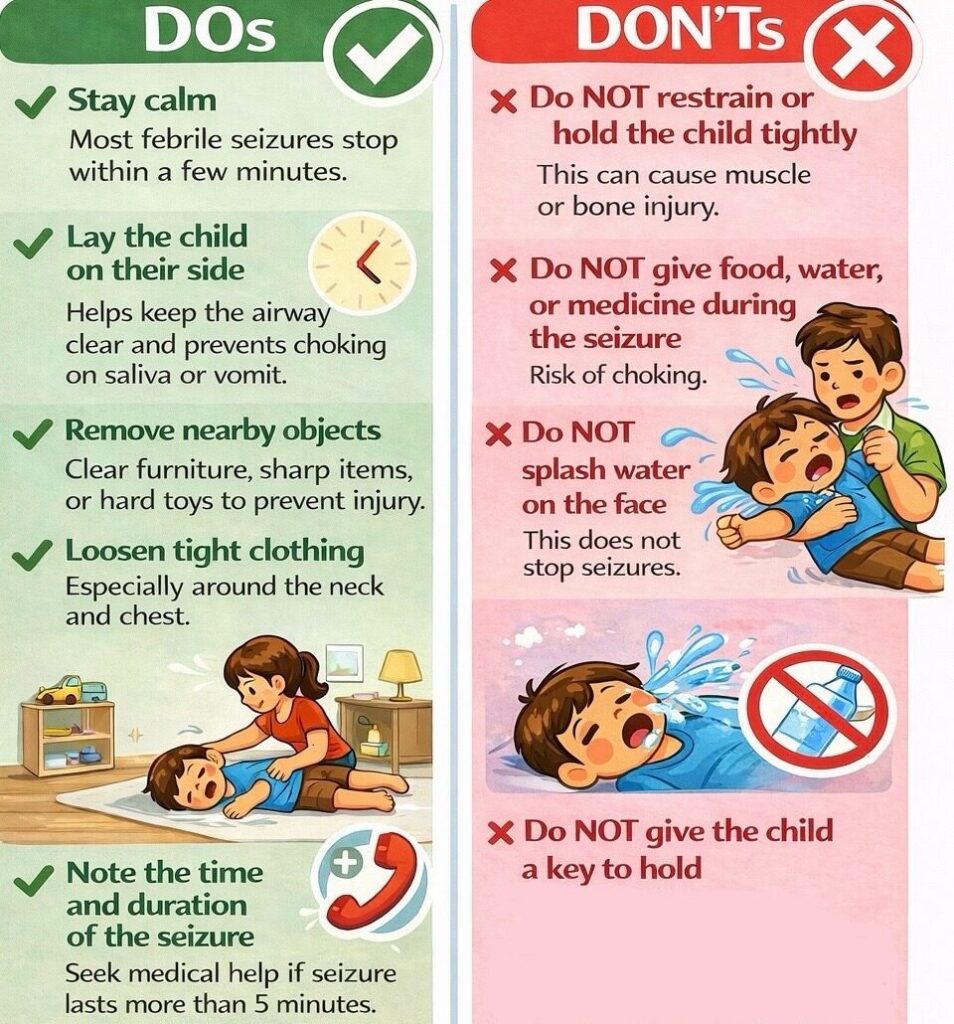
DURING THE SEIZURE
DO NOT PANIC!!
- Panicking will only lead to mistakes. Staying calm is of utmost importance as calmness will ensure quick actions.
- Remove nearby objects that may potentially injure the child.
- Do not restrain the child.
- Do not put anything in the child’s mouth.
AFTER THE SEIZURE
- Reduce fever with antipyretics like paracetamol.
- Treat the root cause of infection.
- Observe the child.
PREVENTION OF SEIZURES
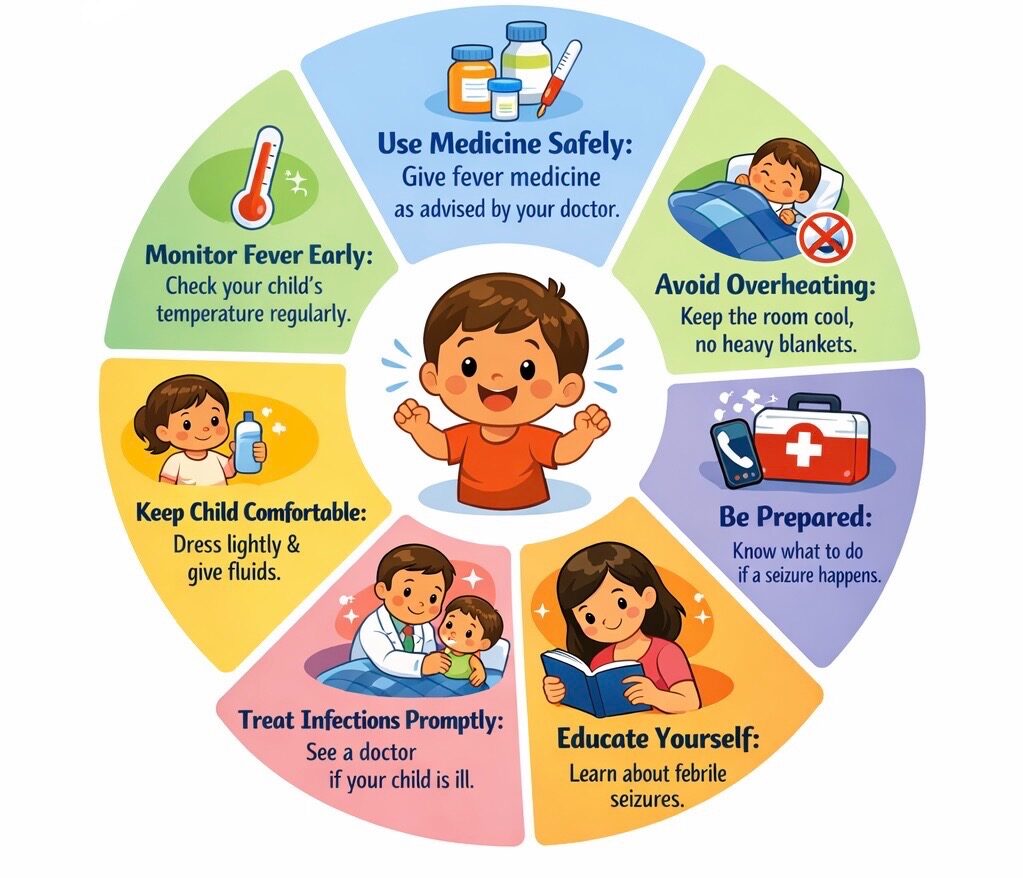
Preventing febrile seizures completely is not always possible, because they occur due to a child’s natural sensitivity to fever. However, several measures can help reduce the risk and help manage fever safely and confidently.
- Early recognition and treatment of fever with antipyretics.
- Tepid (lukewarm) sponging may be used to help reduce fever.
- Educating parents and caregivers about the do’s and the dont’s.
TYING IT ALL TOGETHER
Febrile seizures are a common and generally harmless condition seen in young children during episodes of fever. Although the sudden onset and physical movements can be frightening to parents, most febrile seizures are short-lived, stop on their own, and do not cause brain damage, developmental delay, or epilepsy. The child’s developing brain is temporarily sensitive to fever, and as the child grows, this sensitivity reduces naturally. Early recognition of fever, safe management during a seizure, and proper parental education are the cornerstones of care. Unnecessary investigations and long-term medications are usually not required. With reassurance, correct first aid measures, and appropriate medical guidance, children with febrile seizures have an excellent prognosis and go on to lead healthy, normal lives.
A febrile seizure is like a sudden summer storm—
Loud, frightening, and unexpected.
But the clouds pass, the sky clears,
And the sun shines again, unchanged.
So too with the child—
The storm leaves no scars,
Only a lesson for the watcher:
To stay calm, to stay close, and to trust the calm that follows.