“Do you often feel like one side of your nose is always blocked? Or that you struggle to breathe properly through your nose, especially while lying down?” the doctor asked the patient as she sat across from him in the consultation room.
I was standing beside her as a medical student, observing the interaction carefully.
The patient was a 26-year-old professional boxer who had been experiencing frequent headaches, persistent nasal blockage, and a runny nose for almost a year. A faint scar ran across the bridge of his nose – evidence of a facial injury he had sustained during a match two years ago. Like many patients with nasal trauma, he had assumed the injury was only superficial and never sought medical attention at the time.
However, over the past week, his symptoms had worsened. He described difficulty sleeping because his nose felt blocked whenever he lay down, making his breathing feel heavy and uncomfortable.
After listening to his history and performing a clinical examination of his nasal cavity, the diagnosis became clear.
“You have a deviated nasal septum,” the doctor explained.
As I stood there observing the consultation, it became clear how a seemingly small structural change inside the nose could lead to such persistent symptoms.
What is a Deviated Nasal Septum?
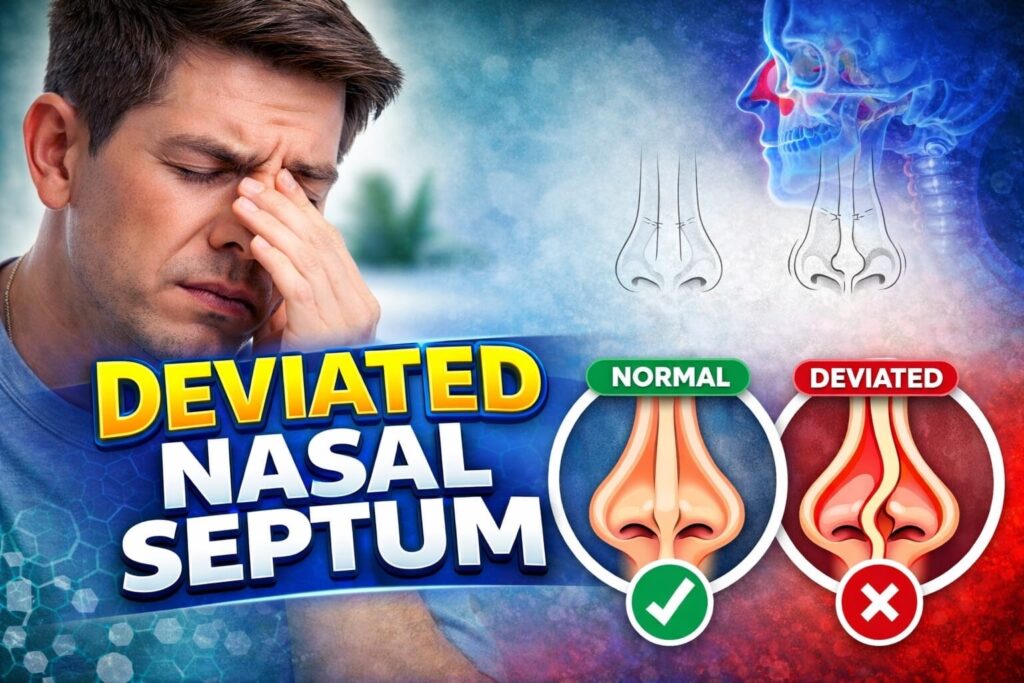
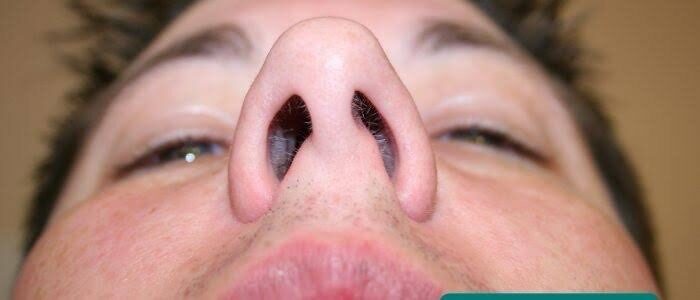
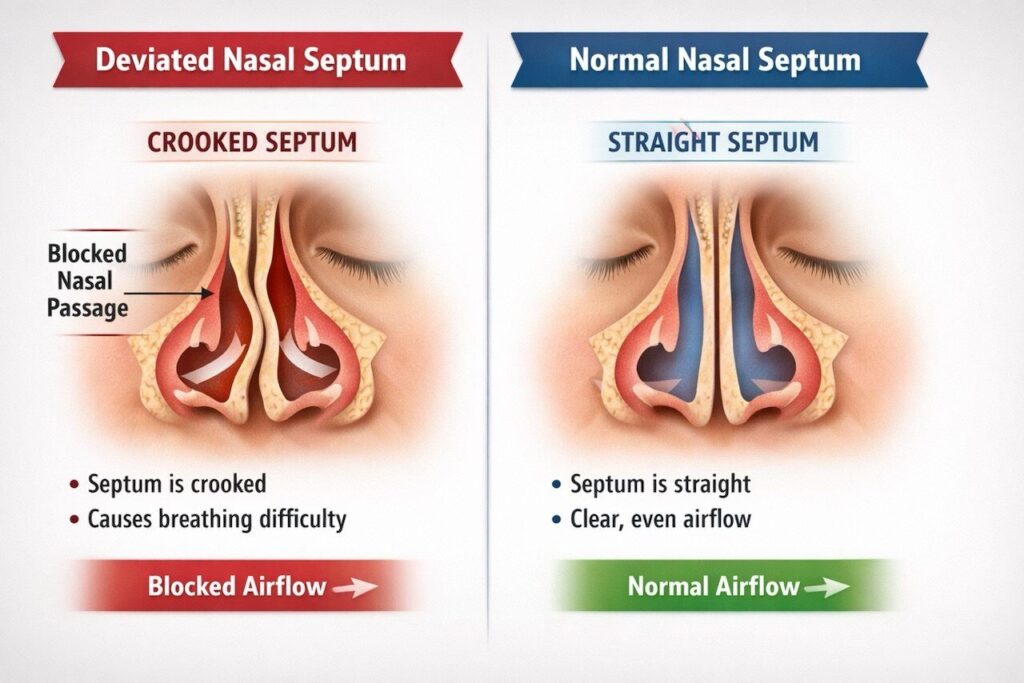
The nasal septum is the thin wall of cartilage and bone that divides the nasal cavity into two halves. Ideally, it should lie in the midline, allowing air to pass freely through both nostrils. But when the septum shifts to one side, due to trauma, developmental changes, or sometimes even from birth, then that is called a Deviated Nasal Septum (DNS).
This seemingly small structural change can lead to symptoms such as nasal obstruction, headaches, recurrent sinus infections, breathing difficulty, and disturbed sleep.
In simpler terms, having a deviated nasal septum means that the wall between your two nasal chambers is tilted either to the left or right or to both the sides.
Sometimes, it can also be associated with a nasal spur, which is essentially a sharp part of the bony wall present in the midline of the nose, pressing onto either side of nasal chambers, leading to headache or a nosebleed.
The septum may also get thickened as a result of trauma to the septum leading to a collection of blood in the septum and overriding of dislocated septal fragments.
What causes your septum to deviate?
Septal deviation can be present due to the inherent bend of the septal cartilage or as a result of septal tilt due to deviated bony septum.
It can also be caused by any injury to the nose or the face, or it can be a simple developmental error.
There are also some racial and hereditary factors that determine whether or not a person will have a deviation of the nasal septum. For example, height of nasal bridge, width of nasal cavity and different craniofacial growth patterns in different races like Caucasians, Africans and Indians influence the likelihood and pattern of septal deviation.
Clinical observations have shown that DNS can run in families and multiple family members may have similar nasal deviations.
What will be the symptoms, if you have DNS?
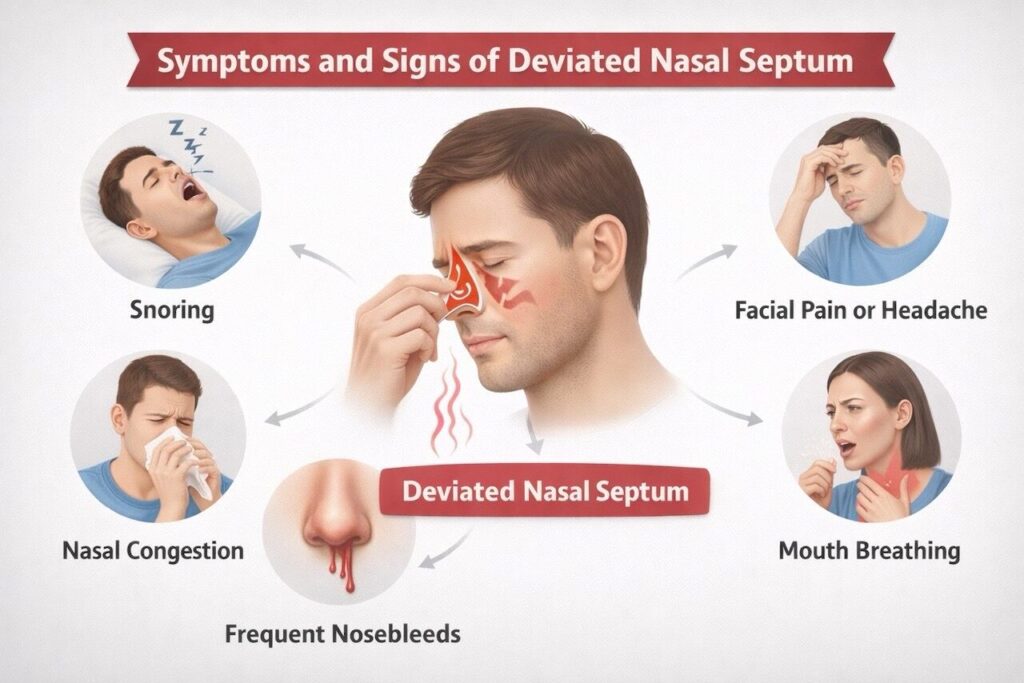
A deviated septum is usually associated with these symptoms:
- Nasal obstruction
- Headache
- Sinusitis ( Infection of the paranasal sinuses )
- Epistaxis ( bleeding from nose)
- Middle ear infection
- Upper respiratory tract infections
- Chronic nasal congestion
- Post nasal discharge
- Allergic rhinitis
- Altered breathing pattern
- Snoring
- Loss of smell
But sometimes, if it is mildly deviated, you may have no symptoms at all !
Is it a common problem?
The prevalence of DNS in the Indian population may vary around 30.9% to 85.5% according to various studies conducted.
How to check septal deviation by yourself?
It can be visualised by you, using a mirror or with the help of another person.
Raise the tip of your nose and check for any deviation of the wall present between the two openings of the nose. Ideally it should be in the middle but if the wall is tilted to the left or right side, you might have deviation of the nasal septum.
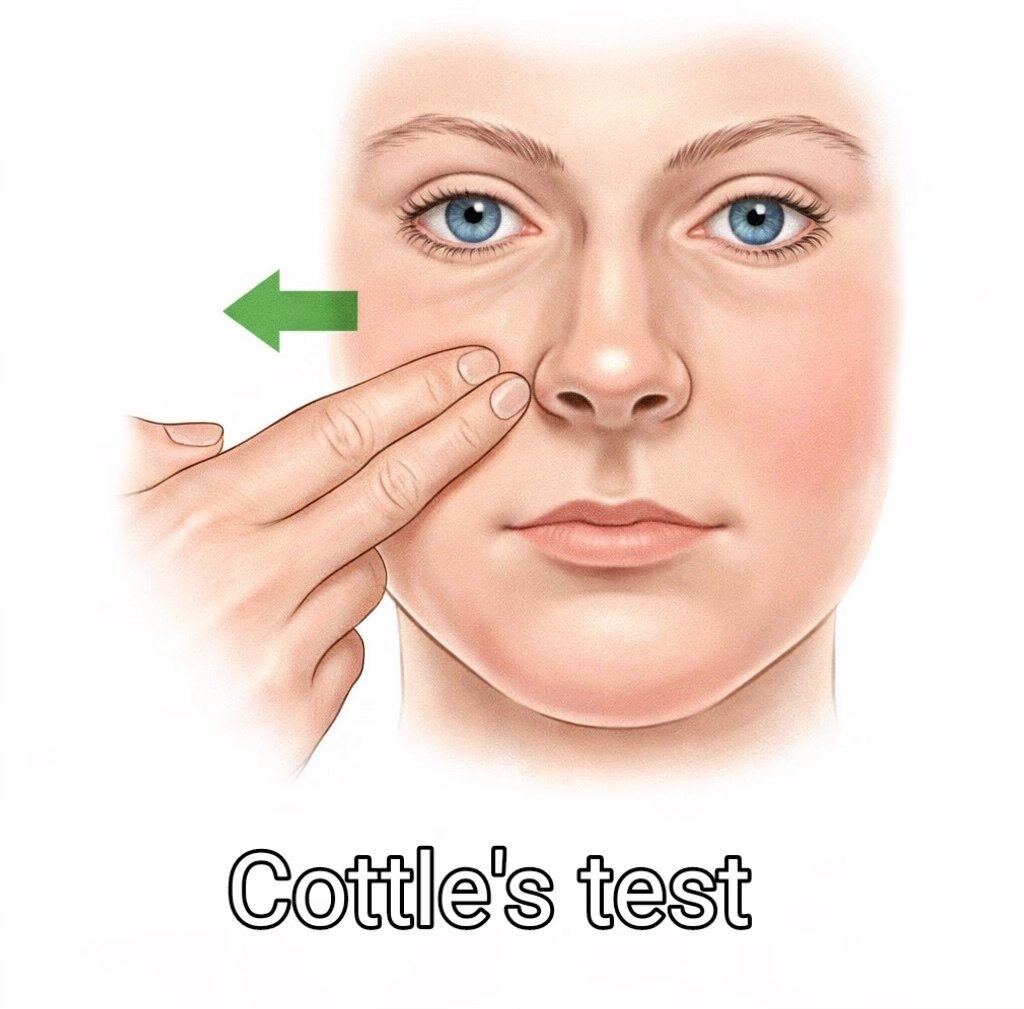
You may also do what is known as Cottle’s test:
Place one of your hands on your cheek and pull the cheek to the side, breathe normally and notice if the airflow increases on that side. You may repeat on the opposite side also. If the breathing improves, you may have a blocked nose on that side.
When should you consult a doctor?
Generally, most of us will have some amount of deviation to one side but it doesn’t matter much as it causes almost nil interference with breathing and that is why most people don’t need any treatment or procedures done for DNS. But if you’re having breathing difficulty, blocked nose, recurrent infections, sinusitis, severe headache, recurrent nose bleeds, you might need to visit a doctor.
Which doctor to consult?
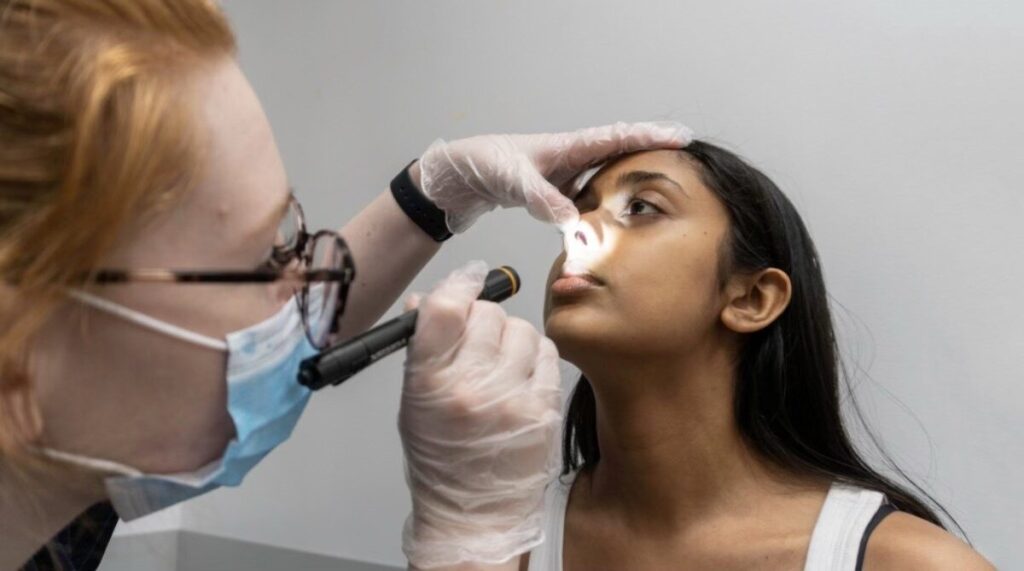
Deviated nasal septum is a pathology of the nose, so it is better to consult an ENT Specialist (Otorhinolaryngologist), but if the symptoms are severe then you can visit any doctor who is available at the moment. Sometimes, a surgeon or a general physician might also be helpful in dealing with the immediate complications.
How do doctors find out if you have DNS?
Doctors usually perform a series of tests to determine the nature and extent of deviation of the nasal septum.
Starting from the most basic Cottle’s test or a spatula test, to anterior rhinoscopy, posterior rhinoscopy and sometimes even a nasal endoscopy depending upon the level of obstruction and to determine the usefulness of surgery, if planned.
While Cottle’s test and spatula test are basic examinations that determine the patency of nose and nasal valve area, anterior and posterior rhinoscopy alongwith nasal endoscopy is used to visualise the internal structure of the nose, and throat.
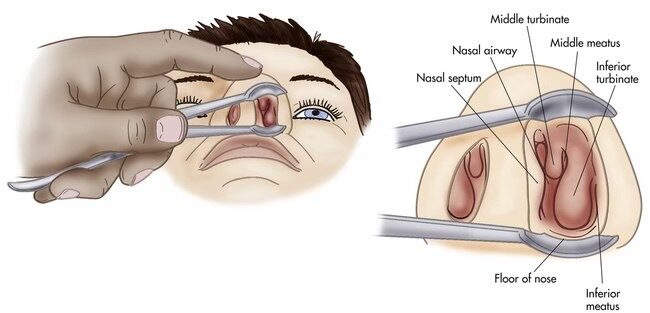
Anterior rhinoscopy is done by passing a nasal speculum through the anterior opening of the nose and visualising the nasal passage, the septum, floor and roof of the nose as well as the lateral wall and structures present on the lateral walls.
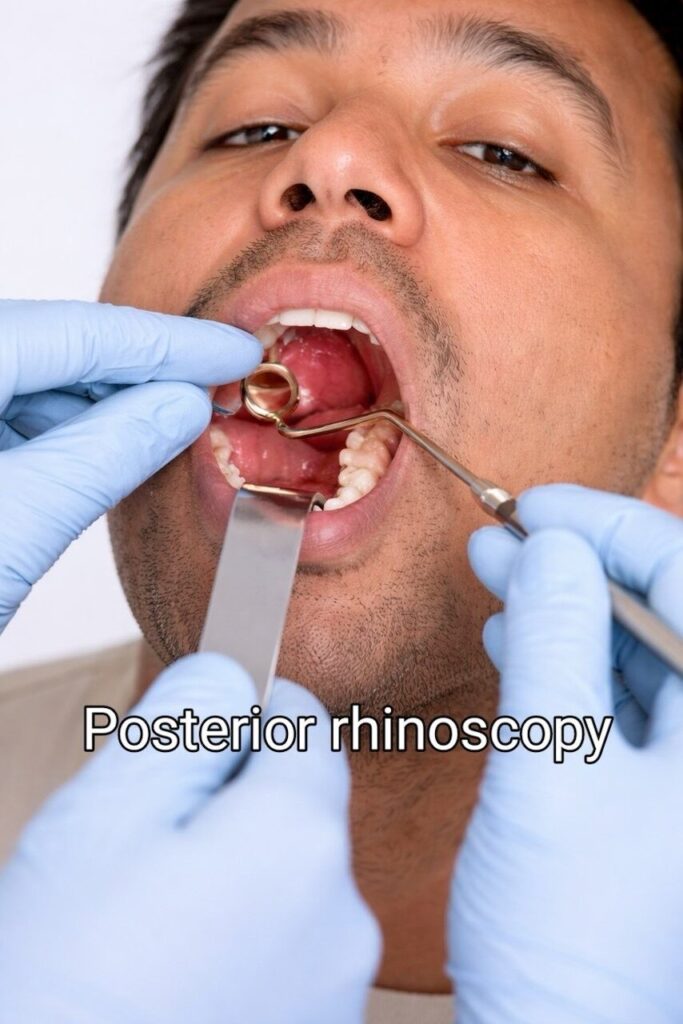
In posterior rhinoscopy, the patient is asked to open the mouth and an instrument is used to depress the tongue, then a mirror is passed through the mouth and the posterior opening of the nose into the throat is visualised for any structural changes.
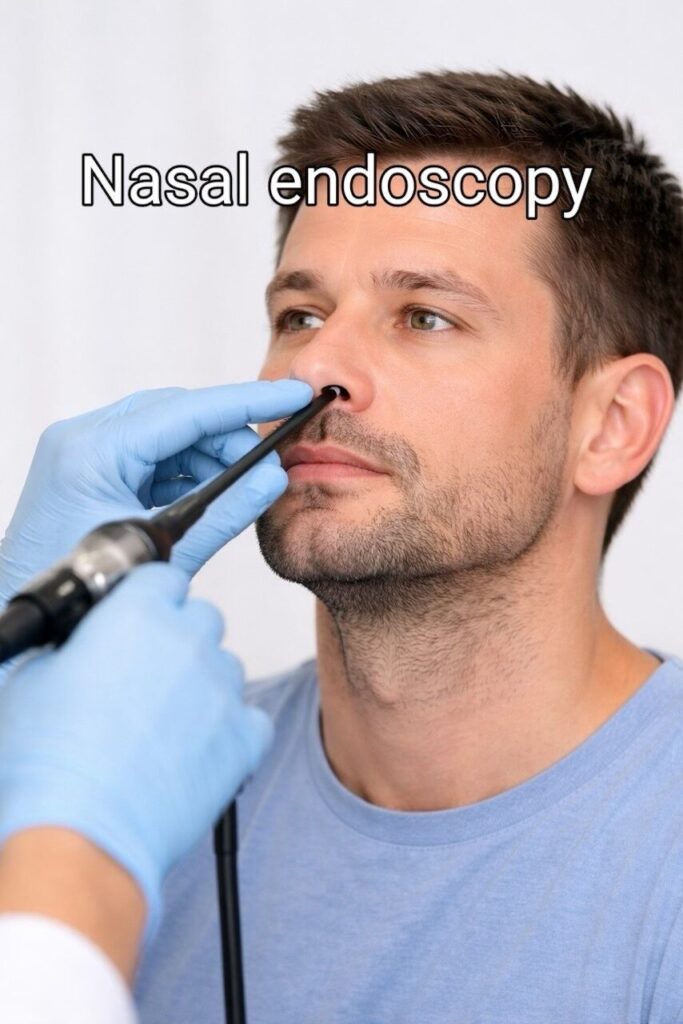
Nasal endoscopy uses a device called an endoscope, which gives a bright, magnified view of structures present inside the nose. It is passed into the nose and rotated at different angles to see structures present at different locations inside the nose. The results can be visualised directly or can be projected onto a screen for better clarity.
What are the complications if DNS is left untreated?
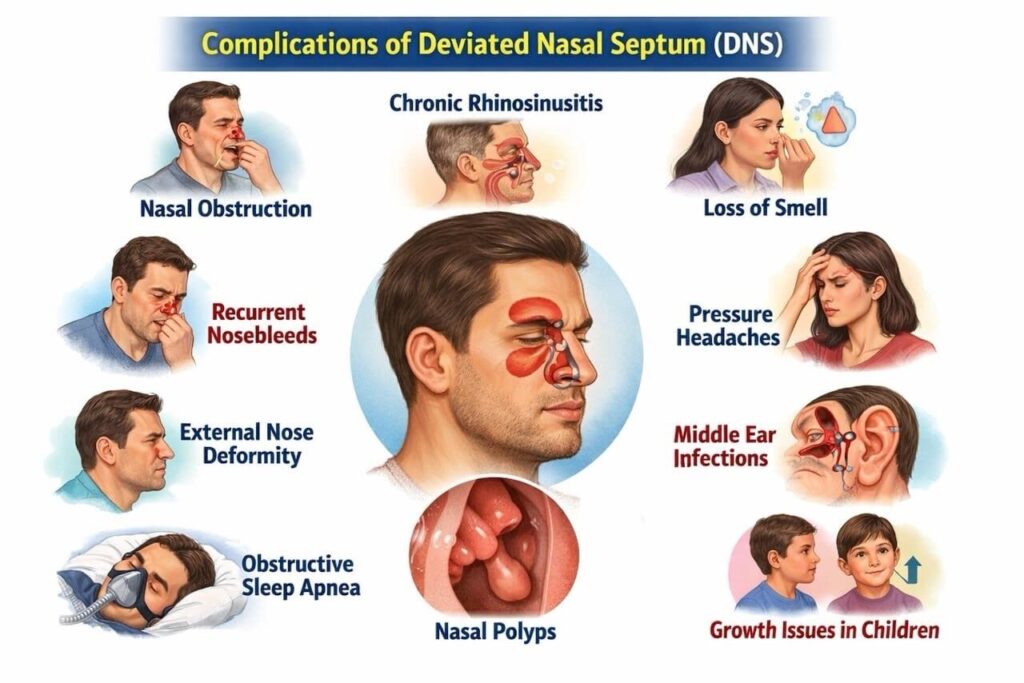
Deviated Nasal Septum if ignored, can lead to
- Nasal obstruction
It is the most common complication of DNS and is related with difficulty in breathing, snoring, mouth breathing and the general feeling of nose block.
- Chronic rhinosinusitis
Blockage of the sinuses due to deviation of the septum is quite common and it may lead to persistent headache, sinus infections, pain and various other manifestations.
- Loss of smell
Since the air is not able to pass properly through the nose, it may lead to a partial or complete loss of ability to smell.
- Recurrent Nose bleeds
An untreated case of deviation can expose the nose to dry air, which may form crusts and eventually break off to cause bleeding through the nose. Occasionally a sharp bend of the septum, called a septal spur can also press on the walls of the nose and cause bleeding from the nose.
- Pressure headaches
There might be persistent severe headaches due to the presence of nasal spur pressing on the lateral walls of the nose.
- External nose deformity
Septum deviation can cause deformity of the root, dorsum or even tip of the nose , which may appear as a crooked nose from the outside.
- Nasal polyps
Obstruction of the nasal passages may create a negative pressure gradient in the sinuses and the sinus mucosa may bulge out due to pressure effects. It may get infected and lead to chronic symptoms. Nasal polyps are usually related to sinusitis.
- Middle ear infections
Blockage of the opening of the eustachian tube by the deviated septum may lead to pressure changes inside the middle ear and cause recurrent middle ear infections with discharge and other ear symptoms.
- Obstructive sleep apnea
Decrease in oxygen concentration due to difficulty in breathing may lead to sleep disturbances and restlessness, cause increased day time sleepiness and negatively affect the productivity and performance of a person.
- Adverse effect on faciomaxillary growth of child
In children, there have been reported incidences of error in facial development due to septal defects. Septal deformation may lead to a crooked nose appearance, causing significant psycho-social distress and self-confidence issues in children.
How to prevent yourself from getting a deviation of septum?
Although many times a deviated septum is a developmental defect, trauma and allergic conditions are some important modifiable and controllable factors that determine the extent of severity of symptoms caused by DNS.
Protect your face!!!
Trauma to the facial region most commonly affects the nose as it is the most prominent part of the face. It can lead to micro fractures in the nasal bone and the septal cartilage, which may deform and lead to deviation of the normally straight septum wall. It is important to protect the face while performing activities that involve the risk of facial injury, such as, riding a bike, during construction work, during sports activities etc. You can use a helmet to protect yourself from trauma to the face and nose and its associated complications.
Treat your allergies!!!
Allergic conditions usually by themselves don’t cause deviation of the septum but they may lead to aggravation of the symptoms which were normally not noticed due to mild deviation. Allergic conditions cause mucosal edema and swelling which may increase the nasal blockage adding to the nasal obstruction caused by DNS. So, if you are diagnosed with DNS, it is always advisable to prevent and protect yourself from getting into the situations that aggravate your allergic condition.
Management – medical and surgical aspects
Minor deviations that are not causing any symptoms, do not require any treatment but if the person is having difficulty managing the daily activities as an effect of deviation, medications that help in preventing nasal blockage such as antihistamines and steroids can be prescribed by the doctor.
When there is obstruction and blockage of the nose and the signs and symptoms produce significant disturbance in the quality of life, the person can be operated on, provided they have reached the age of 17.
Generally, two types of surgery are done, both under local or general anaesthesia.
Either a submucous resection (SMR) which involves removing the deflected bony and cartilaginous parts of the septum or a septoplasty which is a much more conservative approach.
Septoplasty is now preferred over SMR due to lesser complications rate and better prognosis.
What people think vs the reality of DNS
- Myth: A deviated septum is a rare condition
Fact: DNS is a very common problem, and about 30-80% of the Indian population has a Deviated septum.
- Myth: There is nothing that can be done for a deviated septum
Fact: There are a lot of treatment options available for DNS and its complications. While there is no harm in home remedies such as steaming, breathing exercises and facial massages, visiting a doctor is advised for proper treatment.
- Myth: Deviated septum can be corrected with home remedies or exercises.
Fact: While home remedies may help relieve congestion and other associated symptoms, they cannot help in straightening the septum. DNS is a structural defect which can be brought back to normal by Septoplasty or SMR surgeries.
- Myth: Septoplasty is a cosmetic surgery.
Fact: Septoplasty is a corrective surgery done for deviation of septum. Rhinoplasty is the cosmetic surgery which is done on the nose and it is different from Septoplasty.
- Myth: Septoplasty will change the shape of the nose
Fact: Septoplasty doesn’t change or alter the size and shape of the nose, Rhinoplasty is the surgery done for changing the size and shape of the nose.
- Myth: Surgery for DNS is very painful and risky
Fact: The surgery is done under anaesthesia and doesn’t cause pain. It is minimally invasive and hence the risks are comparatively low. After surgery the pain is minimal and can be easily managed.
- Myth: Long bed rest is required after surgery
Fact: Patients usually return to their normal daily routine after a week of surgery, prolonged bed rest is not needed.
Conclusion
A deviated nasal septum is quite common among the Indian population and very often may present with non-specific symptoms such as nose block or headaches. Mild deviation may not need treatment at all but it’s important to visit a doctor and take appropriate steps to prevent complications of a deviated septum. The surgeries done for DNS are simple, have low risk of complications and good prognosis. So, the next time you feel that you are having any symptoms of a deviated nasal septum, don’t forget to visit your ENT specialist as soon as possible !