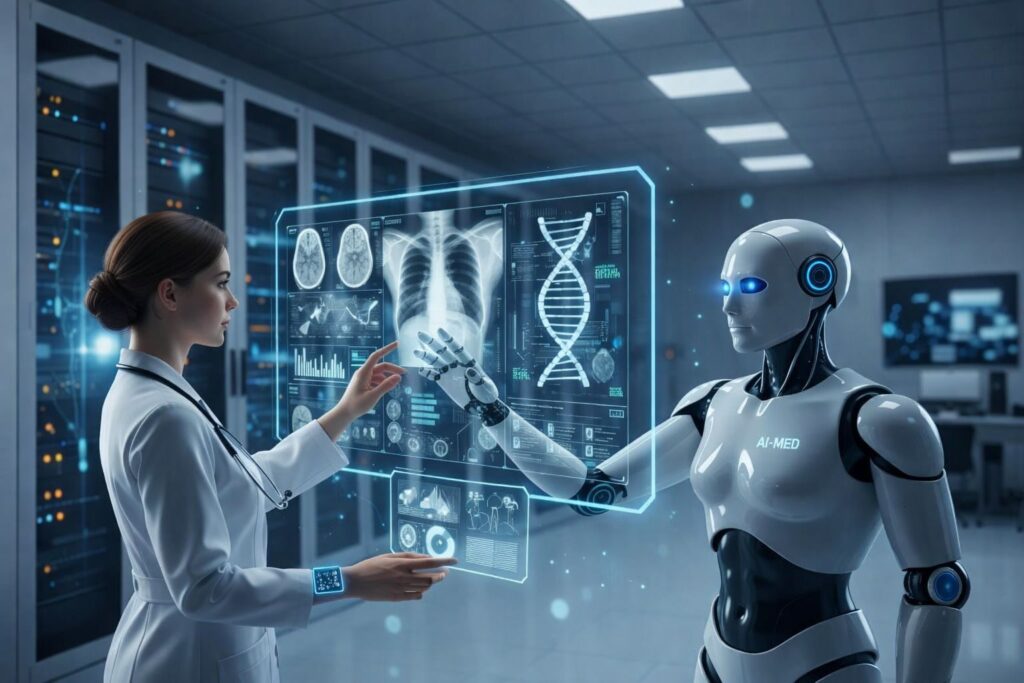
Artificial intelligence will not replace physicians, but physicians who use AI will replace those who do not.
This is a very popular quote that we come across various times when we see or hear about modern medicine developments and the use of ai in different sectors of medicine, predominantly in radiology which involves interpretation of images of scans of the body. In this article, we are going to delve into what this actually means and what are the impacts of ai in the field of radiology.
MEDICAL IMAGING AND AI
What is medical imaging and how has ai entered the field?
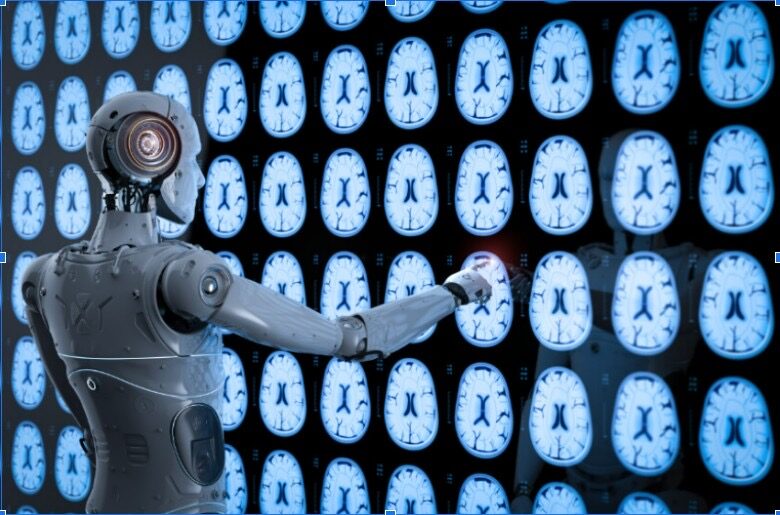
Medical imaging is the technique of imaging the interior of the body for clinical analysis and medical treatment, as well as representation of the function of the particular organ being imaged. Medical imaging is aimed at revealing internal structures beyond the skin and bones, and to diagnose and treat the respective diseases.
Artificial intelligence (AI) permeated medicine slowly but steadily, at first through seminal works and then with the first commercial systems.
It started with basic computer programmes which just enhanced contrast of the image or reduced the noise in the image. They were not really intelligent. Then came computer-aided detection (CAD) systems for assistance mainly in mammography. Then came more advanced machine learning methods but they still relied heavily on human designs. Today, AI development emphasizes reliability, explainability, and ethical use. Research continues to occur into multimodal AI that combines imaging with patient data, while radiologists increasingly train alongside AI systems to improve patient diagnosis. This change was not spontaneous and occurred over a period of time.
How is AI being used in medical imaging today?
AI IN DIFFERENT TYPES OF MEDICAL IMAGING
AI is applied in various different types of scans in medical imaging such as
• X-Rays
• CT Scans
• MRI
• Ultrasounds
• PET Scans
• Retinal Imaging
• Screenings like Mammography
In modern-day medical imaging ai is being used in various procedures.
• Early disease detection – Ai is being used for analysing various types of scans such as X-rays, MRIs, and CT scans for detecting probable diseases in patients with very few symptoms or even before they appear.
• AI tools can detect early signs of cancer. They can read CT scans to detect lung cancers and can detect breast cancer through mammograms.
• Conditions like Alzheimer’s can also be detected by ai through reading brain scans and bringing potential patterns into light which might have been missed by the doctor.
• Ai in faster analysis of larger amounts of data – Where one doctor may take quite some time to analyse a scan of a patient and give the diagnosis, Ai can read a large number of scans and give a much faster analysis of multiple reports. This saves time and increases the efficiency of diagnosis of patient scans. This also decreases the plausible errors by the doctor’s diagnosis.
• Ai is being used to point out and isolate areas of interest in scans to improvise the diagnosis and the treatment possible for the same.
• Extensive collection of data – Ai is being used to compile all the data of a patient like past history, family history, etc., to ensure all possible conditions of the patient. Hence, it can also predict the response of a patient to a particular treatment.
• Personalised treatment plans for an individual – Ai takes into consideration lifestyle factors, genetic information, habits, past cases, and diseases to provide a treatment regime specifically for a patient adhering to their needs.
• The US Food and Drug Administration and the European CE marking have integrated many ai tools into their settings for improvements in diagnosis and treatments due to their increased accuracy.
• AI is also being used in many educational institutions to improvise training medical students.
Examples of AI tools being used in medical imaging
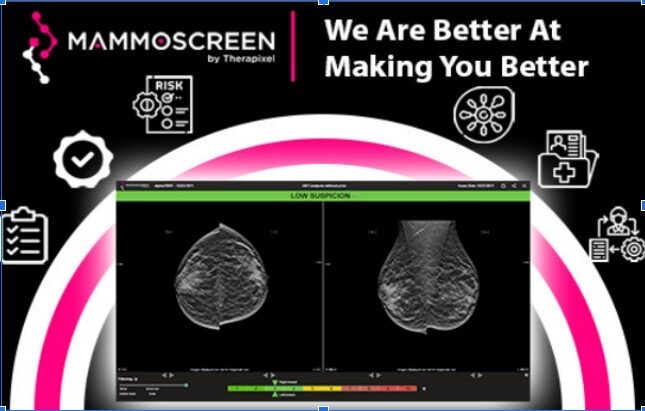
1. Mayo Clinic has incorporated the ai tool Mammoscreen developed by Therapixel, which helps in early breast cancer detection, boosting it by up to 20 percent and also reducing unnecessary callbacks.
2. Zebra Medical Vision (now part of nanox) is an ai analysis tool that helps in early detection of diseases
3.Aidoc is a tool for reading CT scans
4.PathAI is a machine learning tool which helps in cancer diagnosis
5.Viz ai is an AI tool which helps in detecting strokes.
FUTURE OF AI IN MEDICAL IMAGING
How is ai being planned to be used in the future?
Ai is being planned to get incorporated in various fields of medical imaging through different methods.
1. Deep Learning
Vision transformers are being introduced in the field ,which unlike the previously used convolutional neural networks, analyse images globally and are able to interpret complex images such as 3D MRIs.
They can find multiple defects and they also possess the ability to learn, which makes them better and better after every diagnosis and use.
2. Generative models
Generative Ai models are also being developed in this field as they can fill in potential mistakes and incomplete information or even enhance primitive scans and records.
For example, they can provide higher resolution scans for older, low-quality scans, fill out missing parts of a scan, and even point out possible defects by depiction.
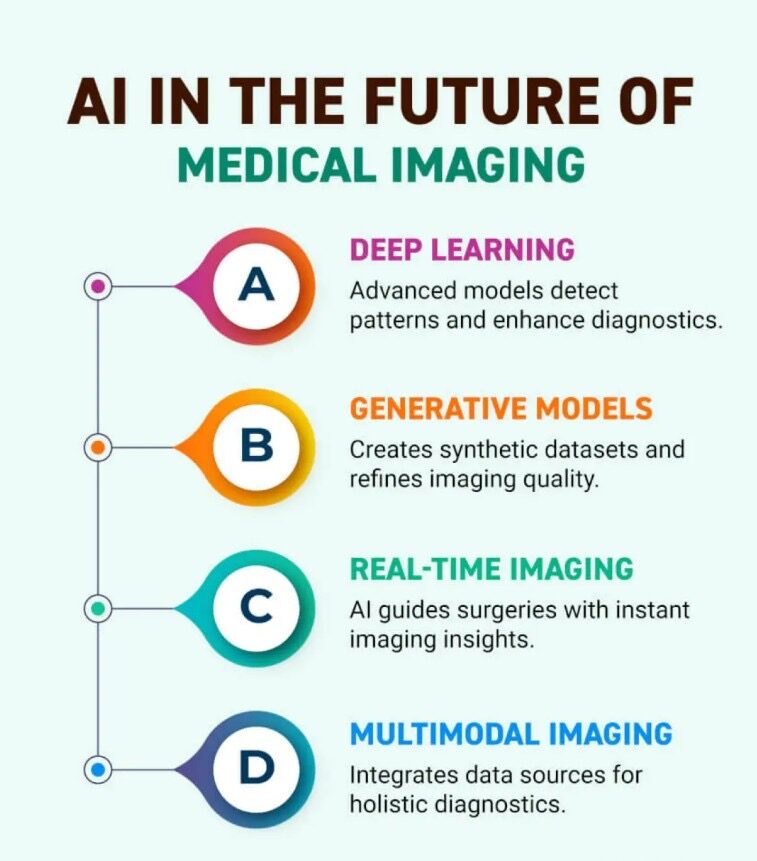
3. Real-time imaging
These tools can be used for quick detections and diagnosis like in emergency cases.
They can also be helpful in guiding surgeries. They can assist the doctor during surgeries, show the area to proceed with, and can also provide real-time solutions in case of crises and emergencies.
4. Multimodal imaging
Multimodal imaging is also a revolutionary technique brought up by Ai where different imaging techniques such as X rays, MRI’s, CT scans, Ultrasounds, PETs etc, are combined together in a single examination. This is majorly helpful as it overcomes the individual limitations of each of the different scans. This leads to much more accurate scans with reduced error margins.
AI – A DOUBLE EDGED SWORD?
“I think that it’s conceivable that this kind of advanced intelligence could just take over from us,” says Geoffrey Hinton renowned as the godfather of ai.
While ai has been encouraged and praised for its ease of management, increased efficacy and minimised error margins by various people it has also received cautionary warnings and severe backlash from several people aswell for it taking over jobs and making humans overly dependent on it. This has split the world of medicine into two. One side which advocates the incorporation of ai into the field of medicine for its enormous benefits and high accuracy and precision while the other side highlights its capability of learning and developing consciousness which may lead to it usurping the job of radiologists and doctors of other fields.
So what is the right way to incorporate Artificial Intelligence into medical imaging?
Ai being rapidly integrated should also be used with precautionary measures. Ai should be primarily used as a system to keep checks on the diagnosis given by the doctor rather than ai giving its own diagnosis. This greatly reduces the error margin of the diagnosis given and greatly reduces the possibility of a misdiagnosis. It also eliminates the hassle of visiting multiple doctors for a case as ai acts as a medium for it, But it also has to be kept in mind that direct diagnosis should never be taken without consulting a doctor as ai in its sense is nothing but an information bank capable of learning and providing. So ai is an optimal medium for differential diagnosis but not accurate and precise diagnosis for the exact condition. So ai shouldnt be used for diagnosis of conditions but rather as a screen to verify diagnosis and treatments recommended by the doctor.