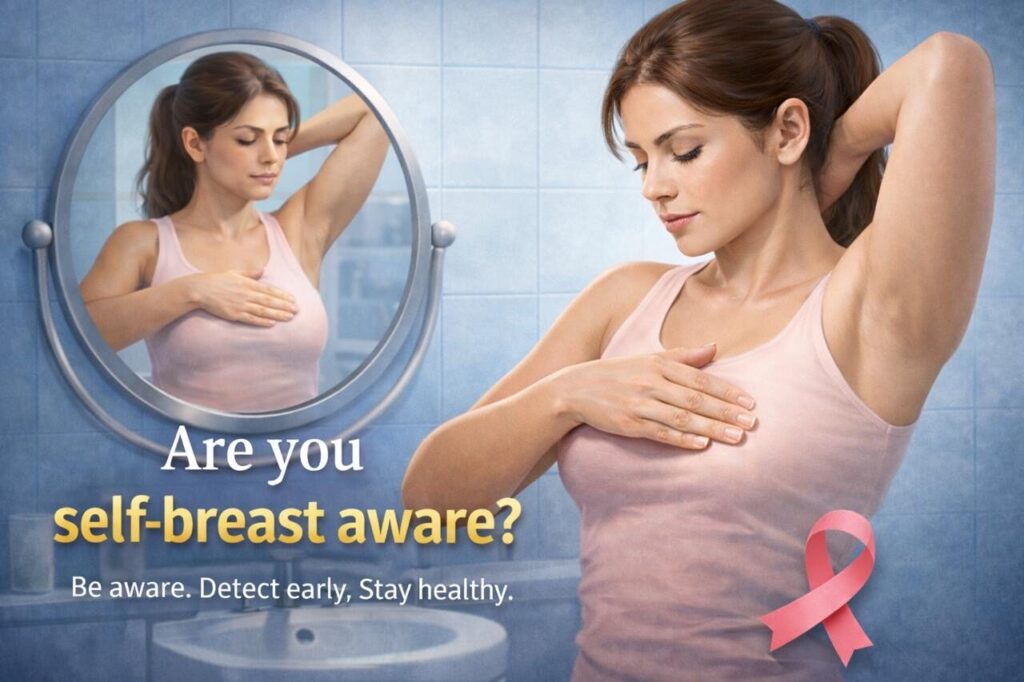
What if saving your life just took three minutes?
Yeah, you read it correctly; a simple habit if followed every month can help you recognise early signs of breast cancer, and the best part is you don’t need any hospital visit nor any expense for it. Curious? Then come follow us along.
UNDERSTANDING SBE: WHAT IS IT?
Self-breast examination (SBE), better to be called self-breast awareness, is a simple practice that helps you understand the typical look and feel of your breasts, so that if you notice any change in your breasts or if one breast is different from the other, you can immediately report it to your healthcare professional.
Before we begin, let’s be clear though that there are many conditions that can cause changes in the breasts, and not just breast cancer.
WHO SHOULD PRACTICE SBE?
Everyone should be familiar with how their breasts look and should be able to tell the difference between normal and abnormal; even men.
But first, let’s evaluate if you’ve got any risk factors.
Women who are at risk
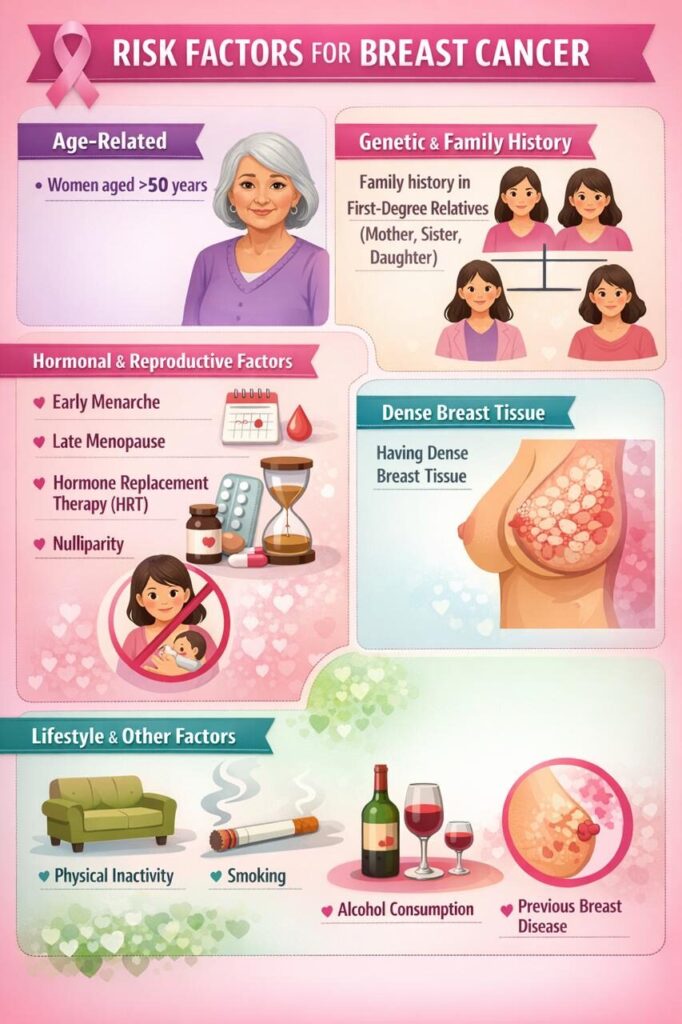
Women with no risk factors
For them, the normal breast awareness holds greater importance than the fear of developing any disease so that in the future they can detect any abnormality as early as possible.
Men
Even though they are at much lower risk of developing any breast disease, they should also be aware that breast cancer is not just limited to women ; in fact, the risk of developing any breast disease in men is more.
WHY SHOULD YOU PERFORM SBE?
Checking your breasts or chest regularly helps you learn how your breasts normally look and feel for you, henceforth making it easier to notice any changes and to report to a healthcare doctor with no delay.
WHEN IS THE RIGHT TIME TO PERFORM?
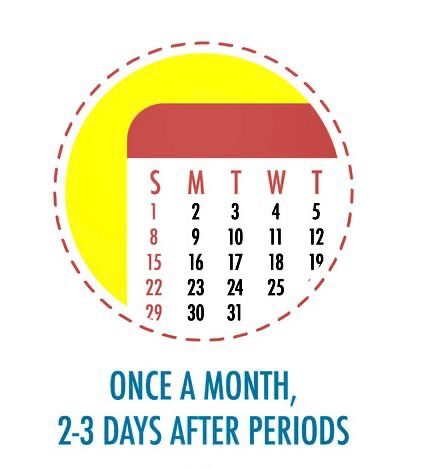
For women who are in their reproductive years or who menstruate, they should self-examine their breasts once a month, ideally 3 to 5 days after their periods start, as breasts are less lumpy during this phase, which makes detection of any lump easier to feel.
For women who have gone through menopause, they can choose any day of the month and should examine on the same day every month.
HOW SHOULD IT BE PERFORMED: STEP-BY-STEP GUIDE
First, begin by looking at your breasts.
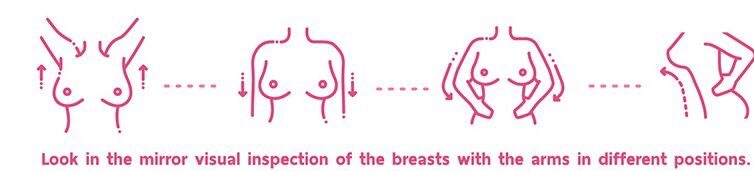
- Undress yourself up to your waist and stand in front of a mirror with your arms by your side.
- Look at your breasts directly into the mirror and note the usual size, shape, and colour of the breast, areola, and nipple.
- Note if both breasts are evenly shaped with no distortion or swelling.
- Note any changes in skin texture, such as dimpling, puckering, indentations, bulging, or skin that looks like an orange peel, any redness of the skin, and skin thickness.
- Look at the nipples if they are at the same level, any nipple inversion.
- Do the same with your arms raised above your head
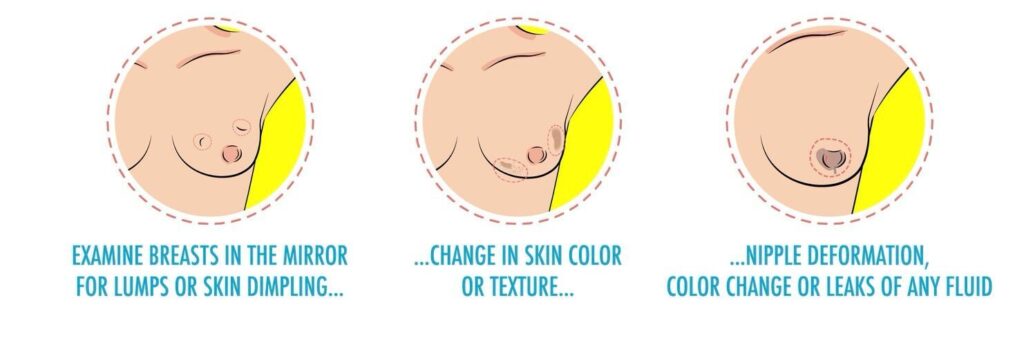
NOW USE YOUR HANDS TO EXAMINE YOUR BREASTS
- Start by lying on your back as it is easier to examine all breast tissue if you are lying down.
- Raise your right hand over your head. Use your left hand to examine your right breast.
- Use the pads of the three middle fingers; note not to use your fingertips, and use a firm, smooth touch to make small, dime-sized circular motions up and down the breast tissue.
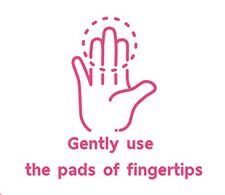
- You can use one of the patterns shown in the diagram to make sure that you are covering all of the breast tissue.
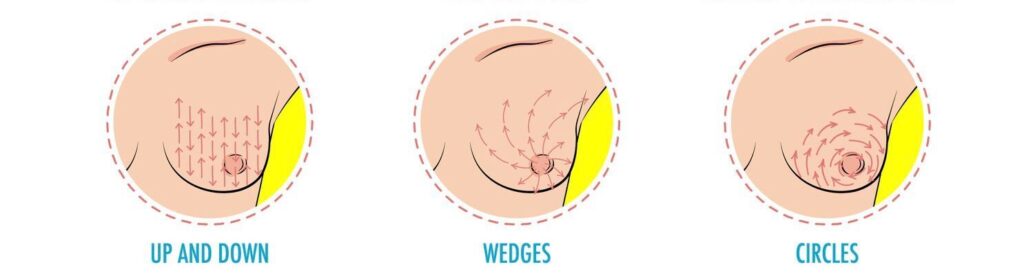
- Cover all four quadrants of the breast as well as your armpits of the same side.
- Feel for any lumps, bumps, or thickened skin.
- Examine up to your collarbones.
- Repeat by placing your left arm over your head and using your right hand to examine the left breast.
- Repeat the above steps in various positions as mentioned below
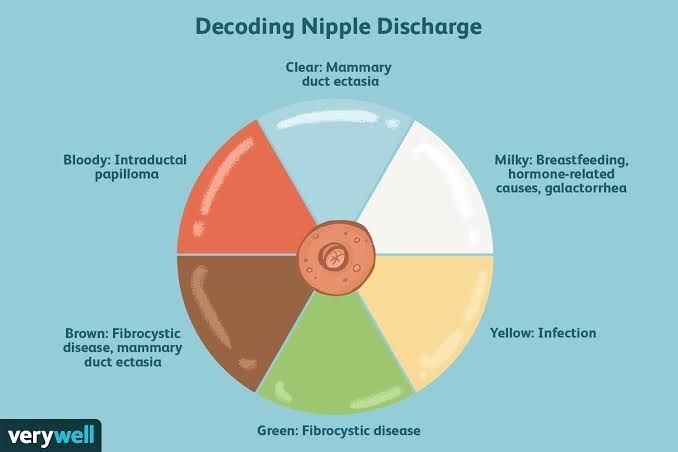
Next, gently squeeze the nipple of both breasts and look for any discharge.
The Breast Exam Technique Most Tutorials Get Wrong
Remember, Your goal is to get used to the feel of your breasts. This will help you to find anything new or different; and in case you find anything not normal there is no need to worry as most of the patients that come to the healthcare providers regarding such concerns usually turnout to be a benign lump or a normal condition but yes getting it confirmed by your doctor is very crucial. It is best to go to a surgeon or to a gynaecologist.
WHAT TO LOOK FOR?
Symptoms to look and feel for when checking your breasts or chest include:
- A lump or swelling in your breast, chest or armpit
- A change in the skin of your breast, such as dimpling (it may look like orange peel) or redness, which may be harder to see on black or brown skin
- A change in size or shape of 1 or both breasts, or either side of your chest – it’s common for breasts to be different sizes, but check for any changes that are not normal for you
- Nipple discharge (if you’re not pregnant or breastfeeding), which may have blood in it
- A change in the shape or look of your nipple, such as it turning inwards (inverted nipple) or a rash on it (it may look like eczema)
- Sores or ulcers on your chest
KNOWING WHAT IS NORMAL
Your breasts may naturally look and feel different:
- At different points in your menstrual cycle, if you have periods
- While you’re pregnant or breastfeeding
- After menopause
COMMON MYTHS
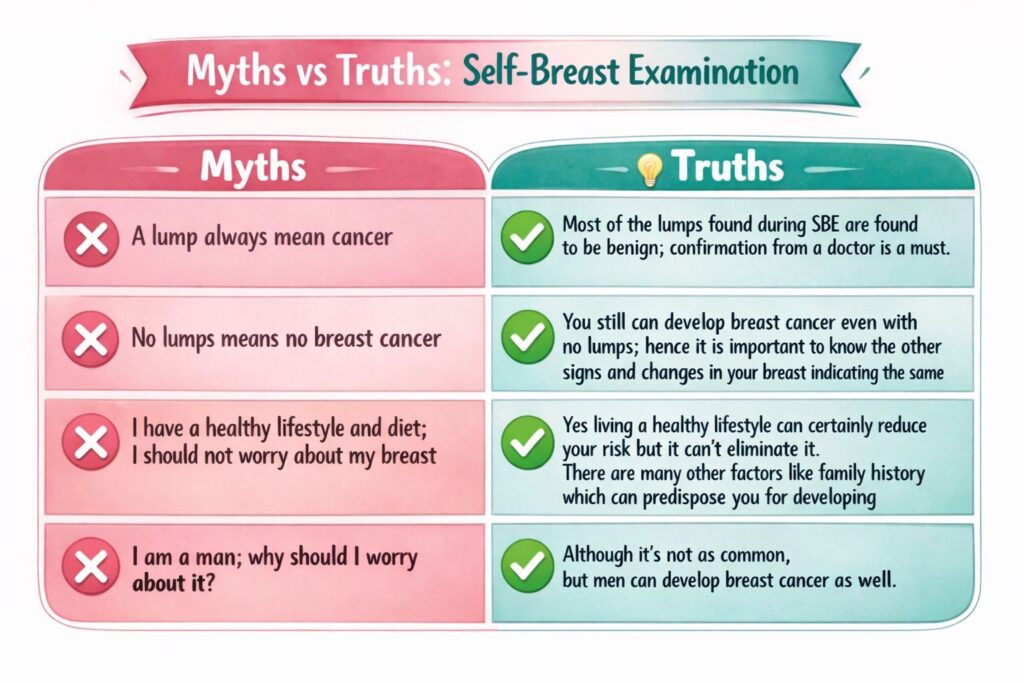
There are a lot of misunderstandings regarding breast examination and some common breast changes hence it’s important to burst them out first:-
WHEN TO CALL A DOCTOR?
The most common sign of breast cancer is a new lump or mass in the breast or underarm. It’s important to have anything unusual checked by a doctor.
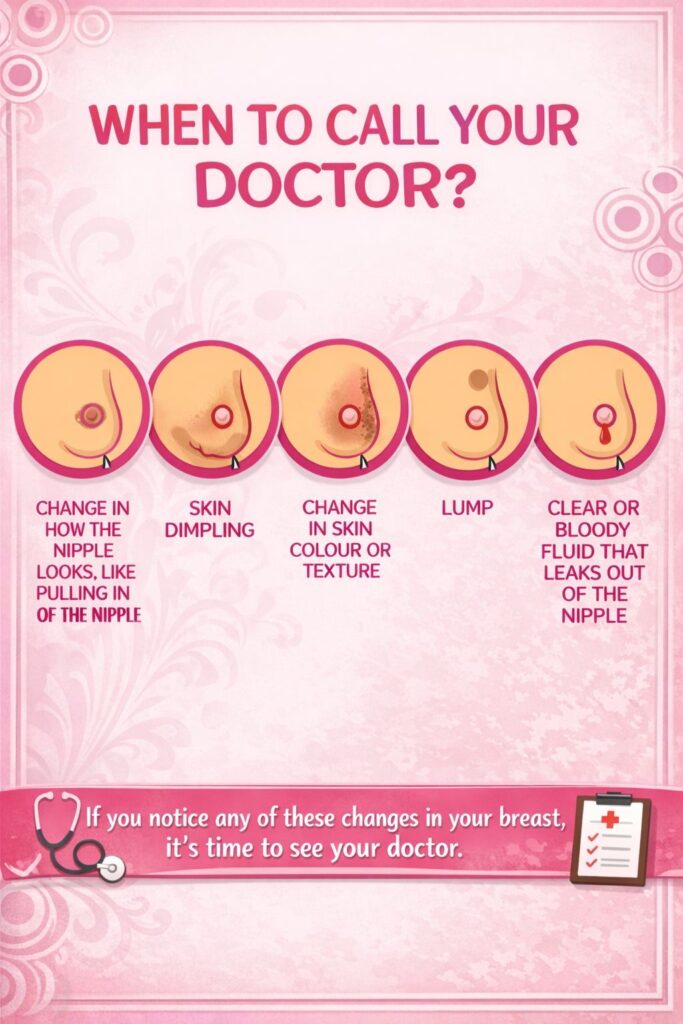
Other signs:
- Swelling of all or part of the breast or in the armpit
- Skin irritation, dimpling or any other skin change
- Breast pain that is not going away
- Nipple pain or the nipple turning inward
- Redness, scaliness or thickening of the nipple or breast skin
- Nipple discharge other than breast
PREVENTION of Breast Cancer
- Limit or stay away from alcohol and smoking

- Get physically active and stay at a healthy weight

- Prolong breastfeeding

- Limit usage of oral contraceptive pills
- Get annual mammography done after 40 years of age
KEY TAKEAWAYS:
Let’s conclude with few take home messages that breast self-awareness is not about fear, panic, or searching for disease, it’s about familiarity, confidence, and care. Those three minutes you give yourself every month are a quiet promise that you are paying attention to your body and respecting the signals it sends you. Most changes turn out to be harmless, but the few that are not can change everything when caught early. So make it a habit, make it personal, and make it non-negotiable. Because sometimes, the simplest actions are the most powerful .
REFERENCES:
● https://www.cancer.gov/types/breast/breast-screening-pdq
● https://pubmed.ncbi.nlm.nih.gov/?term=breast+self+examination
● https://pubmed.ncbi.nlm.nih.gov/?term=breast+self+examination+systematic+review
● https://www.who.int/publications/i/item/WHO-NMH-NMA-17.5
● https://www.cdc.gov/breastcancer/screening/index.htm
● https://www.mayoclinic.org/tests-procedures/breast-exam/in-depth/breast-self-exam/art-20044682
● https://www.hopkinsmedicine.org/health/conditions-and-diseases/breast-self-exam
● https://stanfordhealthcare.org/medical-tests/b/breast-self-exam.html
● https://www.mountsinai.org/health-library/selfcare-instructions/breast-self-examination