

It ’s 2:17 AM.
You promised yourself an early night. Yet here you are, negotiating with yourself for just five more minutes of scrolling, texting, or diving deeper into the seemingly endless rabbit hole you’ve stumbled into. Eventually, frustration wins. The phone goes down, the lights go off, and a desperate thought appears:
“Should I just take melatonin?”
All about the ‘Hormone of Darkness’:
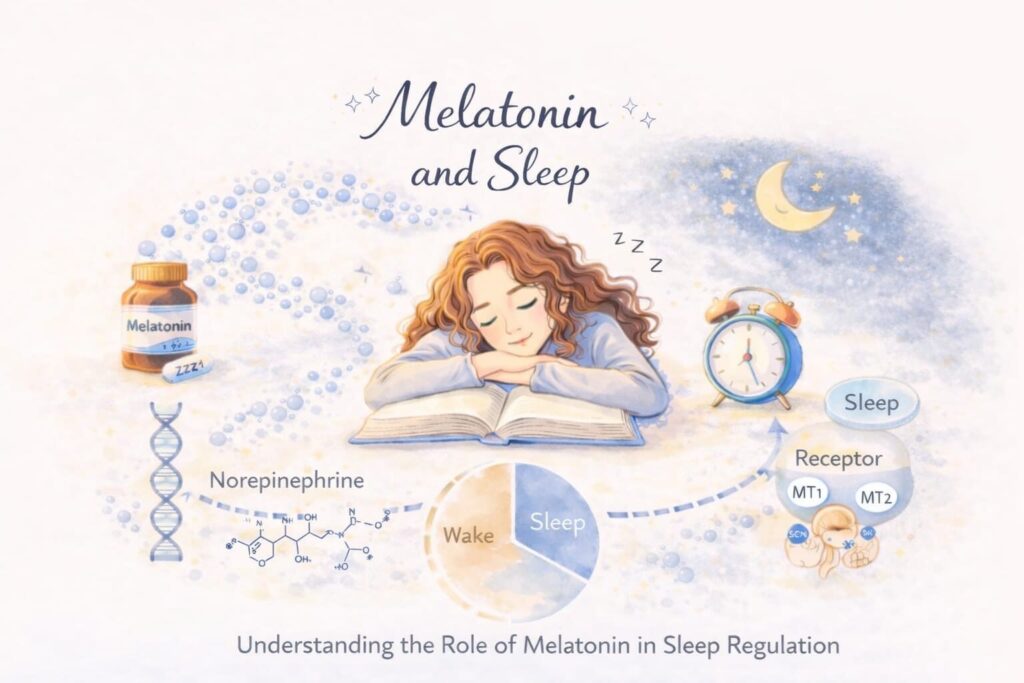
Melatonin, the hormone of darkness, is naturally produced by the pineal gland or the seat of the soul as coined by Renee Descartes. It is a tiny pinecone shaped beauty located at the centre of your brain.
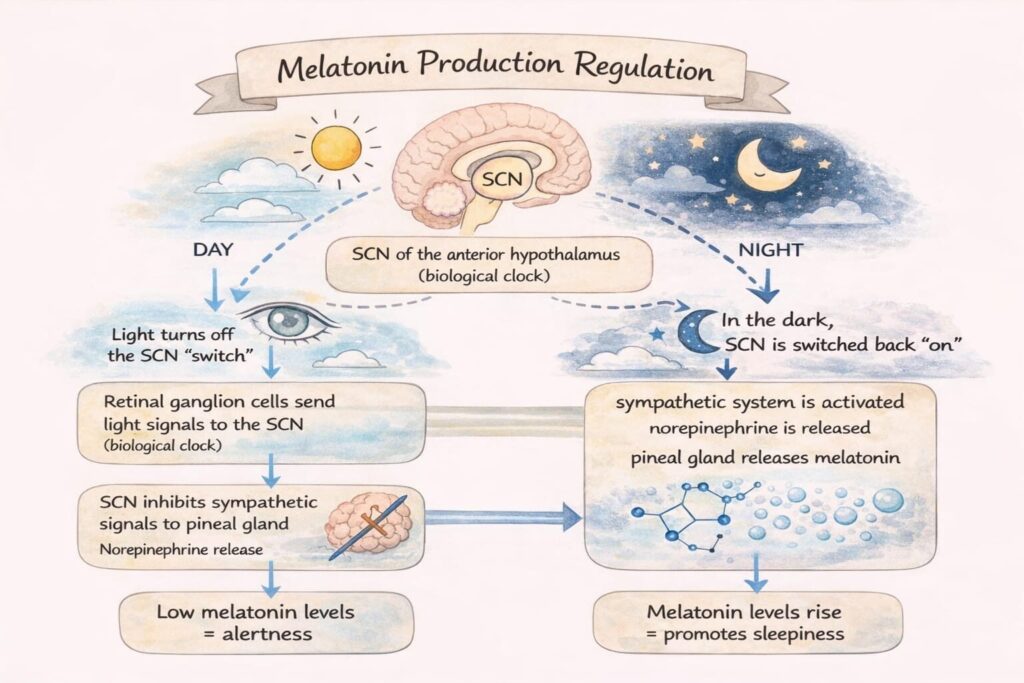
The suprachiasmatic nucleus (SCN) of the anterior hypothalamus, which is a fancy name for our biological clock, essentially regulates melatonin production.
During the day, light entering your eyes sends signals to this clock. In response, it tells the body to stay alert by blocking signals that would otherwise trigger melatonin production.
One of the key messengers involved in this process is norepinephrine. When it is suppressed, the pineal gland does not release much melatonin—helping you stay awake and active.
In stark contrast, at night, when light is no longer present, this inhibition is lifted. Norepinephrine is released, the pineal gland is activated, and melatonin begins to enter the bloodstream.
Think of it like a factory assembly line – each worker flips a switch in sequence, and only when every switch is turned on or off in the right sequence, does the final product move onto the conveyer belt or in this case, the bloodstream.
After these arduous events, melatonin is out in the world, parading itself proudly. So what? You may ask. Now, it acts on melatonin receptors, MT1 and MT2, present in the hypothalamus, the master regulator of key physiological functions including blood pressure, body temperature, blood hormone levels, and energy homeostasis.
- Action on MT1 receptors, expressed in the SCN, causes slowing of neuronal firing, directly inducing sleepiness.
- Action on MT2 receptors, found in the SCN, retina and brain cause the internal resetting of the biological clock.
The Biological clock and all its cogs:
All this started with Mimosa. Mimosa pudica. Back in 1729, the French astronomer Jean-Jacques d’Ortous de Mairan (JDM for short) noticed that the plant folded its leaves when touched—almost as if it knew. But that wasn’t all. It opened in daylight and closed for business at night. Curious, Mr. JDM placed it in complete darkness—and still, it kept time. It was on a schedule. (Sympathies for the baby shrub, but eh, we’ve all been there.)
And just like that, one of the earliest glimpses of the circadian rhythm was born.
This was the grand story of the earliest discovery of the ‘circadian rhythm’.
Like a watch that moves too fast or too slow, the internal clock of every animal needs to be reset everyday. This clock regulates sleep, body temperature and protests every time we skip too many time zones.
The story you just read implies that the circadian rhythm is endogenous, i.e. even without any external stimulus, the clock is still ticking. This means that the clock must be ‘entrainable’ by environmental cues and it sets itself to the correct time. In mammalian systems the most robust synchronising cues or ‘zeitgeber’ — ‘time-givers’ in German — are light and food.
Naturally, this makes one think, “how can I train my master clock?”
Well, spoiler alert, it’s nothing new. Turns out the age old advice still stands and it’s high time we take it seriously.
- Start a regular sleep schedule. The recommended amount of sleep for a healthy adult is no more than seven hours. Wake up at the same time every day, even on weekends. Consistency reinforces the body’s sleep-wake cycle.
- Stick to a regular meal time schedule and watch what you eat and drink. Avoid eating heavy meals within a couple hours of bedtime. Stimulants like nicotine and caffeine can interfere with sleep. And even though alcohol might make you feel sleepy at first, it can disrupt sleep later in the night.
- Limit long daytime naps, especially late in the day. However, night shift workers may benefit from a tiny little cat nap before they have to work. (10-30 minutes)
- Manage your exposure to light. Light is the strongest zeitgeber in our external environment for resetting the sleep-wake cycle. Seeing the sun and touching grass is highly preferred over a bed-rot-doom-scroll situation since artificial light can lower your melatonin levels, making it harder to fall asleep. Other ways to manage this could be to use blue light blocking glasses, screen filters and smartphone apps to dim the light from devices.
- Get out of your house. This might be the most multimodal strategy to set your rhythm well. It gets you exposed to light, physical and social activity. All of which are quintessential to maintain a healthy, stress free lifestyle.
- Stress-bust. Stress and sleep have a two-way relationship: stress makes it harder to sleep, and poor sleep makes it harder to handle stress. Practicing activities like journaling, connecting with friends, playing a sport, listening to music, meditating or even taking a bubble bath after a long, hard day can set your clock right!
Sleep: What really goes on under the hood?
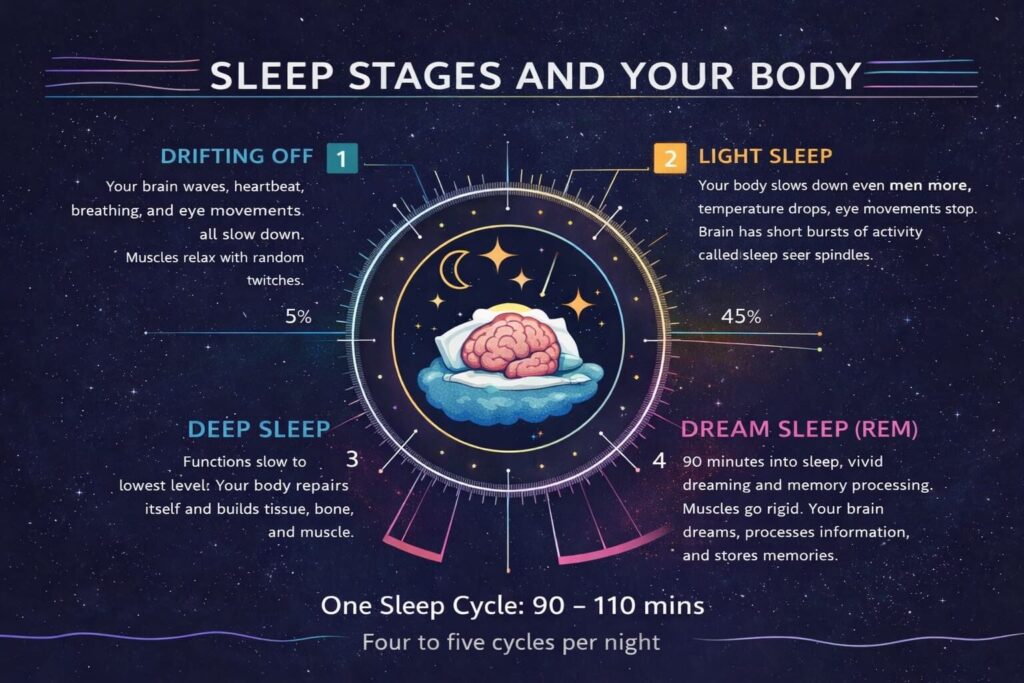
About one-third of your life is spent sleeping. But, all sleep is not the same. During sleep,your brain goes through multiple sleep cycles. One sleep cycle is typically 90-110 minutes long and consists of non-REM and REM (rapid eye movement) sleep. A typical night’s sleep consists of 4 to 5 sleep cycles, with the progression of sleep stages in the following order: N1, N2, N3, N2, REM.
Non-REM sleep comes in 3 stages:
- N1 stage: (5%)
- It is the stage of lightest sleep. It is a transition between the state of wakefulness and sleep.
- It lasts for about 1-5 minutes.
- N2 stage: (45%)
- It is still light sleep, but deeper than N2. Your brain has short bursts of electrical activity during this time.
- It is thought that these bursts of activity are a result of consolidating and processing memories formed while you were awake.
- Lasts for about 25 minutes and lengthens in each successive cycle.
- N3 stage: (25%)
- This is the deepest stage of the sleep cycle. It is the most difficult to awaken from this stage.
- Babies and children need more N3 sleep, the older you get, the lesser of it you need.
- This is the stage where the body performs its restorative functions and strengthens the immune system.
- You need N3 sleep in order to wake up feeling well-rested.
- If someone is aroused from this stage, they tend to have sleep inertia, a state of impaired mental functioning or ‘mental fog’ for 30 minutes- 1 hour.
- REM sleep: (25%)
- The brain waves in this stage are very similar to ones during wakefulness.
- This stage is the one associated with vivid, emotional and memorable dreaming, where your eyes move constantly behind your eyelids.
- The first REM period is the shortest lasting for about 10 minutes, but it progressively increases, each one longer than the last. The final one lasts for about 1 hour.
- You wake up spontaneously from REM sleep in the morning.
Why sleep matters:
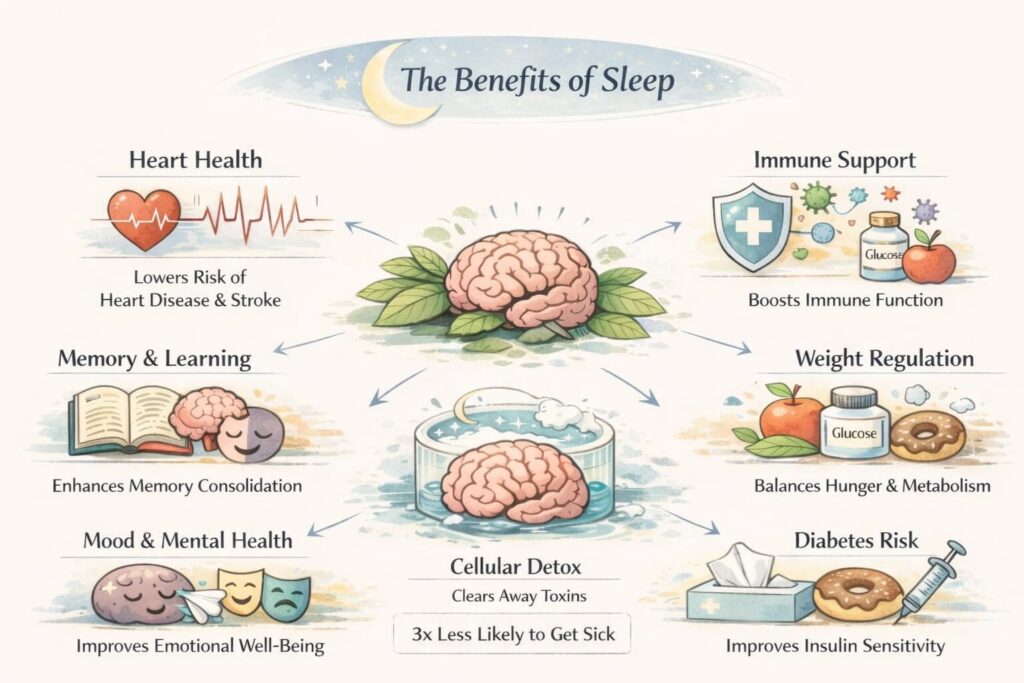
It is no secret that sleep is a vital determinant of well-being throughout life. Much of how you feel during the day depends on what happens while you’re catching some zzzs. As it turns out, something good does happen after 2 AM after all. In those ungodly hours, while you’re fast asleep, your body is quietly working to support healthy brain function and maintain physical health.
- When you enter non-REM sleep, the parasympathetic nervous system takes the helm. It is a more lenient version of the tight ship that runs your body during wakefulness and REM sleep. Heart rate slows, blood pressure falls, and the cardiovascular system finally gets a chance to rest as it no longer has to work as hard. Over time, people who do not get enough sleep may face a higher risk of coronary heart disease, high blood pressure, obesity, and stroke.
- During sleep, the body produces protective cytokines, increases T-cell efficiency, and consolidates the memory of our adaptive immune system. All this ensures that our body is able to fight off specific pathogens lurking in the vicinity. It has been found that people with long term sleep deprivation are three times more likely to catch a common cold than people who get eight hours or more of sleep every night.
- Quality sleep is a crucial period for memory consolidation, cognitive restoration, and detoxification. During this time, the neural pathways involved in learning and memory undergo essential maintenance. Much of the version of yourself that you present to the world—your emotional stability, decision-making ability, and even your social battery—ultimately depends on how well this nightly housekeeping process is carried out. It seems all those heroic all-nighters were only paving the way for brain fog.
- Sleep also has an effect on the way your body handles metabolism. Sleep keeps ghrelin (a hunger promoting hormone) low and leptin (a satiety hormone) high, thus regulating appetite. Sleep deprivation can also impair insulin sensitivity, making it difficult for the body to process sugar and fat effectively, leading to weight gain and diabetes risk.
- Few phrases illustrate the link between sleep quality and mental state better than “woke up on the wrong side of the bed.” Sufficient REM sleep facilitates the brain’s processing of emotional information. A lack of which impairs an area of the brain called the prefrontal cortex. So the next time you feel irritable or unusually short-fused, take a moment to think about the kind of sleep you had the night before.
Despite being a fundamental biological need, many individuals experience poor quality sleep, which has far reaching consequences on our mental and physical health.
59% of Indians get less than 6 hours of sleep, with many relying on weekend recovery or afternoon naps.Roughly 18–33% of adults suffer from insomnia (difficulty initiating or maintaining sleep).
Unfortunately, many people with sleep disorders remain undiagnosed and untreated.
When can you consider taking melatonin and is it really required?
Recently, there has been a rise in the number of people, particularly young adults, relying on melatonin supplements as a seemingly mild and harmless fix to their sleep problems. Sleep specialists, however, emphasize that melatonin should ideally be used as a short-term aid, taken at the lowest effective dose while people work on improving sleep routines, reducing screen exposure, and managing light at night.
You can consider taking low-dose melatonin in the following conditions:
- Short-term insomnia (less than 4 weeks): Research shows that melatonin might decrease the time required to fall asleep, slightly. This might work better for older adults (>55 years) since they are melatonin deficient.
- Delayed sleep phase syndrome: Delayed sleep phase syndrome (DSPS) is a condition that affects your ability to fall asleep and wake up on time. The delay in your sleep schedule is off by at least two hours and there is severe daytime dysfunction.
- Circadian rhythm disorders in the blind
- Jet-lag: Melatonin can be used to alleviate symptoms like daytime sleepiness and low alertness.
- Shift work: It will help you sleep when you are transitioning between work shifts by telling the brain to sleep at a different time than normal.
- REM sleep behaviour disorder: It is characterised by the loss of muscle paralysis which normally occurs in REM sleep. This can cause you to physically act out your dreams, including shouting, screaming, punching, and grabbing.
Myths debunked:
- MYTH 1: Long term use of melatonin is detrimental to health:
While many articles on the internet admonish the long term use of melatonin with vague suggestions of adverse outcomes, there has been no research backing these claims.
- MYTH 2: Your brain will become desensitized to melatonin:
Melatonin has no withdrawal symptoms and rebound potential, meaning users of melatonin will rarely have adverse effects after they stop using it. Some studies reveal that the effectiveness of melatonin on sleep parameters might decrease after 6-12 months of continuous use, but this can be handled by simply taking a short break (or reducing the dosage temporarily) from melatonin.
- MYTH 3: When taking melatonin, more is better:
Even though research indicates that the effect of melatonin is dose dependent, it doesn’t automatically mean that more is better. Since melatonin levels are influenced by factors such as genetics, age, diet, lifestyle, and medication use, the optimal dosage can vary significantly from person to person.
How to use melatonin?
- Dosage: Typically, the dose ranges from 0.5 to 10 milligrams. Current research primarily supports oral formulations. Experts recommend starting with a lower dose, 0.5 to 1 mg, 1 to 2 hours before bed time.
This can help you gauge how your body reacts to it, in terms of effectiveness and risk of potential side effects like grogginess or vivid dreams.
If needed, the dose can be increased gradually by 1 mg. However, most adults would meet their requirements within 3 mg for short term problems like insomnia or jet-lag.
- Dosage forms: Melatonin is available in a wide variety of dosage forms in India. Tablets, capsules, chewable gummies and syrups. Alternative forms such as sprays, patches, or topical preparations lack robust evidence for comparable effectiveness.
Possible side-effects:
Melatonin taken orally, in safe amounts, is generally safe. It can, however, cause certain side effects:
- Headache
- Dizziness
- Nausea
- Drowsiness
- Short-lasting feeling of depression
- Mild tremor
- Mild anxiety
- Irritability
- Abdominal cramps
- Reduced alertness, confusion, disorientation
Since melatonin can cause daytime drowsiness, it is not advisable to drive or operate heavy machinery within five hours of taking the supplement.
Who should not be taking melatonin?
- People diagnosed with autoimmune disorders like rheumatoid arthritis, or post organ transplant
- Women who are pregnant or are trying to have a baby
- People with liver or kidney dysfunction
- People with nightmare disorder, post-traumatic stress disorder
- Individuals with Depression
- Individuals with Dementia
- Individuals with other chronic conditions on medications like:
- Blood thinners/ Anticoagulants
- Diabetes medications
- Anti-hypertensives (Blood pressure medications)
- Immunosuppressants
- Seizure medications
Special caution is advised if you identify yourself in the mentioned categories. A consultation with your health care provider would be the best approach.
How is melatonin different from your average sleeping pills?
Melatonin acts as a ‘dose of sunset’, signalling to the body that it’s time to sleep rather than forcing sedation. Melatonin reduces sleep latency (the time spent staring at your ceiling while trying to fall asleep!) by only 6 minutes, which is not a lot considering that some people take approximately 45 minutes to fall asleep, sometimes an hour, or more. Melatonin affects when you fall asleep, not how quickly.
While most prescription sleeping pills are sedatives that are used for a short term (two weeks to two months depending on your doctor’s advice).
Using them for longer, leads to the development of tolerance (their dosage needs to be increased for them to work). Some sleeping pills can cause a hangover the morning after taking them. These medications tend to have longer “half lives,” which means they stay in your system longer. Melatonin has low potential for addiction and withdrawal.
Conclusion:
So before you crown that tiny pill the undisputed ruler of your nighttime routine, remember that melatonin was never meant to replace good sleep habits – it’s more of a gentle nudge than a magic off-switch. The real groundwork still happens earlier in the evening: dimming the lights, stepping away from glowing screens, keeping a consistent sleep schedule, and letting your body do what it already knows how to do – produce its own melatonin.
And if sleep continues to play hard to get night after night, it may be time to bring in someone with a bit more authority than your 2 AM decision-making skills.
A doctor can help figure out what’s really going on beneath the restless nights.
As mentioned before, melatonin can interact with some medications which you might already be taking, cause adverse effects and mask certain symptoms of preexisting conditions. This, therefore, makes it quintessential to check with your doctor before starting this little experiment. This becomes especially important for children, teenagers, pregnant or breastfeeding women and older adults.
You can start by consulting a primary care physician (general doctor) to evaluate your symptoms and provide referrals. For specialized care, see a sleep medicine specialist, who may be a neurologist, pulmonologist, or psychiatrist.
Until then, think of melatonin less as a nightly ritual and more as a temporary guide—helpful when needed, but not the captain of the ship.