

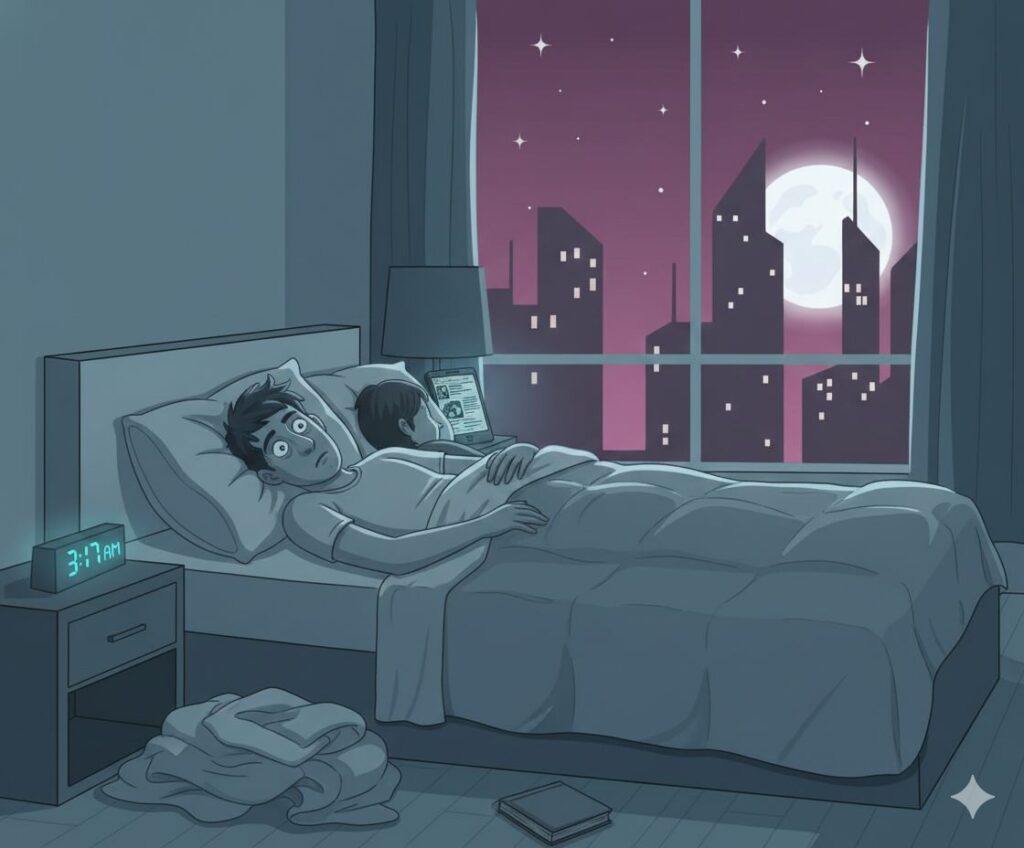
“ I’m tired, but can’t I fall asleep? “
If you’re reading this, you may be curious about insomnia or wondering why sleep feels difficult even after a long, tiring day. Trouble sleeping is common and can affect people of all ages, including adults, teenagers, and children.
This article explains what insomnia is, how it differs from normal sleep variations, who may be more likely to experience it, and the ways it can be managed or improved over time.
What is insomnia?
Insomnia refers to ongoing difficulty with falling asleep, staying asleep, waking too early, or feeling that sleep is not restful. Around 30% of adults report at least one symptom related to insomnia. When sleep difficulties also interfere with daytime functioning, the number is closer to 10%. Using stricter clinical criteria, the prevalence is estimated at about 6%.
Is it insomnia or just a natural sleep pattern?
Sleep needs and habits vary widely from person to person, and many differences are considered normal.
Examples include:
- Early sleepers and risers: Some people naturally feel tired earlier and wake up early.
- Late sleepers: Others prefer going to bed and waking up later.
- Short sleepers: Some people function well on fewer hours of sleep, possibly due to genetic factors.
- Learned sleep patterns: Work, environment, or past experiences can influence how lightly or deeply someone sleeps.
- Changes with age: Sleep needs shift across the lifespan. While infants require much more sleep, adults typically need seven to nine hours.
Having a different sleep pattern does not automatically mean someone has insomnia.
Who is more likely to experience insomnia?
Insomnia does not have a single cause. Instead, it often results from a combination of factors, such as:
- Family history: Sleep patterns and sleep difficulties can run in families.
- Brain activity: Differences in brain activity or chemistry may affect sleep regulation.
- Medical conditions: Short-term illnesses or long-term health conditions can interfere with sleep.
- Mental health conditions: Anxiety, depression, and other conditions are commonly linked with chronic insomnia.
- Stress and life circumstances: Ongoing stress or difficult situations may contribute to sleep problems.
- Changes in routine: Travel, shift work, or changes in environment can temporarily disrupt sleep.
- Sleep habits: Caffeine intake, naps, screen use, and irregular sleep schedules all play a role.
Certain groups are also more likely to experience insomnia:
- Women: Hormonal changes during menstruation, pregnancy, and menopause can affect sleep.
- Older adults: Changes in health, medications, and sleep structure make insomnia more common with age.
How long does insomnia last?
- Short-term insomnia: Lasts less than three months.
- Chronic insomnia: Persists for three months or longer.
The duration depends on underlying causes and how they are addressed.
Common symptoms
Insomnia may involve:
- Difficulty falling asleep
- Waking up during the night
- Waking earlier than intended
- Daytime tiredness or low energy
- Irritability, low mood, or anxiety
- Difficulty concentrating or remembering
- Increased concern or worry about sleep
How insomnia is evaluated
There is no single test for insomnia. A healthcare provider usually begins with a medical and sleep history, asking about sleep habits, daily routines, stress levels, and overall health.
You may be asked to keep a sleep diary for one to two weeks, recording bedtime, wake time, nighttime awakenings, and caffeine or alcohol intake.
In some cases, tests such as a sleep study or actigraphy may be used to rule out other sleep disorders.
Insomnia and aging
As people age, sleep often becomes lighter and more easily disrupted. Changes in activity level, health conditions, medications, and sleep timing can all affect sleep quality. While sleep patterns change, older adults generally still need a similar amount of sleep as younger adults.
Insomnia in children and teenagers
Sleep difficulties can also occur in younger age groups. Many teens naturally have delayed sleep cycles, meaning they feel alert later at night and struggle with early mornings. This does not always indicate insomnia.
Reducing the impact of insomnia
Good sleep habits can help prevent or reduce sleep problems. Helpful practices include:
- Keeping the bedroom quiet, cool, and comfortable
- Reducing light exposure before bedtime
- Maintaining a consistent sleep schedule
- Limiting naps and late-night screen use
- Creating a calming pre-sleep routine
Managing insomnia
Lifestyle changes often play an important role:
- Regular physical activity: Moderate exercise supports better sleep.
- Reducing smoking: Nicotine can interfere with sleep quality.
- Mindful eating: Avoid heavy meals, caffeine, alcohol, and spicy foods close to bedtime.
- Balanced nutrition: Foods rich in fiber, protein, magnesium, and healthy fats may support overall sleep health.
Stress-management techniques such as reading, gentle stretching, meditation, or listening to calming music may also be helpful.
Cognitive Behavioral Therapy for Insomnia (CBT-I)
CBT-I is often recommended as a first-line treatment for chronic insomnia. It typically lasts six to eight weeks and focuses on:
- Reducing anxiety around sleep
- Improving sleep habits
- Strengthening the association between bed and sleep
- Encouraging consistent sleep-wake schedules
CBT-I can be done in person or through online programs.
Home remedies and complementary approaches
Some people explore supplements or practices such as melatonin, meditation, yoga, or acupuncture. Evidence varies, and it’s important to discuss these options with a healthcare provider, especially if you take other medications.
Living day to day with insomnia
If insomnia persists:
- Stay consistent with treatment strategies
- Address underlying health or stress-related factors
- Speak with a healthcare provider if symptoms worsen
- Be patient, as improvement often happens gradually
A gentle takeway-
Insomnia disrupts normal sleep patterns, but it does not stop your strength or long-term potential. Periods of wakefulness are not signs of failure; they reflect an active nervous system responding to stress, habits, or biological factors. Recovery often occurs gradually as the brain adapts to a healthy sleep regulation. Research shows that with consistent routines, cognitive and behavioral strategies, and appropriate medical support when needed, sleep efficiency improves and rest can return. Until then, it is important to recognize that insomnia is a common, treatable condition—you are not broken, you are not alone, and this phase is temporary.