

MICHAEL JACKSON , AMITABH BACHCHAN, ASTHA SHAH these are some of the very famous personalities you have heard of , but do you know they have vitiligo?! That’s surprising isn’t it!
I am sure that many of you guys , while having a walk in the garden, or in the workplace, or at any function, have seen or met a few people with certain white patches around their face or hands or other body parts and thought, “Eww, they look ugly and scary. I better die than look like that.” Will they ever get married? And sometimes we have even laughed at them for the way they look . But have you ever wondered what those white patches are and why they occur? Let’s break it down.
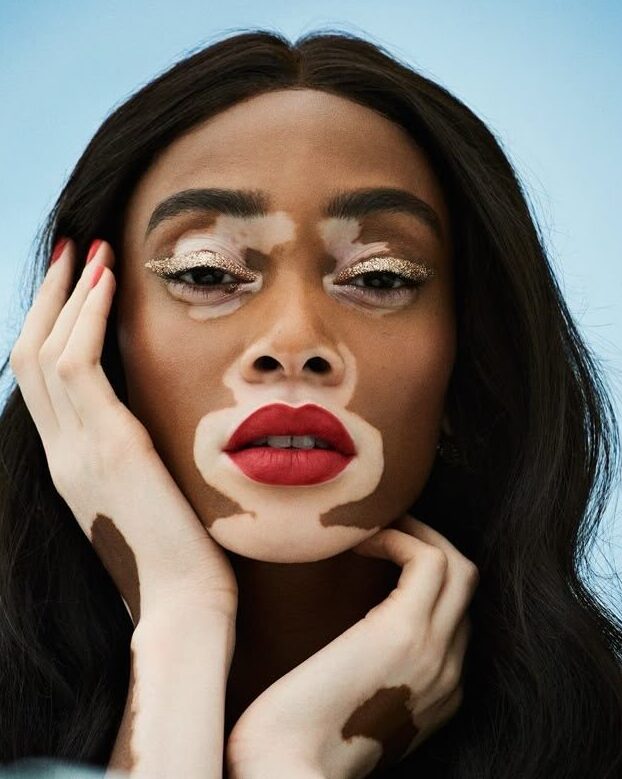
What is vitiligo?
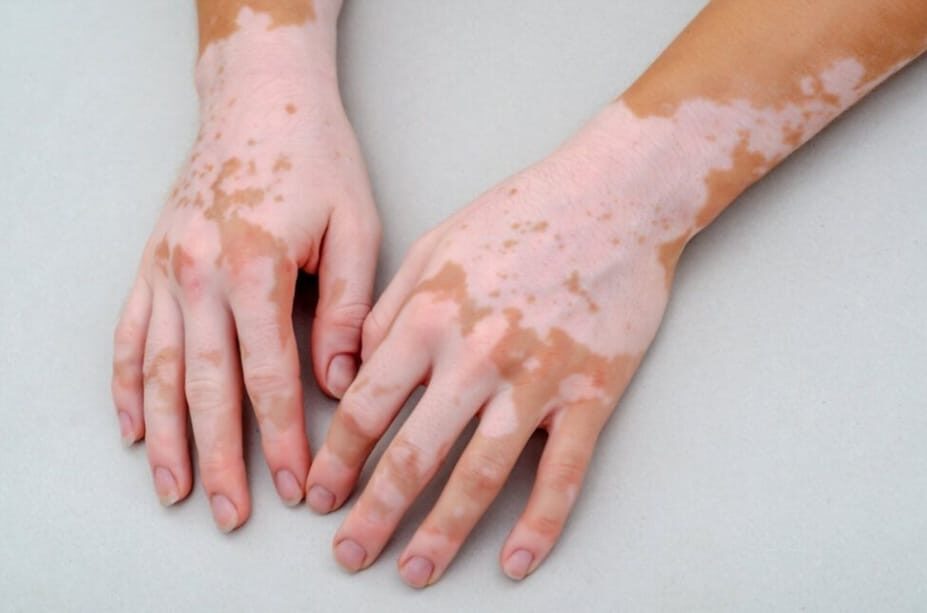
The white patches that we are mentioning here are vitiligo, which is an acquired skin disorder . So basically, there are a few cells in our body called pigmentation cells or melanocytes that give our skin the color, be it dusky , fair, etc. In this disease, there will be an absence of such cells, and hence that area will become white and appear as patches to us.
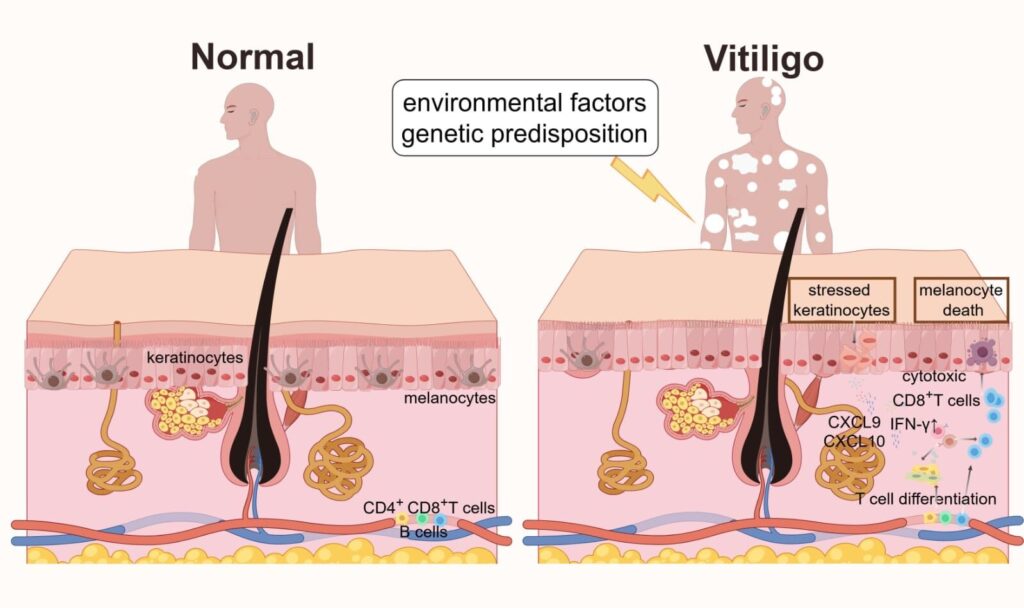
Why and how does it occur?
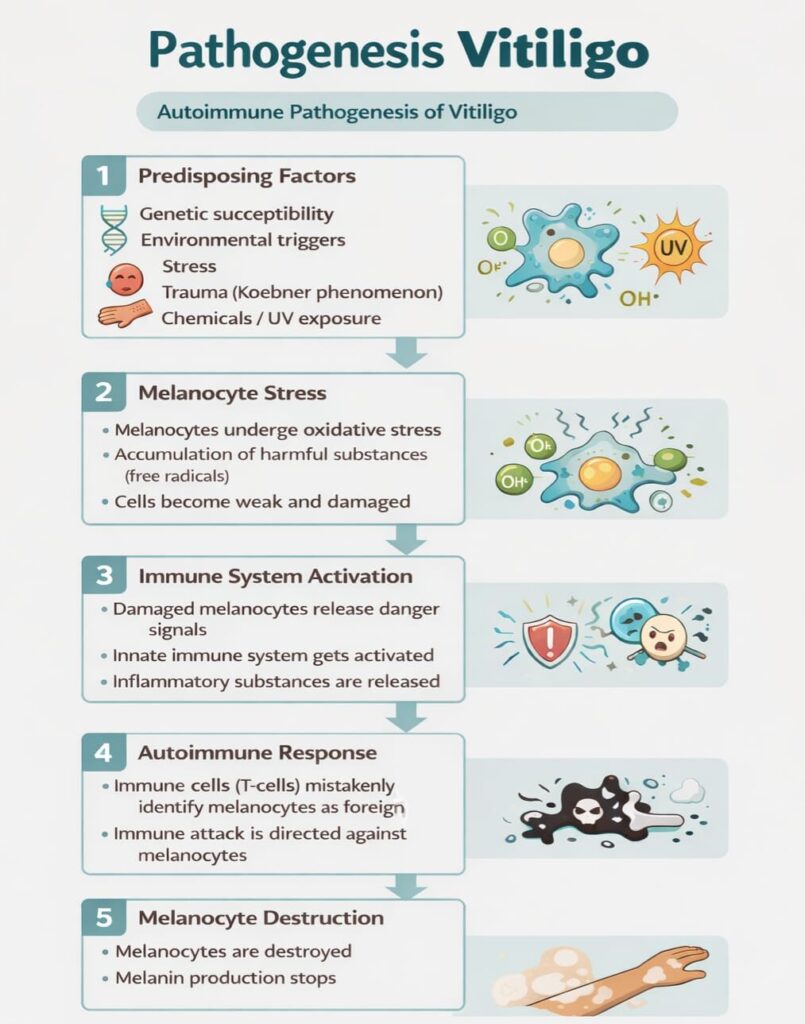
Nowadays, vitiligo has become very common as we see many people having it . But still, the exact cause or its origin is not known. But not to worry because various theories have been proposed to understand how it occurs. Vitiligo is an acquired autoimmune condition, which means that our own body is destroying our melanocytes due to various reasons. Let me put it in a flowchart manner for better understanding.
How does vitiligo start ?
Vitiligo usually starts as minute white patches which can eventually progress and cover different parts of the body. It typically starts in the areas of lips, hands, forearms, feet, or legs and sometimes covers the entire surface of the body, including eyes and hair. The affected skin in some people will be very small and localised, whereas in some people, it will spread and start covering a larger area.
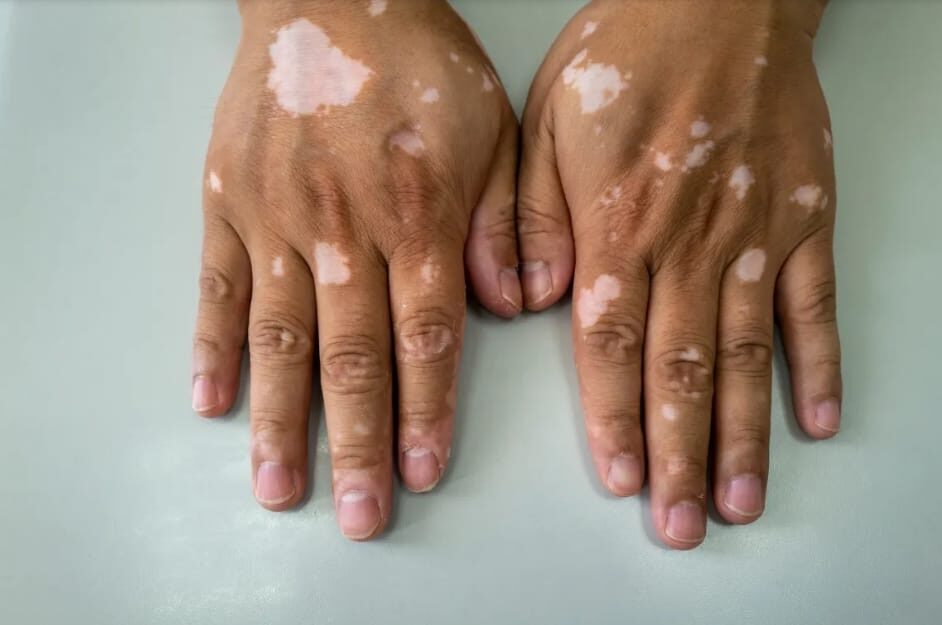
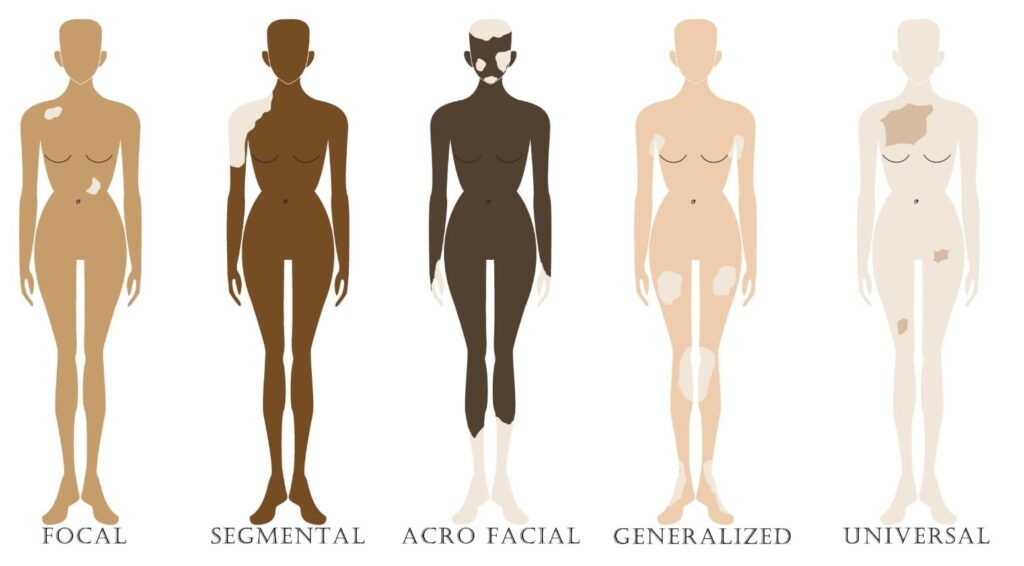
Types of vitiligo
1. Generalised vitiligo: also known as non segmental vitiligo is the most common pattern where white patches appear symmetrical on both sides of the body. They appear in a few areas and usually progress to more surface of the body though rate of progress depends on the patients.
2. Segmental vitiligo: the white patches appear on only one side of the body . This is usually more common in children.
3. Focal vitiligo: here the white patches appear in one or two areas initially but may progress to become generalised type.
4. Acrofacial vitiligo: it’s also known as lips tip vitiligo whether white patches develop only one the lips and finger tips.
5. Universal vitiligo : it’s the rarest form where the entire body is covered with white patches.
Does it occur in all individuals?
Geographically, prevalence rates are greatest in Africa and India. Incidence in the Indian subcontinent has the highest proportion of 9.98% followed by Nigeria 2.8% . According to various studies in India, vitiligo prevalence among dermatology outpatients ranges between 0.25-4% with states of Gujarat and Rajasthan having maximum frequency of 8.8% . There are certain risk factors for people to develop vitiligo some of them include family history, monozygotic twins,autoimmune diseases like thyroid disease,type 1 diabetes , pernicious anemia, Addison disease etc increased stress be it emotional or psychological.
Interesting Facts about vitiligo!
1. It’s an acquired autoimmune skin disorder
2. It is not associated with certain food combinations like curd and egg , fish and curd etc
3. It’s not a punishment given by god
4. It is not a contagious and communicable disease which spreads on touching the patients.
5. There is no cure for vitiligo but the white patches can be reduced through various treatment modalities.
6. It is not a deadly disease in fact it protects the patients from skin cancers like melanoma.
What do vitiligo patients feel like?
Though vitiligo is like some other diseases, its impact on society and people is way different. The world health organization defines health not merely as the absence of disease but as a state of complete physical, mental and social well being. When viewed through this , it becomes evident that more patients living with vitiligo experience psychological and social distress.
Through conversations with several individuals with vitiligo, I have come to understand the silent struggles they undergo. Many of them hesitate to step into public places like shopping malls ,theater, any marriages, or workplace etc , or openly express their opinions and ideas or give any advice, due to a persistent fear of judgement. Their confidence is often vanished , not by the disease itself but by the way society sees them. They are frequently held back in decision making,offered very few opportunities in the workplace and denied promotions despite their talent,competence, skills,and professionalism. This raises an important question: is it fair to judge an individual based on their appearance rather than knowledge and ability? The answer’s clearly NO.
Vitiligo patients often feel like this because society has clearly misjudged them and cornered them. Let me give an example : for modeling, be it male or female we expect them to have a clear skin with no marks or scars and here’s where vitiligo patients are cut off usually just because of their coloured skin for which they are not even responsible. Yet this is something we can change about vitiligo, showing empathy, boosting self-confidence among the affected individuals and encouraging them to participate openly in the society rather than going into isolation and holding themselves back .

What does society think about vitiligo?
The way society thinks about vitiligo and treats the vitiligo is deeply rooted in long standing myths and misconceptions. Many of us have grown up hearing elders warn against eating certain food combinations as mentioned above ,we have also heard people thinking and considering vitiligo as some punishment given by god due the sins he or she commited.These narratives create fear from childhood, portraying the condition as something “scary” , socially unacceptable, and hence people isolate themselves installing a subconscious fear of being an outcast , which later manifests as discrimination.
There is also a clear discrimination seen in gender . Society doesn’t concern itself much about vitiligo in men compared to women . This increases the stress levels in females more. In females the work opportunities, marriage proposals are rejected because of the way they look different in vitiligo. It feels wrong and really bad for people with vitiligo who are suffering because of society and hence it’s important that society is properly educated about vitiligo as a medical condition which is either autoimmune or sometimes maybe genetic, free from dietary myths and food taboos. People must be taught to abandon food taboos and instead adopt a scientific understanding. More importantly, individuals with vitiligo should be supported , encouraged and accepted- not cornered . Addressing these misconceptions is not just a medical responsibility but a social one, and it is essential for building progressive,mentally healthy nation.

Is there any treatment available?
Since vitiligo does not cause any harm to our body as such few patients don’t approach any dermatologist and leave it. Few people approach the doctor due to shame faced in the society. As mentioned earlier vitiligo has no cure , if a person has vitiligo it will be present till their last moments but the number of white patches can be reduced by phototherapy or steroids etc . There is also an option of surgical correction by skin graftings. Nowadays special makeup is available for vitiligo people so that they can hide the patches and move around with confidence.
Vitiligo patients should avoid
1. Mental and physical stress.
2. NSAIDS like combiflam, ibubrufen etc
3. Oral contraceptive pills for females
4. Sea swimming and swimming pool ( chlorine water)
5. Avoid sunlight therapy
Conclusion
Vitiligo can be considered as a condition rather than a disease as it does not harm the body. You may have heard of Winnie Harlow if not , to mention she is a very famous international model with vitiligo . She has become an inspiration to many of the individuals with vitiligo, especially females, to stand for themselves and follow their dreams. We the genz being the future of India should make sure that vitiligo patients should not be discriminated against or held back in any fields instead support them and encourage them to fulfill their dreams.
People with vitiligo, you need not be scared or worried about anything , we are there with you , you just have to keep in mind that even you are a normal human and are beautiful the way you are . One thing to mention here is a saying “beauty is not the face , it’s a light in the heart” “ beauty begins the moment you choose yourself and love the way you are.”