
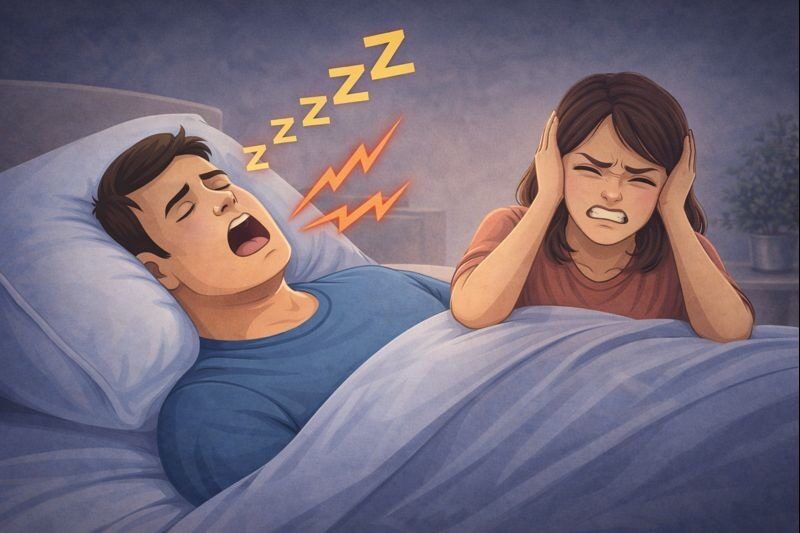
It usually starts as a joke in the family— “You snore too much!”. But night after night, the snoring grows louder, the pauses grow longer, and your mornings begin with headaches, tiredness, and are filled with a constant urge to sleep.
If this sounds familiar, it may point to an underlying sleep disorder called obstructive sleep apnea.
A good night’s sleep is more than just ‘rest’

We often tend to think of sleep as ‘shutting off our minds’ and relaxing after a long day of work. In reality, sleep is a complex biological process that plays a pivotal role in the normal functioning of your body. In addition to keeping your heart healthy and your blood pressure in check, it regulates your metabolism. Poor sleep impairs your ability to focus and think clearly, and affects your mood and memory. Moreover, the sleepiness resulting from poor sleep increases your risk of getting into accidents in your daily life.
Hence, sleep disorders can be potentially dangerous when left untreated and must be addressed.
So, what is obstructive sleep apnea?
Obstructive sleep apnea (OSA) is a common sleep-related breathing disorder in which a person repeatedly stops and starts breathing while they sleep. These pauses in breathing are called ‘apneas’.
Are you at risk?
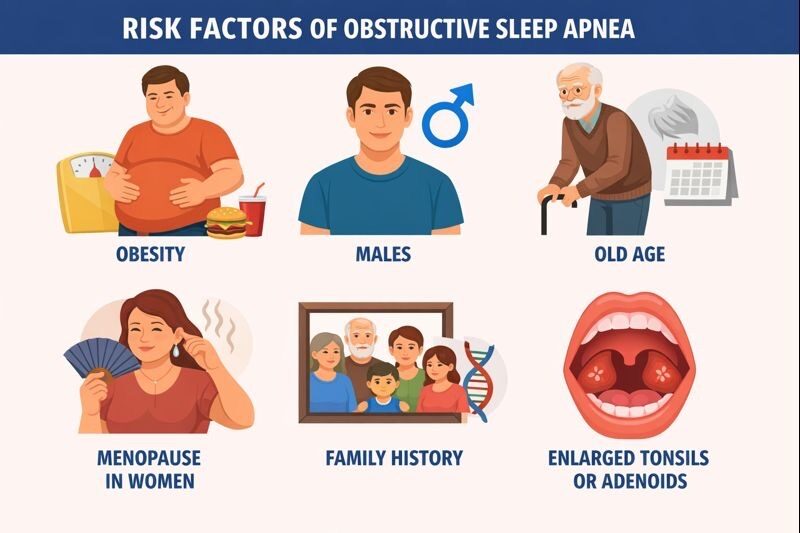
There are certain factors that increase your risk of developing OSA. These are:
- Obesity: Being overweight is the most significant risk factor for OSA. When fat accumulates around your upper airway, the airway becomes narrower and breathing is obstructed.
- Age: OSA is more likely to develop in older age.
- In men: Men are about 2 times more likely to develop OSA than women.
- Genetics: If any of your close blood relatives have OSA, your risk is significantly greater, as genes determine the shape and size of your face, jaw, skull, etc. Some genetic conditions like Down’s syndrome are also linked to OSA.
- Menopause in women: After menopause, there is a steep decline in a woman’s sex hormones, which puts them at greater risk of developing OSA.
- Narrowed airway: Enlarged tonsils or adenoids can obstruct the airway, which is a common cause of OSA in children.
- Other medical conditions: OSA is commonly seen in individuals with diabetes mellitus, hypertension, atrial fibrillation, acromegaly, and hypothyroidism.
How common is OSA?
Obstructive sleep apnea is actually more common than you think. According to a recent study, approximately 11% of Indian adults suffer from OSA. It is more common in males— about 13%, while fewer females (about 5%) are affected by it. Based on this data, approximately 104 million Indian adults of working age have OSA, of which 47 million suffer from moderate-to-severe OSA.
In addition, there has been an increase in the number of children suffering from obstructive sleep apnea.
Studies show that it is seen in about 9.6% of Indian children. It highly affects the child’s academic performance and behaviour.
How to know if you have OSA?
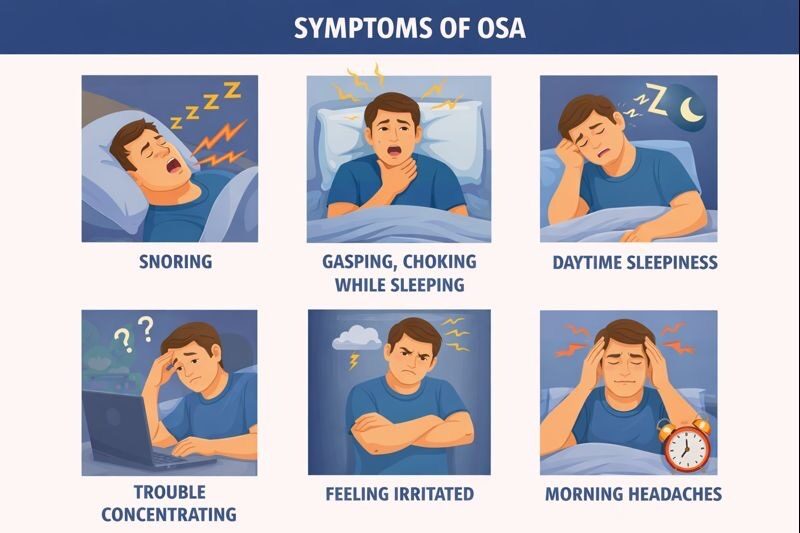
Although only a doctor can confirm the diagnosis, here are some symptoms you should look out for.
At night:
- Loud snoring— It is the most common symptom of OSA.
- Gasping or snorting in your sleep, often noticed by others in your house.
- Waking up frequently in the night.
- Needing to urinate often.
- Feeling a burning sensation in the lower part of your chest (nocturnal heartburn).
In the daytime:
- Excessive sleepiness or fatigue during the day.
- Having difficulty concentrating.
- Involuntarily dozing off.
- Feeling overly irritated and moody.
- Experiencing morning headaches.
- Having a dry mouth.
What happens in your body when you have OSA?
Normally, when you sleep, the muscles of your throat relax a little. However, the airway remains wide enough for you to breathe properly.
In OSA, your airway tends to collapse repeatedly during sleep, which leads to insufficient air reaching your lungs. When this happens, the brain sends an alarm to wake you up briefly to reopen the airway. The awakening is so brief you won’t remember it, but it repeats several times throughout the night making it hard for you to get any deep, restful sleep.
Hence you feel sleepy and tired during the day.
| Normal sleep | Obstructive sleep apnea | |
| Airway | The airway remains open. | The airway collapses and narrows repeatedly. |
| Breathing | Regular breathing without pauses. | Repeated pauses in breathing. |
| Snoring | May or may not occur (Is steady if occurs). | Heavy snoring followed by sudden pauses. Sudden loud gasps and snorts. |
| Sleep quality | Refreshing sleep without frequent interruptions. | Poor sleep with frequent interruptions. |
What happens during obstructive sleep apnea?
Can you prevent OSA?
There are some lifestyle modifications you can make to reduce your chances of developing obstructive sleep apnea.
The first change can be eating a nutritious and balanced diet. Make sure to pair your carbs with proteins, vitamins and minerals, and healthy fats. Avoid smoking and drinking alchohol, especially before bed. Regular exercise is another positive step towards maintaining a healthy weight.
Along with these, it’s important to manage existing health conditions such as high blood pressure, high cholesterol and diabetes.
Management and treatment
Those with mild form of OSA can often be treated without surgery. In severe OSA, surgery may be needed.
- Nonsurgical methods:
- Lifestyle modifications: This includes reducing weight by eating balanced meals and exercising regularly. Smoking and drinking alchohol must be avoided.
- Sleep position: Individuals with OSA are advised to sleep on their side instead of on their back.
- Intraoral devices: Certain devices like MAD (mandible advancement device) and TRD (tongue retention device) help relieve snoring and prevent pauses in breathing during sleep.
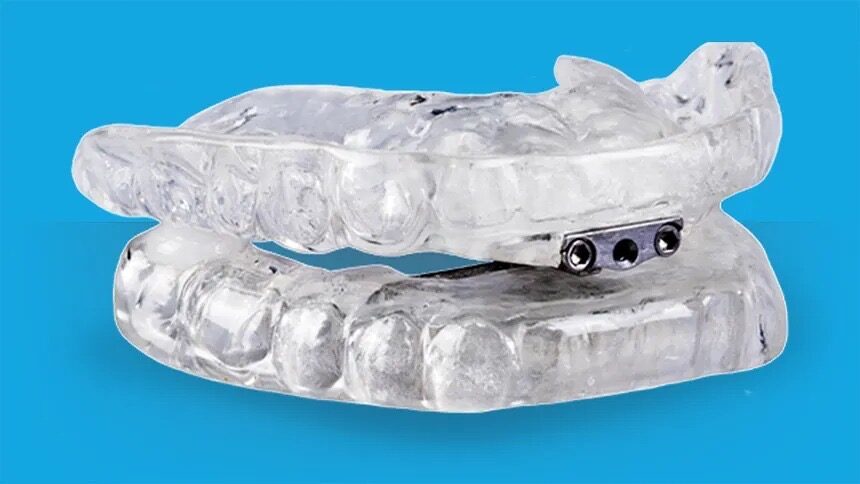
Mandibular advancement device (MAD)
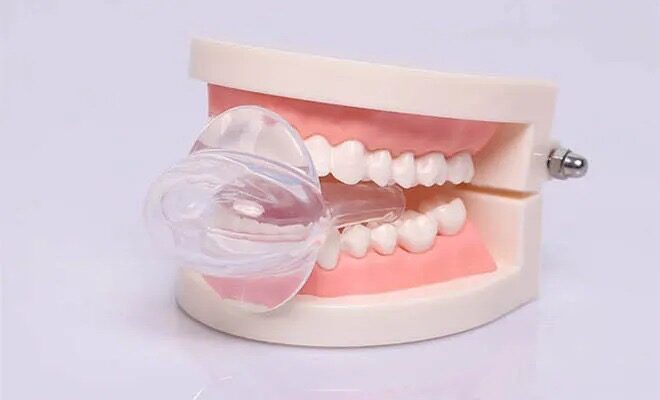
Tongue retaining device (TRD)
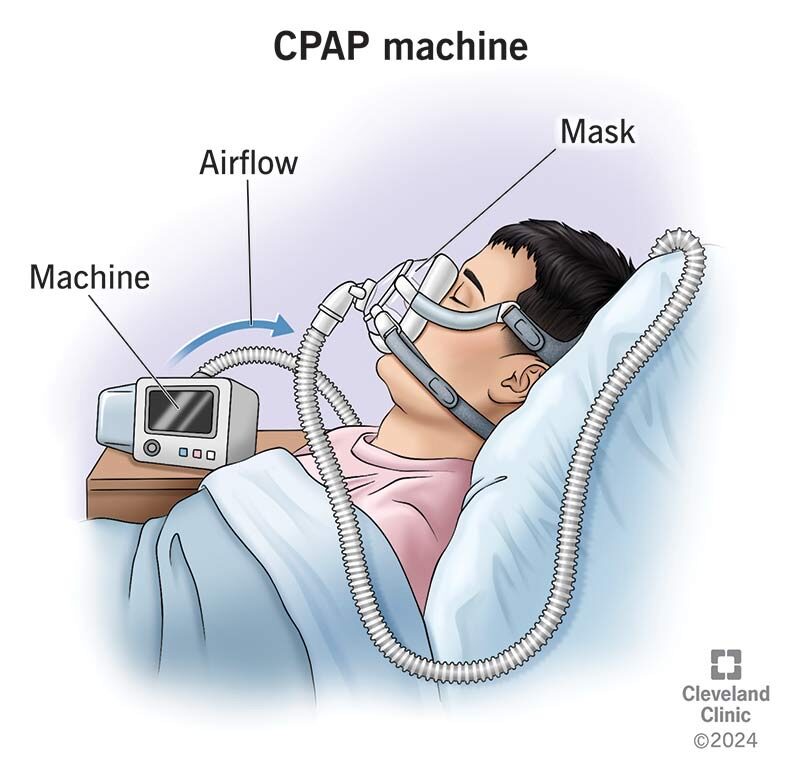
- Using a CPAP machine: A CPAP (continuous positive airway pressure) machine is designed to deliver continuous air through your mouth or nose while you sleep. This ensures that your airway stays open and you breathe normally.
- Surgical methods:
In case of severe OSA, or if the other methods don’t work, surgery may be required. Based on the region of obstruction, the doctor may proceed with nasal surgery, oropharyngeal surgery, tonsillectomy, tongue base surgery or others.
Why OSA shouldn’t be ignored
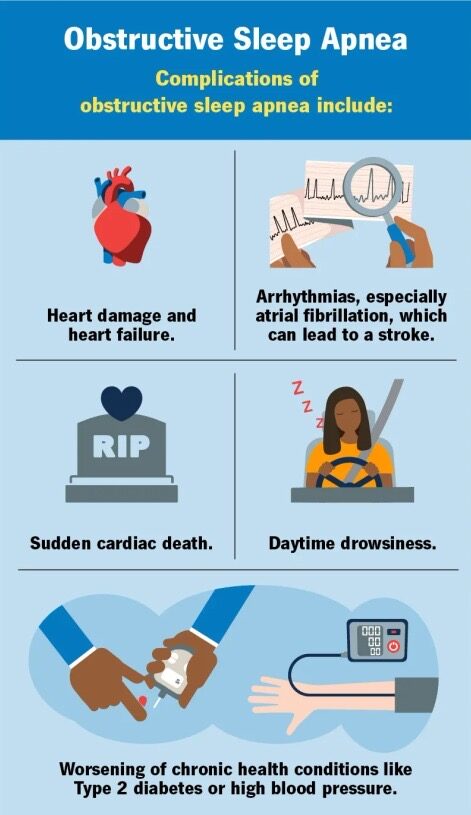
OSA is more than just a disturbance in your sleep. If left untreated, obstructive sleep apnea can lead to multiple conditions that have a dire effect on your body, including the following:
- Heart problems: It can lead to heart failure, arrhythmias (irregular heartbeat), atrial fibrillation, attacks of angina (severe chest pain) and even increase your risk of heart attack.
- High blood pressure (hypertension)
- Loss of memory
- Diabetes
- Stroke
- Decreased libido
- Traffic accidents which can be fatal
- Decreased productivity at work
Snoring is a silent relationship killer
Not only does OSA affect your health, your loud snoring also disturbs your partner’s sleep. This may lead to them feeling irritable and tired during the day, and resentful towards you. Ultimately they may choose to sleep in separate rooms at night. This is called snoring spouse syndrome, and it may even be a cause for divorce among couples.
Hence, it is important to acknowledge the problem and take steps to get treated.

Healthy sleep, healthy life
Obstructive sleep apnea is the most common sleep-related breathing disorder, which can hamper your physical and mental well being in multiple ways, and make you less productive in your daily life. It can also strain your relationship with your partner or other family members.
However, it is a highly treatable condition. With the right changes in your lifestyle and adhering to the doctors’ treatment, you can manage the condition effectively and lead a normal, healthy life. With every good night’s sleep, you will wake up feeling energized and ready to go about your day.