

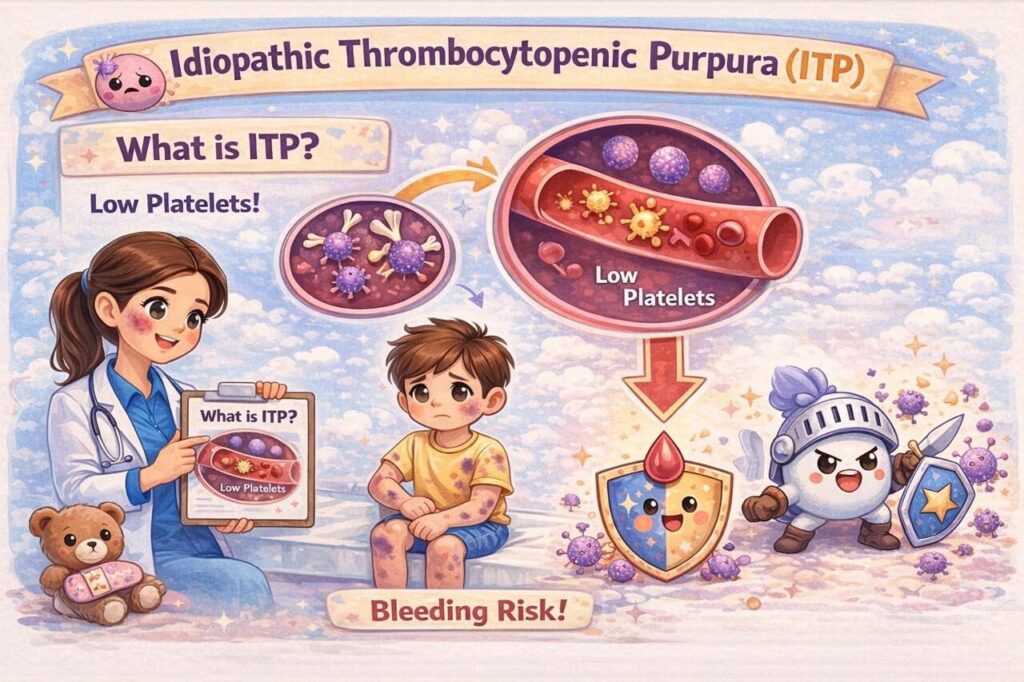
Let’s start with a story-
One day a young girl returns home from school and her mother noticed a few bruises on her legs. Initially the mother presumed it as common injuries which would have happened while playing . Over the following days the number of bruises started increasing and the colour of them deepened without any cause. Concerned , they visited a doctor and had a blood checkup done. That’s when the child got diagnosed with ITP (Idiopathic thrombocytopenic purpura).

Imagine a child not being able to have to live a normal childhood. They cannot play mischievously or fall or get hurt or bleed. They have to be careful all the time. All because the blood that is supposed to stop flowing when there is a hurt will continue to flow due to the lack of platelets in the body.
Let me break it down
Platelets– What are they?
Platelets (thrombocytes) are one of the main types of blood cells in your body, with red blood cells and white blood cells. Platelets are responsible for helping your blood clot to prevent excess bleeding and to promote wound-healing.
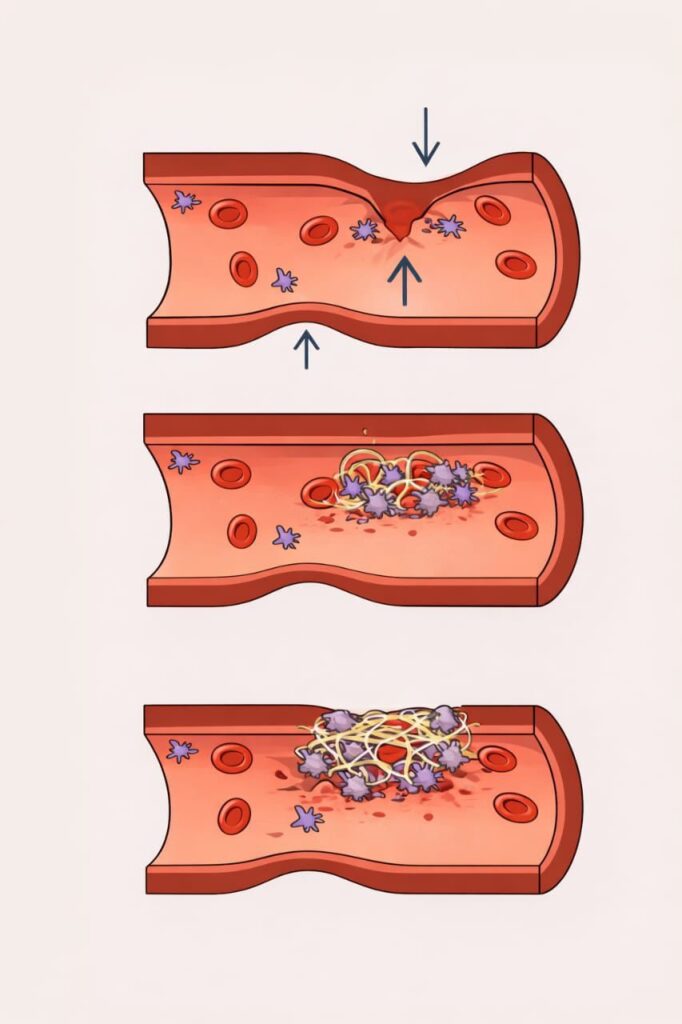
The normal count of platelets in our body is 1.5 lakhs/ul to 4.5 lakhs/ul [150,000–450,000/μL].
ITP – Idiopathic thrombocytopenic purpura
– ITP is an acquired disorder in which there is immune-mediated destruction of platelets and possibly inhibition of platelet release from the megakaryocyte (bone marrow).
– In ITP, the platelet count goes down to around 20,000/uL; there is spontaneous bleeding. If it is less than 5,000/uL, it is life-threatening.
This is how it goes-
T-cell factor (often unknown/viral infections/autoimmune)
↓
Autoantibody production (IgG) – against platelet surface glycoproteins (GPIIb/IIIa or GPIIb/lX)
↓
Antibody-coated platelets
↓
Destruction in the spleen – by macrophages
↓
Thrombocytopenia (decrease in platelet count)
Additional mechanism – autoantibodies also act on megakaryocytes in the bone marrow.
↓
Decrease in platelet production
↓
Severe thrombocytopenia
↓
Patients present with signs and symptoms
Keep in mind –
- In children – acute ITP
- In adults – chronic ITP
- HIV, SLE, Hepatitis C – Secondary ITP
Why this happens –
- The exact cause is unknown hence the name idiopathic.
- It can be triggered by infections especially viral and also autoimmune diseases.
Symptoms and signs–
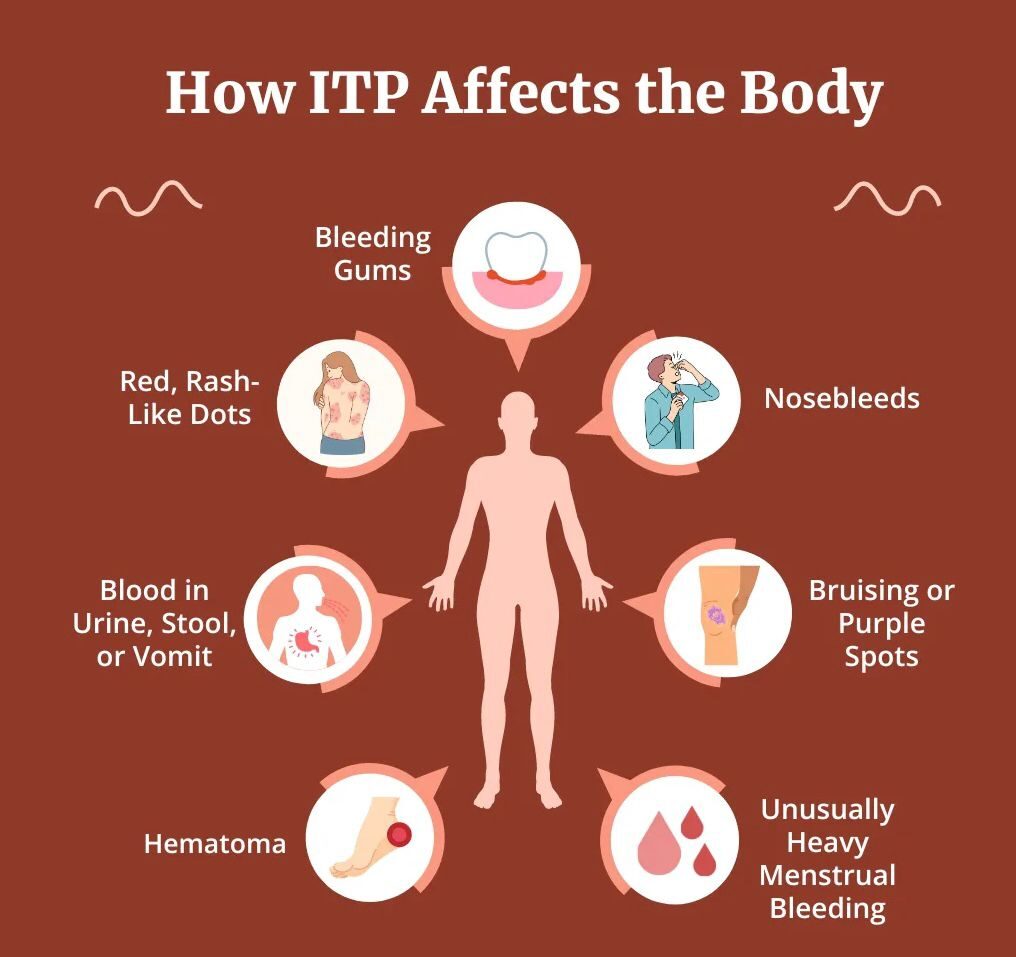
ITP patients usually at the beginning have no symptoms. Only when the platelet levels drop very low do the symptoms occur.
Some of these symptoms include-
1. Easy bruising

2. Bleeding into the skin that looks like tiny reddish-purple spots (petechiae). The spots mostly show up on the lower legs. They resemble a rash and can be mistaken for one.
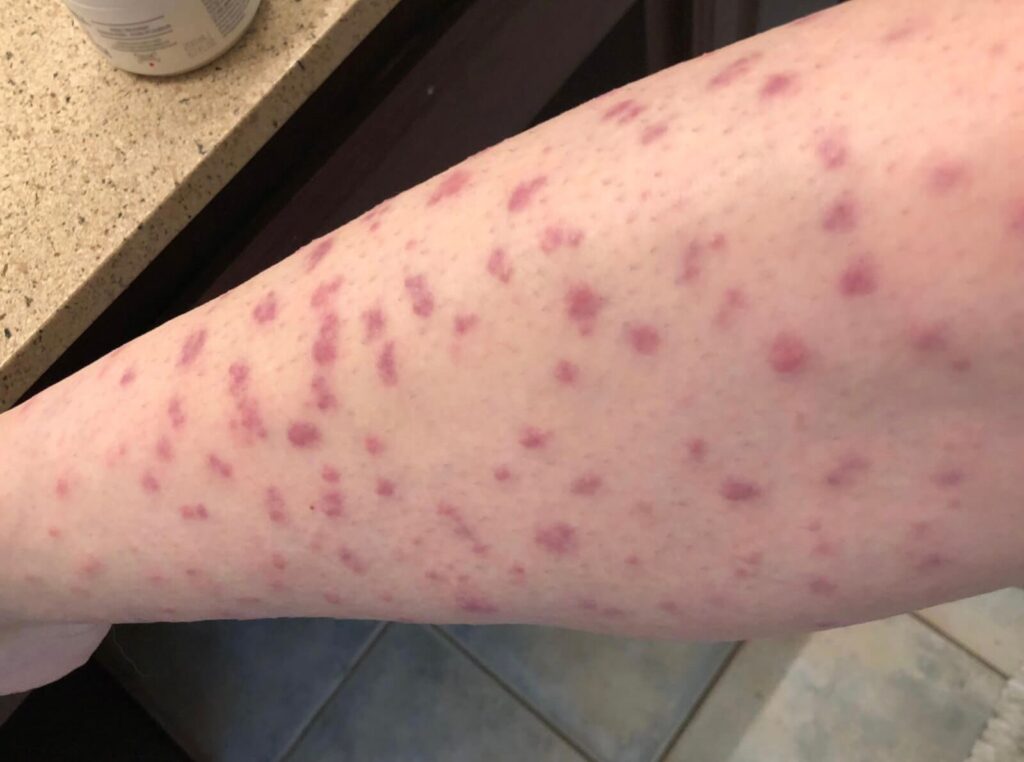
3. Bleeding into the skin that’s larger than petechiae, also known as purpura.
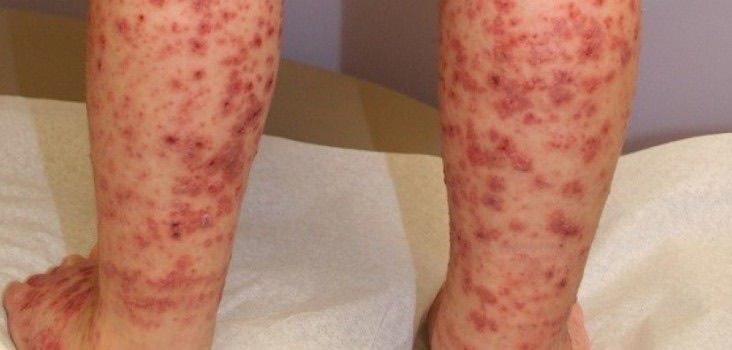
4. Bleeding from the gums or nose



5. Blood in urine or stools.
6. Really heavy menstrual flow (for females)
When to go seek a doctor–
When bleeding doesn’t stop after getting hurt is a medical emergency. These include even after applying pressure or using first aid. Seek help immediately if you or your child or anyone has the same.
Which doctor to seek–
Make an appointment with a doctor, it can be a general physician or
a pediatrician ( if children are below 18 years) if you have the symptoms mentioned above. Further you will be referred to a haematologist.
Problem faced by patient and family–
- Misunderstanding the bruise as a casual hurt–
- At the beginning these bruises are small and light reddish in colour but later it turns purplish. Many people misunderstand these bruises and ignore them due to which treatment can get delayed.
- Solution- when the number of bruises are increasing or if there are bruises without any cause or if bleeding doesn’t stop , advised to consult a doctor for safety.
- Not trusting the doctor –
- Since the disease is rare, people have very little idea about the disease and people are always searching for second opinions and searching for other details.
- Solution – listen to your doctor, practically they know about the disease and it’s treatment as they have studied the patient and their history. Websites and other online sources have information for the ideal type of disease and all the symptoms may not correspond to the patient. Second opinions are good but the doctor treating the patient is the best.
- Financial troubles –
- The treatment for the disease is long course hence there can be a load on finances especially if there is only one person in the family earning money.
- Solution – talk to the doctor and administration on the treatment plan . This will give you an idea about the financial load. Then you can plan the treatment.
- Emotional Baggage-
- Due to the long course and strenuous treatment plan, the patient and the family will undergo lots of emotional baggage.
- If the patient is a child, he/she will be missing out on school which might lead to anxiety and fear of missing out on activity and fear of losing people. They might lose friends on the way and also have the same fear for a long time. This can be controlled by constant reassuring and support from the family, giving advise and confidence to the child will help a lot.
- Family also undergoes a lot of emotions such as empathy , fear , etc which can be controlled by support of family and friends.
- Nutritional aspect –
- Due to strenuous treatment, the patient will be advised to have a diet which will be different from normal consumption of food, for example if the person is on steroids they will be advised to eat salt less diet .
- Solution – This advise should be maintained and followed as told.
- Checkups –
- This disease is not completely curable and the platelets count can drop at any time.
- Solution – Hence the person has to be on alert for a good amount of time. At beginning weekly , then monthly, then yearly checkups should be done on time to keep the platelets count in check. (This will be difficult due to school or work , but has to be done as health comes first.)
- Social life –
- Some people have the fear of losing social life and functions and spending most of the time in hospital checkup and admissions.
- Solution – Social life can be maintained by making aware of the disease and spreading information. This helps people and society to include the patients in normal activities.
- Cautiousness –
- Since it is an autoimmune condition, the immunity is compromised.
- Solution- The patient should be cautious not to fall ill or get hurt and if they do, to visit their doctor for immediate treatment. They have to be cautious all day long.
Relation between patient and their family –
The most important part of any disease and treatment is the support of the family. The relation between the two (family and patient) is very important and should be maintained. The family is advised to give support at all times; it can be with physical help or emotional help. The patient will be going through a lot of changes with regard to treatment, disease, or emotions, but it becomes easy to handle if the family is present with them. And the other way round works as well. The family can have hopes in the patient and get reassured by their presence.
To keep in check –
- Advised to have regular check-ups
- Advised to follow a strict diet.
- Advised to be cautious about surroundings and not to get hurt easily.
- If in case of a wound and bleeding isn’t stopping, then immediately advised to visit the doctor for treatment.
- Advised to maintain a book with the count of platelets with every test to see the improvement in count or downfall.
Management–
How to treat the disease and its course is advised by the consulted general physician only. That’s the first line of management.
To give a brief idea, sometimes they prescribe corticosteroids, or splenectomy can be done (spleen is removed).
The appointed doctor will give a plan and pros and cons of the treatment. Make sure to listen and continue their advice (most important).
Conclusion–
Idiopathic Thrombocytopenic Purpura (ITP) is more than a medical term or a laboratory value; it is a quiet struggle that seeps into everyday life, especially for children and young individuals. What may appear to be a simple bruise can often carry a deeper story, reminding us that even the smallest signs should never be ignored.
Today, with advancing research and a clearer understanding of ITP, we stand at a place where early recognition and timely treatment can make a profound difference. When diagnosed early, many complications can be prevented, allowing individuals to lead safe, active, and fulfilling lives. Yet medicine alone is not enough. Healing becomes truly effective when it is supported by empathy, emotional reassurance, financial stability, and the unwavering presence of family and friends.
Awareness plays a powerful role in this journey. By educating families, communities, and society at large, we can break misconceptions, reduce fear, and ensure that warning signs are recognized rather than dismissed. Awareness leads to action and action leads to protection.
With appropriate medical care, regular follow-ups, balanced nutrition, and strong emotional support, even conditions like ITP need not define or limit a life. At Nirmaya Care, we believe that knowledge is the first step toward healing. By spreading awareness and compassion, we can transform silent struggles into stories of strength, resilience, and hope.
Because when care is informed and support is shared, even the quietest battles can be won.
EVIDENCES/ REFERENCES/ CITATIONS
- Harrisons principles of internal medicine 22nd edition
- Robbins and cotran – physiologic basis of diseases 10th edition
- https://www.mayoclinic.org/diseases-conditions/idiopathic-thrombocytopenic-purpura/diagnosis-treatment/drc-20352330
- https://www.webmd.com/a-to-z-guides/chronic-immune-thrombocytopenia