

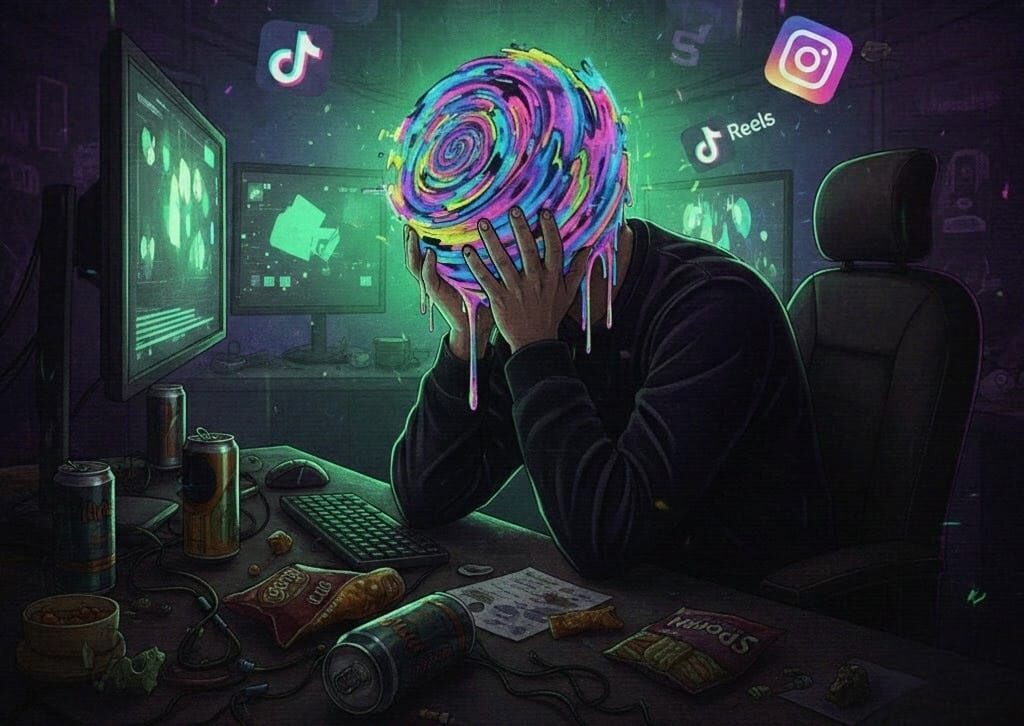

I’m sure you’ve caught yourself aimlessly scrolling at 2 am, fully aware that you should stop, yet utterly unable to. You keep scrolling anyway. Well, it isn’t your fault. Curious to know why? ‘Keep scrolling’
What exactly is brain rot?
Brainrot is a slang term used to describe the cognitive decline or “rotting” of the mind caused by consuming excessive amounts of low-quality, mindless, absurd internet content. Like literally anything!
It is so much in use that it was named the Oxford Word of the Year for 2024, reflecting how deeply it has permeated modern culture, especially among Gen Z and Gen Alpha.
These AI- generated low quality short form videos have left researchers thinking how they’ve reshaped the brain.
Social media is so advanced, it knows the algorithm, what your likes and dislikes are, what type of content you like and keeps feeding you the same to keep you hooked.
Be it Tiktok, Instagram or YouTube Shorts, these mini hits of dopamine have made us slaves by making us lose our self control and focus. Studies have shown a strong association of mindless scrolling with increased symptoms of anxiety, depression and loneliness.
Everyday Patterns That Rot Attention
- Binge-watch YouTube videos
- Scroll social media
- Surf the internet while you text and check email
- Play video games
- Doomscroll (obsessively check your news feed, even if it disturbs or upsets you)
The Science behind cognitive overload
“Oh let me just take a break, I’ll scroll for 10 mins”
What feels like rest for the mind is often the opposite. Continuous scrolling exposes the brain to rapid, fragmented information that overstimulates neural pathways. This constant sensory input repeatedly activates the brain’s reward circuitry, triggering small but frequent releases of dopamine, just enough to reinforce the behavior and sustain craving.
Over time, the brain is pushed into a state of cognitive overload, where attention, memory, and emotional regulation are strained. Rather than restoring mental clarity, such breaks exhaust cognitive resources, trapping the mind in a cycle of stimulation without recovery.
Effects of Brain rot
Now there are a few concepts that will help you understand this better, stay with me
Cognitive Overload: Constant digital input, especially multitasking across platforms, overwhelms the brain, leading to mental fatigue and sluggishness.
Dopamine Loop: Likes, shares, and short videos trigger small dopamine releases, creating a reward cycle that fosters behavioral addiction, similar to gambling.
Attention Economy: Algorithms designed for engagement train your brain to expect rapid shifts, making sustained focus on single tasks difficult
Executive Function Impairment: Excessive screen time can affect memory, planning, and decision-making, leading to difficulty with complex thinking.
All of these leading to-
● Reduced attention span: quick, bite-sized content can make it harder to focus on longer, more complex tasks. Let’s just say your attention span is Mewing: And it’s not looking good.
● Mental fatigue: Overloading your brain with information, even shallow content, can leave you feeling mentally drained and less productive. You won’t even realise and the day’s gone.
● Decreased memory retention: Constant digital distractions can affect your ability to retain and recall necessary information. Failing your finals, blame it here.
● Increased anxiety or stress: Consuming negative online news, also known as doomscrolling, can elevate stress levels and contribute to feelings of anxiety.
But why is all this necessary to know? Understanding this is essential, as it has a direct and often unnoticed impact on our daily lives.
You finally sit down to start studying, you even open your books, only to end up scrolling for the next 1 hr, happens all the time, doesn’t it?
You wake up in the morning, you reach for your phone, this early morning dopamine hit ruins your entire morning, leaving you with no motivation to do or learn anything new

Soon, there’s no will to finish a task, engage in your favourite activity, step out of your room, or even talk to your parents. Cognitive fatigue is real.
Unfortunately, all these symptoms are often mistaken for burnout or depression, want to know the difference? Tag along here
Is there a specific target audience?
The primary targets being GenZ and GenAlpha, adolescents and young adults who are extensively engaged with digital platforms and social media. However, this concern is not limited by age. Any individual who relies on online spaces for instant validation, constant stimulation, humour, or mental escapism may experience similar patterns and effects.
Why does this matter more than we think?
Cognitive Effects
●Attention & Focus: Fragmented attention, inability to focus on complex tasks.
●Memory: Difficulty retaining and recalling information, disrupted memory consolidation.
●Problem-Solving: Compromised analytical skills and cognitive flexibility.
●Executive Function: Impaired planning, organization, and decision-making.
Emotional & Psychological Effects
●Mental Fatigue: Feeling sluggish, drained, unmotivated, and foggy.
●Emotional Desensitization: Reduced emotional processing and responsiveness.
●Mental Health: Increased anxiety, depression, frustration, and lower self-esteem.
Behavioral & Social Effects
●Addiction: Compulsive scrolling (doomscrolling, zombie scrolling).
●Social Withdrawal: Opting for online interaction over offline engagement, causing isolation.
●Poor Performance: Struggles in academics or work due to decreased focus.
●Physical Health: Decreased physical activity due to sedentary screen time.
Potential Long-Term Concerns
●Brain Structure: Excessive screen time linked to thinning of the cerebral cortex (gray matter) in some cases.
●Dementia Risk: Potential increased risk of early-onset dementia.

When to seek help?
Signs you need professional help:
●Struggling with daily tasks: Difficulty concentrating on work, school, or chores despite trying digital breaks.
●Increased anxiety/irritability: Feeling anxious or upset when away from your phone or experiencing constant low mood.
●Compulsive device use: Inability to stop scrolling or checking for notifications, even when you want to.
●Poor problem-solving/memory: Noticeably worse memory, reduced critical thinking, or inability to form complex thoughts.
●Social withdrawal: Isolating yourself and using screens as your primary way to cope or connect.
Any level of brain rot is reversible with a few mindful habits.
Is this mental fog reversible? [Ways to reduce cognitive overload]
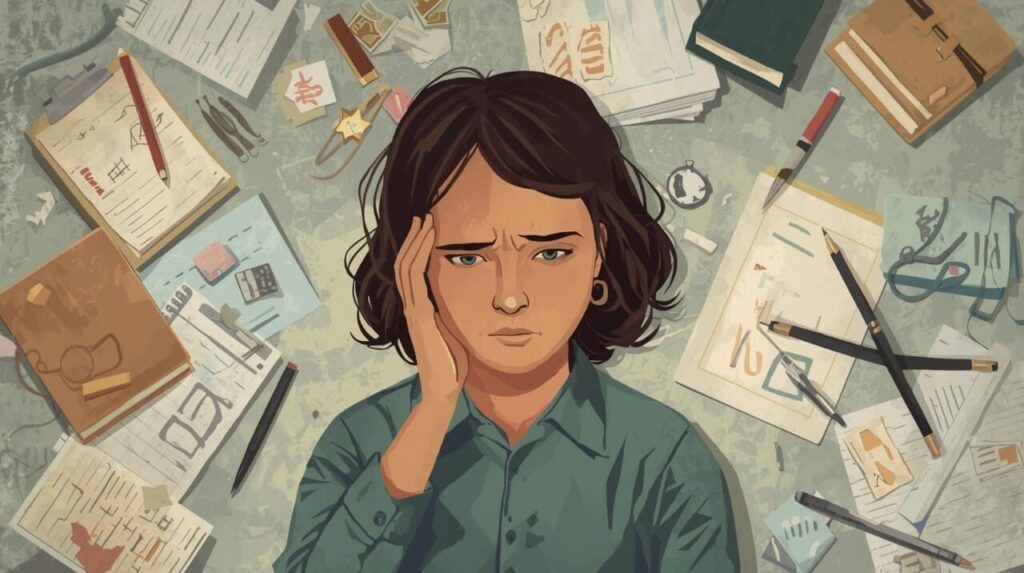
Preventing brain rot is possible with consistent lifestyle changes. Small daily habits can protect long-term brain health.
1. Improve Sleep Hygiene
- Maintain fixed sleep and wake times
- Avoid screens at least one hour before bed
- Keep the bedroom dark and quiet
2. Eat Brain-Friendly Foods
- Fresh fruits and vegetables
- Whole grains and nuts
- Adequate protein and hydration
3. Reduce Digital Overload
- Take screen breaks every 60 to 90 minutes
- Limit unnecessary notifications
- Avoid constant social media scrolling
4. Move Your Body Daily
- Walking, yoga, or light exercise improves blood flow to the brain
- Physical movement also reduces stress hormones
5. Practice Mental Rest
- Deep breathing
- Mindfulness
- Short breaks between work tasks
6. Stay Socially Connected
Healthy conversations and real-world interactions keep the brain active and emotionally balanced.

In conclusion, while “brainrot” may have started as a self-deprecating internet meme, its prevalence in our daily lives is undeniable. With usage of the term skyrocketing by 230% in the last year alone, it has become a shorthand for the very real mental fatigue that billions of people experience in the age of infinite scrolling.
However, this feeling isn’t a permanent sentence. Because of our brain’s remarkable neuroplasticity, you can easily slide back into a state of clarity by making small, intentional pivots like reclaiming offline “dopamine” through physical movement and creative hobbies and setting hard boundaries like tech-free zones or app timers.
It’s never too late to change, never too late to be accountable.
Anything done in moderation is totally normal. Many patients report digestive problems after eating alongside mental fatigue, showing lifestyle imbalance affects multiple systems together. Keeping our brain healthy for our own sake is our responsibility, let’s scroll mindfully now on further.
By stepping away from the noise, you aren’t just protecting your attention span—you are rediscovering the version of yourself that is capable of deep focus, genuine connection, and lasting peace. Your phones should be a part of your life, not your entire identity. Ultimately, a healthier mind isn’t about deleting every app or shunning the modern world; it’s about choosing presence over passivity.
Resources
- https://pmc.ncbi.nlm.nih.gov/articles/PMC11939997/
- https://www.inspirahealthnetwork.org/news/healthy-living/brain-rot-explained-how-digital-overload-affects-your-mind
- https://www.nbcnews.com/health/health-news/brain-rot-research-short-form-video-consumption-rcna245739
- https://www.webmd.com/brain/brain-rot