

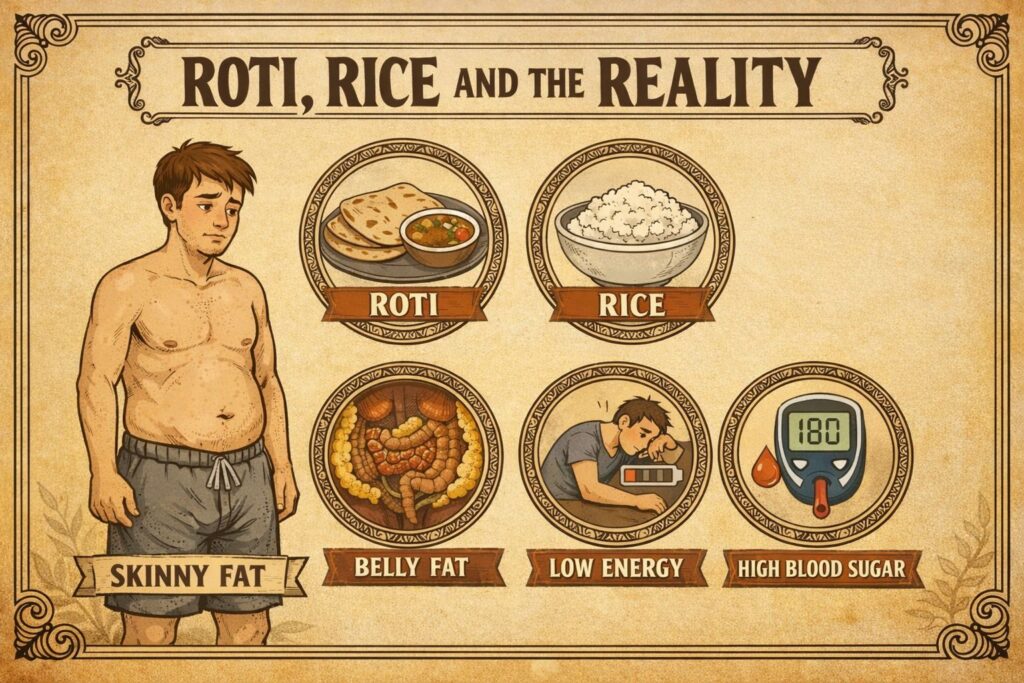
Are our elders really always right?
Since our childhood, we’ve heard the same thing from our parents about which food is healthy and which food isn’t, and about how the Indian diet is extremely healthy and nourishing. But, what is the reality?
Let’s take a deep dive into what constitutes a balanced, healthy nourishing diet, and find out if our elders were telling the truth about the Indian diet.
(Hint, absolutely not!)
What is a balanced diet?
The ICMR defines a balanced diet as a wholesome and nutritionally sufficient diet, which provides the required amount of calories, proteins, vitamins, minerals and fibre thus enabling a vast array of functions in the body.
If we were to go in depth, we can talk about the division of the calories into the various macronutrients along with their relevant functions in brief.
- Fats- No, they are not unhealthy or are they going to make you fat., fats are extremely important in your diet, but in controlled amounts and only healthy fats. Dietary fats are of various types like fatty acids, phospholipids, cholesterol, and triglycerides. So fats are required for many physiological functions in the body. They form a part of the structure of a cell. They are needed for the absorption of fat-soluble vitamins like A, D, E, and K as well as the storage. They are needed for the production of particular hormones.
- Carbohydrates- they are a direct source of energy and quickly provide it. They improve gut health, and cause a spike in insulin when consumed causing glucose to be stored as glycogen in the tissues and muscles. Fibre is a type of carbohydrate, which is non-digestible and helps in easy bowel movements and control of cholesterol.
- Proteins- they are one of the most important macronutrients which are heavily neglected in the Indian diet. They are responsible for the synthesis of antibodies, hormones, and important neurotransmitters like dopamine. Proteins are broken down into amino acids and absorbed, which stimulates the synthesis of proteins within the body as well as inhibits the protein breakdown.
What’s the Indian diet and the issues with it?
The traditional Indian diet that a lot of us have been consuming since childhood is a carbohydrate heavy diet. Now you might think that carbohydrates are good because why not? It’s instant energy and it tastes good. Unfortunately, no, Indians obtain 62% of their total calories from carbohydrates, such as white rice mill, whole grains,added sugars. The national recommendation of daily sugar intake is less than 5 g. However, studies found that in 21 states, the sugar consumption exceeded the national recommended intake. Next is the protein deficiency. Protein is recommended to be consumed around 0.8-1 g per KG of body weight. However, Indian adults consume about .6 g per KG of body weight on average. Therefore, we can conclude as stated by the EAT Lancet commission that Indians consume more simple carbohydrates and less complex carbohydrates, fruits, vegetables, and proteins in their diet.
Why is this an issue?
You know, it’s very easy to say that over the diet is bad because we’re having too many carbs and much less protein than recommended , but we cannot simply dismiss it as an imbalance. There are some implications of this imbalance that have widespread effects.
What are the implications of a carb heavy diet?
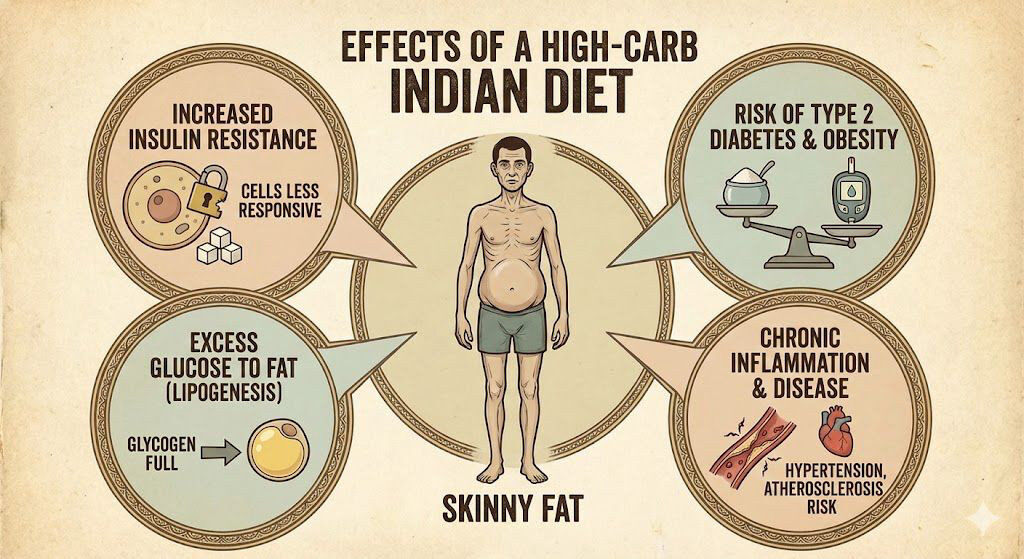
Let’s begin with what the carb heavy Indian diet leads to: increased risk of insulin resistance, obesity, and diabetes. Once again, according to the ICMR, 56% of lifestyle health disorders in India are linked to an unhealthy and unbalanced diet. so, when we consume a diet that’s high in carbohydrates, we give the body continuous insulin spikes, which is the hormone required to increase glucose uptake into the cells. Over time, this will cause something called insulin resistance where the cells are less responsive to insulin. This leads to type two diabetes and metabolic syndrome. Once glucose enters the body, it is usually stored as glycogen. However, once these glycogen stores are full, excess glucose will be converted through a process called lipogenesis into fat. This leads to the common Indian phenotype known as skinny fat. So persistently high glucose along with increased insulin release will lead to chronic inflammation and damage to blood vessels in the body which increases the risk of hypertension, atherosclerosis and coronary artery disease.
What are the implications of a low protein diet?
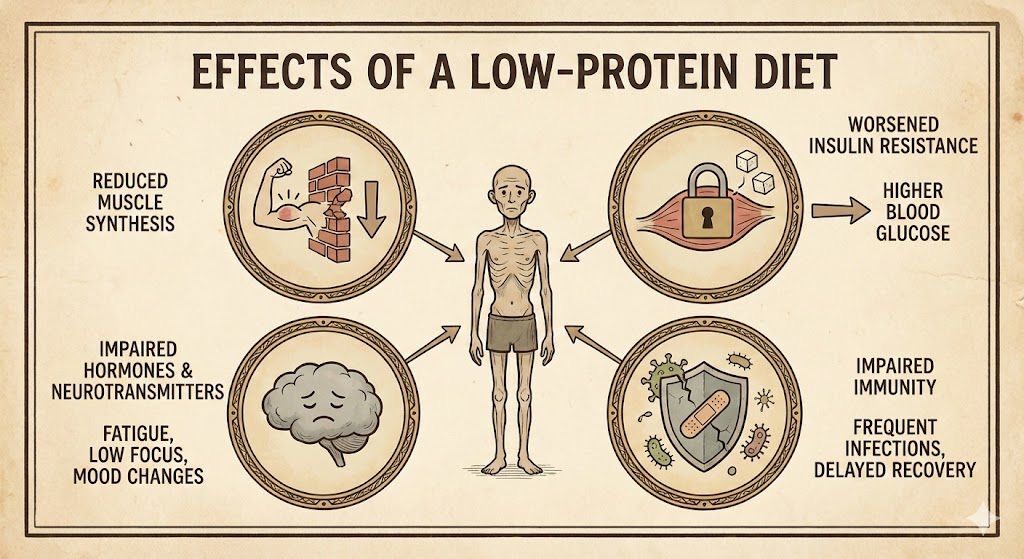
Proteins are obviously sources of amino acids which are required for the muscle building process. So lack of protein would mean reduced muscle synthesis. A lack of protein also worsens insulin resistance as skeletal muscles are the major side of glucose storage as glycogen thus, glucose stays longer in the blood in absence of adequate skeletal muscle. The amino acids are also required for hormones and neurotransmitters. A lack of these can lead to fatigue, low motivation for focus and mood changes. A lack of protein in the diet can also lead to impaired immunity, leading to frequent infections, delayed recovery and poor wound healing.
Cope within the Indian mindset
A lot of Indians tend to believe the Rajma, lentils, chole and soya are good sources of protein but that is not fully true. While Dal is a source of protein, around 100 g of cooked dal would give 24 g of protein. However, that would equate to around six complete servings of Dal, which would be very impractical to consume.
Moreover, they are also considered to be incomplete protein sources due to the fact that they lack major amino acids. For example, Dal lacks methionine and cysteine.
So not only would you need to consume an unhealthy amount of the above to get a decent amount of protein but you would also be getting an incomplete amino acid profile.
That was just an example, the Indian diet does include protein. However, there is a difference between protein quantity and protein quality. The protein that Indians get from the diet is quite often incomplete in amino acids.
Reasons for the way the diet is
Religion is probably one of the driving factors for a protein deficiency within the country. The majority of Indians do not consume meat or sometimes even eggs due to their religious beliefs.
Apart from this are agriculture policies, such as the mechanisation of farming while high yield wheat and rice varieties resulted from the green revolution. Initially millets and pulses dominated the Indian diet. However, in order to feed a growing population in the 1960s, The Green Revolution resulted in rice and wheat mono cropping becoming widespread.
Another not so talked about reason is the fact that the excess carbs in the Indian diet were so high due to the fact that our ancestors worked demanding jobs in agricultural fields and so on as a result, these carbohydrates were sources of energy for them that were very much required. However, in the modern world, with most jobs being 9 to 5 jobs, where a person sits at the desk, add to this the lack of exercise and then the energy from the carbohydrates is of no use. There are no depleted glycogen stores that need to be refilled, so the carbohydrates as mentioned before will be diverted towards lipogenesis.
How can this be resolved?
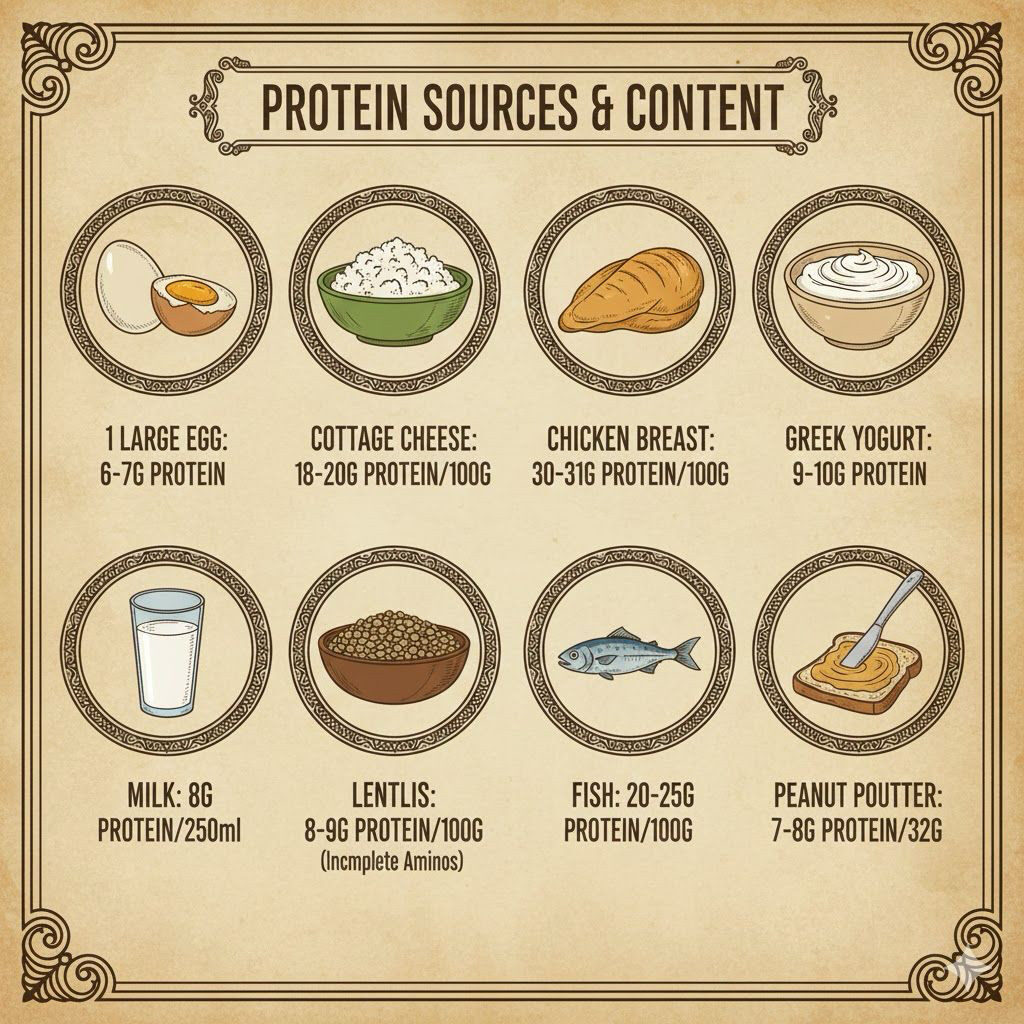
It would be very difficult to incorporate a completely western diet into Indian society, due to the differences in vegetation, tradition and a major factor being affordability. There we must find a way to alter the Indian diet and try to incorporate proteins in a practical manner. Luckily, this can be done simply just by adding certain high protein foods-
- Eggs-1 large egg- 6-7g of protein
- Cottage cheese- 18-20g of protein/100g
- Chicken breast- 30-31g of protein/100g
- Greek yoghurt- 9-10gof protein/100g
- Milk- 8g of protein per 250ml of toned milk
- Lentils (not very good for obtaining all amino acids)- 8-9g of proteinper 100g
- Fish- 20-25g of protein per 100g
- Peanut butter- 7-8g of protein per 32g
Apart from proteins, Indians would also benefit from increasing the consumption of fruits in their diets. Fruits are good carbohydrates, they contain lower amounts of fructose. They are also rich in fibre and water and are thus digested and absorbed slowly so the fructose entry into the liver is at a very low rate. They also help with weight loss due to the satiety obtained from the fibre content.
Whey protein- what is it, what are the benefits and the myths?
Casein and whey are the two types of protein that we find in Milk. During the process of formation of cheese the protein that is separated from the milk is whey. It contains all the essential amino acids and is therefore termed as a complete protein.
Benefits of whey
- It provides the body with a complete amino acid profile and is therefore helpful in muscle growth through protein synthesis.
- Improve cardiovascular health by lowering blood pressure, improving vascular stiffness and reducing inflammation.
- It also helps in lowering the cholesterol by reducing triglyceride levels and in increasing high density lipoproteins.
- It also has profound anti-cancer effects through triggering apoptosis of atypical cells.
It can also help supply protein within an individual’s diet. It is a quick and easy source of protein.
Myths
There exists a stigma surrounding protein powders. First people believe that whey protein damages the kidneys, however, when the protein intake of an individual is within the recommended amount and this is paired with an active lifestyle and adequate hydration, then no such strain will be placed on the kidneys. Rather, the whey will benefit the consumer.
Another famous worry is that protein powders are spiked with steroids. This is true to a certain extent. Some shady/unreliable companies do put steroids into their whey protein. However, if you buy your whey from a trusted source, then such an issue will not be faced. There are various studies that have been carried out to test the components of whey of different brands. One can refer to them and accordingly decide which whey they would like to use.
Conclusion
The goal of this article is to spread awareness amongst the readers about the severe lack of protein and excess of carbohydrates in the unbalanced Indian diet and its implications in our lives. Once again, it is very important to have a healthy balanced diet, even with all the exercise and sleep,if an individual does not get an adequate amount of nutrition then all their efforts of living a healthy lifestyle will be in vain.