The sky is split open by lightning. The wind screams through the air, shaking everything in its path. Rain lashes down so hard it stings your skin. Thunder crashes so loudly that it rattles your bones.
In that moment, your entire body knows only one thing: survive Your heart pounds. Your breath shortens. Every muscle tightens, ready to run, hide or fight.
Soon the storm passes. The sky clears. The rain stops. People step outside again. Life slowly returns to normal.
But inside you the thunder still echoes. Your heart still races at sudden sounds. Your mind keeps scanning the horizon, waiting for the next strike. Your body still braces for impact. Outside, the storm has passed. But inside, the sky is still broken.
This is how trauma lives on in the body. This is how Post Traumatic Stress Disorder or PTSD takes shape- not as a memory of danger, but as a constant expectation of it.
This is how Post Traumatic Stress Disorder or PTSD takes shape- not as a memory of danger, but as a constant expectation of it.
Read on to know that your mind is not broken, it’s just relentlessly trying to protect you.
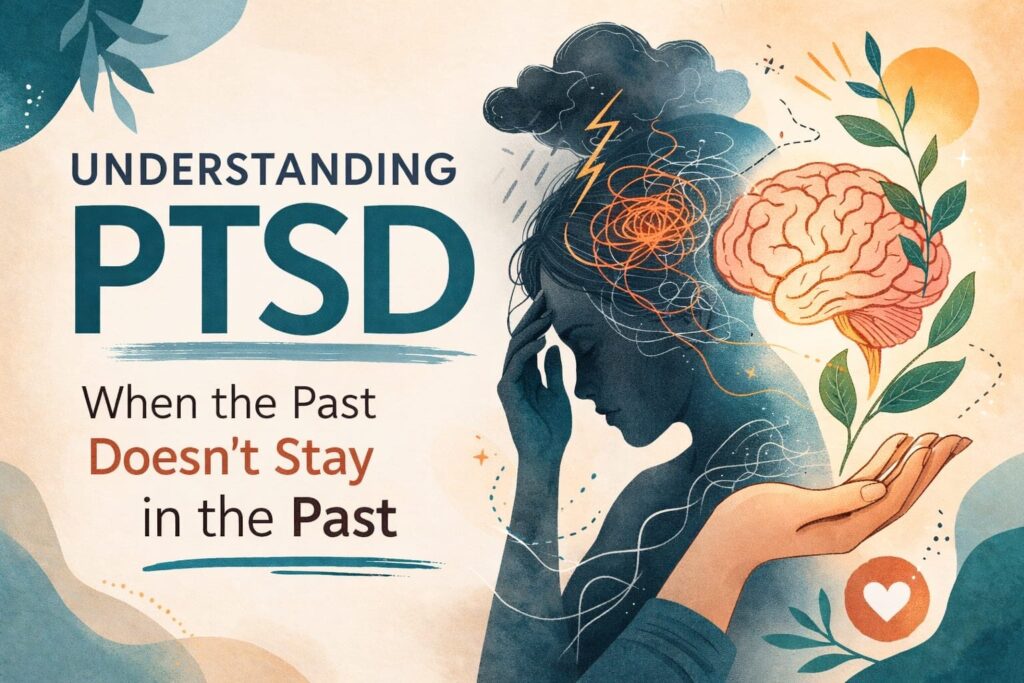
Understanding PTSD
Don’t we all love to watch movies? We often see a character waking up screaming from a nightmare, ducking for cover after a loud noise or having all-consuming thoughts of guilt or fear. These and other dramatic symptoms often are shown as depictions of post-traumatic stress disorder in movies or TV shows. Some portrayals are accurate while others are far-fetched.
Actually, Post Traumatic Stress Disorder (PTSD) is a mental health condition that develops in some people who experienced or witnessed a traumatic or frightening event – such as:
experiencing violence, military combat
terrorist attack
surviving a natural disaster, such as flooding, an earthquake or a pandemic
physical or sexual assault, bullying or harassment
an automobile accident
being kidnapped or held hostage
seeing other people hurt or killed
losing someone close to you in upsetting circumstances, such as suicide
being diagnosed with a life-threatening condition
Childhood abuse
During these events, the brain’s natural stress response- designed to protect us- can get “stuck” in survival mode. Instead of returning to normal once the danger has passed, the nervous system may remain on high alert, causing long lasting emotional and physical reactions.
What is wrong with my mind?
First of all, understand that your brain is just being overprotective of you because you have dealt with things that scared you so much that it thinks that it can happen again but this time it will be better prepared.
To understand PTSD, think of your brain as the most advanced home security system ever built. Its only job is to keep you safe.
Usually, the system is smart. It knows the difference between a friend knocking at the door and a burglar trying to break in. But when you experience a trauma—an accident, a loss, an assault, or a disaster—it’s like a massive power surge hits the control panel. The wires get crossed.
Now, the alarm goes off every time the wind blows. The sirens wail when a leaf touches the window. This is Hyper-vigilance. Your body is stuck in “High Alert,” pumping out adrenaline as if a lion is in the room, even when you’re just trying to watch TV.
The Three Key Players in Your Mind
The Amygdala (The Alarm): In PTSD, this part of the brain becomes hyper-reactive. It’s a smoke detector that screams “FIRE!” because it smelled a candle.
The Hippocampus (The Librarian): This part usually organizes memories. In PTSD, the librarian is overwhelmed. Instead of filing the trauma away in the “Past” section, the memories are left scattered on the floor, making them feel like they are happening now.
The Prefrontal Cortex (The Captain): This is your logical mind. Usually, it tells the alarm to calm down. But in PTSD, the “Captain” loses his voice, and the “Alarm” takes over the ship.
Two people can go through the same trauma- one may heal quickly while the other may develop PTSD. That doesn’t mean that the person is weak. It simply means that their nervous systems reacted differently.
Normal brain vs PTSD brain
In PTSD, the brain is basically stuck in survival mode instead of living normally. And that can affect the day to day life of a person:
FEATURE
THE HEALTHY BRAIN
THE PTSD BRAIN
Threat detection
Notices real danger, then relaxes
Alarm blaring 24/7- sees threats everywhere
Emotional control
Feels stress, bounces back quickly
Emotions hijacked; anger or fear explodes
Memory processing
Files trauma as past event and moves on
Replays trauma on loop, like a stuck video
Response to triggers
Hears a loud bang- “firework? Cool”
Hears a loud bang- “incoming! Run or fight”
Sleep quality
Deep, refreshing rest most nights
Nightmares ambush, exhaustion rules the day
Self perception
”I’m safe now, I can handle life”
”I’m broken; danger lurks around every corner”
How trauma shows up
Everyone of us has a different mind. So how can something as grave as a trauma leave the same impression on a person’s mind.
People assume that PTSD is just “over exaggeration”, but it’s not. Because of the stigmas surrounding mental health problems in society, people suffering from PTSD often fail to understand that something’s wrong.
According to the Diagnostic and Statistical Manual of Mental Disorders, PTSD diagnosis requires exposure to a qualifying trauma (directly witnessing, experiencing or learning of it) followed by specific symptom clusters lasting > 1 month and causing impairment.
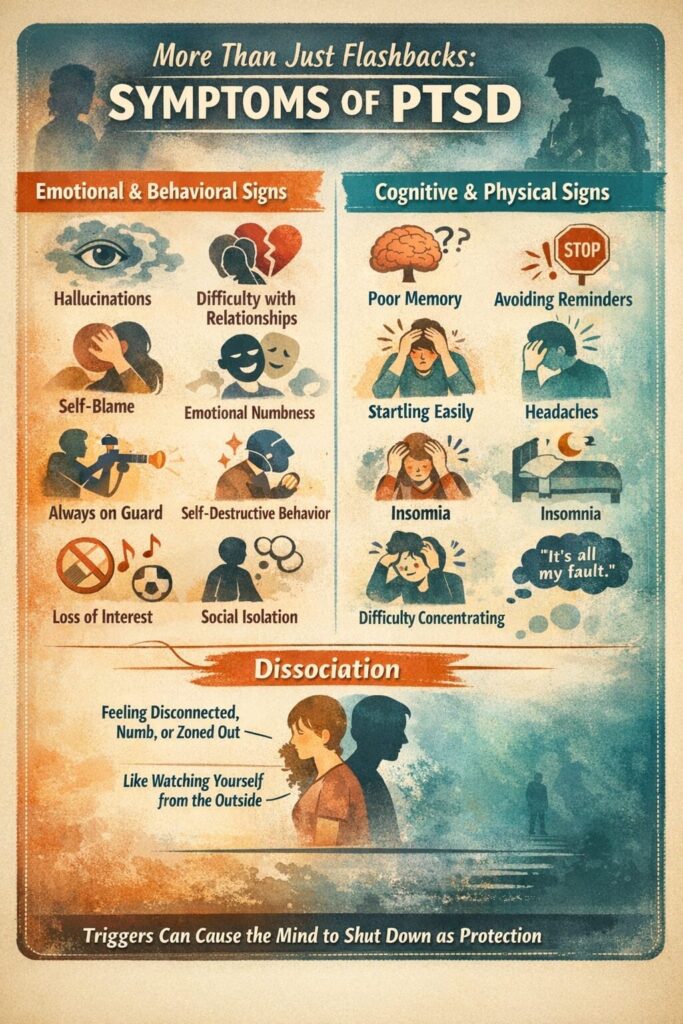
Intrusive re-experiencing: Unwanted distressing memories or flashbacks of the event, nightmares, or physiological reactions when reminded.
Avoidance: efforts to avoid thoughts, feelings, people, places or activities that are reminders of the trauma
Negative cognition/mood changes: persistent negative beliefs, distorted guilt, emotional numbing, loss of interest or feelings of detachment.
Arousal and reactivity: hyper vigilance, exaggerated startle response, irritability or angry outbursts, sleep/concentration difficulties or reckless behaviour.
Upon visiting a health care professional, the psychiatrist uses these symptoms to diagnose someone with PTSD.
PTSD can include many other symptoms like:
Hallucinations: This involves seeing, hearing or sensing things that others do not experience, even though they feel very real to the person.
Dissociation: Dissociation is a feeling of being disconnected from your thoughts, emotions, body, or surroundings — as if you are watching yourself from the outside or moving through a dream. It’s like your mind’s freeze response. Understand it like an animal playing dead for survival. Your mind shuts down to protect you from overwhelming emotional pain.
Anything said or done which might be a trigger to someone, can make them detached mentally, even mid conversation.
Am I alone?
Whenever we feel like something is wrong or something bad is happening, our mind tends to isolate us, saying that you are alone in this. But in reality, there are many people like us that face these hardships. We might not know them, but that doesn’t make us alone.
Data across many countries reveal that nearly 3.9% people worldwide experience PTSD at some point in their lives. People who have lived through natural disasters or wars have a higher rate of developing PTSD.
People having faced a natural disaster have a prevalence rate of 33%.
Approximately 70% people go through a traumatic event, out of which, nearly 5.6% people develop PTSD.
Women are twice as likely to suffer from PTSD as compared to men. Global lifetime prevalence shows that nearly 8% women suffer compared to 4% for men.
PTSD is more often reported in urban areas as compared to rural areas.
Probably, the most important statistic that we need to focus on is- nearly 70% of Indians suffering from PTSD never receive help. This isn’t because help isn’t available, but because of the stigma of being “weak” in the eyes of society.
Risk factors for PTSD
We all are human beings with our own mind and thoughts. Therefore, anything affecting the brain can never have the same effect on anyone.
Let’s suppose two people have gone through the same traumatic event. But, the response to that trauma might be different for both of them. One of them may develop PTSD while the other one may not.
Thus, there are a lot of factors that influence the development of PTSD:
FACTORS
COMMENTS
Prior trauma history
More likely to develop when: Life threatening trauma Serious injury Repeated events Occurs during childhood
Mental health history
Depression, anxiety or any other psychological disorder beforehand
Demographics
Females are twice as more likely than men Lower IQ or any head injury increases the vulnerability
Family history
A history of any psychological disorder in family increases chances Naturally more sensitive stress response system
Event severity
Extreme helplessness, dissociation or anxiety experienced during trauma increases chances
Lack of social support
poor social networks or family instability Financial or legal stress
Ongoing stressors
Disability or repeated exposures
What is C-PTSD?
Imagine feeling in control of your body but out of control when it comes to your mind. You might feel like your home is your safe place and isolate yourself because you feel like you can’t trust anyone else. You might feel a sense of hopelessness and a loss of faith in the future, as well as humanity. Nightmares might haunt your dreams and flashbacks of repressed memories might darken your waking life. Anxiety and panic attacks may plague your existence. You feel trapped in a cycle of chronic trauma that helps create and internalize these “habits” as aspects of your nature that aren’t “normal.”
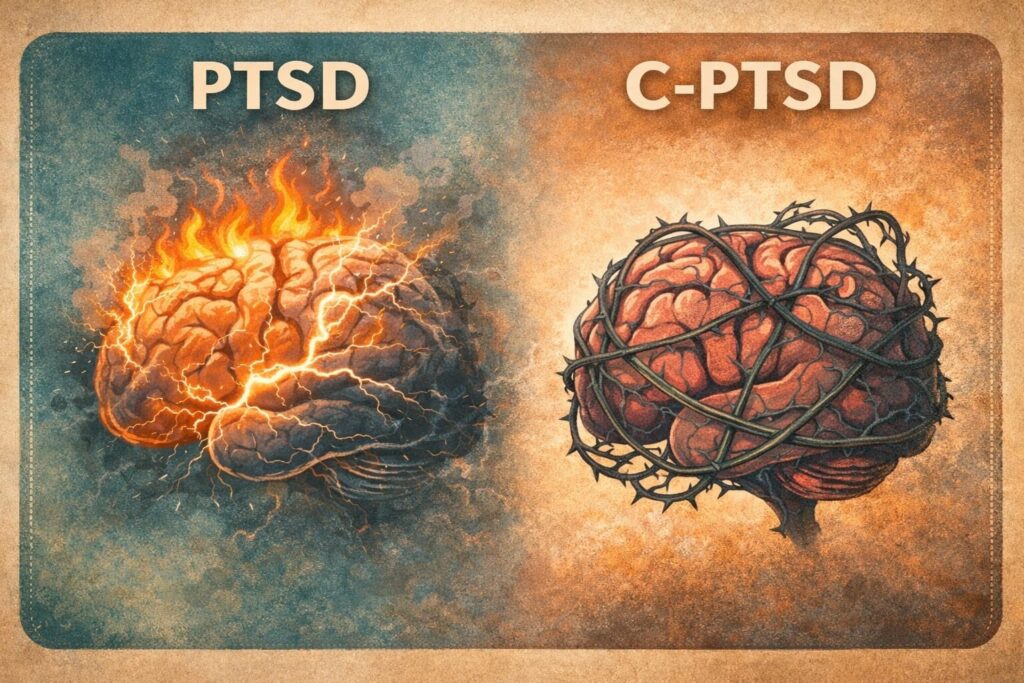
C-PTSD occurs due to prolonged exposure to trauma unlike PTSD which occurs due to generally one traumatic event.
Let us understand the differences between the two more properly:
PTSD
C-PTSD
One traumatic event with a clear start and end.
Recurring and prolonged traumatic events with no exits.
Extreme highs and lows emotionally with hyper vigilance and anxiety to the point of numbness.
No emotional extremes. But the basic emotions are difficult to manage.
The Sense of self is shaken – “I’m not who I used to be”.
Toxic sense of shame feeling the problem is in them because the trauma is internalised.
Relationships are difficult to sustain.
As, generally, the trauma is given by someone close, the whole blueprint of relationships is disrupted. They tend to push people away and repeat toxic patterns.
Dissociation generally occurs due to flashbacks only as a way of escape.
Dissociation can occur during normal routine activities.
Generally, has 4 symptom clusters: Hyper reactivity and arousal Avoidance Intrusions and re-experiencing Negative beliefs and emotional states
Along with the symptoms of PTSD, 3 more symptom clusters are added: Disrupted sense of self Disruption in emotional regulation Disrupted social relationships
In their thoughts, the person believes that the world is a dangerous place.
Due to loss of faith in humanity, person believes that the world is in darkness due to hopelessness.
PTSD: Myths vs Facts
MYTHS
FACTS
PTSD only affects combat veterans
While 11-20% veterans suffer from PTSD; civilians still dominate
Everyone who has been traumatised develops PTSD
Nearly 70% people suffer from trauma but not everyone develops PTSD. It depends on a number of factors like genetics, resilience, etc.
It develops immediately after an event
While it stands true for a lot of cases, sometimes, it develops after months of the event.
People with PTSD are usually violent
Having PTSD can be extremely distressing, and a small minority of people can react violently but research proves a little or no connection of PTSD to violence
PTSD means weakness
It is a very real mental health condition which affects brain activity. The reactions of a person is a consequence of the brain protecting itself. There is nothing weak about PTSD
It will just go away by itself
If left untreated, it festers and increases the problems. It can also increase mortality rates.
PTSD isn’t treatable
While people with PTSD may feel like they will forever carry the feelings of fear and threat; many evidence based treatments are present that can help treat PTSD.
Kids do not develop PTSD
False- anyone who has suffered a trauma can develop it irrespective of age
How would I understand who is vulnerable?
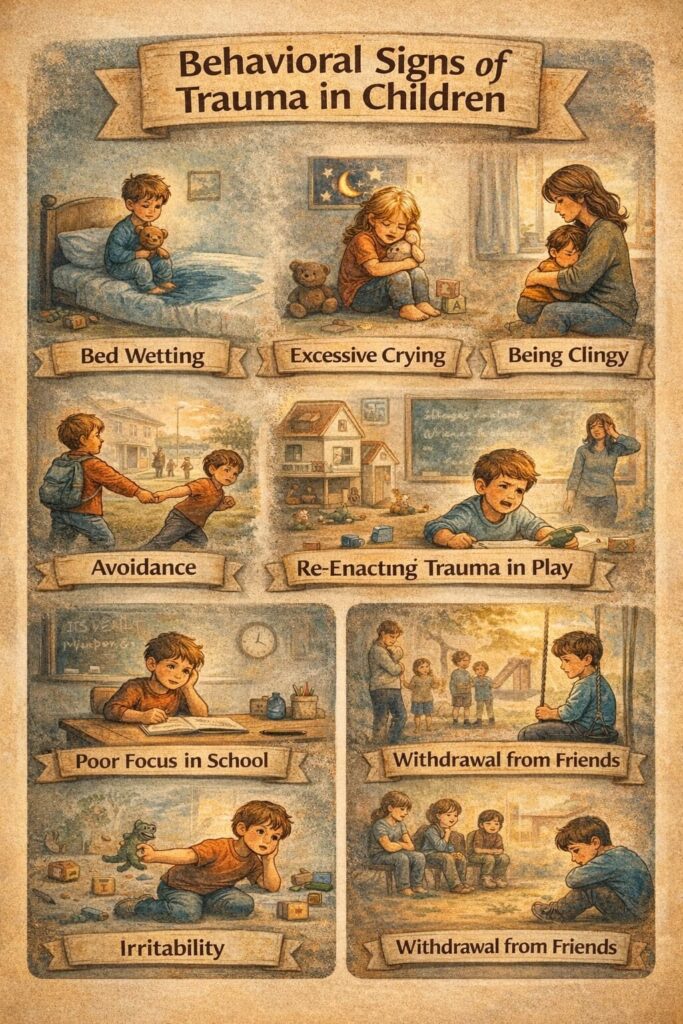
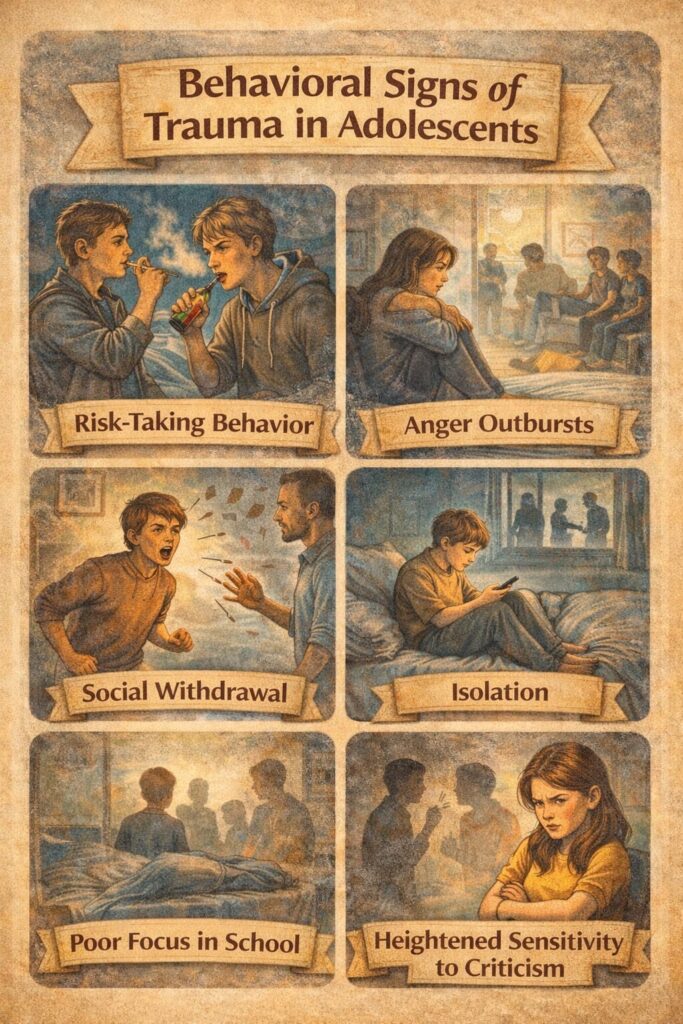
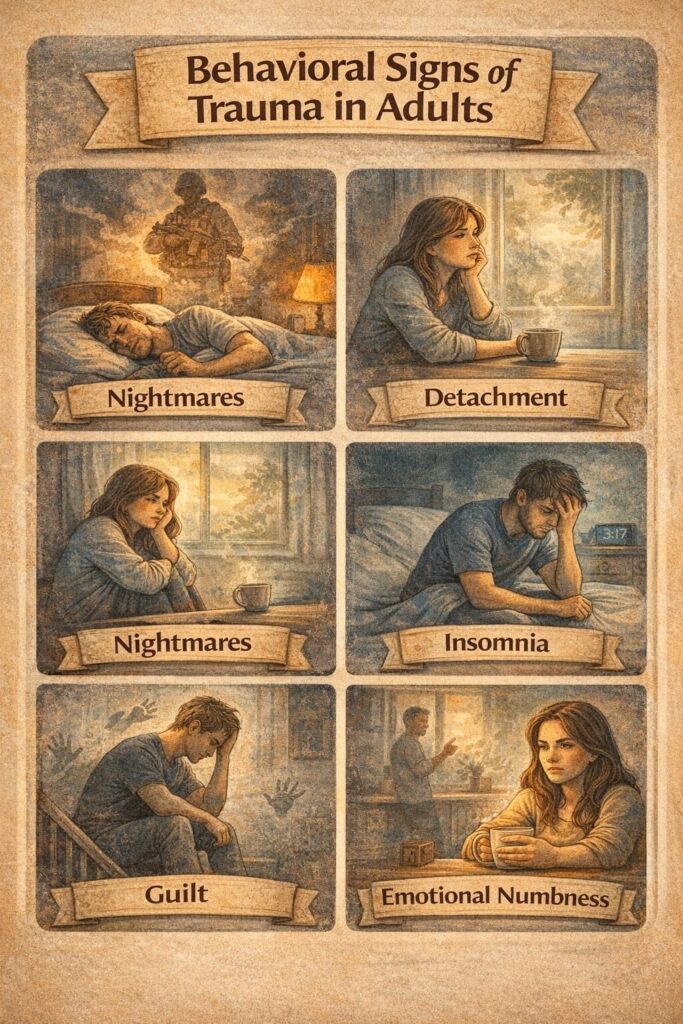
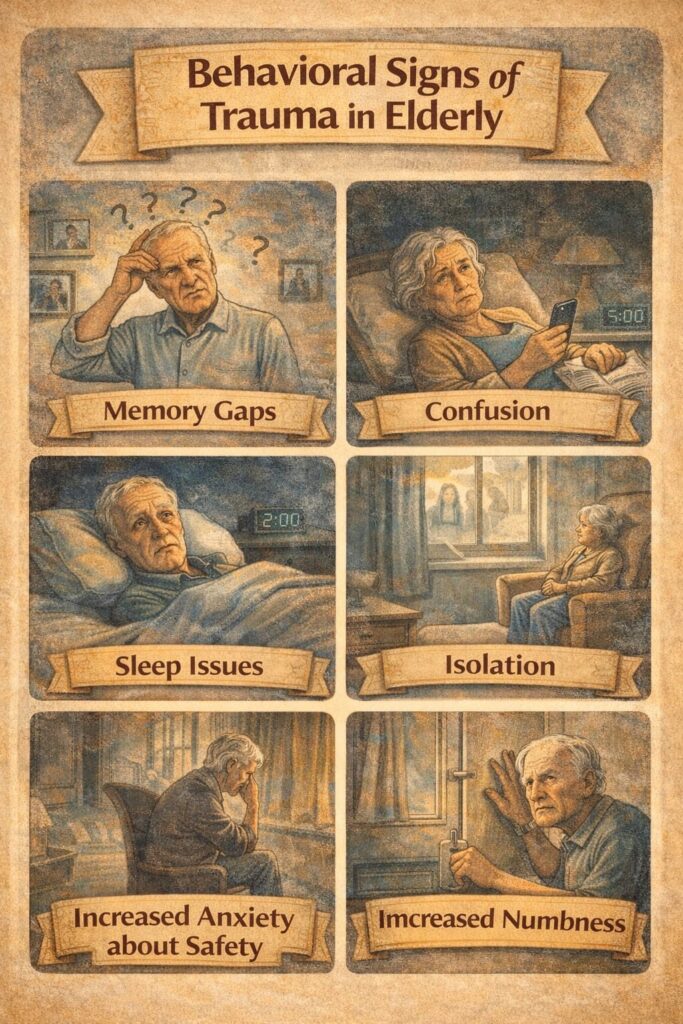
PTSD does not show up the same for everyone. Every person’s mind is affected differently. It is extremely important to know the signs that a person can show so that they can get the help they need in time:
CHILDREN:
ADOLESCENTS:
ADULTS:
ELDERLY:
How to get better?
PTSD is a very real mental health condition that makes a person think that it will never get better. That is untrue. Treatment of PTSD is very much possible and can help a person regain some sense of control over their life.
Treatment of PTSD involves alleviating and managing the symptoms effectively.
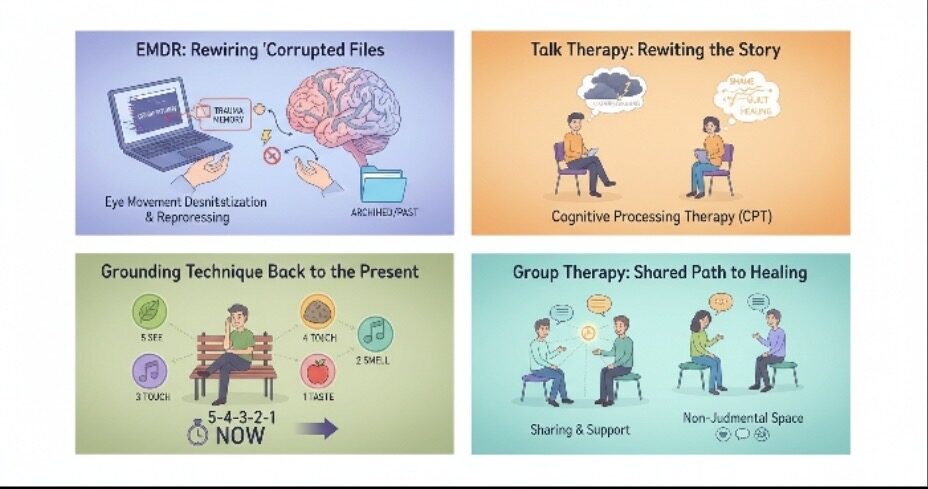
EMDR(Eye Movement Desensitization and Reprocessing): Imagine PTSD is like a “corrupted video file”. EMDR helps your brain “digest” that file. While you briefly focus on a traumatic memory, the therapist guides your eyes in a back-and-forth rhythm. It allows your brain to take that “stuck” memory and finally move it from the “Active/Danger” area to the “Archive/Past” area. After EMDR, the memory is still there, but it no longer feels like a lightning strike when you think about it.
Cognitive Processing Therapy or Talk Therapy: This therapy was designed specifically to treat PTSD. It focuses on changing painful negative emotions (like shame and guilt) and beliefs due to the trauma. It also helps you confront distressing memories and emotions.
Grounding technique: When a flashback starts, the brain gets stuck in the past. To bring it back to the present, the 5-4-3-2-1 technique can be used- 5 things you see, 4 things you can touch, 3 things you hear, 2 things you can smell, 1 thing you can taste
Group therapy: This type of therapy encourages survivors of similar traumatic events to share their experiences and feelings in a comfortable and nonjudgmental setting.
Prolonged Exposure Therapy: This therapy uses repeated, detailed imagining of the trauma or progressive exposures to symptom triggers in a safe, controlled way. This helps you face and gain control of fear and learn to cope.
Regular exercises
Meditation to calm the mind
Avoidance of alcohol and smoking
Seeking support from close ones
Your story is not over yet
If parts of this article felt uncomfortably familiar, stop for a moment and take it all in. Trauma responses are not the signs of failure- they are the signs of your body working hard to protect you.
If it still seems like the storm is raging around you: breathe; because you have already done the hardest part- you survived. Carrying the weight of a world that feels unsafe is exhausting, and it is okay to be tired. But your past, as heavy and jagged as it may be, does not have the final say in your future. You are more than the worst things that ever happened to you. You are a person with a future that is still unwritten, and that future doesn’t have to be in the shadows. The clouds can part, the winds can die down, and peace—true, deep, quiet peace—is waiting for you on the other side.
The views and opinions expressed on Nirmaya Care are those of the individual authors and do not necessarily reflect the official stance of the platform. While we aim to share clear, evidence‑based perspectives on public health, any suggestions or recommendations are intended to inform and support better understanding of health topics. The content is for educational purposes only and should not be taken as medical advice; readers should consult qualified clinicians for personal care. Nirmaya Care disclaims responsibility for any decisions or actions taken based on material published here.
Textual content on this website is written and edited by humans; no AI is involved.
Subscribe to Updates
Evidence-based articles for everyday health with clear guidance on what to watch for, when to act, and how to prevent problems.