

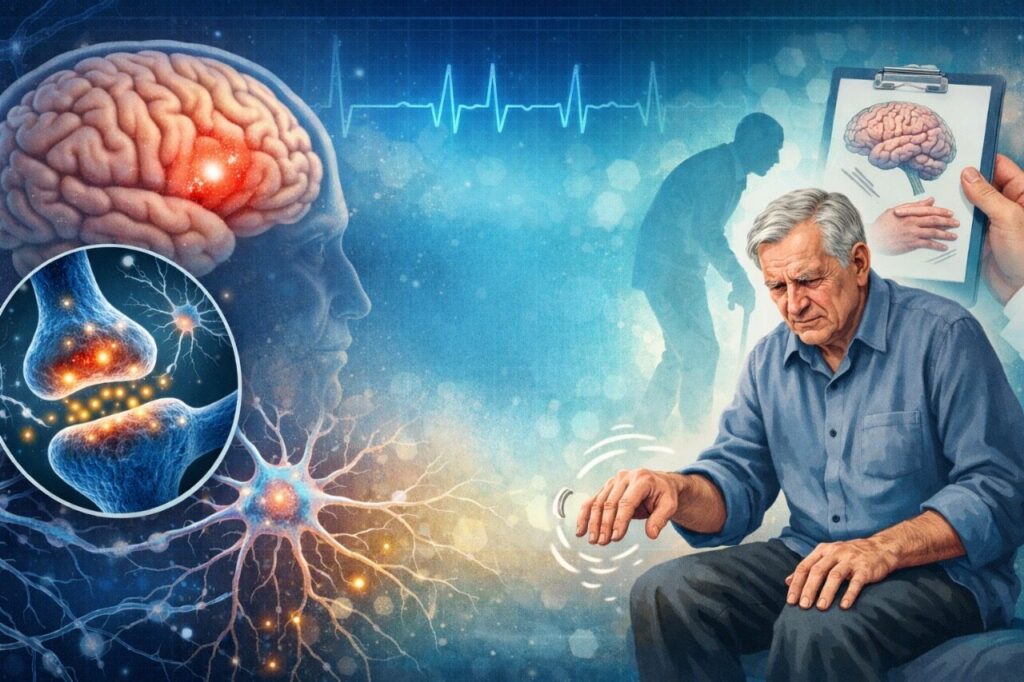
Childhood memories are often filled with loving moments with our grandparents. As we grow older, we notice our grandparents getting older too. They don’t move around like how they used to. Some of them might have a stooped posture, tremors, stiffness, and daily tasks can get harder to get through. How do we help them? To help them, we must first understand them. Learning about Parkinson’s disease might help us get a better insight into their struggles.
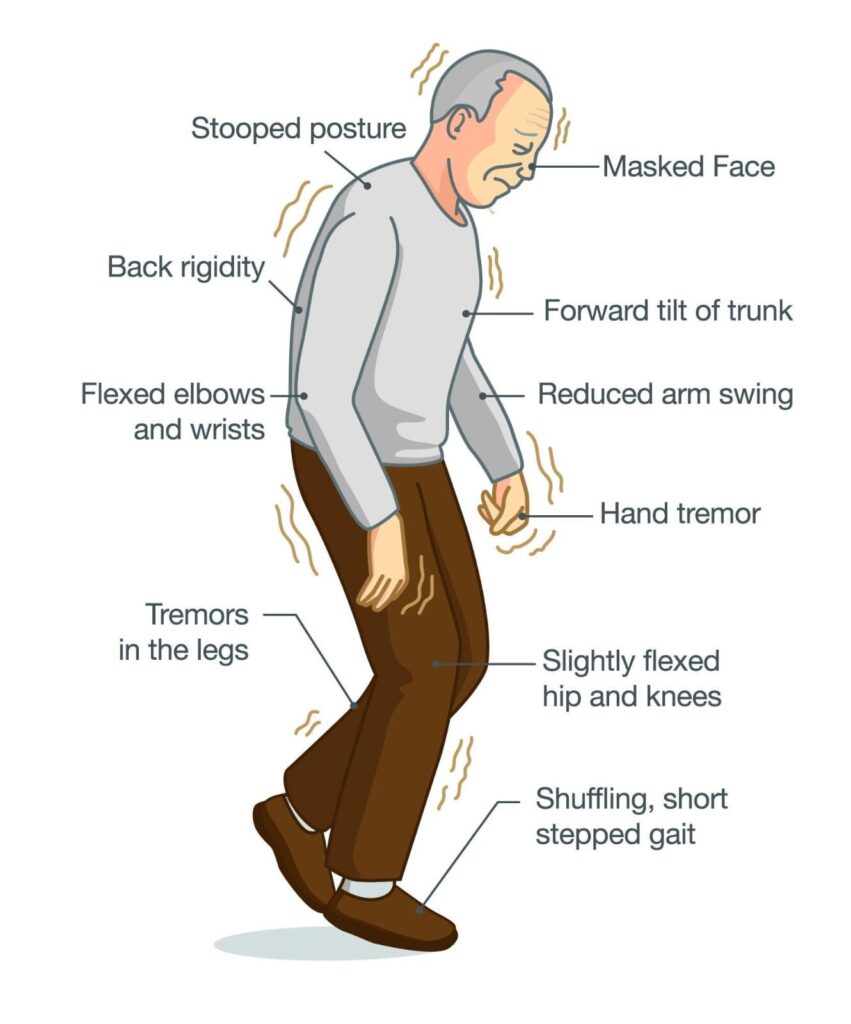
Image 1: Old man exhibiting signs of Parkinson’s
WHAT IS PARKINSON’S DISEASE [PD]?
Parkinson’s disease is a progressive neurological condition affecting movements and other bodily functions of an individual. It is due to decreased dopamine levels in our body. Death or injury of the dopamine-producing neurons in the brain causes fluctuations in dopamine levels. As a result, functions and movements controlled by dopamine are affected, which present as symptoms of the disease.
Who does it affect?
- It is an age-related disorder, often seen in people above 60 years of age.
- It affects over 10 million people globally.
- There are also rare cases of parkinsonism in younger people, termed as “early-onset Parkinson’s disease.”
- It is known to affect men more than women.
What do the symptoms of Parkinson’s look like?
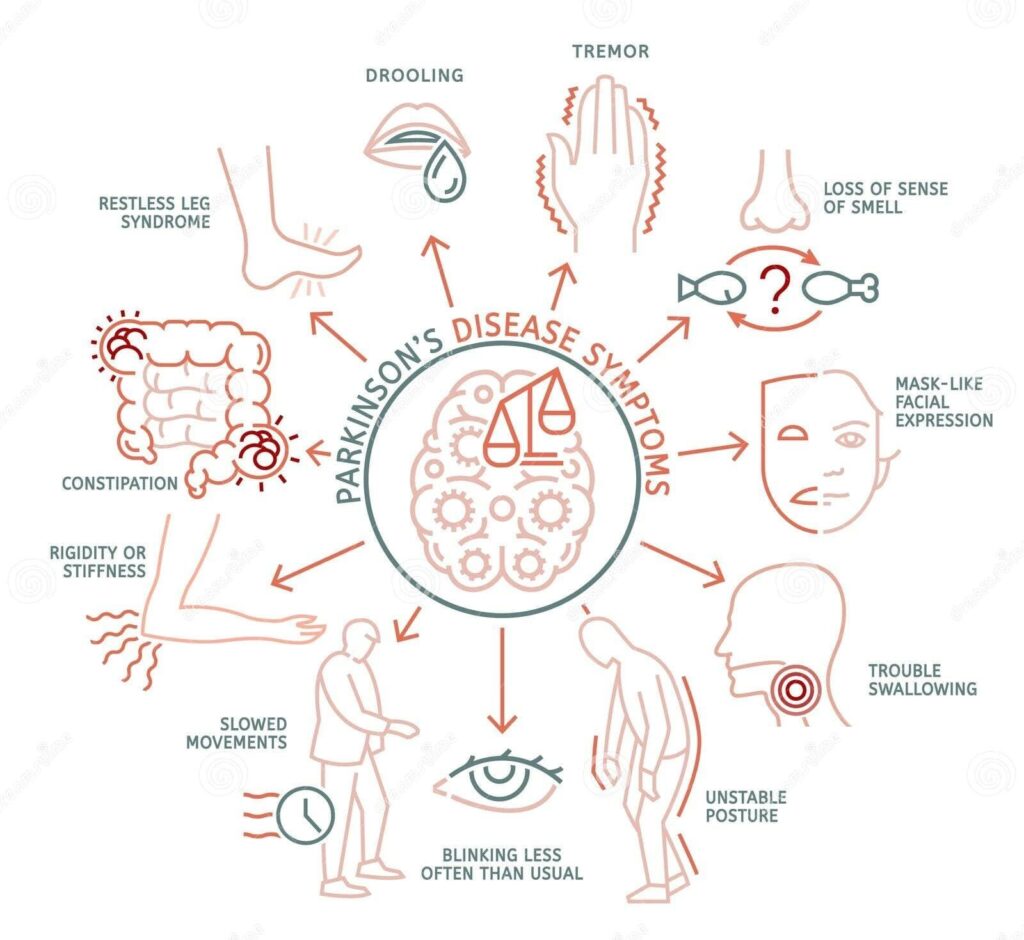
Image 2: Symptoms of Parkinsonism
Causes and common risk factors of PD
We haven’t fully understood the causes of PD, and around 90% of the cases are idiopathic.
[denoting any disease or condition which arises spontaneously or for which the cause is unknown.]However, we have noticed a few patterns or risk factors in the patients.
Several factors can increase a person’s risk of developing Parkinson’s disease, though having these risk factors does not mean someone will definitely get it.
These are:
– Age is the most significant risk factor. Parkinsonism is more common in older adults, usually developing after age 60.
– Genetics can play a role. Having a close family member with Parkinson’s slightly increases the risk, although most cases are not inherited.
– Sex is another factor. Parkinson’s disease is more common in men than in women.
– Environmental exposure may increase risk. Long-term exposure to pesticides, herbicides, heavy metals, or other toxins has been linked to Parkinson’s.
– Head injuries have also been associated with a higher risk, especially repeated or severe injuries.
These risk factors work together in complex ways, and researchers continue to study how they contribute to the development of Parkinson’s disease.
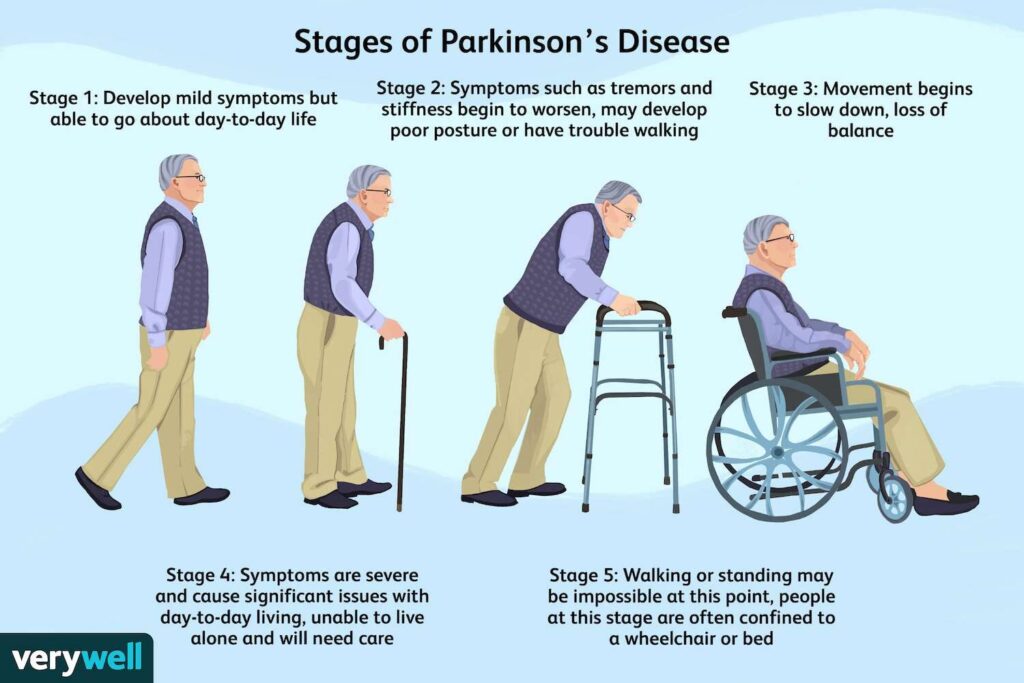
Image 3:Stages of Parkinson’s disease
HOW IS DAILY LIFE AFFECTED?
People with Parkinson’s may face challenges like:
1. Getting ready
- Buttoning shirts or tying shoelaces becomes difficult because of shaking or slow movement.
- Walking may feel slow or stiff.
2. Eating
- Hands may shake while holding a spoon or cup.
- Swallowing can become harder later on.
3. Talking
- The voice may become soft or monotone.
- Speaking clearly can be tough.
4. Writing
- Handwriting becomes very small and cramped.
5. Walking & Balance
- They may shuffle instead of taking full steps.
- The risk of falling increases.
6. Energy & Mood
- They often feel tired.
- Can have sadness or anxiety because of the brain changes.
7. Sleep
- Trouble falling asleep or staying asleep.
What can we do?
There is no cure yet, but treatment helps most people live active, manageable lives for many years.
1. Do you feel like you or a loved one is showing signs of Parkinson’s?
The best course of action would be to approach a general physician primarily and, based on the recommendations, seek a neurologist as needed.
2. When diagnosed, how do we cope with Parkinson’s?
Exercise is the most helpful tool to deal with parkinsonism. It can help slow down the symptoms and improve the quality of daily life.
Helpful activities include:
- Walking
- Yoga
- Cycling
- Dance
- Physiotherapy
3. There may be instances when management of a few symptoms may be out of our own ability. Thankfully, we have the resources in this day and age to approach trained professionals to seek therapy in various forms. They may be:
- Physiotherapy: Helps with walking, balance, and stiffness.
- Speech therapy: Helps make the voice louder and clearer.
- Occupational therapy: Helps with daily tasks like dressing, writing, and eating.
4. It is very important to maintain a healthy lifestyle alongside the treatment or rehabilitation measures. Key points include:
- Good sleep
- Healthy food
- Stress management
- Staying mentally active
5. In certain specific cases, the medical practitioner may find it appropriate to prescribe medicines, mainly in the form of Levodopa combined with Carbidopa.
6. How do these drugs work?
Levodopa: When introduced into the body, it plays the role of a dopamine producer. This leads to a dopamine surge.
However, dopamine by itself is easily degraded in the body. Thus, we need an agent to inhibit this process. This is the function of the drug carbidopa.
7. Family support
Similar to other illnesses, the diagnosis and management of Parkinson’s is an extremely stressful ordeal. During such a time, the help and moral support of loved ones are very helpful.
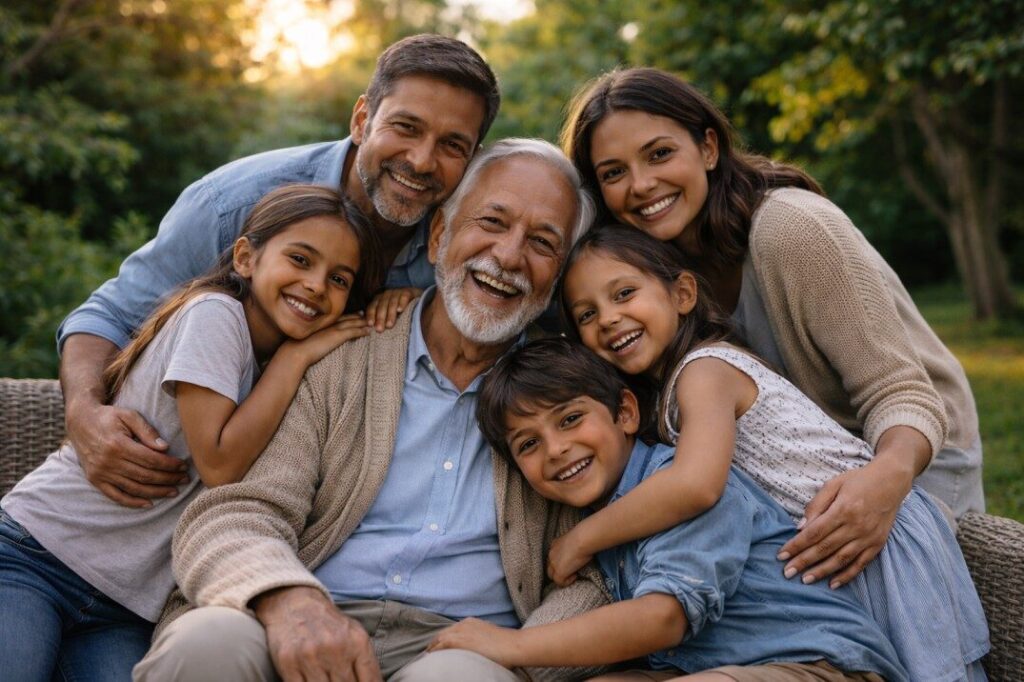
Image 4: an old man surrounded by happy family
EMPATHY, SUPPORT AND PARKINSON’S
Parkinson’s disease doesn’t just deteriorate the physical health of an individual, it also affects the mental state. The whole process of signs ,symptoms, diagnosis, and treatment leaves a person vulnerable emotionally. They have to deal with not being able to do certain tasks they earlier completed with ease. Family support is crucial in maintaining the mental well-being of the patient by giving them a shoulder to lean on. After learning about the basics of the disorder, it is my hope that we can be kinder and more patient with their struggles.