
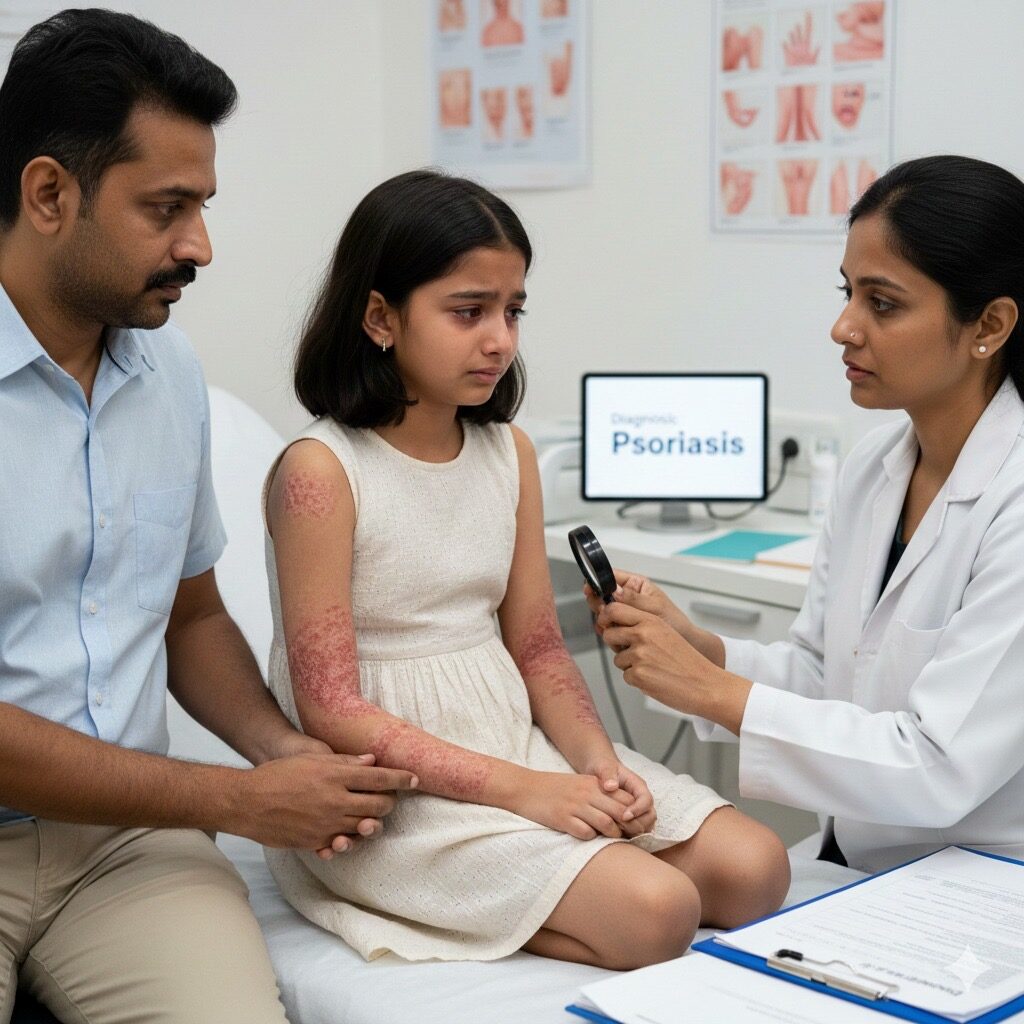
Hesitant, constantly staring at the floor,
She stepped into the dermatologist’s room,
Her father close behind,
Both wearing the fragile shine of unshed tears.
Her sleeves hid patches of red, scaly skin,
Like winter frost refusing to leave,
She avoided every gaze,
Shrinking from within.
School had become a battlefield,
That she could no longer fight on,
Her friends drifted away like leaves in the wind
And relatives closed their doors in quiet fear.
She hated mirrors,
Hated the way her skin appeared,
While some feared her touch
Others feared her presence.
For their perception was inclined towards a curse,
Neither logical, nor practical,
But it was nothing more than a skin condition,
As the doctor called it Psoriasis.
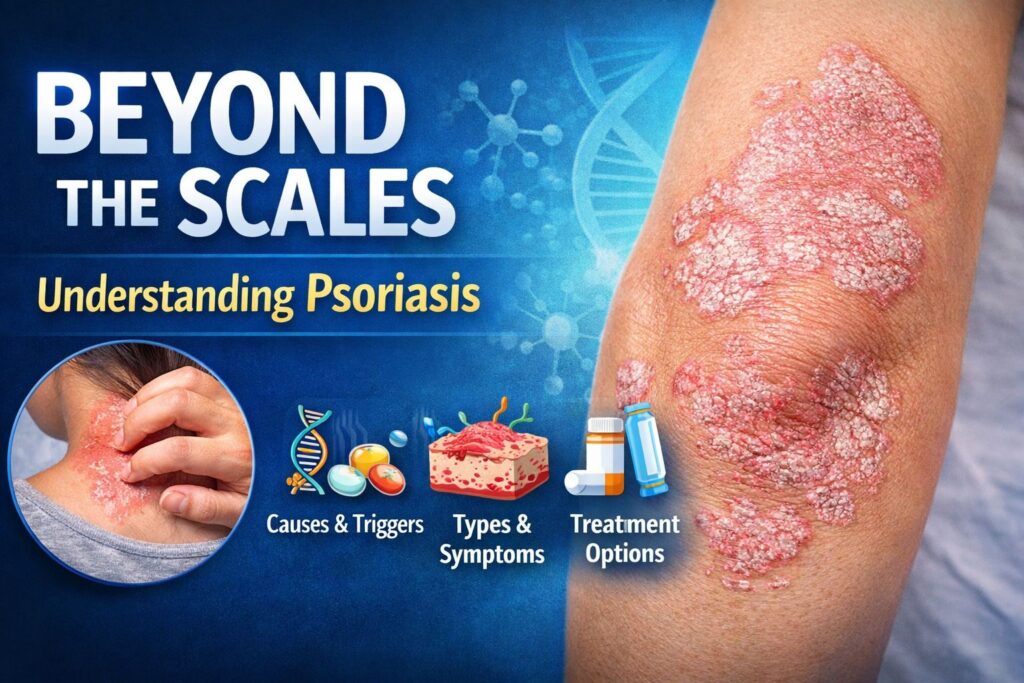
Skin problems are often brushed aside as minor or temporary concerns—an itchy scalp blamed on dandruff, flaky patches dismissed as dry skin, or redness attributed to allergies. However, these visible changes can sometimes signal a deeper, long-standing disorder. Psoriasis is a long standing inflammatory disease that affects not only the skin but also the immune system. Understanding psoriasis, its causes, mechanisms,types and management, is therefore essential for early recognition and effective control.
This article explores psoriasis in detail, as you read on, the nuances become clearer and more meaningful.
Psoriasis: More Than Just a Skin Condition
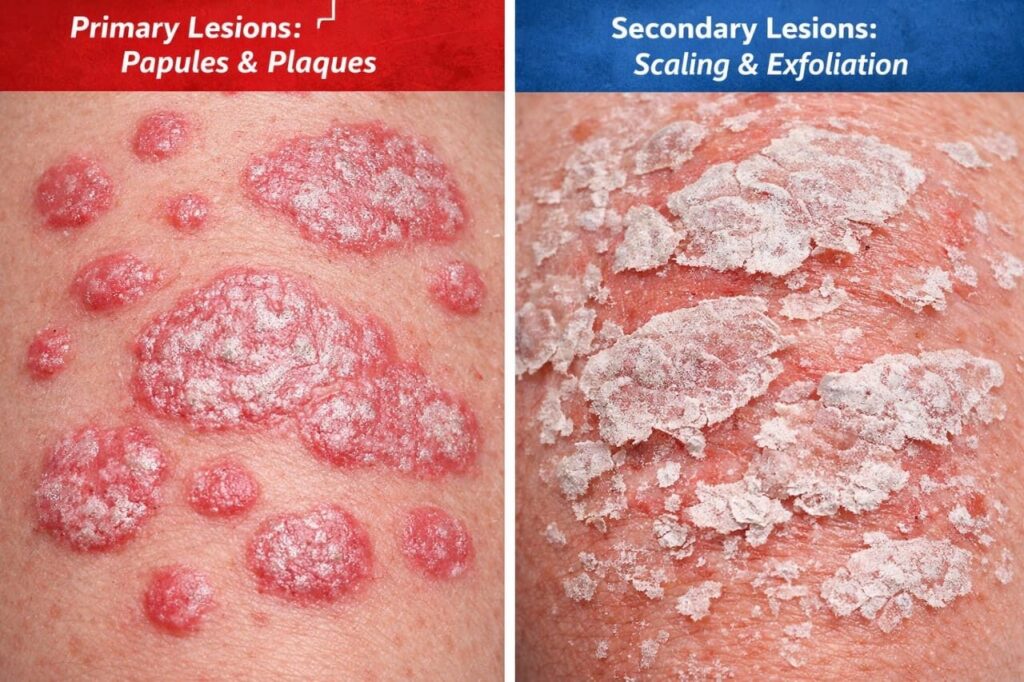
- Psoriasis is a long standing inflammatory disease majorly affecting skin mainly characterized by itching and lesions which can be primary or secondary
- Primary lesions are circular solid raised lesions which are either less than 1 cm (papule)or more than 1 cm(plaque)
- Secondary lesions are visible exfoliation of skin
It is a condition that extends beyond appearance, influencing physical comfort, mental health, and overall quality of life. Despite being relatively common, psoriasis remains widely misunderstood.
Inside Psoriasis: What Really Sparks Those Flare-Ups?
It could be due to signalling molecules called cytokinins or genetic or environmental
- Inflammatory mediators ( chemicals released during injury or infection that act as tiny alarm signs): increase in inflammatory mediators causes increased cell division and inflammation leading to psoriasis
- Genetic factors: 60 to 90% of the cases are due to hereditary factor
- Environment factors: Winter season
- Drugs: Drugs like Lithium, beta blockers ,anti malarial drugs, sudden stopping of systemic steroids
- Infections: Infections like HIV or group A streptococci
- Substance abuse: Alcohol and smoking
Psoriasis in the Population: What the Statistics Reveal
- Psoriasis affects extremes of age groups which is 15 to 25 year old and 50 to 60 year old people
- It affects about 0.44 to 2.8 % of adults in India and approx 2-3% of world’s population
- Male to female ratio being 2:1 or 2.5 :1
How Psoriasis Takes Shape: The Story Under Your Skin
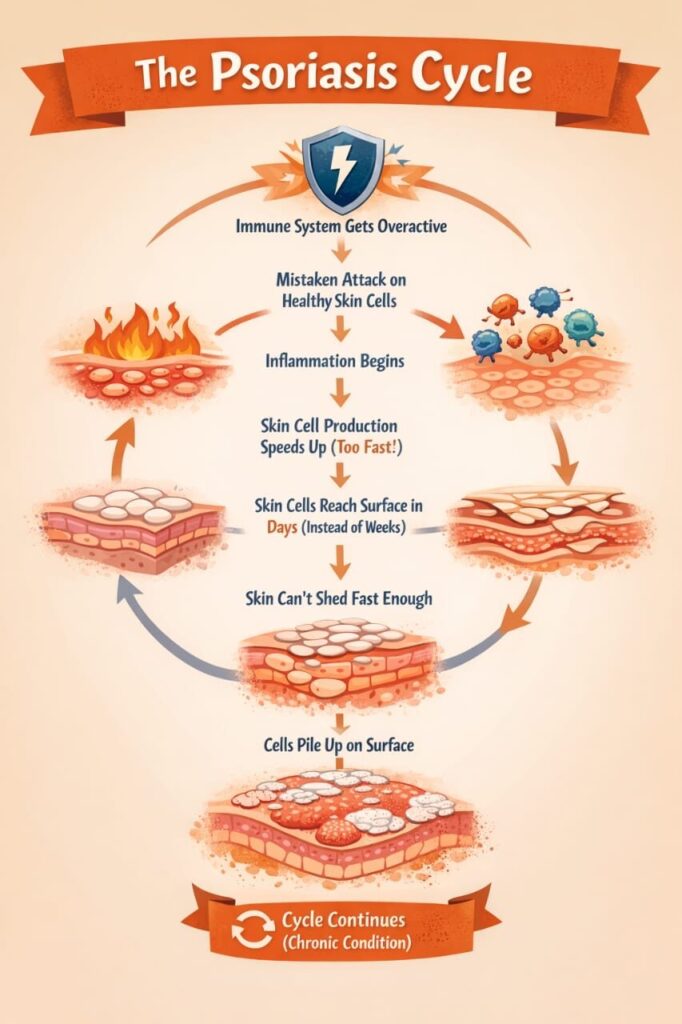
What you see on the skin in psoriasis is only the final chapter of the story. Behind it, the body’s immune system and skin cells are communicating abnormally and working too fast. The pathophysiology explains how this hidden process leads to the outward symptoms.
When the Skin Speaks in Different Forms- Understanding the variants of Psoriasis
- Chronic type or psoriasis vulgaris
- Guttate psoriasis
- Pustular psoriasis
- Erythrodermic psoriasis
- Nail psoriasis
- Psoriatic arthritis
- Chronic type or psoriasis vulgaris:
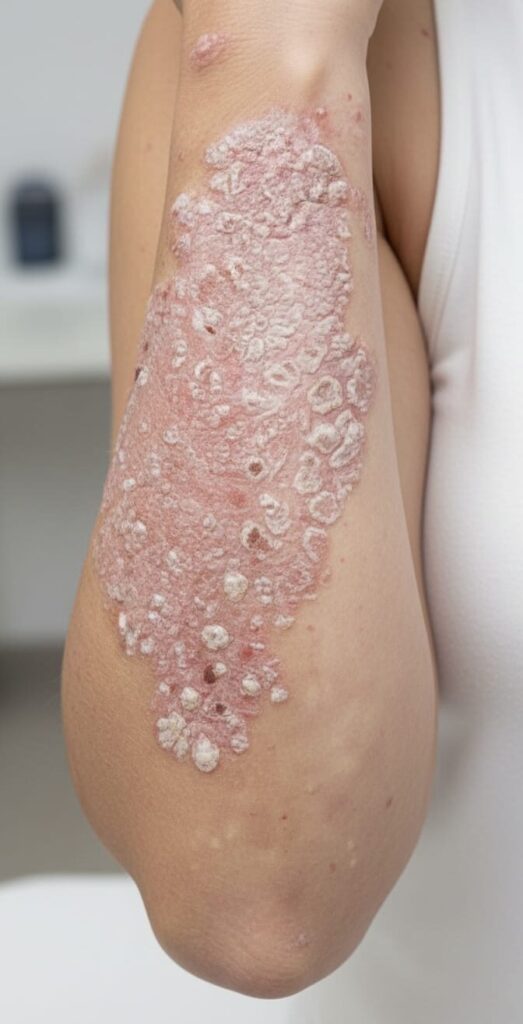
This is the most common type of Psoriasis characterised by reddish papules and plaques along with silvery white scaling of kin.
This is present over the scalp, elbows and knees.
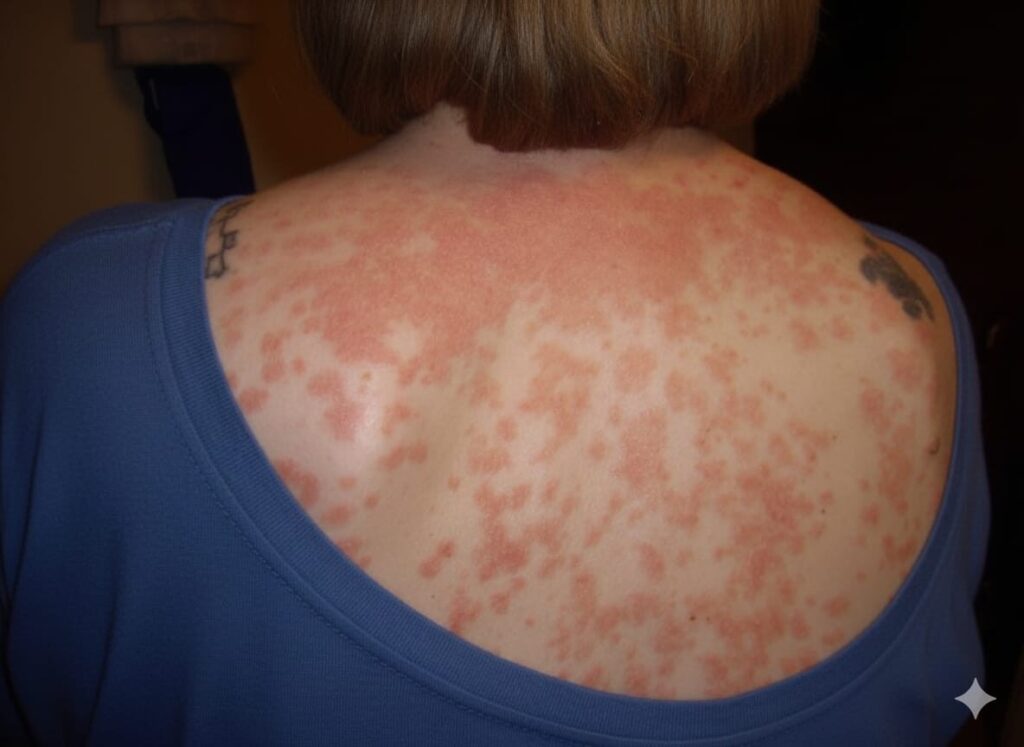
2.Guttate psoriasis :
Meaning raindrop-like lesions usually seen on the trunk. This usually occurs in children with the history of sore throat or pharyngitis .The main causative agent being Group A- hemolytic streptococcus.
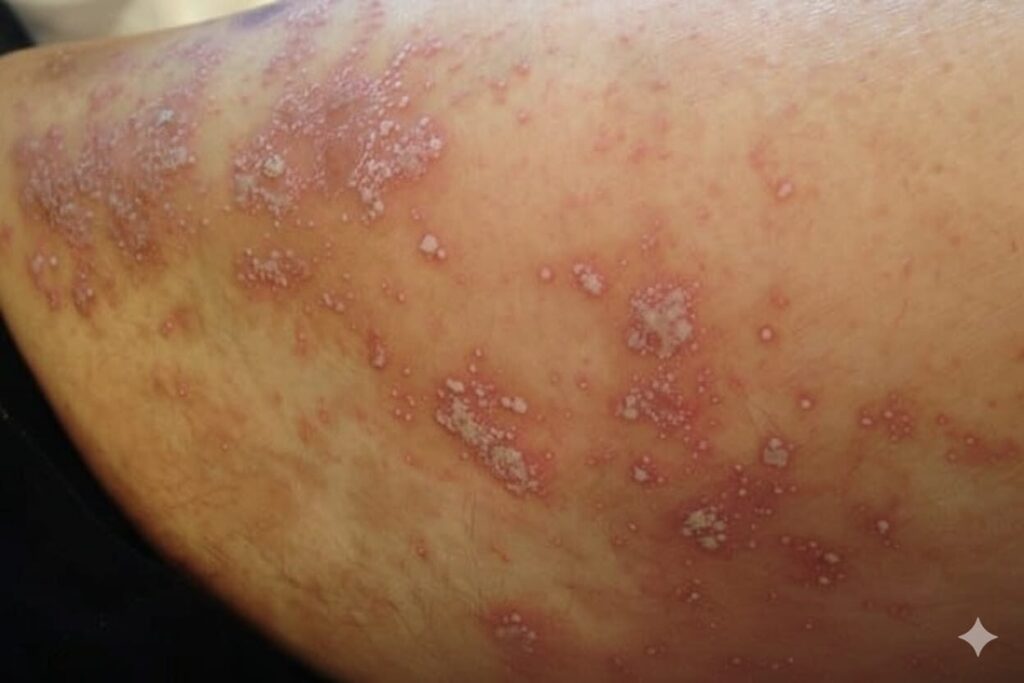
3. Pustular psoriasis
- It is triggered by sudden withdrawal of systemic steroids leading to lesions with sterile pustules
- These pustules eventually come together to form sheets of pus.
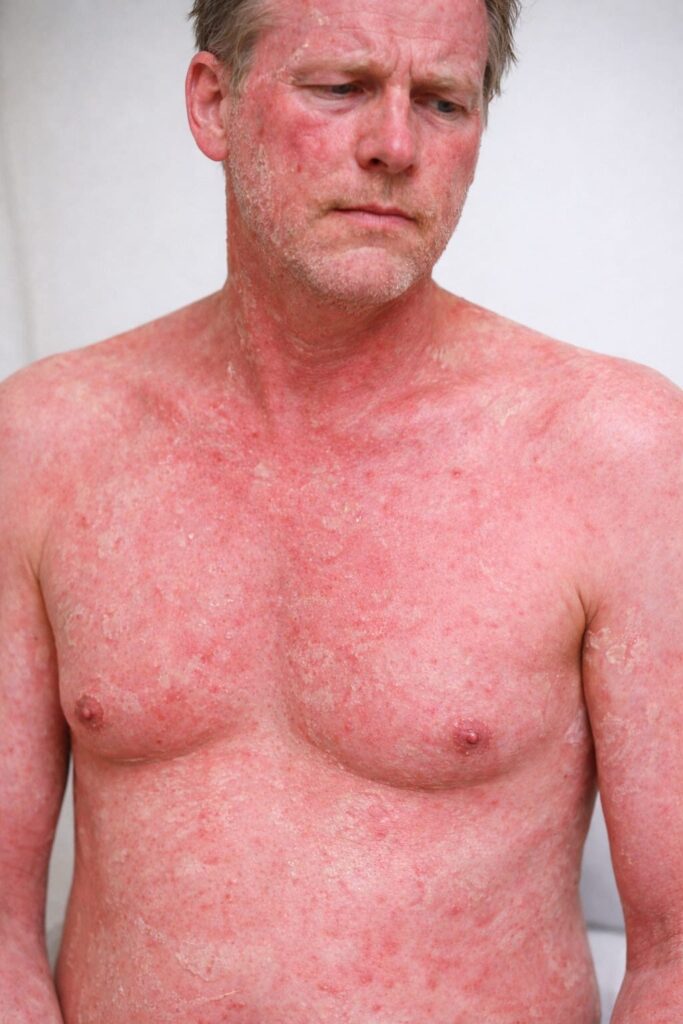
4. Erythrodermic psoriasis:
In this case the lesions cover over 90% of the body surface with or without scaling of skin.
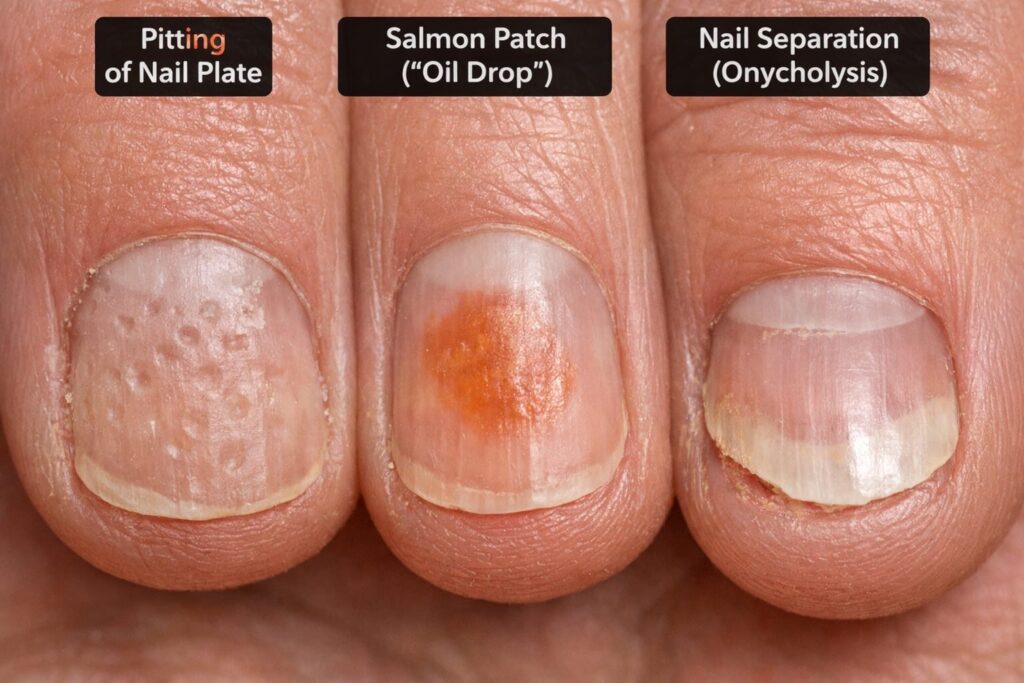
5. Nail psoriasis:
The following lesions can be seen in case nail psoriasis:-
- Pitting(depression )of nail plate
- Separation of nail plate from nail bed
- Salmon patch seen on nail bed
6. Psoriatic arthritis:
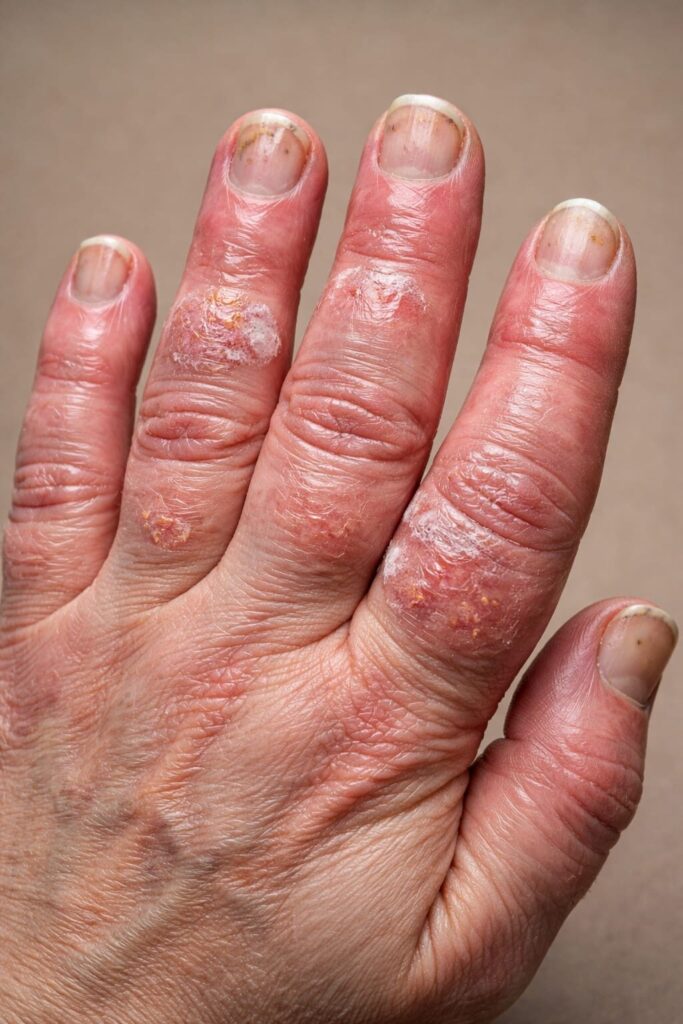
- Causes joint pain , swelling, stiffness and restrictions of movements in joints of fingers,wrist , ankle,hip, spine and knee .
- It usually affects the distal part of joints.
- Causes sausage like appearance of fingers .
Psoriasis doesn’t always appear in its classical signs it can also disguise as:
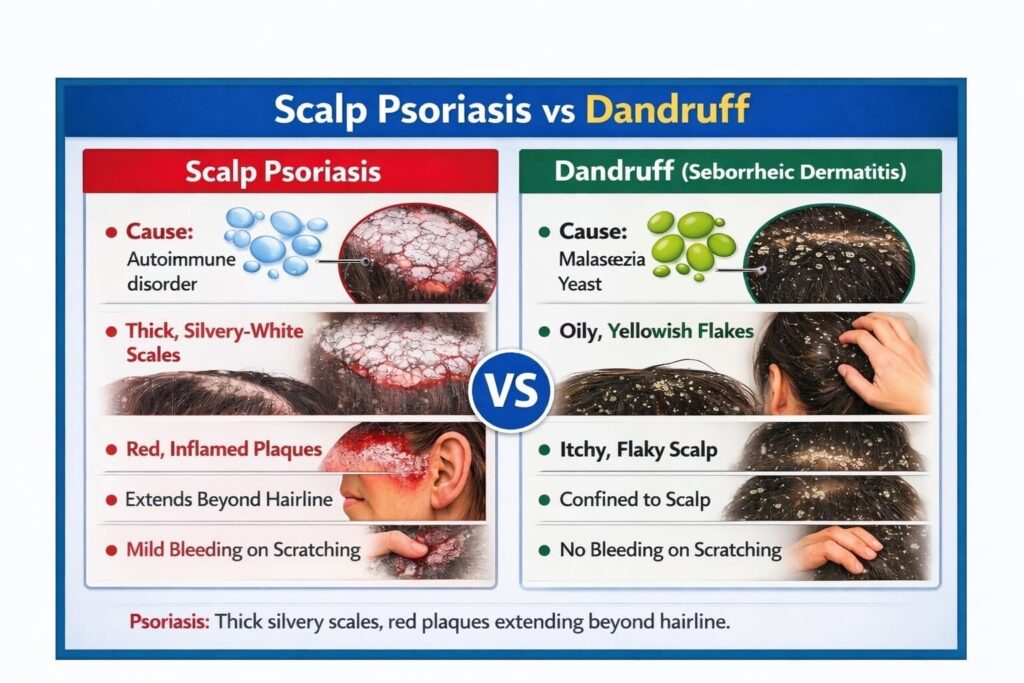
- Scalp psoriasis
Silvery white scaly lesions on the scalp should not be confused with dandruff.
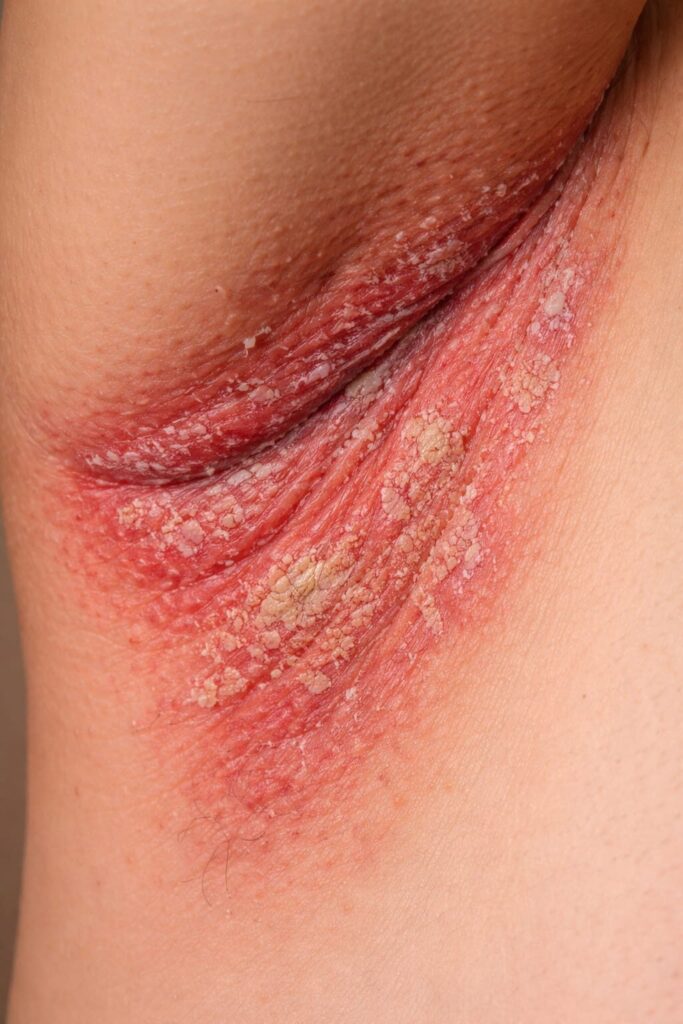
- Flexural psoriasis / inverse psoriasis
Red itchy shiny rash seen on warm, moist folds of the body like the breast, groin, armpits.
Psoriasis myths that need a reality check!
Living with psoriasis comes with enough challenges on its own, let us address some myths that keep confusing everyone.
× Psoriasis is contagious
- Psoriasis is a non contagious disease which does not transmit on physical contact.
× Psoriasis is caused due to poor hygiene
- Psoriasis is an autoimmune systemic disorder which does not have any relationship with hygiene.
× Psoriasis can be completely cured
- Psoriasis can be controlled with proper treatment but cannot be completely cured.
× Psoriasis spreads by scratching
- Psoriasis does not spread by scratching but can cause scarring .
× Sun exposure worsens psoriasis
- Mild to moderate sun exposure turns out to be actually beneficial in Psoriasis but extreme Sun exposure can cause burns and worsen the lesions.
When to visit the doctor?
On seeing any of the signs and symptoms mentioned above visit the dermatologist as soon as possible to prevent any further complications.
As psoriasis affects not only skin but also the patient’s confidence, quality of life and daily functioning both physical symptoms and emotional status of the patient must be addressed.
Physical symptoms are addressed with:
- Topical therapy:Moisturizers, vitamin A and D analogues to normalise tissue growth.
- Phototherapy: using UV Rays.
- Systemic drugs: specific drugs for different types of Psoriasis are prescribed .
Addressing psychological effects of Psoriasis:
Living with the burden of Psoriasis takes a toll on both emotional and Physical health of an individual. It feels like carrying an invisible weight that grows heavier each day, dealing with constant itching,scaly lesions, unkind stares from strangers, and hesitation to step into the outside world can drag a person into darkness, dimming their confidence and increasing anxiety. With emotional support,education and courage to challenge myths one can reclaim their sense of self,compassion from within and others becomes a powerful medicine in healing their spirit .
Can psoriasis be prevented:
- Psoriasis can not be prevented when it is due to genetic factor however triggering factors like alcohol ,smoking and stress can be controlled
- Receive proper treatment for HIV, streptococcal infections and maintain personal hygiene
- Primary prevention of Psoriasis is not possible but secondary prevention like early detection and treatment prevent the further complications and control the disease, continue the prescribed treatment of lotions and drugs
Conclusion
Understanding psoriasis goes beyond skin-deep. It calls for empathy, early diagnosis, and consistent treatment. When stigma fades and awareness rises, individuals living with psoriasis gain the space to heal both medically and emotionally.
Although it cannot be completely cured,advances in medical therapy have made it possible to control symptoms effectively and significantly improve the quality of life of those affected.
Early diagnosis and consistent treatment play a crucial role in preventing complications such as severe skin involvement and psoriatic arthritis. Equally important is breaking the myths associated with psoriasis. Recognizing that the disease is non-contagious, unrelated to hygiene, and influenced by immune and genetic factors helps reduce stigma and promotes empathy toward those living with the condition.
By adopting healthy lifestyle habits, avoiding known triggers, and adhering to prescribed therapies, individuals with psoriasis can lead active and confident lives. Increased education and awareness remain the cornerstone in transforming psoriasis from a misunderstood condition into a well-managed one.
What the skin reveals is only a chapter, the rest of your story is resilience.
References
- Global psoriasis Statistics:https://www.globalpsoriasisatlas.org
- Psoriasis Statistics in India:https://ijdvl.com/psoriasis-in-india-prevalence-and-pattern/
- WHO – Global Report on Psoriasis