

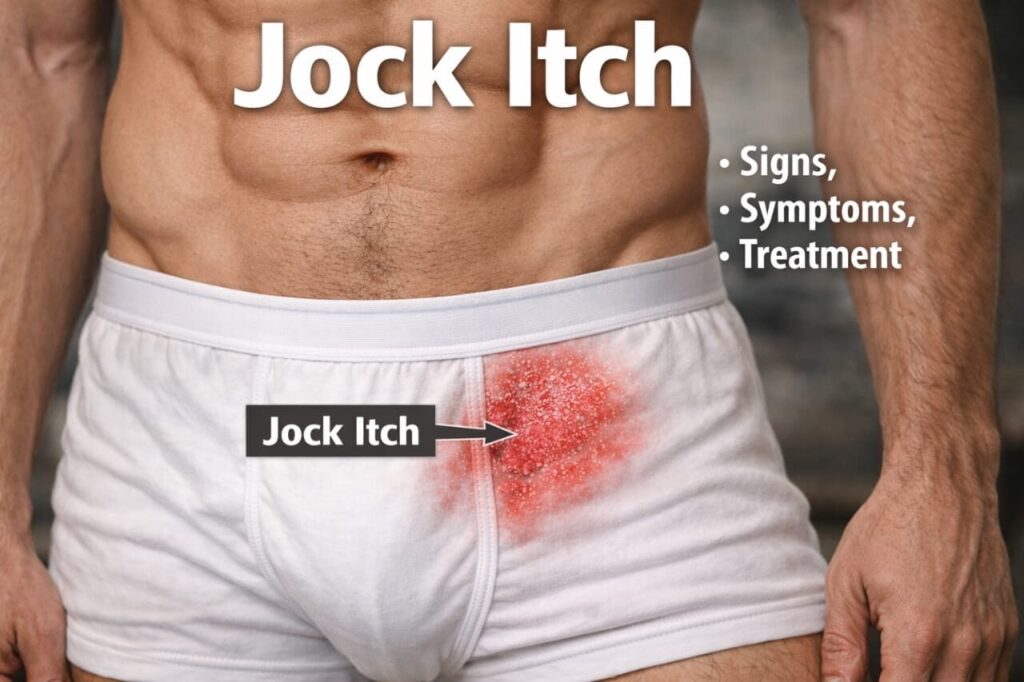
Introduction: Let’s Talk About the “Down-There” Itch
Hello there, I am here to talk about a condition where a person gets a very irritating itching sensation in his private area or near his thigh and is dealing with an uncomfortable, itchy rash—please know that this is an incredibly common problem in India, most commonly targeting athletes and people who sweat a lot. Medically, we call it Tinea Cruris, but you likely know it as Jock Itch.
As a medical student, I’ve learned that this condition causes more frustration and embarrassment than it should. This article aims to replace that worry with clear, useful information on why it happens, and exactly how you can fix it. We are going to address the fact that it’s not about being unclean; it’s about a tiny organism loving a specific environment a little too much.
-I have written a short, to-the-point article so let’s start.
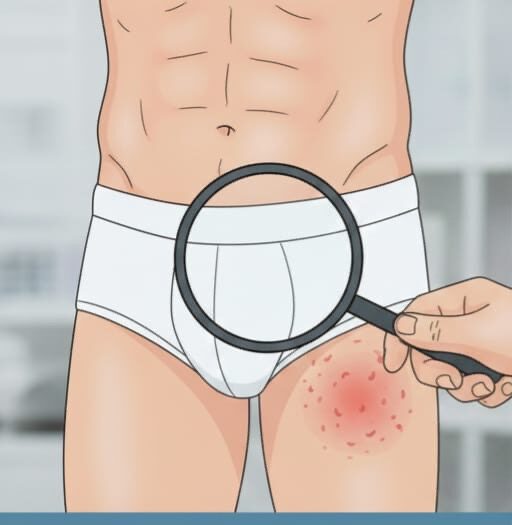
What Causes this Itch and Why You?
The Main Culprit: A Fungus
Jock itch is not caused by a bacteria or a virus. It’s caused by a type of fungus which looks like a ring shape and the culprit is a ringworm. Specifically, it’s often the same group of fungi (dermatophytes) that cause athlete’s foot. These microscopic organisms live on dead skin, hair, and nails. So don’t think why this fungus has only chosen me, it is always some factors which have influenced and promoted the cause of the growth of this fungus.
Risk Factors
The fungus is around, but it needs the right conditions to grow out of control. You’re more likely to get Jock itch if you create a growing environment for it.
Key factors include:
•Moisture & Heat: Sweating heavily from exercise or living in a humid climate, whether you are an athlete or a dancer who does their activity so much that they sweat a lot all over the body, creates a perfect environment for the growth, providing adequate moisture, the right temperature, and also not showering after the activity causing the moisture to lodge.
The fungus always finds the perfect temperature and moisture for its survival, and thus providing it with that is always a known thing – you are going to get infected with it.
•Tight Clothing: Wearing tight synthetic underwear, tight athletic gear, or non-breathable pants that trap sweat, creates a perfect home-like set up for bearing the fungus and a hotspot for its survival.
•Direct Spread: A person who already has athlete’s foot and ignores the fact and uses the same towel to dry his feet and also uses it to wash his groin region is directly welcoming the fungus to lodge in the groin region; hence, his ignorance would have costed him this. Having an athlete’s foot and using the same towel to dry your feet and then your groin.
•Sharing Personal Items: People who visit the gym after their intense workout come to the changing room and sometimes change their clothes and shoes. Some would have forgotten their towel, so they might have borrowed it from their friends. If he is also affected with any fungus either on his foot or skin and has used it, then the chances of getting the fungal infection are always high.
Even athletes after playing, they might share the same towel to wash the sweat; this might cause the spread of fungus easily through the towel.
•Being Male: Tinea Cruris/Jock Itch has shown a greater prevalence towards men according to the statistics, but even women can get it.
.
•Has some underlying conditions: Conditions like diabetes or immunocompromised patients are always more susceptible towards fungal infections. In HIV, we can clearly see how much fungal infection they are prone to.
Let’s have a Simple Look at What’s Happening Under Your Skin
Let’s break down the process without complex terms:
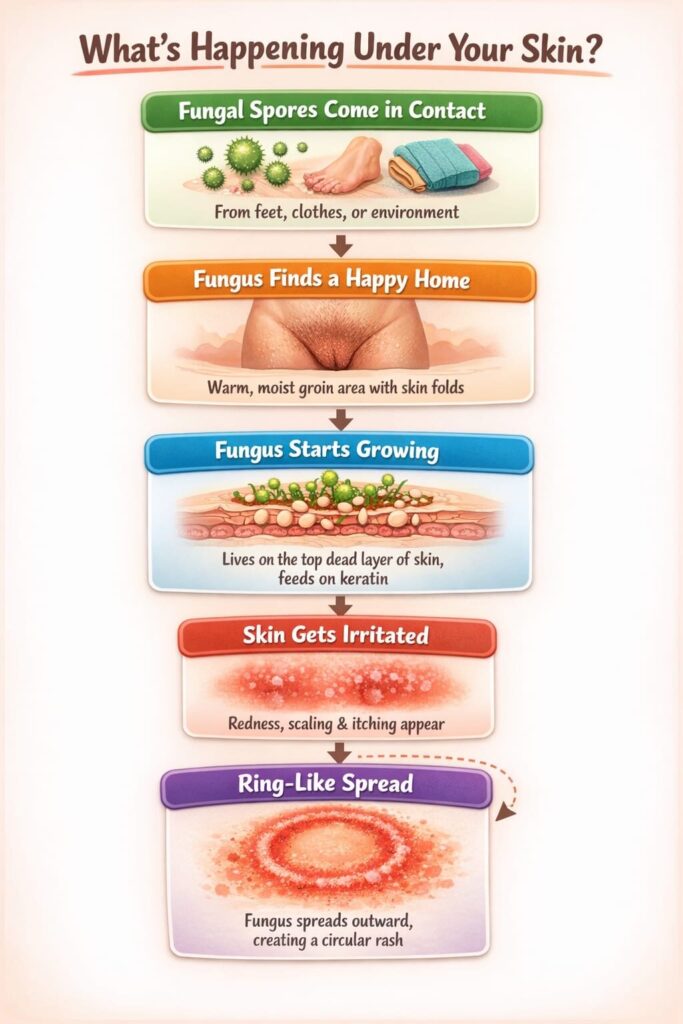
-The Fungus Arrives: The fungal spores come into contact with your skin, often from your own body (like from your feet) or the atmosphere where you are in contact.
-It Finds a Happy Home: Your groin is warm, moist, and with skin folds, providing the ideal living conditions for its survival.
-It Grows and Irritates: The fungus starts to grow and multiply on the top, dead layer of your skin (the stratum corneum). It feeds on a protein called keratin.
-Your Body Reacts: Your skin’s immune system notices this invasion and reacts, causing the redness, scaling, and most importantly, the itch. The fungus often spreads outwards in a circle, leading to the ring-like appearance and is caused by ringworm.
How to Recognize the Signs and Symptoms
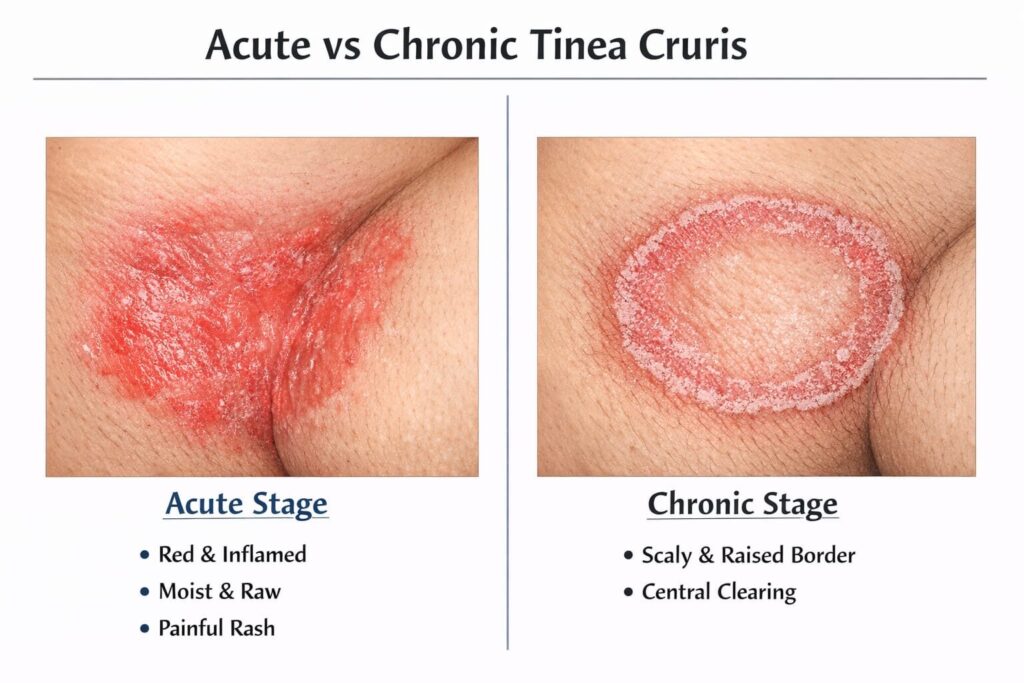
How do you know it’s jock itch and not something else? Look for these common signs:
•Tinea cruris is usually itchy. It usually begins in the inguinal (groin) skin fold on one side which can evolve to become a bilateral but characteristically asymmetrical rash.
•The rash can extend down the inner aspect of the thigh or to the lower abdomen and pubic area.
•Involvement of the buttocks and perineum may be seen but there is typically sparing of the penis, scrotum, and vulva.
•Early stages of tinea cruris may present as a moist and red rash.
•Later stages of tinea cruris presents as a large well-demarcated infection with a raised border.
•There might also be a skin colour change where it can get darker or lighter and can also have a burning sensation of the skin.
Age Group Distribution–
% of Total Jock Itch Cases:-
Age group Percentage
10-20 yrs 19%
21-30 yrs 30%
31-40 yrs 27%
10-40 yrs combined 76% (majority of cases)
•Most jock itch patients are between 21–40 years, with the peak around 21–30 yrs (30%) and substantial cases in 31–40 yrs (27%). Younger teens (10–20 yrs) still show notable cases (19%).
Prevention: How to Keep It From Coming Back–
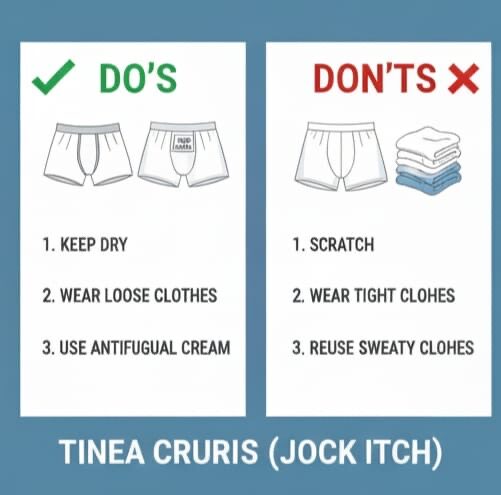
Beating jock itch is half treatment, half changing the environment that let it grow.
Make these habits for the prevention: [3D’s Strategy]
•Dry areas thoroughly: After showering or swimming, pat the groin area completely dry with a clean, dry towel. Make sure you are completely drying the area which was previously affected and make it moisture and heat free. Use a separate towel if you have an athlete’s foot as it might again increase the chance of recurrence.
•Dress with Proper Hygiene: Wear loose-fitting, breathable clothing like cotton underwear where you will not provide the environment for its regrowth..
•Use Talcum/Powder: A simple talcum or powder can help keep the area dry. Antifungal powders are even better for prevention as it might eradicate the chances of its recurrence.
•Don’t Share your belongings: Keep towels, clothes, and sports gear personal as it might hamper your maintenance of a safe environment and strike another infection.
•Treat underlying infections: If you have an athlete’s foot, treat it at the same time to prevent re-infection.
How Do Doctors Know For Sure?
For most typical cases, a doctor can diagnose jock itch just by looking at the rash. It has a very recognizable appearance.
If the rash is unusual, keeps coming back, or doesn’t respond to standard treatment, a doctor might do a simple test:
-Skin Scraping: They may gently scrape off a tiny bit of the flaky skin and examine and get you the results.
-Microscopy: This sample is then treated with a special liquid and looked at under a microscope to see the fungal cells.
This quick test confirms the diagnosis and rules out other skin conditions like eczema or psoriasis
Treatment:Necessary Steps to be taken-
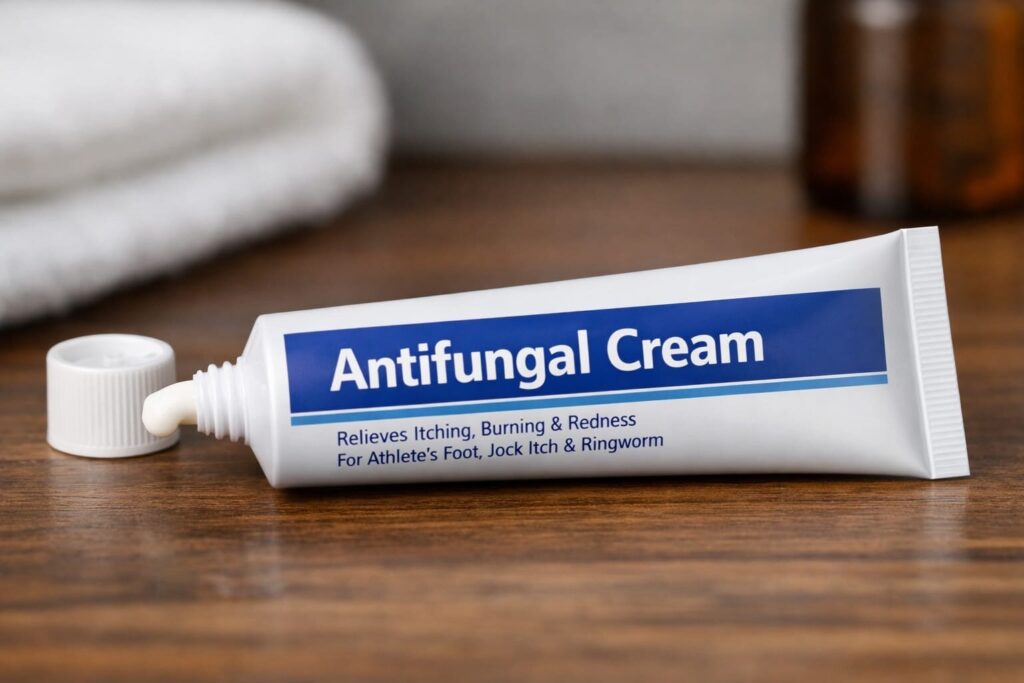
A doctor can prescribe:
•Stronger Topical Creams: More useful antifungal creams which needs to be applied as per the guidance and healthy environment should be maintained..
•Oral Medications: Antifungal pills for severe or stubborn cases where it looks as very difficult to remove it using creams, pills are used. These are taken by mouth.
Takeaway
•Remember,Jock itch is a manageable skin condition.
There’s no shame in having it. By understanding the simple “why” behind it and combining targeted treatment with smart lifestyle changes, you can stop the itch for good. It is one of the most common infections one can have due to sweating aggressively and not taking care of it as in the case of athletes,dancers.
Also in the case of people going to gym who sweat profusely and dont shower after coming home and dont change their inner garments , this is the most favorite hotspot for the fungus to grow and multiply. So it is the duty of the individual to take care of their vulnerable spots and prevent the growth of this dreadful fungus. It is always a chronic cause that this grows and also the treatment is also a chronic treatment.
So it is always ‘Prevention is better than cure’ which holds the perfect weight for this infection.
Resources
•https://www.ncbi.nlm.nih.gov/books/NBK554602/
•https://www.mayoclinic.org/diseases-conditions/jock-itch/symptoms-causes/syc-20353807
•https://dermnetnz.org/topics/tinea-cruris
•https://my.clevelandclinic.org/health/diseases/22141-jock-itch-tinea-cruris