

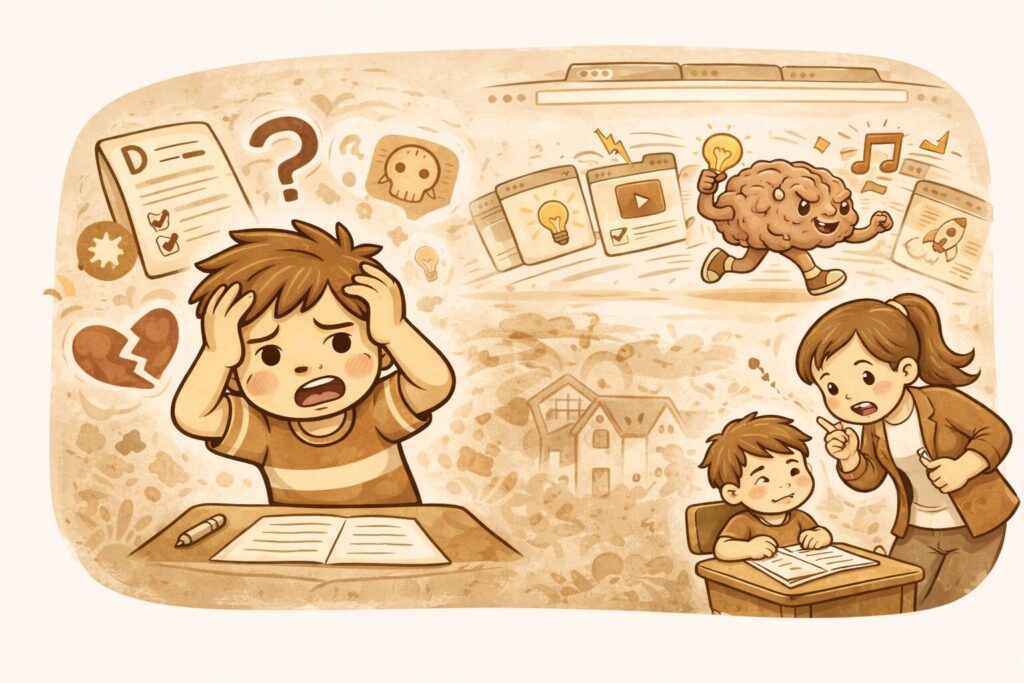
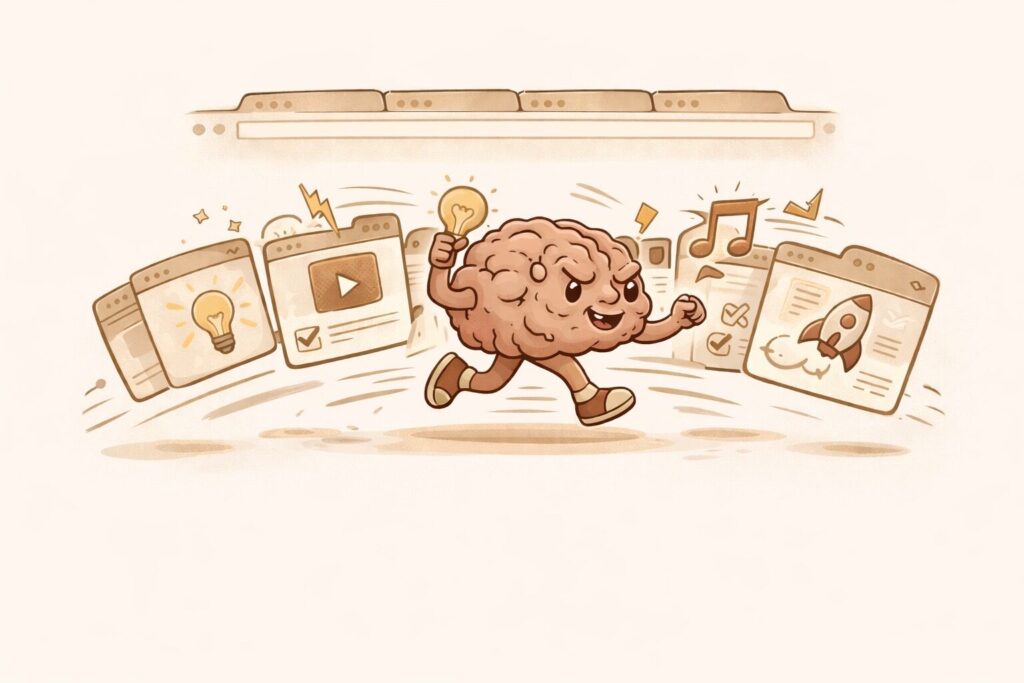
Imagine a browser with multiple tabs open, each running different activities. And every time you have a new idea, you cannot resist opening a new tab. Soon you have a whirlwind of ideas and you cannot focus on just one of them or all of them at the same time, so you keep switching from one tab to another without finishing any one activity completely.
This is how children with ADHD often feel, which makes it difficult for them to pay attention and makes them appear as if constantly ‘driven by a motor’.
What is ADHD in children?
Attention-Deficit/Hyperactivity Disorder, or ADHD, is a neurodevelopmental disorder (condition affecting the proper development and functioning of brain and nervous system) in children.
ADHD is one of the most common neurodevelopmental disorders, with studies indicating about 7% of children and adolescents suffering from it in India. It is more common in boys than in girls, and is primarily characterized by difficulty in paying attention and exhibiting hyperactivity and impulsivity.
The science behind ADHD: A brain that is never quiet
According to studies, ADHD involves differences in brain structure and function, and altered connections between different regions of the brain. In children with ADHD, the regions of the brain responsible for attention and self control develop more slowly or function differently, and the communication pathways responsible for planning, focusing and emotional regulation don’t work the same way as in other children.
There are multiple factors that cause ADHD in children. According to research conducted in families- among siblings, twins and adopted children- ADHD is highly hereditary and tends to run in families.
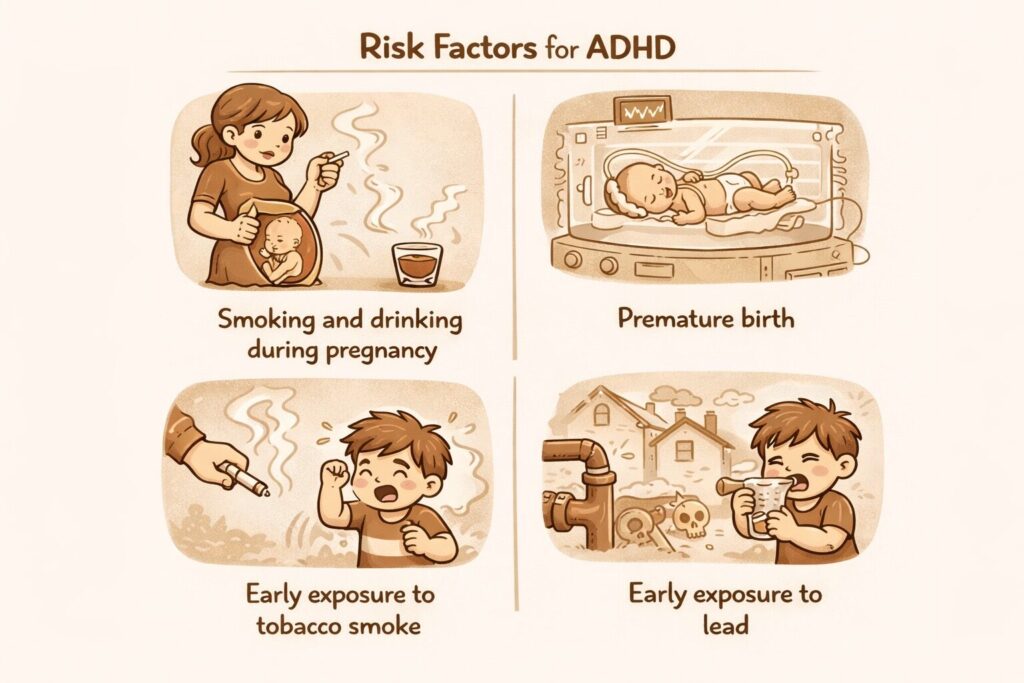
Apart from the strong genetic component, there are other factors that increase the risk of a child developing ADHD. These include:
- Prenatal factors: Smoking, drinking and use of illicit drugs by the mother during pregnancy.
- Birth factors: Premature birth and low birth weight.
- Events and exposures in early childhood: Children exposed to second-hand smoke, especially tobacco smoke, and other toxins like lead have an increased risk of developing ADHD than others.
Core signs and symptoms in children
Symptoms of ADHD generally begin in early childhood. These symptoms affect the child’s daily life, including their performance at school and relationships with classmates and friends.
There are three types of ADHD based on the symptoms in the child:
- Predominantly inattentive
- Predominantly hyperactive/impulsive
- Combined presentation
Parents and teachers can look out for certain signs, that is, behaviours shown by the child at home or at school that point to ADHD.
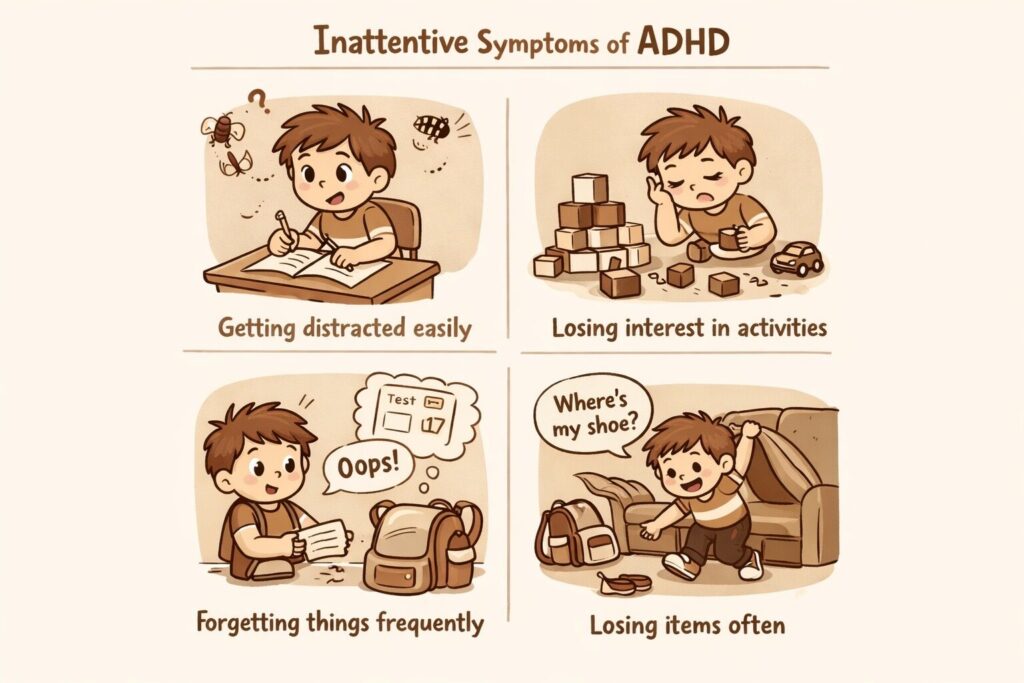
Signs of inattention:
- Having difficulty concentrating on tasks- such as homework, reading, or taking a test.
- Getting distracted frequently and switching from one activity to another.
- Losing interest in a task quickly.
- Having trouble following simple instructions, or seeming not to listen when spoken to.
- Making excessive careless mistakes in schoolwork.
- Frequently losing items such as toys, books, stationary etc.
- Forgetting to do daily activities and chores.
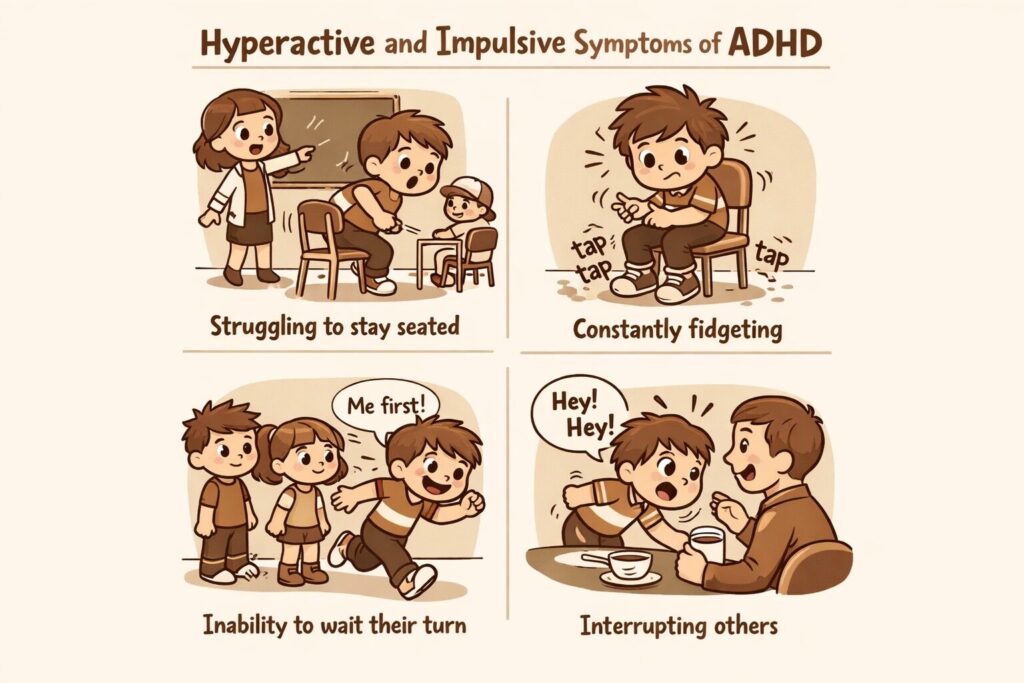
Signs of hyperactivity/impulsivity:
- Struggling to remain seated in places where it’s expected, such as the classroom.
- Constantly fidgeting, tapping their feet or squirming while seated.
- Always being in motion- running, jumping, climbing, roaming around at inappropriate times (eg: During a class).
- Unable to wait for their turn in activities, games, or in queues.
- Talking excessively.
- Interrupting others’ conversations and intruding into their activities.
- Blurting out answers or finishing others’ sentences before they are finished speaking.
- Being unable to stay quiet while playing or taking part in hobbies.
ADHD from Childhood to Adulthood [Symptoms and Traits]
ADHD or not?
It can be hard for parents to understand if their child is showing signs of ADHD, since all children can seem restless, distracted and impulsive at times.
What primarily differs between children with ADHD and typical children is the frequency of these behaviours, its severity compared to their peers, and how much it affects their daily life.
For example, even typical children may get bored and lose focus during class or while studying but they can still follow instructions and complete their daily chores and schoolwork. However a child with ADHD may frequently get distracted and leave tasks midway, shift rapidly from one activity to another, and struggle to complete daily chores and follow instructions. Most children are excited and active while playing, but a child with ADHD may find it difficult to remain seated even in the classroom, or be impatient and break rules while playing.
Myths that keep ADHD invisible
The stigma surrounding ADHD gives rise to a lot of misconceptions about it. It’s important to debunk these myths to provide the child with the right support.
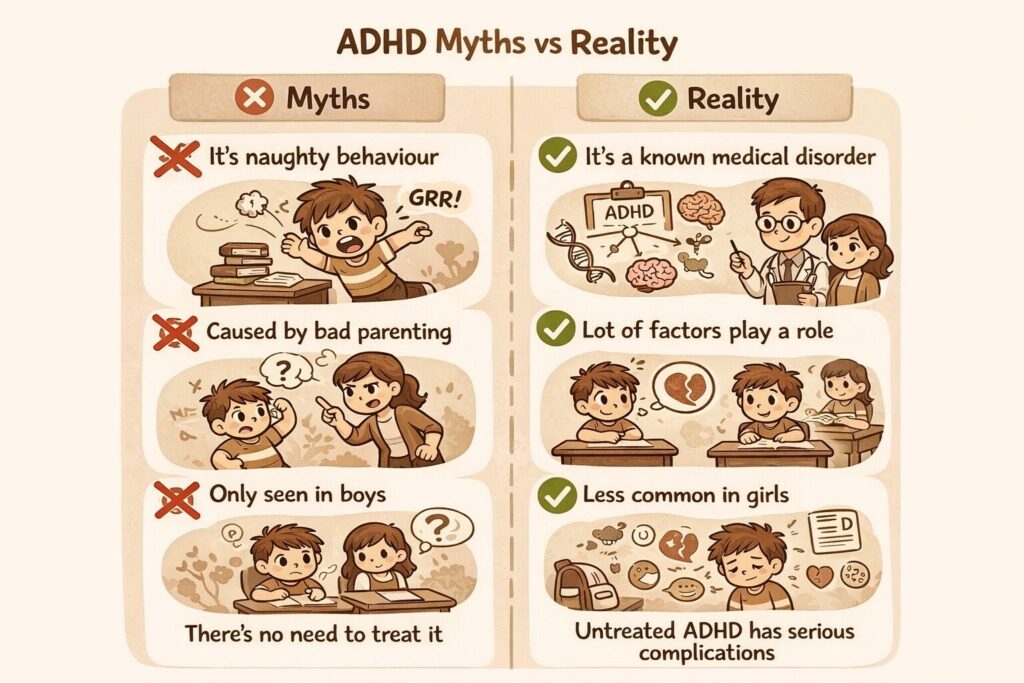
Myth #1: ‘He’s just naughty and needs to be disciplined.’.
Fact: ADHD is a legitimate medical disorder, and children do not choose to behave that way.
Myth #2: ‘Bad parenting causes ADHD.’
Fact: Although there are some environmental factors that increase the risk of developing ADHD, bad parenting alone doesn’t cause ADHD.
Myth#3: ‘My child can’t have ADHD as she isn’t hyperactive.’
Fact: Hyperactivity is more obviously visible to others, but not all children with ADHD are hyperactive. The child may predominantly show inattention symptoms, where they have difficulty concentrating on tasks.
Myth#4: ‘Only boys have ADHD.’
Fact: Boys are two to three times more likely to have ADHD than girls, but that doesn’t mean girls never have it. Girls often show inattention symptoms or their hyperactive symptoms are not as obvious as in boys, due to which it goes unnoticed.
Myth#5: ‘He doesn’t have ADHD as he can focus for hours while gaming.’
Fact: It’s not impossible for a child with ADHD to concentrate. When a child with ADHD finds an activity highly interesting and exciting they can focus on it, while other activities may not stimulate them enough to hold their attention.
Myth#6: ‘They’ll just grow out of it.’
Fact: ADHD can continue into teenage and adulthood, though the symptoms present differently then.
Conditions that occur along with ADHD
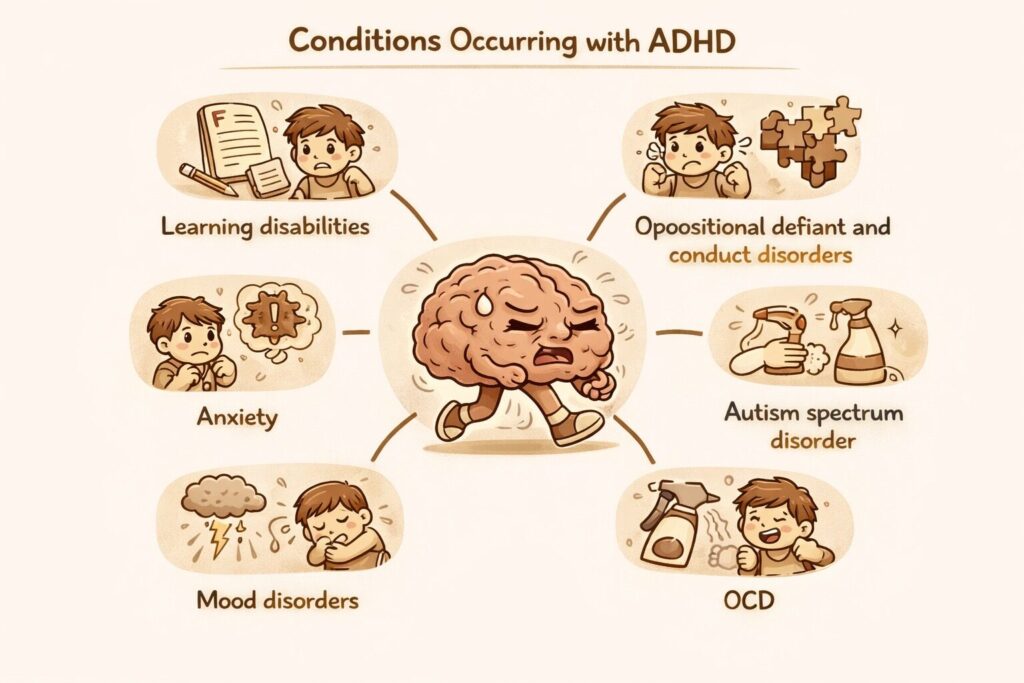
ADHD doesn’t directly cause other disorders, but children with ADHD are more likely to develop some conditions such as:
Dyslexia and learning disabilities– This affects reading and writing, math and reasoning skills, and difficulty learning and remembering new concepts.
Oppositional defiant disorder– It includes negative and hostile behaviour towards people in authority, such as parents and teachers.
Conduct disorder– The child shows antisocial behaviour like fighting, stealing, destroying property and harming others.
Autism spectrum disorder– It is a complex condition that affects how a person interacts with others.
Anxiety– It includes persistent worry, nervousness and feelings of panic that hampers daily life.
Obsessive compulsive disorder (OCD)– OCD includes a pattern of intrusive thoughts and fears that lead to repetitive behaviours.
Mood disorders– It includes depression and bipolar disorder.
Tic disorders– Tic disorders include repetitive, sudden, and involuntary movements and vocalizations.
Diagnosis of ADHD
Although you see signs of ADHD in your child at home, a complete evaluation and diagnosis can only be done by a doctor. Parents should first consult a pediatrician if they observe the above behaviours in the child. The pediatrician will then refer them to an appropriate child psychiatrist or child psychologist as required.
Diagnosis involves gathering detailed information from parents and teachers, assessing the child’s behaviours across different settings, and ruling out other possible conditions.
Management and treatment of ADHD
Once confirmed, management may include behavioural strategies, school support, and sometimes medication. Early professional guidance helps children develop social skills and excel in school.
Behaviour therapy
Parents can learn behavioural strategies, as trained by child psychologists or behaviour therapists, to manage the child’s symptoms. Some examples include:
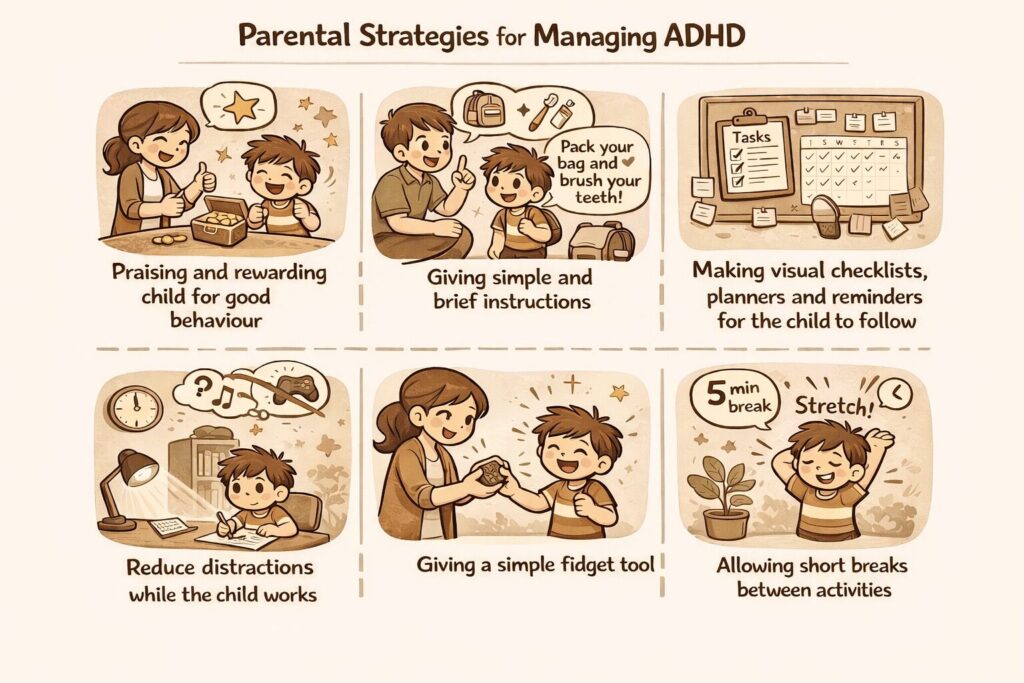
School intervention: Teachers can coordinate with parents and provide a daily/weekly behaviour report of the child based on how well they achieve certain goals, including following class rules, finishing schoolwork and interacting with others. Efforts could be made to find an optimal spot for the child in the class, allow them to take short breaks in between assignments, and make visual schedules for them to follow.
ADHD in children : Tips For Teachers : Nip in the Bud
Social skills training: A specialist could help the child develop strong social skills to build and maintain friendships, and to learn appropriate social behaviour.
Treatment with medication
Medicines for ADHD should strictly be taken as prescribed by the doctor to prevent harm to the child. Many stimulant drugs are used to reduce the symptoms of inattention and hyperactivity by balancing the levels of chemicals called neurotransmitters in the brain. When these aren’t effective, other non-stimulant drugs may be prescribed.
Untreated ADHD- impact in the future
It is not advisable to wait for a child to ‘grow out of ADHD’. Untreated ADHD can go beyond inattention and hyperactivity and impair several aspects of the child’s development.
It often leads to academic underachievement, incomplete learning and increases the risk of school dropout in adolescence despite normal intelligence. Repeated criticism from parents and teachers leads the child to label themselves as ‘lazy’ or ‘incapable’, gradually lowering their self esteem. Children with ADHD often develop emotional dysregulation where small setbacks feel like catastrophes and lead to excessive frustration and distress.
How ADHD Causes Emotional Dysregulation
As children grow, untreated ADHD leads to an increased risk of substance abuse, indulgement in risky behaviours, conduct disorders and ongoing educational and occupational difficulties in adolescence and even adulthood.
Seeing the Child, Not the Label
Attention-Deficit/Hyperactivity Disorder is not a result of poor parenting, laziness, or lack of discipline — it is a well-recognised neurodevelopmental condition that affects how a child’s brain regulates attention and impulses. When misunderstood, children with ADHD may be unfairly labelled as “difficult” or “careless,” which can harm their confidence and emotional well-being.
Eliminating stigma begins with awareness, empathy, and early support for children. With timely diagnosis, appropriate behavioural strategies, school accommodations, and when needed, medical treatment, children with ADHD can thrive academically, socially, and emotionally. With understanding and guidance, ADHD is not a limitation — it is merely a difference that can be managed and empowered.