

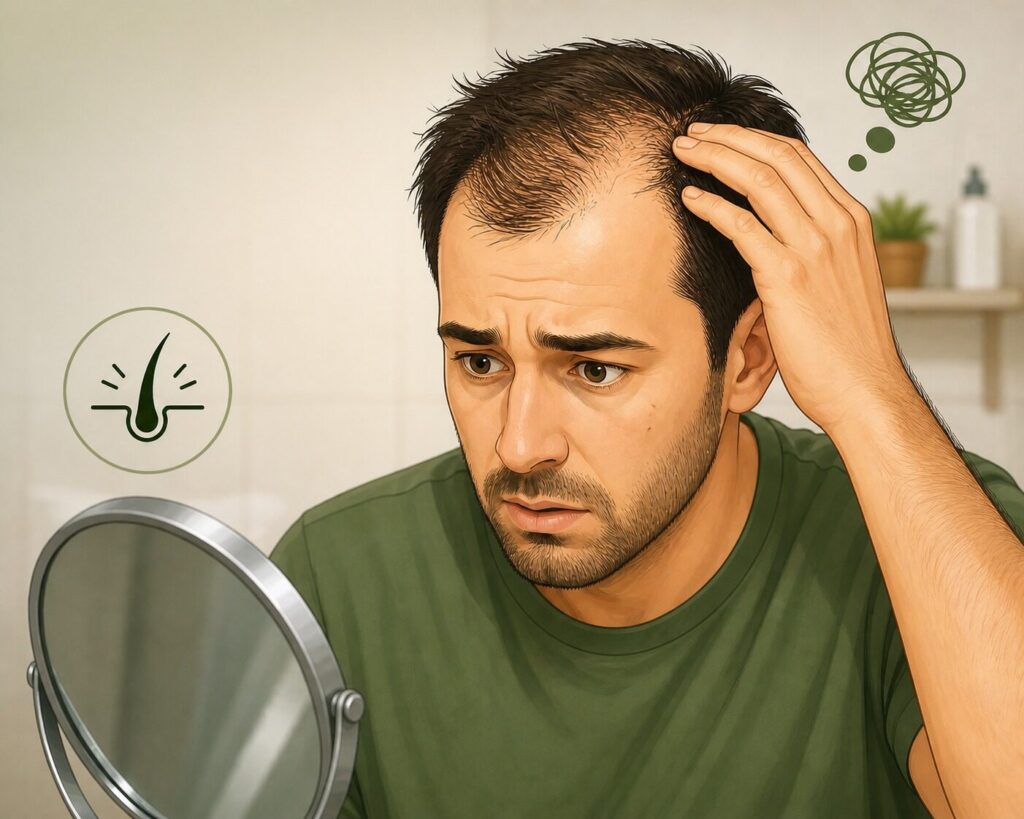
It starts subtly— you notice a few extra strands on the pillow, a widening parting in photographs, or a hairline that seems to retreat a little further each year. At first, you dismiss it as stress. But over time, it begins to chip away at your confidence.
In an era where appearances are amplified by social media, hair loss is no longer just a personal worry — it becomes a visible reminder in every mirror and every snapshot. This is where hair transplantation enters the conversation like a ray of hope, but surrounded by hesitation and misinformation.
So what is hair transplantation exactly? Let’s unravel the science, the process, and the myths behind modern hair restoration.
Hair transplantation- a second chance for your hair
You may have heard phrases like ‘hair restoration surgery’ being thrown around in cosmetic articles or magazines. This usually refers to a process called hair transplantation.
Hair transplantation is a surgical procedure where hair follicles are transferred from healthy sites to areas of balding or thinning on the scalp. Generally, hair from the back of the head is transferred as it grows the thickest in this area.
Hair transplant is a good option if you’re looking for an effective solution for your hair loss.
What conditions can a hair transplant treat?
Hair loss occurs due to a variety of causes, and shows varying patterns.
A hair transplant can be useful in the following cases of hair loss:
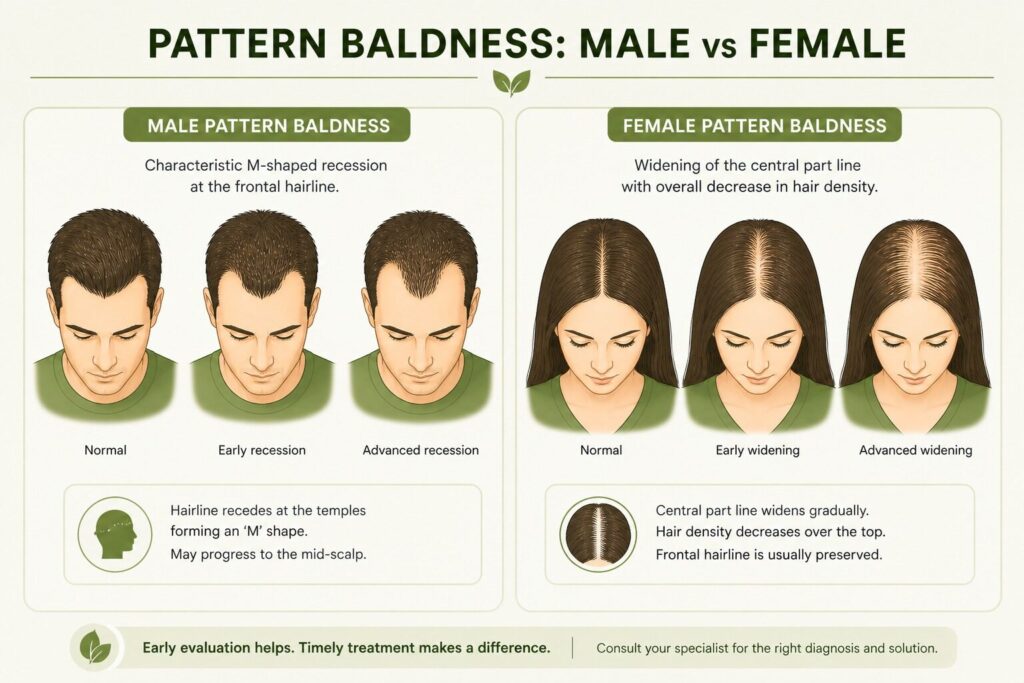
- Androgenic alopecia: It is also known as pattern baldness, and is a common form of hair loss in both men and women which leads to thinning of hair. It tends to manifest as a receding hairline forming a characteristic M shape in men and a significant widening of the central part line in women.
- Thyroid disorders and hormonal imbalances: An overactive or underactive thyroid gland disrupts the hormonal balance of the body, which in turn leads to hair loss. This manifests as diffuse thinning of hair, or excessive shedding while washing and combing.
- Traumatic injuries or burns can also lead to hair loss.
Is it recommended for you?
Hair transplantation is highly recommended for people with stable patterned hair loss- such as male or female patterned alopecia. To be a suitable candidate, you would be required to have healthy hair growth on donor sites- such as the sides and back of your scalp.
Hair transplantation is generally not recommended for candidates with unpatterned and unstable hair loss, seen in conditions like diffuse unpatterned alopecia, or complete baldness. It is also not advised in people with certain psychological disorders like body dysmorphic disorder (being excessively preoccupied with a perceived flaw in one’s appearance) and trichotillomania (a repeated urge to pull out one’s own hair).
Other serious health issues-including bleeding disorders like hemophilia, hypertension, heart conditions, immune disorders, or diabetes mellitus- put you at higher risk for surgery, and must be appropriately managed.
Things to keep in mind before a transplant:
If you’re considering a hair transplant, it’s important that you have realistic expectations. You cannot show your doctor photos of your favorite celebrities’ hair and demand to have similar hair after the procedure. It also becomes vital to consult a professional for advice on the process, and not believe every social media post or influencer on the same.
How popular is it in India?
Hair transplantation has become increasingly popular in India over the past decade, driven by rising awareness, advances in surgical techniques, and greater emphasis on appearance and self-confidence. India is now one of the fastest-growing markets for hair restoration procedures, with growing demand among younger adults as well.
Despite this rise, the procedure remains relatively underutilized when compared to the large number of individuals affected by hair loss. Factors such as cost, lack of awareness about treatment options, fear of surgery, and misconceptions regarding outcomes continue to discourage many eligible candidates from seeking treatment.
Hair transplant procedures
Let’s look briefly into the hair transplant process.
GRAFTING:
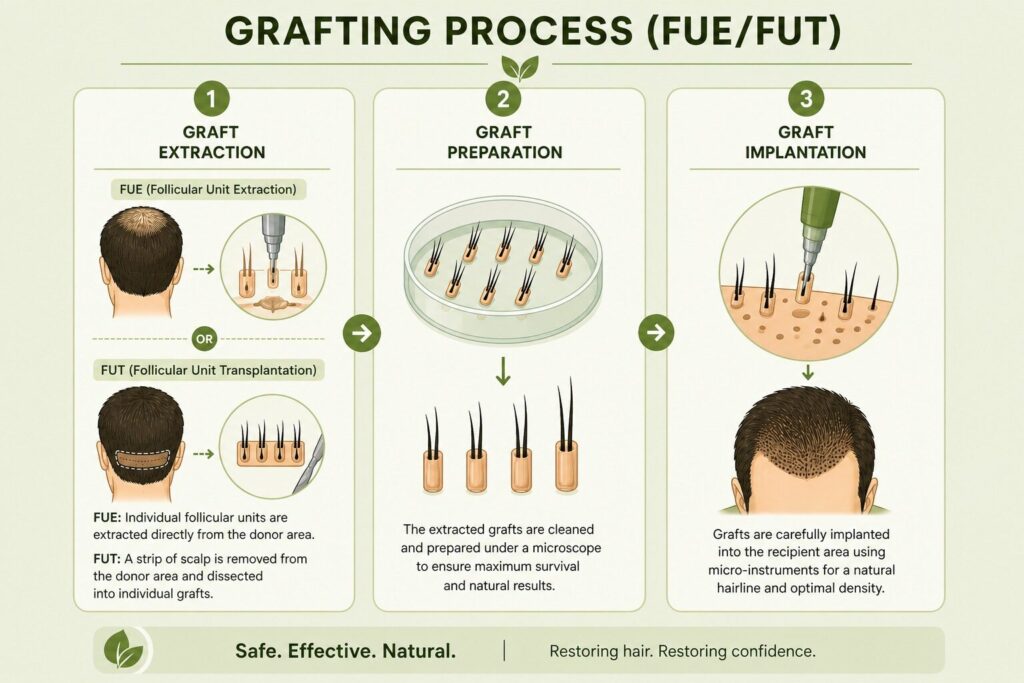
Hair transplantation refers to the process of grafting. Grafting is the most commonly performed hair transplant procedure. Modern techniques like Follicular unit extraction (FUE) and Follicular unit transplantation (FUT) are highly successful and show the best results.
- Follicular Unit Transplantation (FUT):
In this method, also known as the Strip Method, the surgeon removes a strip of scalp with healthy hair follicles from the donor area. This strip is then divided into small grafts, and the wound is stitched.
In this method, no large incision or scar is made. Instead, the surgeon extracts individual follicular units typically containing 1-4 hair follicles one by one from the donor area.
The grafts are prepared carefully and stored to keep them healthy. The surgeon then implants the graft within the recipient area.
Based on the degree of hair loss, donor hair density and number of grafts required, one or more sessions may be needed.
Click here to watch the video explaining FUE Hair Transplant
Click here to understand differences between FUE and FUT Hair Transplant
Apart from grafting, some other procedures are performed to treat hair loss. These are often combined with grafting to get better results.
Some of these procedures are discussed below.
SCALP REDUCTION
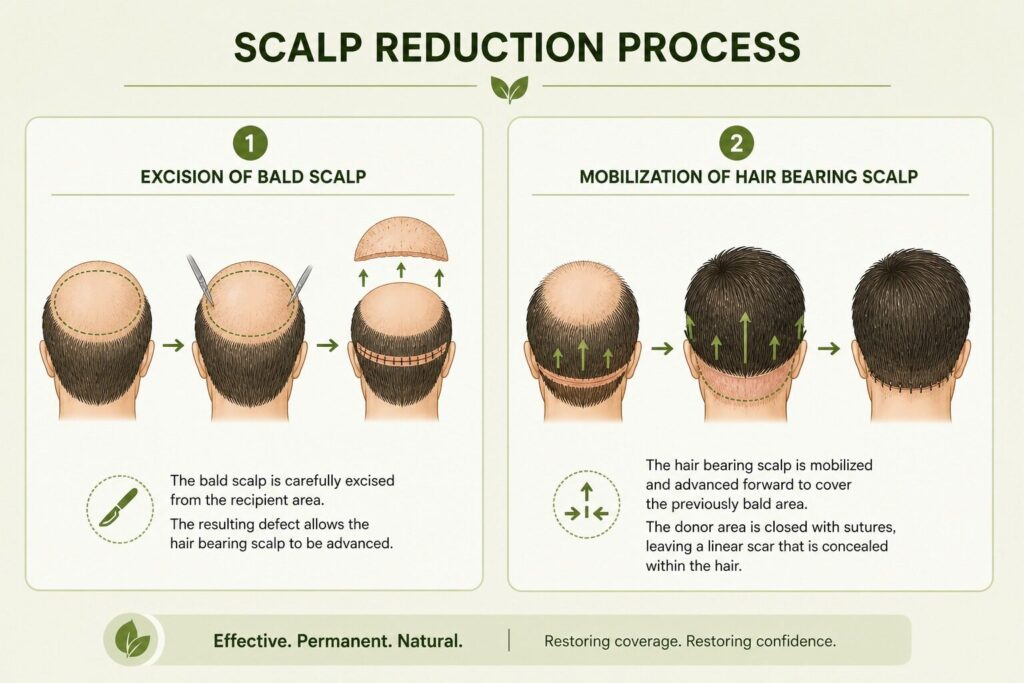
Scalp reduction is a procedure done to treat bald areas of the scalp. It is best suited to treat stable male pattern baldness.
In this procedure, a portion of the scalp from the balding area is removed, after which the surrounding hair-bearing areas are stretched inwards over the bald area and stitched together. Hence, the bald area gets covered.
Scalp reduction is often done in 1-2 procedures with a gap of about 3-6 months in between.
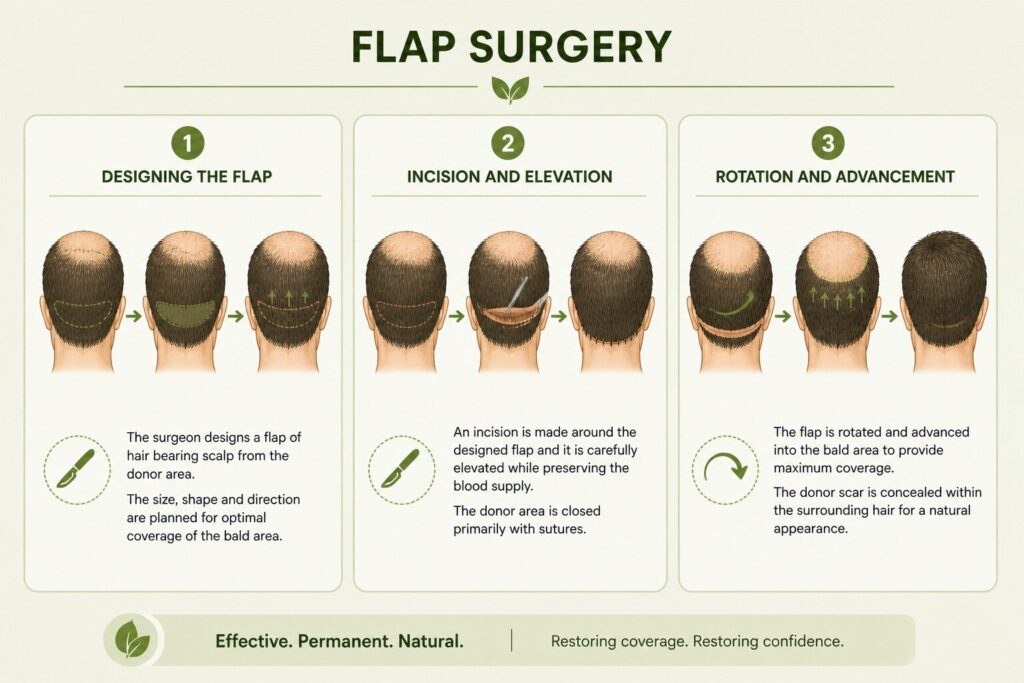
FLAP SURGERY
Flap surgery is a procedure in which a portion of hair-bearing scalp with intact blood supply is moved to cover a bald area.
TISSUE EXPANSION
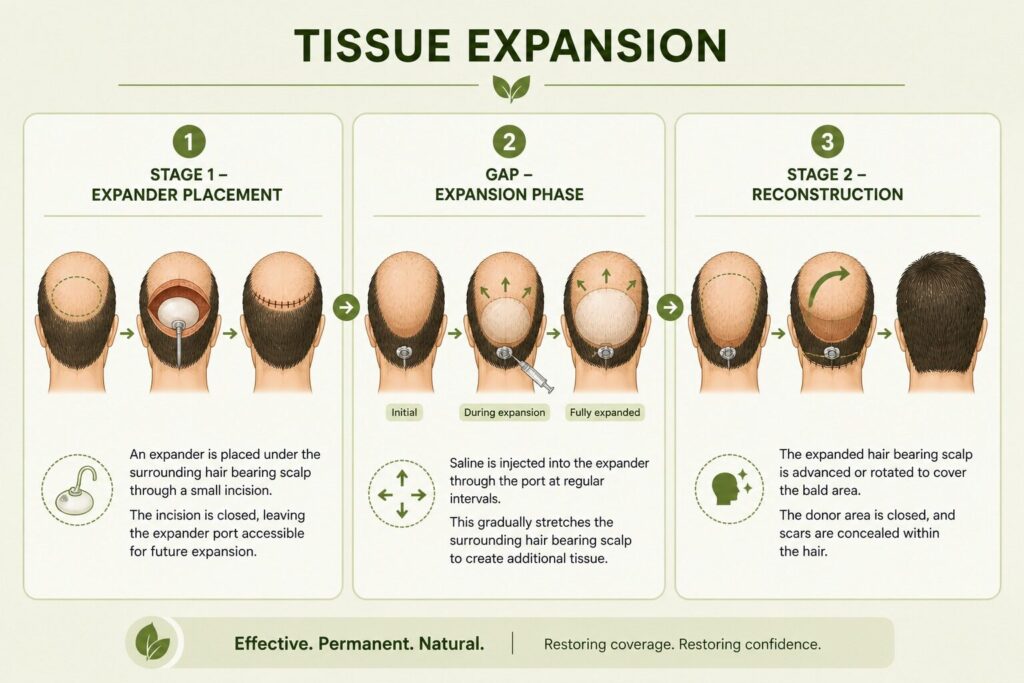
Tissue expansion done in two separate stages, with a gap between them.
In the first stage, a silicone balloon expander is inserted beneath the hair bearing scalp. Saline is injected periodically into the expander for about 6-12 weeks in order to stretch the overlying hair bearing scalp.
In the second stage, the tissue expander is removed, and the expanded hair-bearing scalp is advanced to cover the gap.
Click here to understand how scalp expansion works
What to expect after the procedure?
It is important that you have realistic expectations following the surgery. The timeline of hair growth varies based on the procedure performed.
Grafting (FUE/FUT)
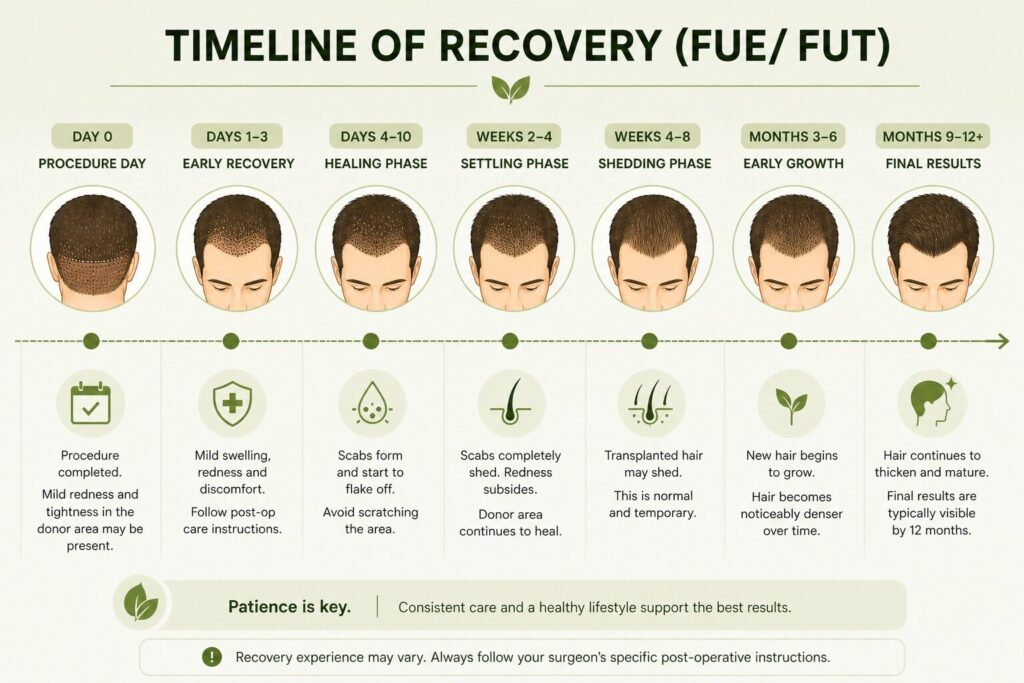
This is a gradual process, and it will be a while before you see results.
Here’s the timeline of hair growth following the procedure.
Click here to watch the video explaining regrowth of hair post transplant
Scalp reduction
Since there is no waiting for new hair growth, you can see immediate reduction of bald area after the surgery. The wound takes a few weeks to heal.
Flap surgery
In this process you will see instant hair coverage after the surgery. Healing takes a few weeks, followed by about 3-6 months for the scar to soften and settle.
Tissue expansion
After the removal of tissue expander and closure ( Reconstruction stage), you can see immediate hair coverage. The final cosmetic result can be observed 3-6 months after the reconstruction stage.
Possible risks or complications
Hair transplantation is generally safe when performed by trained surgeons. However like any surgery it comes with certain risks.
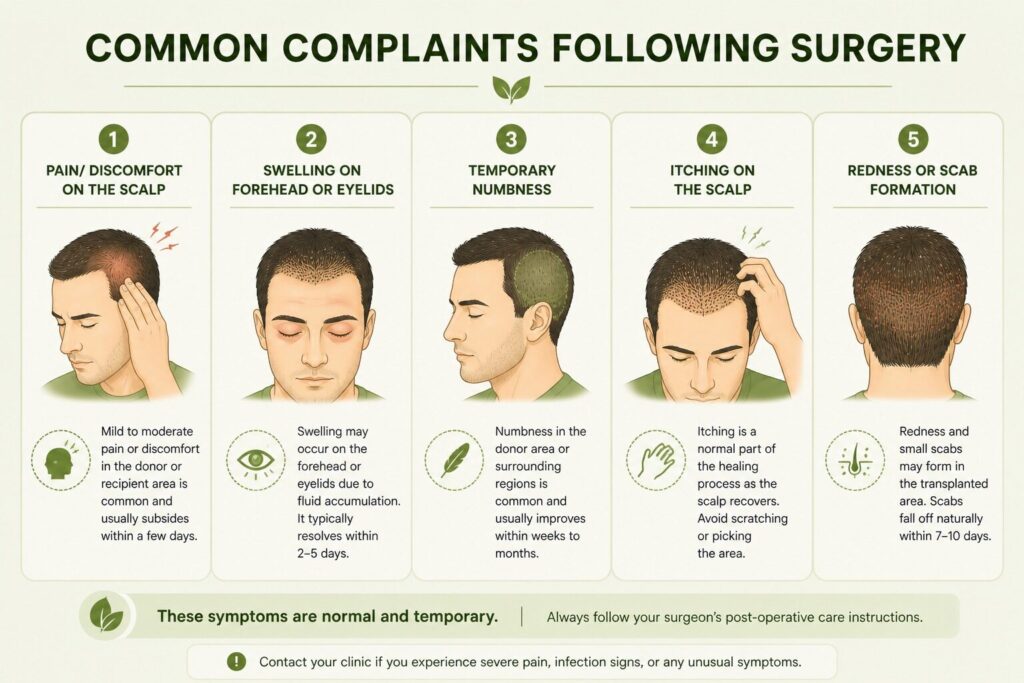
Most people experience the following common complaints. These are usually temporary and resolve within a few days.
You may experience:
- Pain or discomfort in the donor or recipient area of your scalp.
- Swelling in the forehead or eyelids
- Itching on the scalp after grafting is done. It is advised not to scratch the area to prevent graft dislodgement.
- Temporary numbness at the donor or recipient site
- Redness or scab formation around grafts
In some rare cases, the area could get infected, which can be managed by antibiotics. Significant bleeding or hematomas after the procedure are highly uncommon.
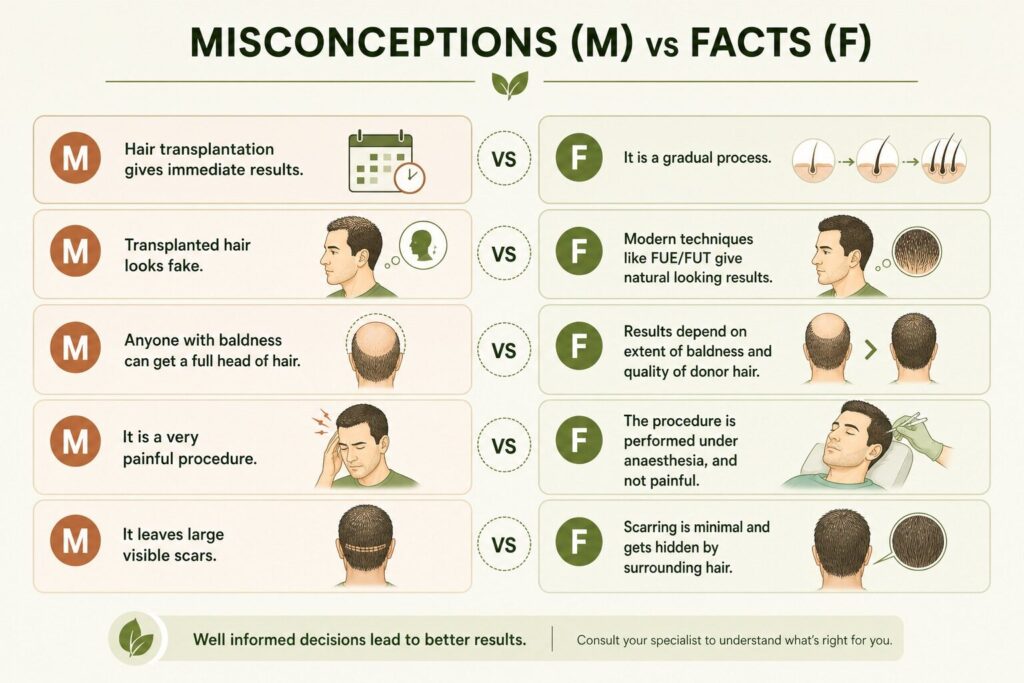
Challenging misconceptions
With social media and celebrity influence driving interest in hair restoration, many beliefs about hair transplantation are shaped more by marketing than medicine. Separating facts from fiction will help you understand what the procedure can — and cannot — achieve. So let’s examine some of the common misconceptions and clarify them with medical facts.
Conclusion
Hair loss often feels like a losing battle. And hair transplantation is an effective weapon to win that battle.
But hair transplantation is not a miracle that creates new hair overnight — it is a carefully planned medical procedure that takes time to show results. With modern techniques performed by qualified doctors, natural-looking and long-lasting results are achievable.
Understanding the procedure, recovery timeline, benefits, and limitations is essential to the process. After all, successful hair restoration is not just about regaining hair — it’s about regaining self-assurance and confidence in your appearance.