

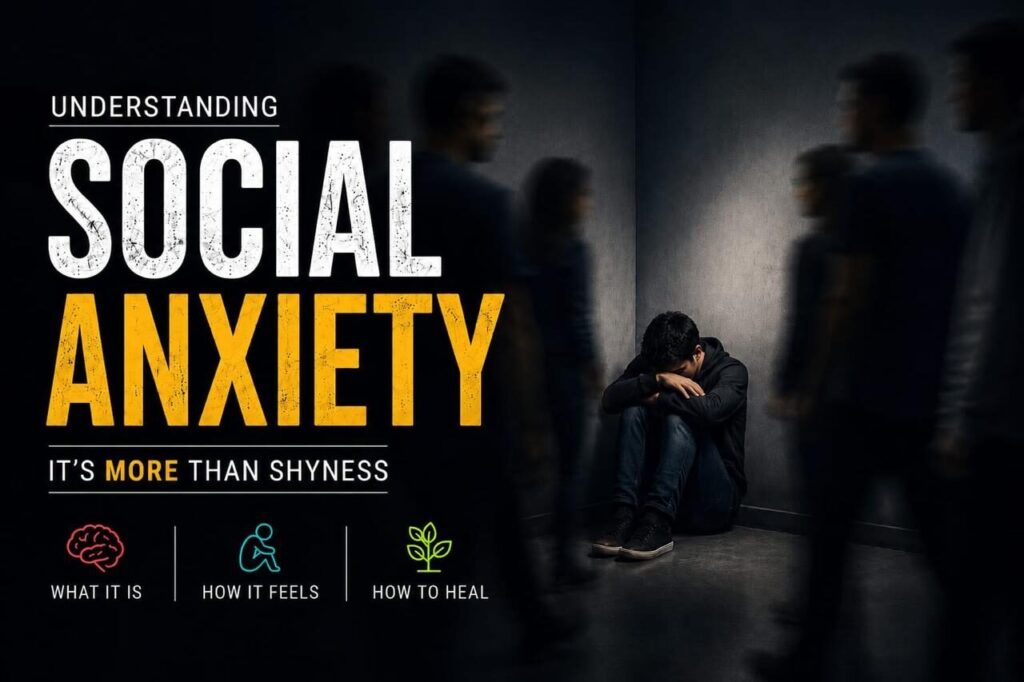
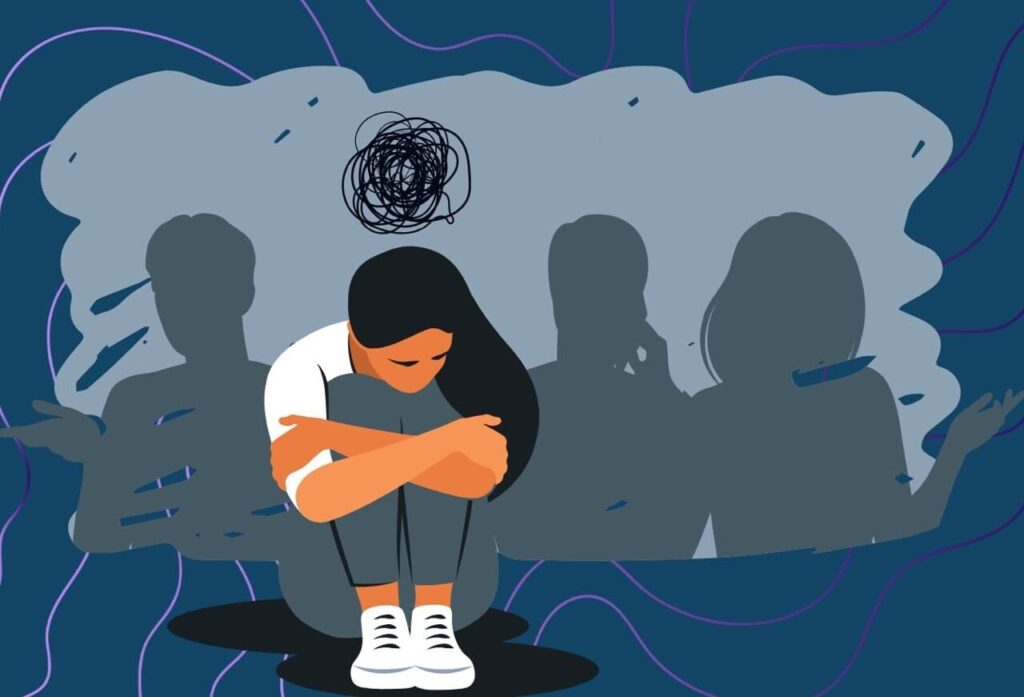
Know more about Social anxiety and the fear of judgment.
Definition : Social Anxiety Disorder, also known as “Social phobia,” is defined as a persistent fear of social situations involving potential scrutiny by others, driven by a fear of acting in a humiliating or embarrassing way. This fear leads to avoidance or intense distress in social situations and causes significant functional impairment, typically lasting six months or more.
What is fear of judgment ?
The feeling of being watched by people around us even though they could be minding their own business, the way when it feels that even very simple task that you do is given a score by someone, the state in which you feel even a small silly mistake has a huge impact even on simple unimportant tasks of your day-to-day life, the constant feeling of being on the edge. These types of thoughts hinder the quality of life, including physical, mental, and social well-being.
Or maybe you could think, “Am I just shy ?”
Social anxiety is different from shyness. Shyness can make socializing, school, and work difficult, but it doesn’t disrupt life to the same extent as social anxiety. Social anxiety is persistent and overwhelming and may affect everyday activities, such as shopping for groceries, getting out to play with friends, or even going to a relative’s house.
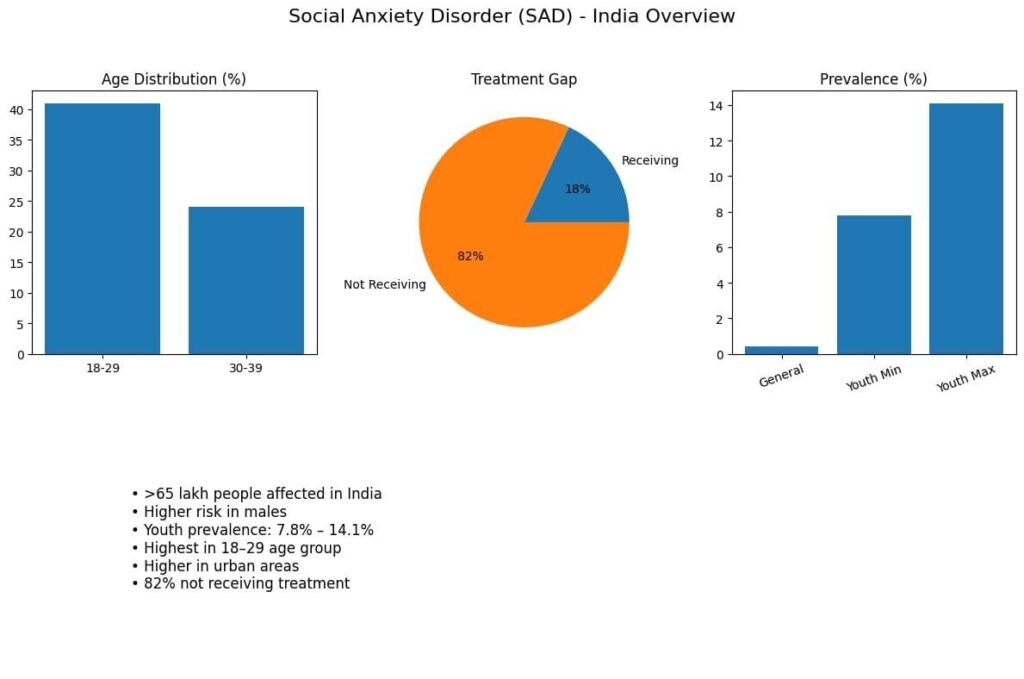
Prevalence of Social anxiety disorder (SAD) in INDIA
A study conducted by NMHS showed that :
- A considerable portion of India’s population (approximately >65 lakhs) is affected by SAD.
- It indicates a higher risk of SAD among males compared with females.
- While some studies estimate a low 0.47% in the general population, other studies targeting youth and adolescents find rates between 7.8% and 14.1%.
- SAD is most prevalent among the 18–29 age group (41%), followed by 30–39-year-olds (24%).
- It is notably higher in urban metro areas.
- approximately 82% of those affected are not receiving treatment.
Getting to know more about Social Anxiety Disorder
Anxiety disorders are among the most common disorders in youth, affecting 10 – 20% of children and adolescents. Like fear, which is an expected response to real or perceived threat, anxiety is the anticipation of future dangers. The main characteristic of all anxiety disorders is a recurrent emotional or physiologic (normal) arousal in response to excessive perceptions of perceived threat or danger.
A) Identifying the Symptoms hindering daily life :
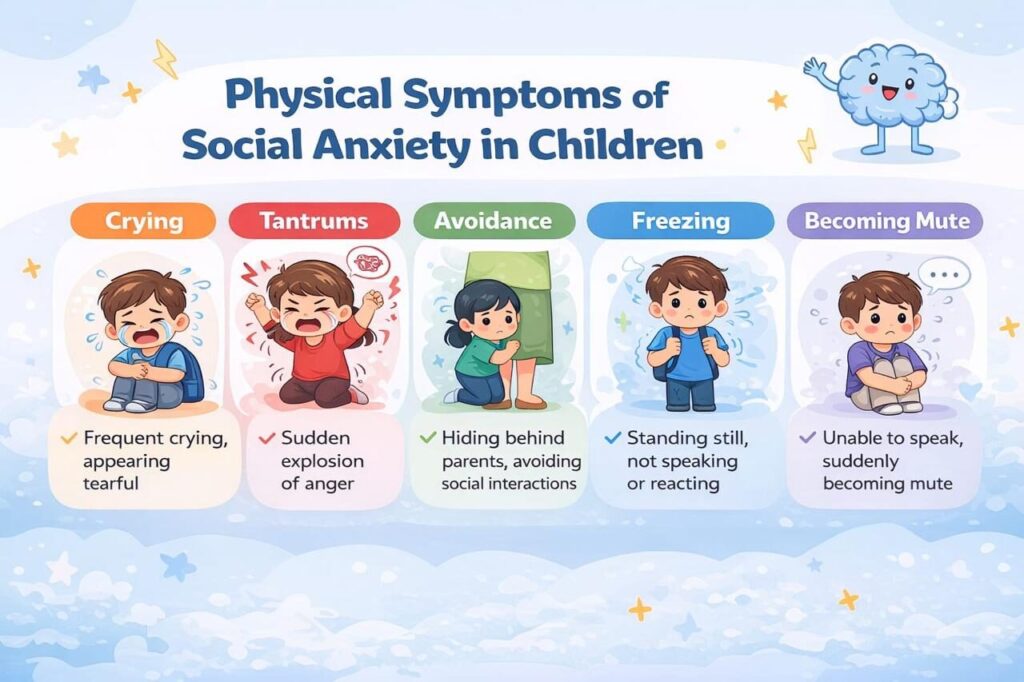
In children, this distress in a social situation could be expressed in the form of :
- Crying
- Tantrums (Sudden explosion of anger)
- Avoidance
- Freezing
- Even becoming mute
In adults, the psychological symptoms seen are :
- Fear of situations in which you may be judged
- Worrying that you will embarrass and humiliate yourself
- Crushing fear of interacting with strangers
- Avoiding an event or interaction where one could be the center of attention
- Looking to find flaws in yourself after a social interaction
- Fear of offending people
- Anticipating the worst possible outcomes.
- Being embarrassed that you will have physical symptoms like sweating, a shaky voice or limbs, trembling, or blushing.
- Avoiding activities or people because of fear of not being good enough.
- Constantly being judgmental of oneself.
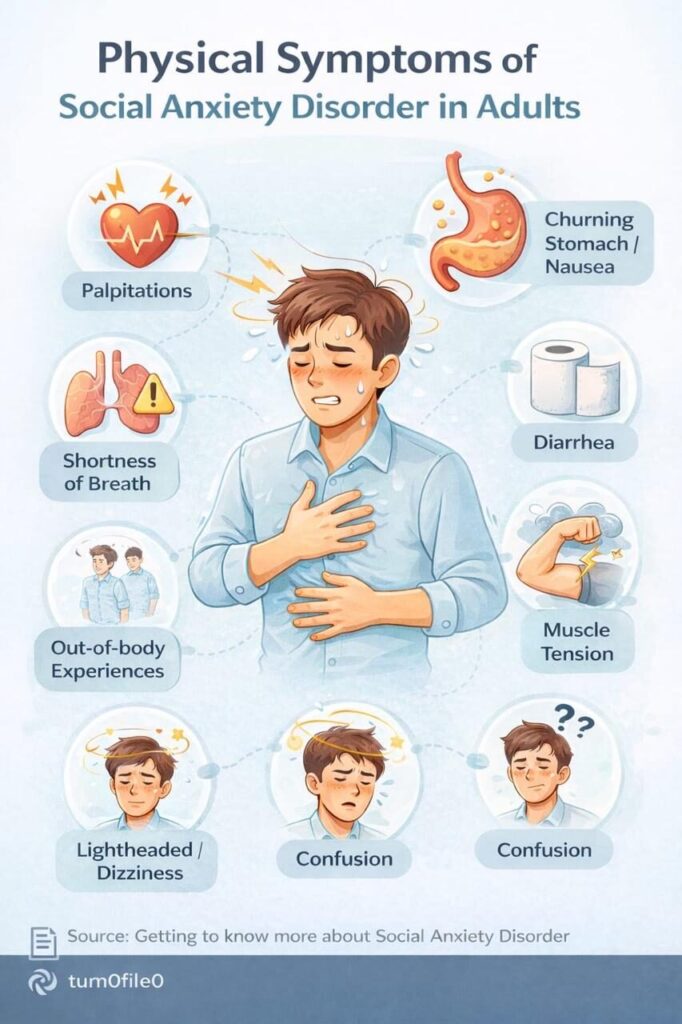
Physical symptoms such as:
- Palpitations (an awareness of your heart beating faster than usual)
- Shortness of breath
- A churning sensation in your stomach / nausea
- Diarrhea
- Out-of-body experiences
- Muscle Tension
- Confusion
- Lightheaded or dizzy sensations
Avoiding social interactions such as:
- Eating in public
- Making phone calls
- Looking people in the eye
- Using public bathrooms
- Walking into a room where everyone is seated
- Returning purchased things in person
- Starting a conversation
- Talking to strangers
- Attending school
- Going to a job
- Going to large social events or parties
According to DSM – 5 (Diagnostic and Statistical Manual of Mental Disorders), this disorder is characterized by consistent anxiety and distress in almost all social situations.
B) TRACKING DOWN THE CAUSE :
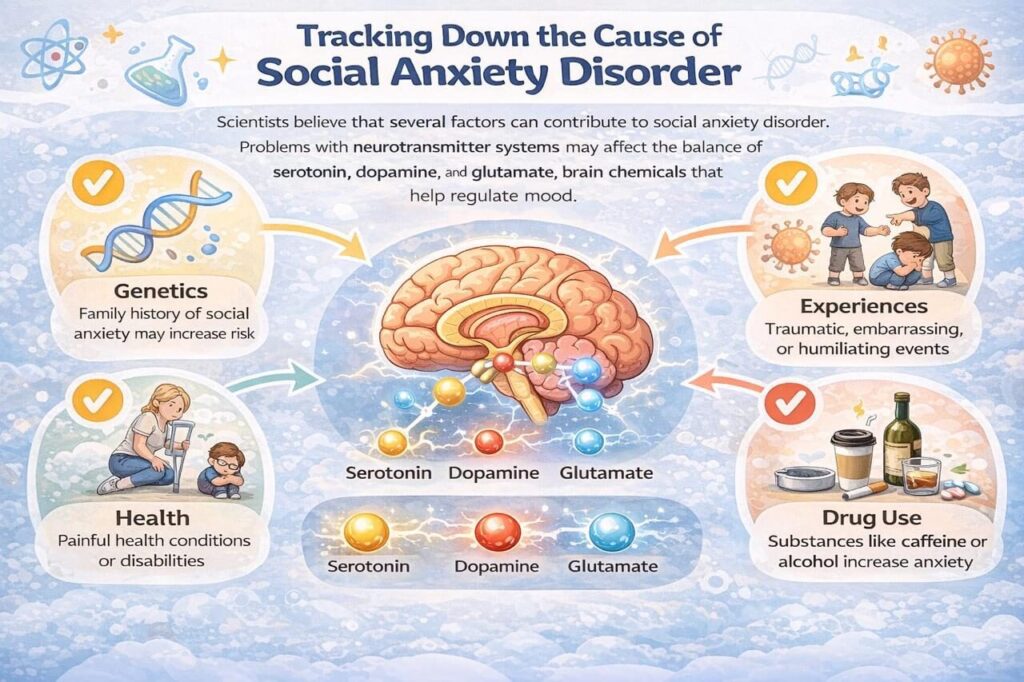
According to scientists, physical, biological, and genetic factors likely play a role. Problems with neurotransmitter (Chemical nerve messenger) systems throughout the body may lead to imbalances in the hormones serotonin, dopamine, and glutamate. These brain chemicals help regulate mood. There are several possible causes of social anxiety disorder, including:
- Genetics : There may be a genetic influence on social anxiety disorder. For example, if your parents live with social anxiety disorder, you may have an increased chance of developing the disorder. It is unclear, though, if this is genetic or if it could be a learned behavior.
- Experiences : Having a history of traumatic or upsetting experiences, such as bullying, being publicly embarrassed or humiliated, or other negative events involving interaction with others. Also, the recent COVID-19 pandemic led to an increase in anxiety disorders, more commonly social anxiety disorders.
- Drug use : Some drugs and substances, such as caffeine or alcohol, may make some people more anxious than others.
- Health : A long-term painful health condition or disability may make it more likely to develop social anxiety. For example, having a condition such as a physical disability, a facial difference, speech impairment, or autism spectrum disorder (ASD).
- Childhood : Shy, timid children, or children who have an overprotective parent, may be more likely to develop social anxiety disorder.
- Negative experiences may lead to a type of post-traumatic stress disorder (PTSD), where social anxiety is a symptom.
To explain it in medical terms :
It could be due to Biological basis like
- Pathological (Abnormal) Brain messengers/ neurotransmitter distribution:
- Dopamine
- Serotonin
- Glutamate
- Oxytocin
- Hyperactive sympathetic system (Flight-Fight system) :
- Exaggerated sympathetic response to stress
- Can cause tremors (shaking) , tachycardia (Increased heart rate), and diaphoresis (Excessive sweating)
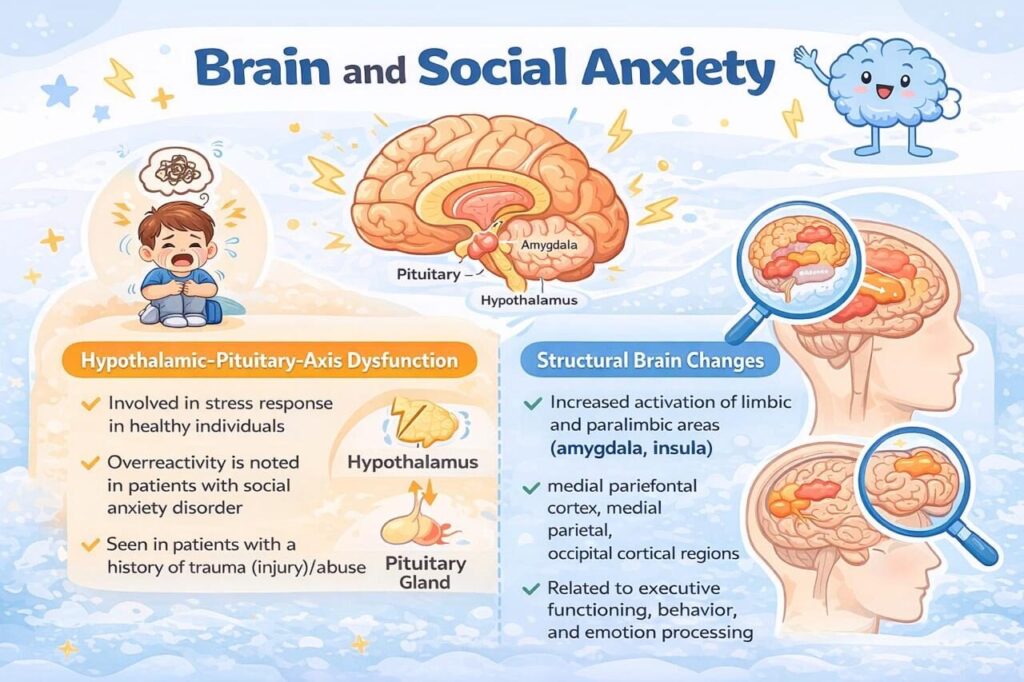
- Hypothalamic-pituitary-axis dysfunction:
- Involved in stress response in healthy individuals
- Overreactivity is noted in patients with social anxiety disorder.
- Seen in patients with a history of trauma (Injury)/abuse
- Structural brain changes:
- Increased activation of limbic and paralimbic areas (especially amygdala and insula), medial prefrontal cortex, medial parietal, and occipital cortical regions
- These brain regions are known to be related to executive functioning, behavior, and emotion processing.
Psychological theories:
- Phobic disorders may be defensive mechanisms of intrapsychic conflict (internal psychological struggles occurring within an individual’s mind).
- Phobias may be a learned behavior, where one associates certain responses with certain stimuli.
C) BEHAVIORAL REASONS :
- It’s important to address your social anxiety. It can have subtle negative effects on your career, friendships, dating life, or even family relationships. When a person is isolated, it can lead to depression because they miss opportunities to have a good time or enjoy themselves, and feel connected to other people.
- The first step is to stop the unhelpful thinking.
Here are some common patterns of unhelpful thinking
- Mind reading:
People often assume they know what others are thinking, and the assumptions are usually negative.
- Labelling:
People who feel socially anxious often label themselves in negative ways.
- Predicting the future:
People who feel socially anxious often spend a lot of time thinking about future social events and predicting what could go wrong, instead of just waiting to see what’ll happen. This can end up making social situations seem worse, both before and after you go to them.
- Personalization:
People who think this way believe everything has to do with them, and it’s usually negative, they place blame on themselves for no logical reason.
- Over-generalizing:
Based on one isolated incident, people with this thinking pattern assume all future events will follow a similar pattern. It becomes hard to see a negative event as a coincidence.
- Focusing on the negatives:
People with this thinking pattern tend to go back over social events in their minds repeatedly after the events are over, and focus on anything they believe went badly. They often ignore all the parts of the event that went well.
D) STRATEGIES to cope up and SELF HELP TECHNIQUES :
Here are some tips for reducing internal focus and seeing yourself in a more realistic and positive way:
- Challenge negative thoughts:
The average person thinks about 50,000 thoughts per day. Have you ever wondered what share of these thoughts is positive and which is negative? And maybe also what influence all these thoughts have on your well-being and your life?
| Negative thinking | Positive thinking |
| It’s too complicated. | I’ll tackle it from a different angle. |
| I don’t have the resources. | I’ll try to do my best with what I have. |
| I’m too lazy to get this done. | I wasn’t able to do it the previous day, but I will do it right now. |
| There’s no way it will work. | I can try to make it work. |
| No one bothers to talk with me. | I’ll see if I can talk with a few new people. |
| I’m not going to get any better. | I’ll give it another try. |
| I’ve never done it before | It’s an opportunity to learn something new. |
- Learn to control your breathing:
The VAGUS nerve is part of the parasympathetic nervous system, the “relax and digest” part, which also calms other body parts. This practice, especially accentuating the out-breath, stimulates the vagus and helps you to relax when you are in pain, anxious, or stressed. Do it for 5 – 10 minutes if possible.
- Face your fears:
One of the most helpful things you can do to overcome social anxiety is to face the social situations you fear rather than avoid them. Avoidance keeps social anxiety disorder going. While avoiding fearful situations may help you feel better in the short term, it prevents you from becoming more comfortable in social situations and learning how to cope in the long term. In fact, the more you avoid a feared social situation, the more frightening it becomes.
Let’s take the example of a person with a strong fear of having to give presentations at work in front of many people. A small first step might be to give a short presentation at home in front of a good friend. Next, the person could expand the circle of people, but still remain in a situation where there is virtually nothing at stake, so nothing can really go wrong. And only the very last step in this chain would then be to present in front of their colleagues or even customers.
Having a gradual exposure is the key rather than an abrupt and forced exposure.
- Make an effort to be more social :
Some things to do when socializing:
- Introduce yourself to new people and quickly find common ground.
- Be semi-comfortable at a party where you don’t know most of the people.
- Be yourself, or some version of that, rather than trying to impress people.
- Speak in front of a crowd of strangers.
- Talk comfortably one-on-one or in a small group, and not worry too much about whether people will like you.
- You can make fairly lasting friendships with just a handful of deeper conversations.
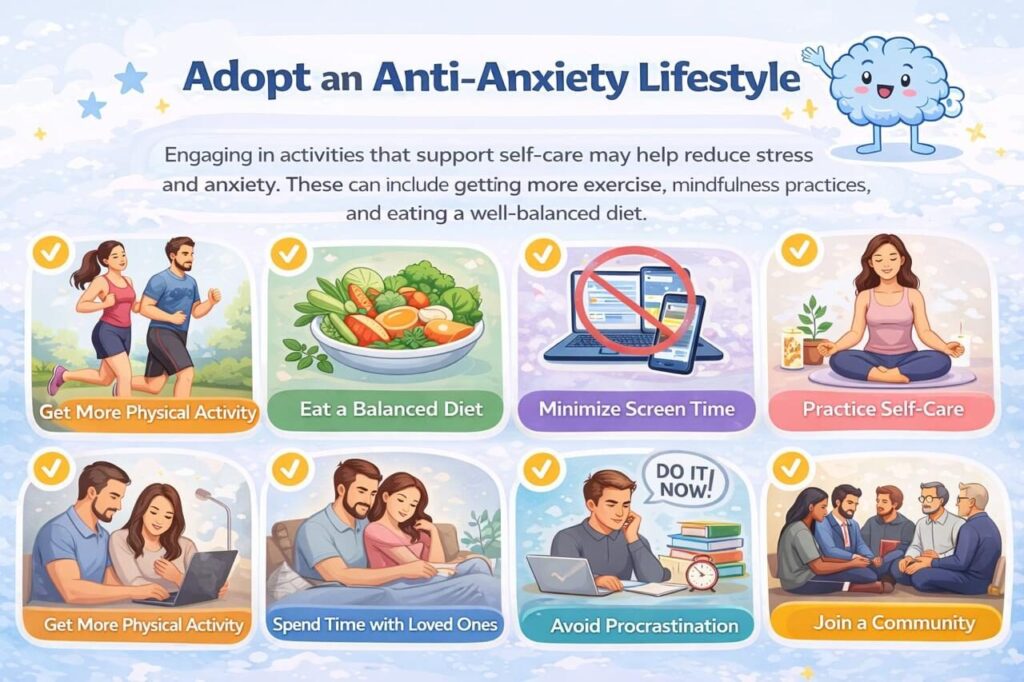
- Adopt an anti-anxiety lifestyle:
Engaging in activities that support self-care may help reduce stress and anxiety. These can include getting more exercise, mindfulness practices, and eating a well-balanced diet.
- Get more physical activity.
- Eat a balanced diet
- Minimize screen time
- Practice self-care
- Spend time with loved ones.
- Avoid procrastination
- Try joining a community with similar interests to yours.
ROLE OF FAMILY, FRIENDS, AND CLOSE ONES
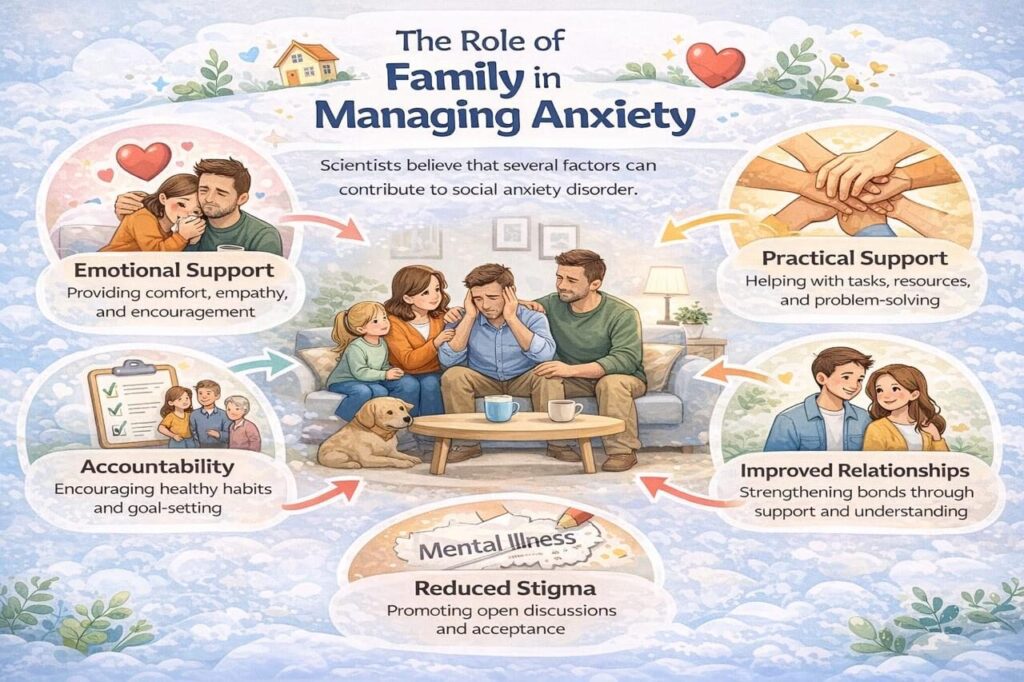
Peer support has been proven to be just as valuable as clinical support and guidance in an individual’s mental health journey. Family members and friends can be a great source of emotional support, practical assistance, and social connection. Peers are involved more regularly in a person’s life and can listen, provide encouragement, and help individuals.
- Emotional support: Having someone to talk to and share feelings with can be crucial in managing mental health issues. A friend or family member can provide a safe and supportive space for an individual to express their emotions and receive validation and empathy.
- Practical support: Friends and family members can also provide practical support, such as helping with daily tasks, which can reduce stress and improve mental well-being.
- Accountability: A friend or family member can provide accountability related to following through with treatment plans or self-care strategies. They care about the individual’s well-being and can motivate them to stay on track with their mental health program.
- Reduced stigma: Mental health issues can be interpreted as shameful and individuals may be hesitant to seek professional help. The support of a friend or family member who is understanding and accepting without judging can help reduce the stigma and encourage individuals to seek the care they need.
- Improved relationships: Mental health issues can have a negative impact on relationships. The support of a friend or family member who is willing to learn and understand can improve communication and strengthen relationships.
Treating the symptoms by PSYCHOTHERAPY
Psychotherapy, also called talk therapy, is a type of mental health treatment.
It’s often used either alone or with medications to treat mental health conditions. During a psychotherapy session, you talk to a doctor or a licensed mental health care professional to identify and change troubling thoughts. Psychotherapy can help you deal with mental health conditions such as depression, anxiety and stress.
Psychotherapy can be helpful for a range of issues. It has been shown to help relieve at least some symptoms for about three-quarters of people who take part in it.
It has been shown to help people:
- Identify behaviors, emotions, and ideas and learn how to modify them
- Understand and identify their life problems or events such as a major illness, death in the family, loss of a job, or divorce and help them recognize which aspects of those problems they may be able to solve or improve
- Regain a sense of control and pleasure in life
- Learn healthy coping techniques and problem-solving skills
- Learn to recognize if they are at risk for self-harm and learning tools to manage those feelings
- Recover from abuse

Psychotherapy may also help you with daily functioning, including things such as:
- Improving relationships at work and home
- Improving symptoms and having less disability with a chronic medical condition
- Increasing life satisfaction
- Actively participating in medical decision-making when you have health issues
Therapy is either catered to an individual, a group or even a family.
Myths & Reality about Social anxiety disorder and Psychotherapy:
Myth 1: Social Anxiety is Just Being Nervous
It is true that social anxiety has a variety of symptoms and this can include a feeling of nervousness, but if you are suffering from social anxiety you may experience cognitive, emotional, physical and behavioural problems when you are in a social situation that is affecting you.
Myth 2: Social Anxiety is a Problem That You Have to Live With
Social anxiety can become so intense that some people cannot work or even leave the house. Some people who suffer from social anxiety can function well in general and it is just a specific fear that gets in the way.
Myth 3: Social Anxiety Isn’t That Common
Social anxiety is experienced by most people at some point in their life. It may have been when giving a presentation in school, or a speech at work as an adult, or when meeting someone for the first time, everyone gets that feeling of butterflies once in a while.
Myth 4: Social Anxiety Can’t Hurt You
It is true that social anxiety can cause significant impairments in life. Research has shown people with social anxiety may earn less, are less likely to gain a degree and are less likely to be in a professional role. Social anxiety can also cause reduced productivity at work, affect personal relationships, cause high levels of suicidal thoughts and higher use of health care services.
Myth 5: Therapy is only for people with severe mental illness.
People seek psychotherapy to address a multitude of issues, including, but not limited to depression, anxiety and life transitions (ex. changes in job, marital/family difficulties or coping with chronic illness). Many people look to therapy as a preventative measure. Annual check-ups can help give you guidance and recommendations on how to prevent further health issues. For example, a primary care physician might advise you to increase physical activity to help lower your cholesterol. In a similar fashion, psychologists or therapists assess your symptoms and offer treatment recommendations for relief.
Myth 6: I must be weak if I need to see a psychologist.
Seeking help for a problem shows signs of both bravery and resourcefulness. Think about a time in your life where you learned something new, like riding a bike for the first time or kicking your first soccer ball. You have to continually practice to strengthen your abilities.
Myth 7: I should be able to fix things on my own. I was raised to be independent.
Many times people equate not being able to fix their own problems as “failing.” A psychologist can help you recognize what is biochemical or behavioral that may be responsible for the difficulties you are facing. When you have a problem, seek an expert’s advice.
Myth 8: Therapy is too expensive.
Cost prohibits many people from seeking therapy. Free psychotherapy and counseling services are available in India through government initiatives, NGOs, and university clinics. Government schemes like Tele-MANAS a national 24/7 toll-free helpline (14416 / 1-800-891-4416) providing support in regional languages.
Conclusion:
Social Anxiety Disorder is a very important yet often overlooked mental health condition but that goes far beyond simple shyness. It can deeply affect an individual’s emotional, social, and functional well-being, interfering with everyday activities and relationships. Despite its high occurrence, especially among young individuals in India, a large proportion of affected people remain untreated due to stigma, lack of awareness, or limited access to care or also even think psychotherapy as a weakness.
“The part can never be well unless the whole is well.” — Plato
References :
Textbooks:
- New Oxford Textbook of Psychiatry
- Kaplan & Sadock’s comprehensive texbook of psychiatry
Websites:
- Mayo Clinic: https://www.mayoclinic.org/diseases-conditions/social-anxiety-disorder/symptoms-causes/syc-20353561
- National institutes of health: https://www.nimh.nih.gov/health/publications/social-anxiety-disorder-more-than-just-shyness
- Cleveland clinic : https://my.clevelandclinic.org/health/diseases/22709-social-anxiety
- Anxiety and depression association of America: https://adaa.org/understanding-anxiety/social-anxiety-disorder
- Help guide.org: https://www.helpguide.org/mental-health/anxiety/social-anxiety-disorder