

We have all seen sanitary pad advertisements glorifying their products by showing women dancing, doing acrobatics, flying, and what not during their periods. An advertising strategy? Of course. But does it really depict reality? For most women, periods come with immense cramps, backaches, fatigue, and the need to prepare for those painful days of the month.
Read this article to learn about one of the most common gynaecological complaints affecting women around you—a condition that is far too often dismissed as “just a part of being a woman.”
What is dysmenorrhea?
Dysmenorrhea is the clinical term which refers to pain associated with menstruation.
Mild to moderate pain is very common. More than half the women who menstruate have pain for 1 -2 days at the beginning of their cycle, more commonly seen in adolescents. But for some, the pain can be incapacitating, so severe that they find it hard to do even their daily work for several days in a month.
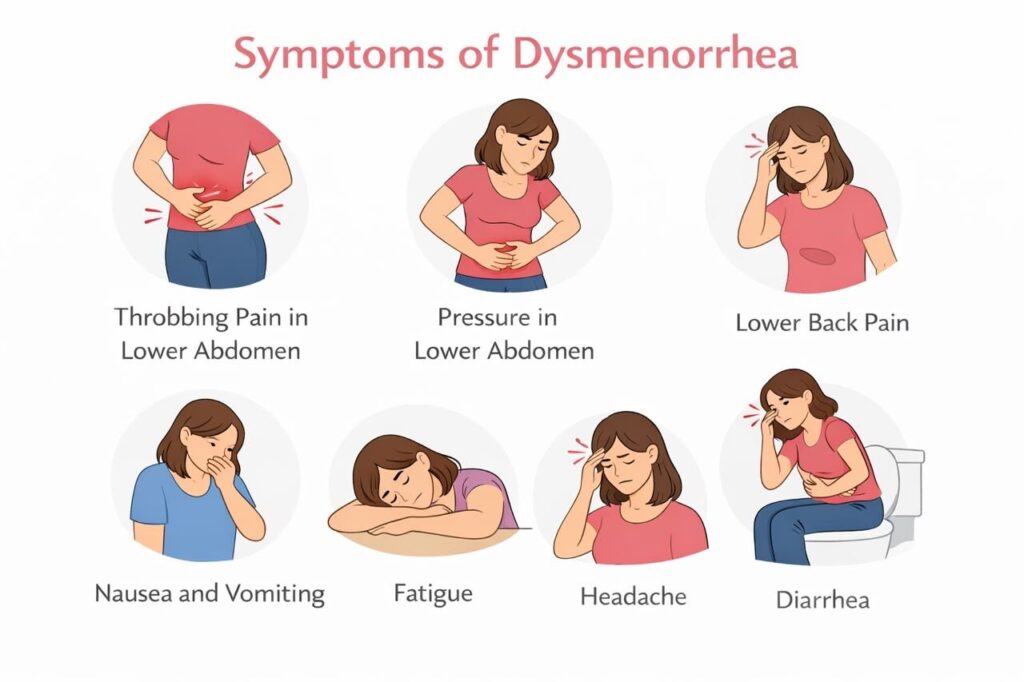
What are the symptoms usually seen?
Women with painful periods complain of the following symptoms
What causes this pain?
Dysmenorrhea can be of either primary or secondary type, based on why it’s hurting.
PRIMARY DYSMENORRHEA
When there is pain but no underlying medical condition found, it is called primary dysmenorrhea. It is the pain felt during normal menstrual cycles.
- It may begin at the start of a girl’s first cycle (menarche) and last till her last menstrual cycle (menopause), but more commonly seen in adolescents
- The pain usually begins a day or a few hours before the cycle begins, and subsides in 3-5 days, with maximum intensity on the first day of the cycle
- Pain is usually felt at the lower abdomen and pelvic area, often radiating to the lower back and inner thigh
- Other symptoms like nausea, vomiting, headache may also be present
- Pain from primary dysmenorrhea is usually cured following pregnancy and vaginal delivery.
If there’s no underlying condition, then why does it hurt?
This is a very common doubt. Let me put it down in simple words.
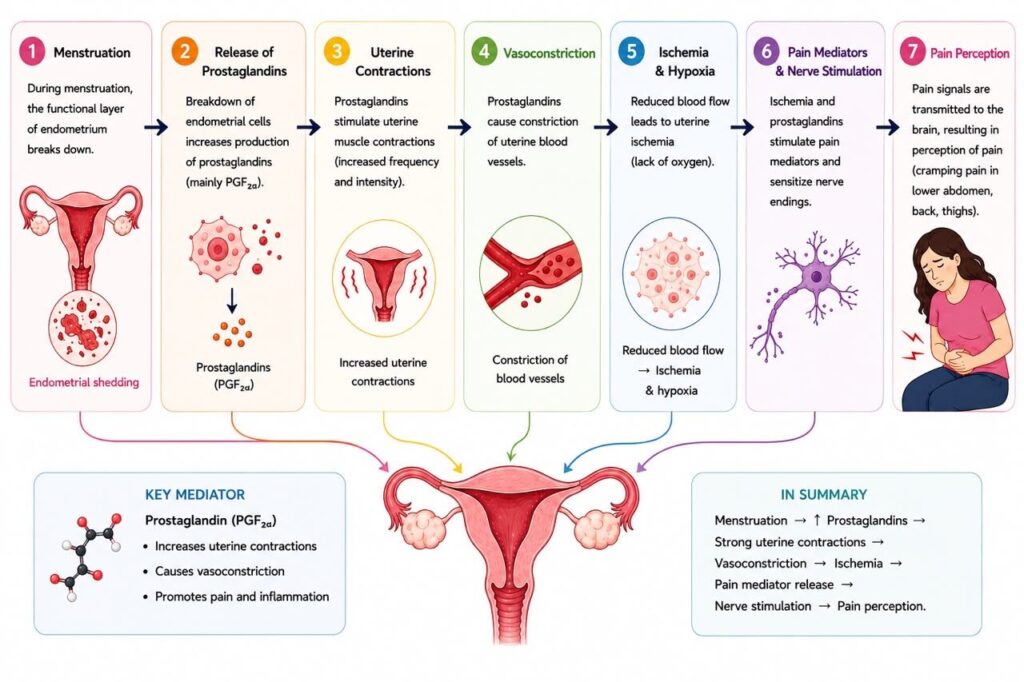
Prostaglandins are chemicals that act as local hormones, which are produced from almost all tissues of the body in response to any stress, injury or infection. These chemicals when released causes the uterus to contract and shed the endometrial lining in the form of blood and mucus leading to a period.
Excess secretion of prostaglandins or increased sensitivity of the myometrium (the muscle layer in the uterus) to prostaglandins can lead to increased contractions of the uterus, which causes pain and discomfort.
SECONDARY DYSMENORRHEA
If there is pain due to any underlying condition or infection, it is said to be secondary dysmenorrhea.
- The pain usually begins 4-5 days before the cycle begins, and may last till the bleeding stops.
- It is less common and is associated with other symptoms related to the condition.
Conditions that can cause increased cramping are :
- Cervical stenosis – narrowing/closure of the cervical canal
- Endometriosis – presence of endometrial tissue in other parts of the body
- Adenomyosis – presence of endometrial tissue in the myometrium
- Fibroids – non cancerous tumors of the uterus
- Pelvic congestions
Women might also experience pain during other days of their menstrual cycle.
- Mittleschmers pain (Ovulatory pain)
German for “middle pain”, mittleschmers occurs mid cycle, during ovulation
- There is pain on one side of the lower abdomen
- Pain may be present for 1-2 hours, but rarely exceeds 12 hours
- Slight vaginal bleeding or vaginal discharge may also occur
- The exact cause is unknown, but it occurs possibly due to : stretching of the surface of the ovary during release of the egg, release of blood or fluid from the ruptured follicle which irritates the abdominal lining
In this condition, there is chronic pain (for more than 6 months) in the pelvic area and which is not associated with menstruation or pregnancy. This occurs due to blood flow problems in the pelvic veins.
This is mostly due to pooling of blood.
‘She’s PMSing’ is a very common phrase used nowadays. PMS is a combination of both physical and emotional symptoms a woman experiences usually in the week prior to their period. These commonly include mood swings, food cravings, bloating and mild cramping. It is rarely severe, but impacts the daily lifestyle of the woman.
Is this very common?
According to the National Library of Medicine (NIH) The prevalence of dysmenorrhea can vary between 16% and 91% in individuals of reproductive age, with severe pain observed in 2% to 29% of individuals. the prevalence of dysmenorrhea is said to be 80% in adolescents. Of those affected adolescents, approximately 40% had severe dysmenorrhea
Who are at risk?
Any woman can develop dysmenorrhea at any point in their reproductive age, but the following are more prone to have painful periods :
- If they got their period before the age of 12
- If they have heavy periods which lasts for more than 7 days
- If they have a biological parent who has dysmenorrhea
- If they smoke cigarettes
- If they consume alcohol during their periods
How do you know if you have dysmenorrhea?
Diagnosing dysmenorrhea mainly depends on the woman’s complaints and their symptoms.
Doctors usually look for the following symptoms in the woman’s history
- Lower abdominal pain occurring during menstruation
- If the pain started just before or during periods
- Associated symptoms like nausea, back ache, fatigue
The doctor may also conduct a physical examination of the pelvic region to rule out any other cause if the pain is severe. This is usually normal in case of primary dysmenorrhea.
If secondary dysmenorrhea is suspected, the doctor may suggest the following investigations to be done
- Ultrasound scan
- Blood tests
- Hysteroscopy
Both primary and secondary dysmenorrhea are curable, so its very important to get it checked
How do you manage the pain?
Many natural methods and therapies are practiced to reduce pain and cramping.
- Use a heating pad during periods
- Take a warm/hot bath
- Exercise (studies show that people who exercise regularly tend to have cramps of lesser intensity)
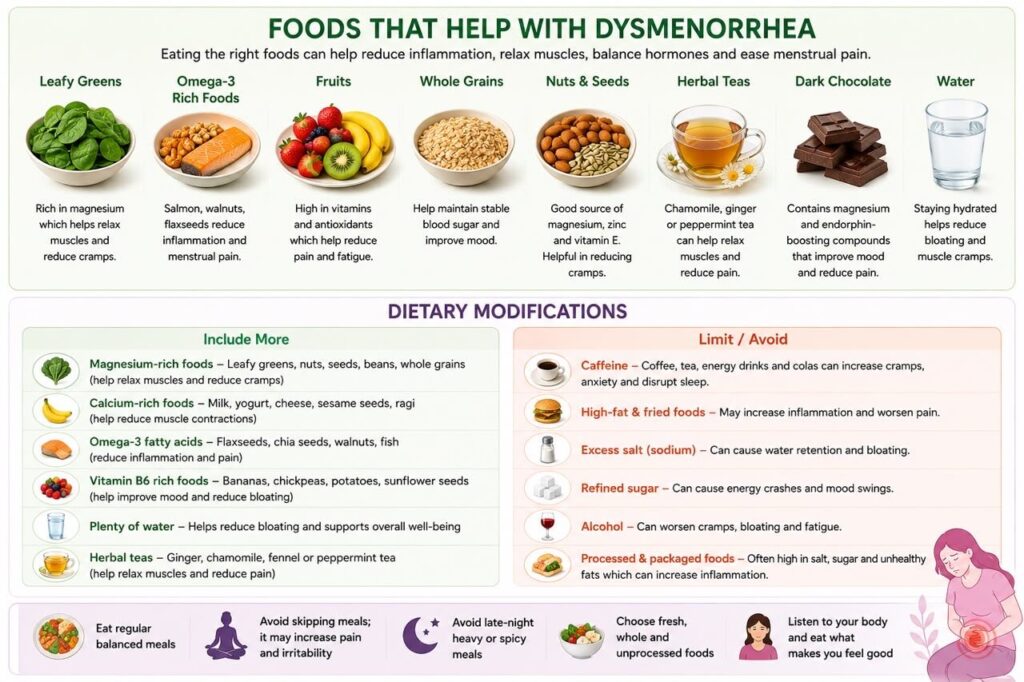
- Dietary modifications (increase protein intake, decrease sugar, smoking and alcohol consumption)
- Eating foods with anti inflammatory properties – such as nuts, green leafy vegetables, dark chocolate
- Avoid foods containing caffeine
- Massage the lower abdomen / back area
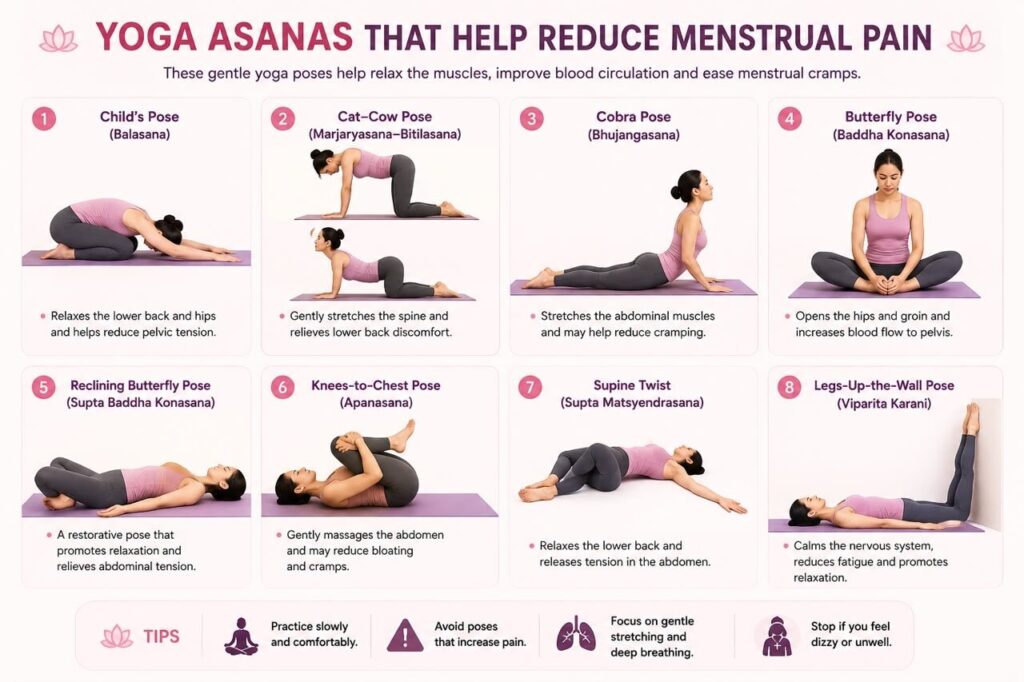
- Yoga
- Acupuncture and acupressure
- Taking vitamin D and magnesium supplements, which might help to reduce inflammation
Do consult a doctor if you notice any of these red flag signs
- Your symptoms worsens every cycle
- Your pain lasts for more than 3 days
- The pain has started after the age of 25 (you didn’t experience period pain before that)
- You experience pain during sexual intercourse
- The pain is radiating to the entire back and legs
- You have severe digestive issues (diarrhea, bloating) specifically during your periods.
- You are having extremely heavy periods, and are passing clots more frequently
- You are having fever or feel chills along with the pain
- You notice foul smelling or an unusual colour vaginal discharge
Myths v/s facts
| MYTHS | FACTS |
| Period pain is normal and should be tolerated | Mild discomfort can be common, but severe pain is not normal and may need medical attention |
| Exercise worsens period pain | Light exercise can actually reduce pain by improving blood flow and releasing endorphins. Regular exercise is shown to reduce the intensity of cramping |
| Painkillers are harmful and should be avoided | Medications like NSAIDs are safe when used properly |
| Cold drinks or certain foods cause cramps | There is no strong scientific evidence linking specific foods to cramps |
| Period pain means you’ll have fertility problems | Primary dysmenorrhea does not affect fertility |
| Period pain prepares the uterus for labor / makes child birth easier | There is no evidence that it strengthens the uterus or helps with labor |
| Irregular periods always cause more pain | Pain depends mainly on prostaglandin levels, not just cycle regularity |
| Hormonal treatment is always dangerous | Hormonal therapy is safe when prescribed properly |
Key takeaways
- Dysmenorrhea is the medical term for pain during menstruation
- It is mainly of two types – primary (most common, no underlying cause) and secondary (due to any underlying condition.
- Common symptoms may include – lower abdominal pain, backaches, fatigue, nausea, headaches.
- Simple methods such as slight dietary modifications, light exercise, yoga and using a heating pad/warm shower helps relieving symptoms
- Spreading awareness and seeking timely care helps improve the quality of life of women.
Periods are a sign of health – not a monthly test of endurance.
Understanding dysmenorrhea plays a crucial role in replacing myths with knowledge, having conversations about menstrual health and providing a safe and comfortable space for women where they feel heard and supported. Every woman experiences her period differently and every month brings a different experience. Remember, your pain is never ‘too small’ or ‘very common’ to deserve care. I hope that this article will encourage everyone reading it to look at period pain with more understanding, empathy and compassion.

References