

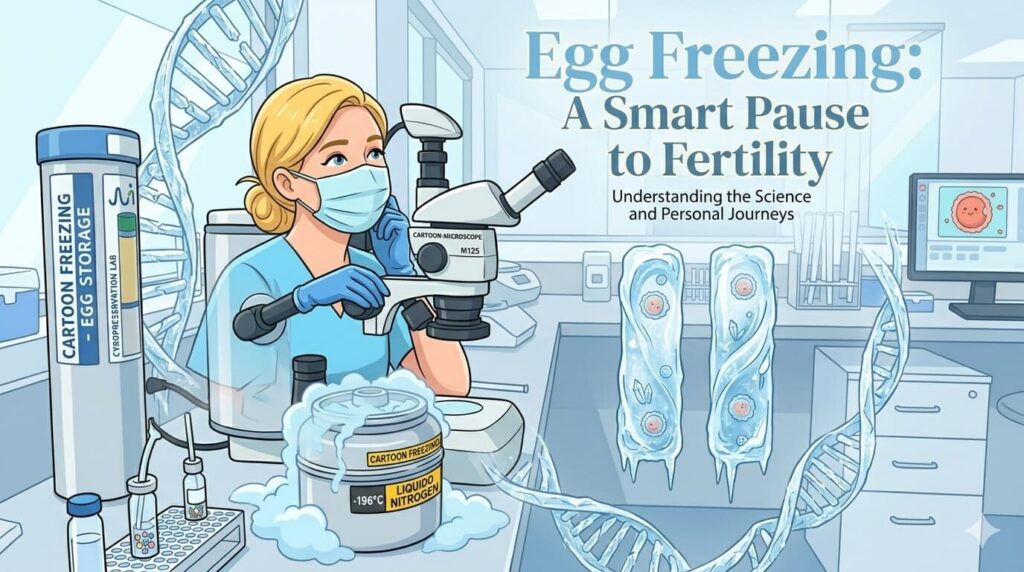
Imagine you are 29 years old. You have finally landed your dream job and are driven to make a name for yourself. Maybe you want to pursue higher studies, or take your time to travel the world, or you are looking for the right life partner. But an itch always remains in the back of your mind: “ Will I be able to have children? Should I hurry up and settle?”
For many women today motherhood does not have a deadline yet biology makes this a tricky endeavour. For multiple reasons they might feel the best option for their life is to delay childbirth. Egg Freezing has emerged as a way to preserve fertility and keep their options open.
So what exactly is egg freezing? Why do women feel they need to delay childbirth? Are results guaranteed? Let us dive into egg freezing ,how it works and address the common myths and taboos surrounding it.
What is an Egg?
Before delving into egg freezing, it is important to understand what exactly an egg (ovum) is.
An egg is the woman’s reproductive cell. It carries half the genetic material needed for a baby. The other half comes from the father’s sperm cell. The egg and sperm fertilize and eventually develop into an embryo that grows to be a baby.
What is freezing eggs?
Oocyte cryopreservation (egg freezing) is the process of retrieving mature eggs from the ovary (female reproductive organ) after controlled ovarian stimulation and preserving them at very low temperatures for future use in assisted reproduction.
Why freeze eggs?
Unlike men, who can continuously produce sperm throughout their lives, women are born with all the eggs they will ever have. These eggs are stored in the ovaries and they gradually decline in number and quality with age. This is the main reason fertility decreases over time.
Let us understand how drastically the egg count changes.
In women, the eggs are produced before birth. Only about 1 million oocytes remain at the time of birth. By the time of puberty about 2,00,000 and by age of 30 only about 26,000 oocytes remain. During a woman’s life, only about 400 oocytes are ovulated and the others degenerate. This shows us that eggs are precious and their count only decreases with age. At the time of menopause, the ovaries are virtually devoid of oocytes
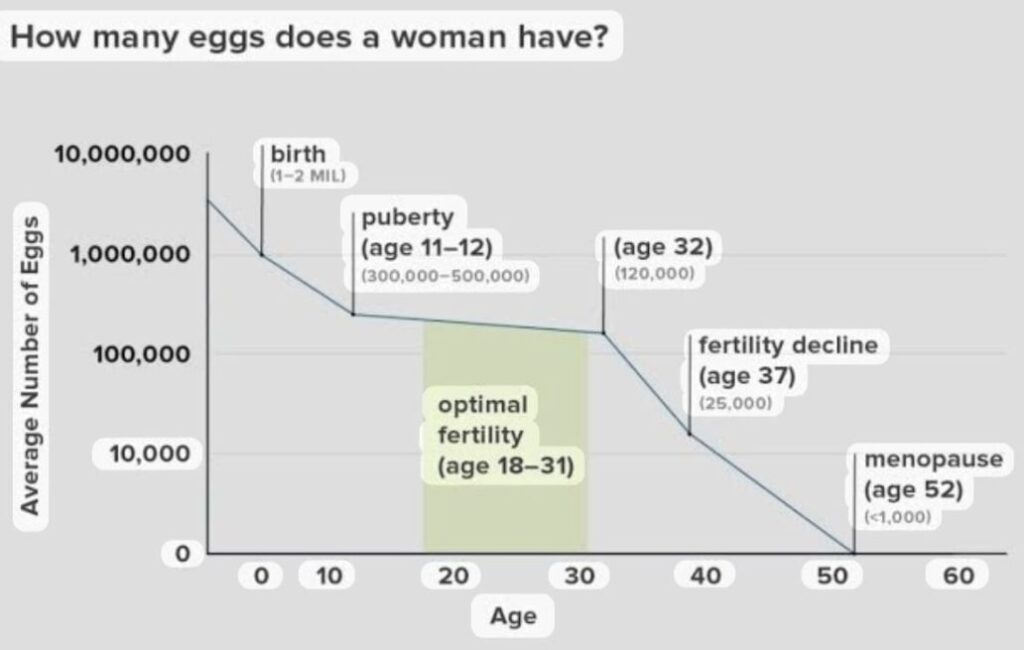
Another fact to consider is that the age of the egg contributes to the health of the child. The oocyte that ovulates in a woman in her 40s is twenty years older than an oocyte she would have ovulated in her 20s. Aged eggs have degenerative changes and their fertilization may give deformed embryos. There is a greater risk for miscarriage and anomalies such as Down’s syndrome.
Egg freezing works by collecting the eggs at a younger age and preserving them for future use when the woman is ready for pregnancy.
Why would a woman consider egg freezing and delay childbirth?
Career or Family?
This is a common question women ask themselves. There are many reasons a woman could have to delay childbirth. Her early working years are essential for building skills, networking and getting promotions. Maternity leave and childcare may hamper her momentum. Additionally, a woman might want to be more stable financially to afford raising children.
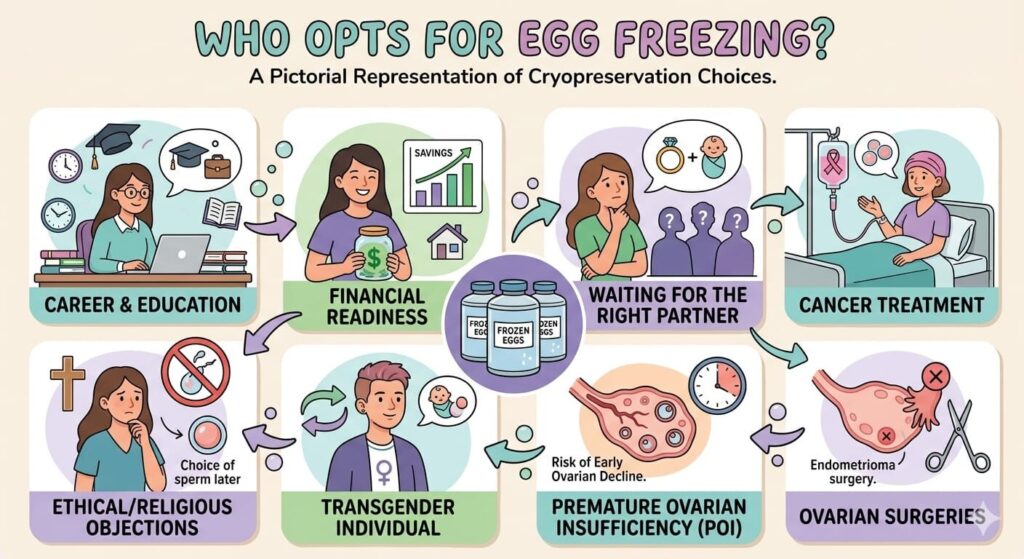
Here is a list of reasons why women might want to consider this option:
Provides time to choose a life partner: This gives women the option to wait for their right life partner even after crossing a certain age limit. They can use their frozen eggs at a later age and have a higher chance of having a healthy baby.
Career or Higher studies: Women who are pursuing higher studies or working on their career
Finances and preparedness to have children: Women who are waiting to be more financially and emotionally stable to be ready to have children
Women undergoing cancer treatment: Egg freezing is strongly recommended for women who must undergo gonadotoxic therapy such as chemotherapy and radiotherapy. These treatments can damage eggs and can cause infertility.
Women undergoing ovarian surgeries: Certain surgeries such as Endometrioma surgery, repeated ovarian cyst surgery ,etc could reduce egg reserve. Repeated ovarian operations can damage ovarian tissue and reduce fertility.
Woman at risk of premature ovarian insufficiency (POI) : This is the loss of normal ovary function before the age of 40 leading to reduced fertility and estrogen deficiency. They experience symptoms such as irregular periods, hot flashes, vaginal dryness. This could be due to chromosomal defects (Turner’s syndrome, fragile X syndrome), Autoimmune reasons (thyroiditis) etc. The aim is to freeze eggs and preserve fertility before ovarian reserve declines.
Women exposed to fertility damaging occupations: Some occupations negatively affect fertility and often involve exposure to heat, chemicals, intense physical stress etc. These include; manufacturing and industries, healthcare with exposure to radiation etc.
Women with ethical or religious objections to embryo freezing: They can maintain reproductive autonomy and have the option to choose sperm later. They might have objections to freezing embryos due to a belief that life begins at fertilization and an embryo has the potential to develop into a baby.
Transgender individuals planning gender transition: People assigned female at birth who plan to start testosterone therapy or gender-affirming surgery may freeze their eggs to preserve biological fertility.
The Process of Freezing Eggs
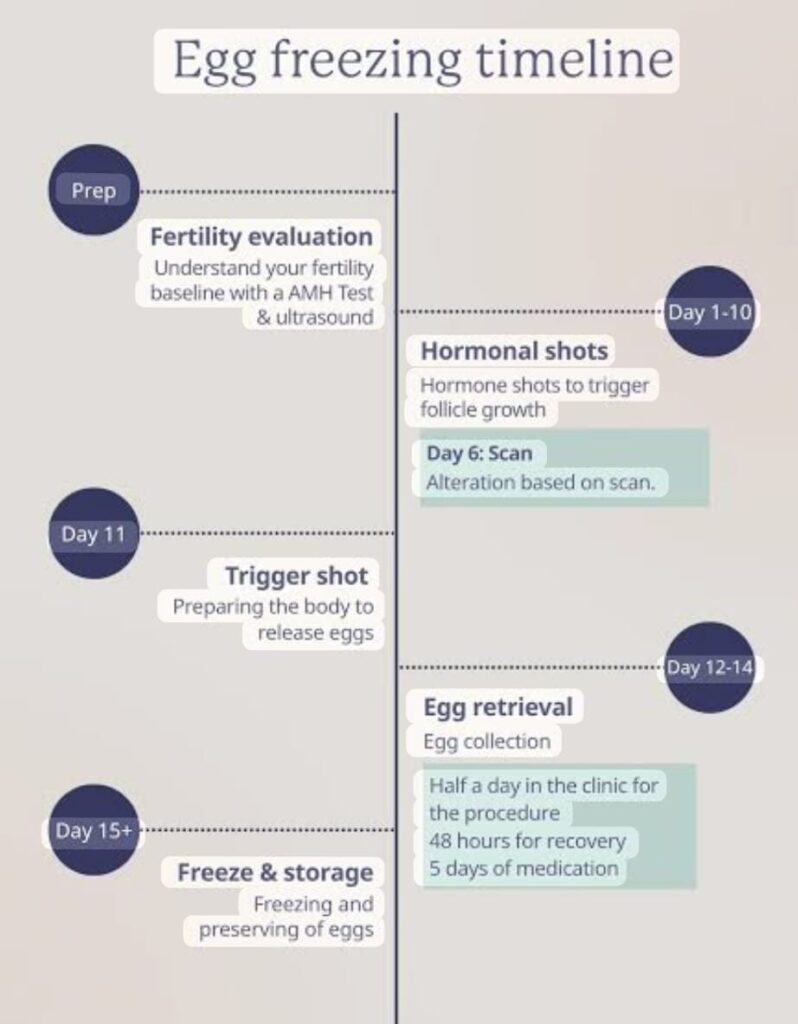
The process of freezing eggs involves estimating the egg count in the woman’s reproductive organ. Then we use hormones to make the ovary release multiple eggs at once. It is important to monitor the egg growth through ultrasounds and blood tests throughout this process. Finally a trigger injection is given which makes the eggs ready for storage. After this the woman has to go to the clinic and the eggs are collected after a small 15 minute procedure. The eggs are then frozen and stored.
Here is a detailed explanation on the process of egg freezing:
From the start of hormonal injections to retrieval of eggs; this process takes about two weeks.
1. Initial Consultation and Ovarian Reserve Testing: This is the first step towards freezing eggs. They assess the number of eggs a woman has (this is called the ovarian reserve) through blood tests. This is usually done for AMH( Anti-Mullerian Hormone) levels. Ultrasound is used to measure antral follicle count. These results help in estimating how well the ovaries respond to the treatment.
2. Ovarian Stimulation through Daily Hormonal Injection: Controlled Ovarian Stimulation (COS) is the step in freezing eggs where hormones are used to make the ovaries produce multiple mature follicles in one menstrual cycle, rather than the usual one egg release per cycle. This process is usually done on day 2 or 3 of the menstrual cycle and lasts for 10- 14 days.
The woman takes daily hormone injections that are given subcutaneously in the abdomen or thigh. These injections are taken at home and the fertility clinic teaches women how to self-inject. The common hormones include :
Follicle stimulating hormone (FSH) to stimulate the ovaries
Luteinizing hormone (LH) to stimulate the ovaries
GnRH agonists or antagonists to stop the body from releasing eggs prematurely. They work by suppressing the natural LH surge and allow the eggs to mature until retrieval.
3. Monitoring during stimulation: A transvaginal ultrasound is taken every 2-3 days during the 10-14 days of ovarian stimulation. This measures the follicle size. The follicles grow to 18-20 mm before the eggs are ready for retrieval.
Estradiol levels in the blood are also checked. One mature follicle produces approximately 150-200 pg/ml of estradiol. Hence, an increase in estradiol levels means that the ovarian stimulation was successful.
4. Trigger Injection: This is the final step in ovarian stimulation. This forces the eggs to complete maturation and be suitable for freezing. Common medications used are hCG or a GnRH agonist like Lupron. This requires precise planning as egg retrieval must be scheduled 34-36 hours later.
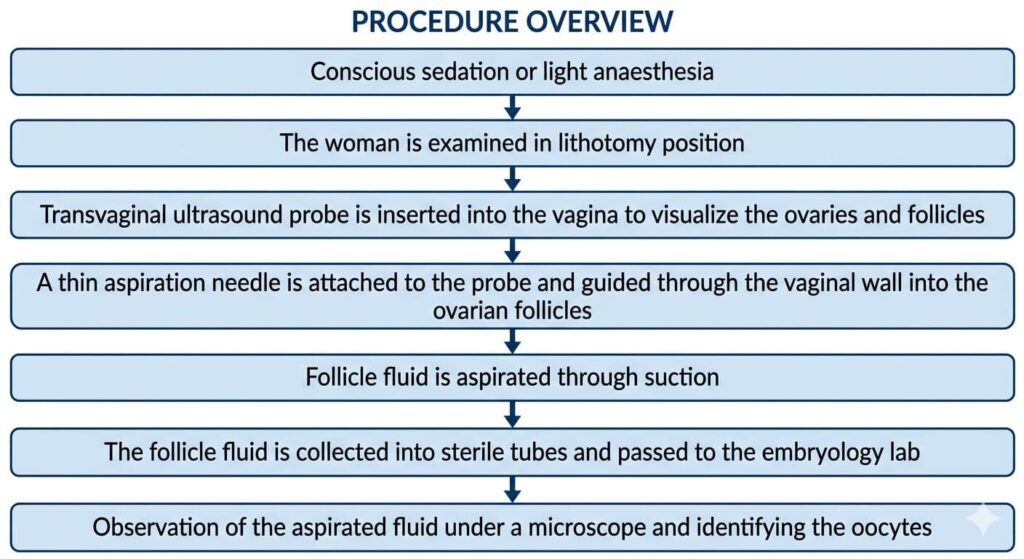
5. Egg Retrieval: This is done through a transvaginal ultrasound-guided aspiration of ovarian follicles. This is a minor outpatient surgical procedure which takes about 15-30 minutes.
Steps:
Post procedure recovery: The patient stays in recovery for about 1 hour. She might experience mild symptoms such as cramps, bloating and light vaginal bleeding. Most women completely recover within 24-48 hours.
6. Vitrification/ Flash Freezing: Mature oocytes are identified and they undergo vitrification. In this method the eggs are preserved by removing intracellular water and replacing them with cryoprotectants like Dimethyl Sulfoxide, Ethylene Glycol and Propan
Rapid freezing is done by using special devices and plunging the eggs in liquid nitrogen at -196 Degree Celsius. This is better than traditional freezing as it prevents formation of ice crystals and damage to the egg’s structure.
The eggs have a 90% survival rate
7. Storage
The eggs are stored in liquid nitrogen tanks. A good embryology lab has an around the clock monitoring system with alarms to ensure equipment is properly functioning and the temperature is maintained.
There must be manual checking of temperatures as well
Best age to undergo this procedure :
25-35 years. Eggs frozen before 35 years have better birth rates. Women freezing their eggs later may need more cycles to obtain sufficient eggs.
How can a woman use these eggs?
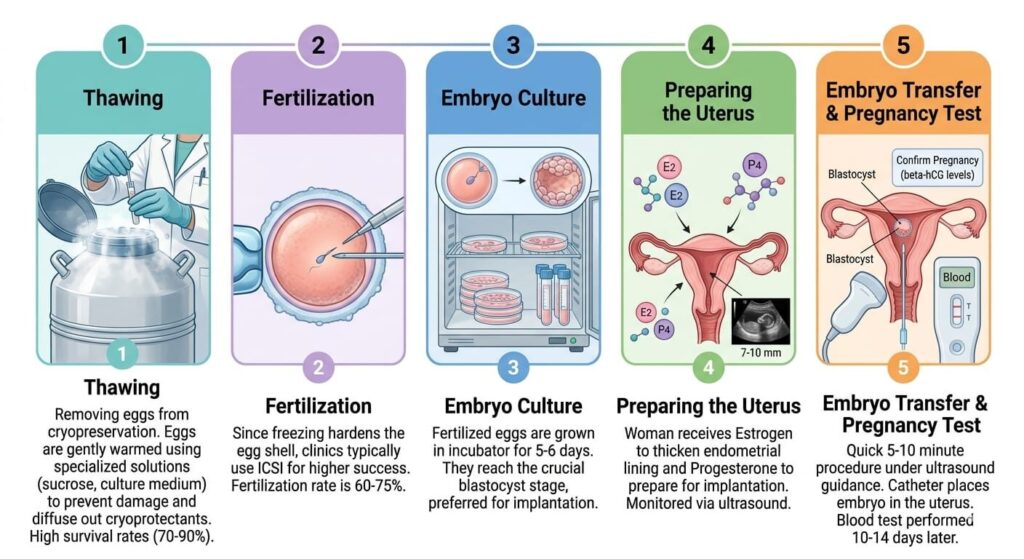
Once the woman is ready to have children. The frozen eggs are carefully warmed in the laboratory. The eggs which survive this process are then injected with sperm from the partner or a donor . A single sperm is injected into each egg to improve the chances of fertilization. The fertilized eggs are then monitored by embryologists for the next few days to ensure that they develop into embryos. The healthiest embryo is selected and transferred to the uterus through a simple procedure. From this point onwards the pregnancy process occurs as natural.
Let us see these steps in detail:
The steps to use frozen eggs:
1. Thawing:
This refers to the removal of eggs from liquid nitrogen storage.
They are then warmed using specialized solutions which usually includes-
- Sucrose at high concentration
- Culture medium such as Human Tubal Fluid
This prevents swelling while cryoprotectants are diffused out
Egg survival rates after thaw are 70-90%
2. Fertilization of eggs:
Most clinics use intracytoplasmic sperm injections. This is because the freezing process hardens the outer layer of the egg.
A single sperm is injected directly into the egg using a microscopic needle.
This method has a higher fertility rate compared to IVF when frozen eggs are used. The normal fertility rate in this process is about 60-75%
3. Embryo Culture:
The fertilized eggs are cultured in laboratory incubators
It takes 5-6 days for the embryo to reach blastocyst stage. This stage is preferred by clinics as the implantation into the uterus is higher.
4. Preparing the Uterus:
The woman’s uterus must be prepared for implantation of the embryo.
She receives the hormones:
- Estrogen to thicken the endometrial layer of the uterus
- Progesterone to prepare the lining for implantation
The endometrial thickness is monitored through ultrasound, the thickness should be around 7-10 mm.
5. Embryo transfer:
This is a 5-10 minute procedure which doesn’t require anesthesia
This is done through ultrasound guidance. A thin catheter is passed through the cervix into the uterus. The embryo is gently deposited into the uterine cavity.
After 10-14 days, a blood test is done to confirm pregnancy by measuring beta-hCG levels
What can be expected from this procedure?
One of the best aspects about egg freezing is that the frozen eggs can be stored and remain usable for many years. Healthy babies have been born from eggs that were stored for over a decade, the longest recorded one being 14 years.
Yet it is extremely important to note that freezing eggs might not always give the expected outcome. It is not a guaranteed way to maintain fertility. The success rates of this procedure mainly depend on the woman’s age at the time of freezing her eggs. Eggs frozen at a younger age are generally healthier and have a higher chance of resulting in a successful pregnancy and a healthy baby.
Studies have shown that women who freeze their egg before the age of 35 may have a 60-70% or higher chance of having at least one live birth in the future.
What are the Alternatives to Egg Freezing?
A woman must know that there are other ways apart from egg freezing to achieve her desired outcome. After knowing all the possible options, she can choose the one she finds best.
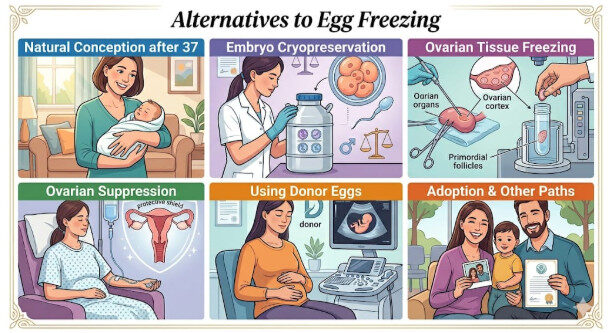
- A woman can conceive naturally and have a healthy baby even after the age of 37 with about a 15%- 20% chance of pregnancy per cycle.
- Embryo preservation: This has a higher pregnancy rate than frozen eggs but it has its own limitations. This has ethical or legal issues regarding embryo ownership and it requires a sperm source. This removes the autonomy of the woman to choose a suitable life partner to have her children with later in her life.
- Ovarian Tissue Cryopreservation: In this technique, fertility is preserved by freezing the ovarian cortex tissue containing the primordial follicles. There is laparoscopic removal of ovarian tissue (surgical procedure). The tissue is later transplanted back after treatment. The advantage of this technique over freezing eggs is that it doesn’t require hormonal stimulation. It can be used in women who require immediate cancer treatment and pre-pubertal girls who can not undergo ovarian stimulation. The disadvantage is that there is a risk of reintroducing cancer cells.
- Ovarian suppression during chemotherapy: There is a protective effect but it is not guaranteed
- Using donor eggs and undergoing pregnancy through IVF
- Adoption
What are the side effects of this procedure?
Egg freezing is considered a safe procedure, yet unlike any other medical treatment it has certain side effects and risks that the woman must be informed of beforehand.
- Effects during hormonal injections: The woman might experience abdominal bloating, pelvic discomfort, breast tenderness, mood swings, headache, fatigue, nausea and mild weight gain,
- Ovarian Hyperstimulation Syndrome
- She might experience cramping, pelvic soreness and mild vaginal bleeding during egg retrieval
- Some other complications include Infections, bleeding ovaries and injury to nearby organs during the procedure
What is the cost of this procedure
The cost of this procedure depends on the fertility clinic, medicines required and the number of treatment cycles needed. The typical total cost can be between ₹1 lakh to ₹2.5 lakh
This cost includes the cost of consultations with experts, the investigations that need to be done before the procedure, the hormones injected to stimulate the ovaries, ultrasound monitoring and blood tests, the surgical cost of retrieving the eggs and the laboratory process of freezing the eggs.
Apart from this the annual storage fees can be between ₹10,000 – ₹30,000.
Additionally there the woman will have to spend more when it comes to utilising the frozen eggs. This additional expenditure includes the process of warming the eggs (Thawing), fertilization and embryo transfer. These procedures may cost between ₹60,000 to ₹2.5 lakh.
The overall cost for successfully using egg freezing as an option for having a child ranges between ₹2.5 lakh to ₹5 lakh approximately.
Thoughts of the women and their families while undergoing this procedure:
Freezing eggs gives the sense of control to women and decreases the anxiety about having an age related decline in their fertility. This gives them greater flexibility in planning their professional and personal lives by giving them a safety-net for their fertility.
At the same time the financial burden and the uncertainty about the outcome may cause stress in the woman as well as the family. This makes open discussions with fertility specialists and loved ones extremely important to help set realistic expectations and provide emotional support.
Social issues while Freezing Eggs:
“She must have a problem”
Society is quick to judge a woman who delays having children. She is often blamed and judged. A woman’s identity is often linked to her motherhood status, yet men’s reproductive timelines are rarely put into question.
A woman’s ambitions and educational pursuit is undermined by society. There are people who view women as failures if she does not settle down and have children within a certain age. She is labeled as selfish.
“It’s unnatural”
A lot of people who are ignorant about cryopreservation or are unempathetic to women who find it best to opt for this procedure say this statement. Other medical practices such as taking vaccines, antibiotics and even C-sections are not “natural”. Yet we accept them as they have significantly helped the society’s health status. If this procedure can help some women increase their quality of life, they deserve to have a choice to opt for this.
Conclusion
Egg freezing is a relatively new medical procedure. As awareness on this procedure is increasing and newer technological advancements are being made, the success rates may increase and the cost may go down in the coming years. Women must be aware about the options they have when it comes to their reproductive health. The choice to freeze eggs is deeply personal and there is no single right answer on whether it is required or not. At the end of the day it is important that women feel empowered to make the decision that is right for them, at the time it is right for them.