

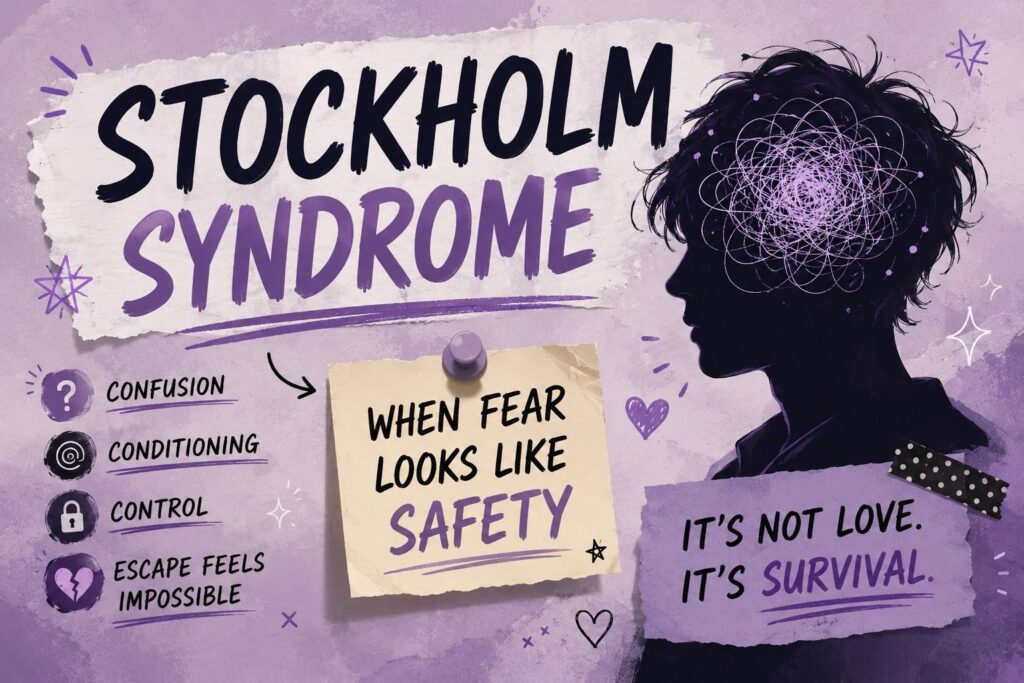
INTRODUCTION
Imagine being trapped and having your safety depending on the person who put you in this danger. You would feel scared, anxious and resistant towards the person.. or so you think, and that’s when you find yourself trusting the person. Growing attached to the person.
Why would a hostage defend the very person threatening their life?
This paradox is referred to as Stockholm Syndrome, a response where hostages develop positive feelings of empathy and affection towards their captors or abusers.
THE CASE OF SWEDEN BANK ROBBERY: THE FORMATION OF A STRANGE BOND:
Beginning from August 23rd, 1973, Jan Errik Olsson and Clark Olofsson had a six day standoff with the police during which bank employees of the Kreditbanken branch at Norrmalmstorg square, Stockholm, Sweden where kept as hostages in the vault of the bank. During this period of captivity, they started developing a peculiar bond with the captors- a bond of fondness and attachment. This bond rooted from the fact that the captors were compassionate, evidences of which include how they comforted the hostages and were sympathetic to their needs-
- Guman giving hope to Birgitta to not give up and keep calling her family when they were unreachable
- He also allowed Elisabeth, who was claustrophobic, to walk outside the vault attatched to a 30 ft rope.
This consolation and sympathy may have reformed the feelings of those held captive grow attatched to the robberers. It was of such deep extent, that on the night of August 28th, when they were released, convicts and hostages were seen shaking hands, embracing and even kissing.
Thus contrary of expected harm, this anomalic relationship where the hostages feared the police more than the convicts is what gave this phenomenon the name Stockholm syndrome.
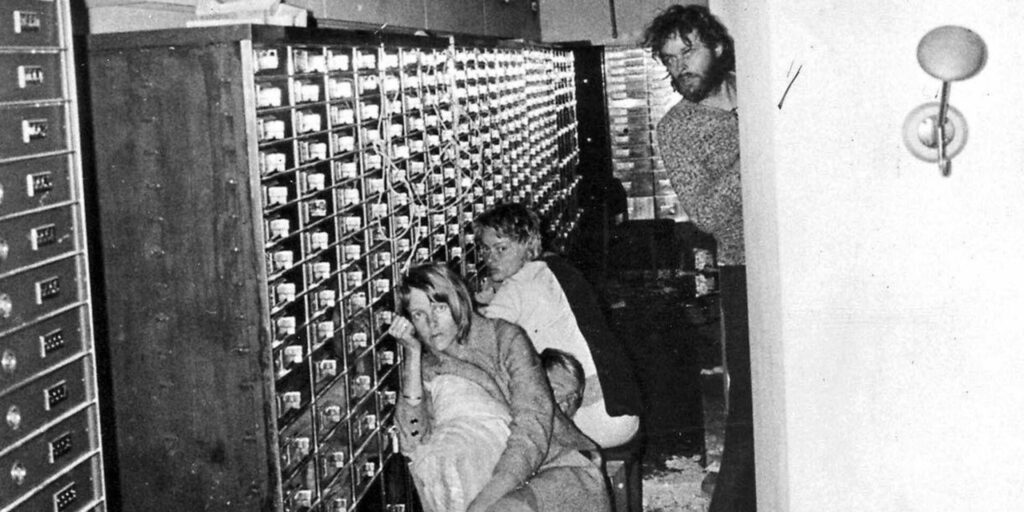
Victims refusing to leave the vault after the incident because built trust for the captors.
WHAT THIS SYNDROME REALLY IS:
Psychologically, Stockholm syndrome is a survival stratergy. The mechanism behind this is explained by cognitive dissonance. Cognitive dissonance is the mental discomfort that is experience when a person hold 2 contradicting beliefs. This creates intense psychological discomfort. To reduce this discomfort, the brain may start reframing the captor as “maybe they are not that bad..”. This amplifies small acts of kindness from the captor and suppresses fear or anger of those held captive. Over time, this evolves into emotional bonding and even protection of the captor- showing how fear and relief become linked psychologically.
It can also be explained through dependency-
Loss of control (no control on safety, survival, power)
↓
Dependence on captor for survival
↓
Captor shows small kindness
↓
Perceived as compassion
↓
Emotional attachment forms
↓
Hostage aligns with captor
↓
Further psychological dependence.
Biologically,
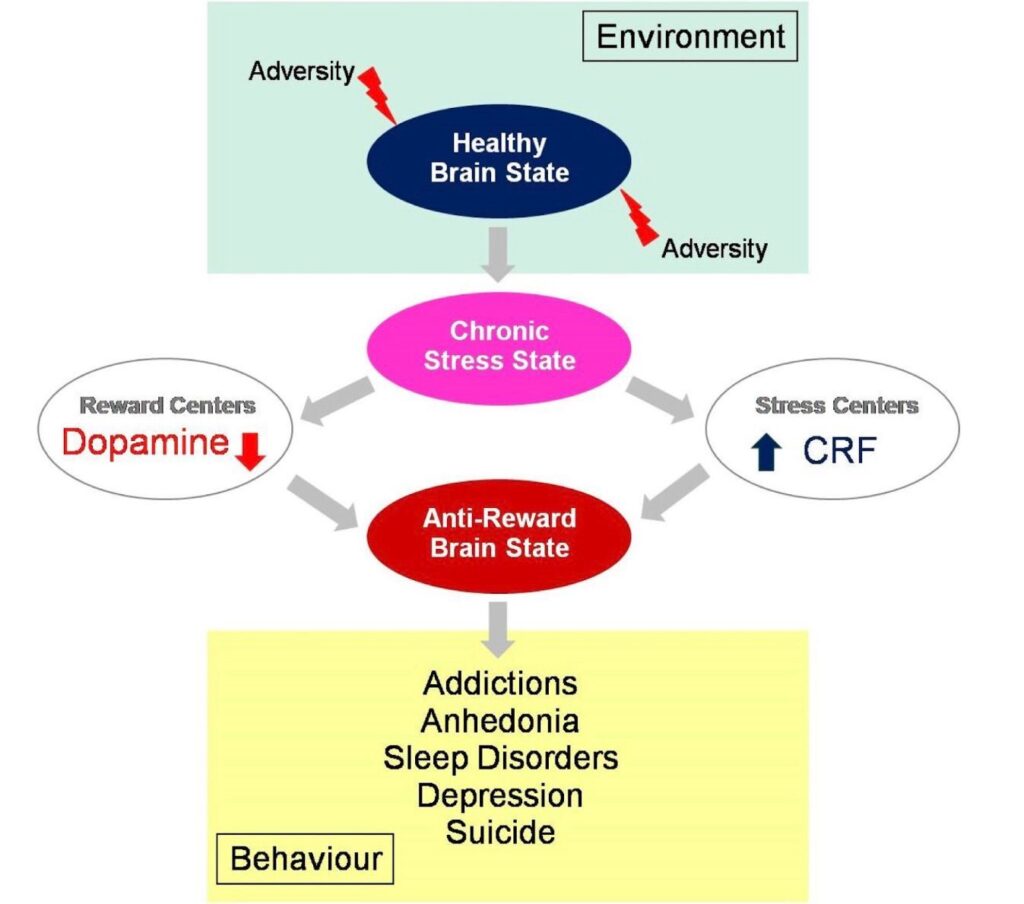
Whenever an individual is faced with situations of threat, the amygdala (part of the brain) gets activated. This activates the hypothalamus-pituitary-adrenal axis to release cortisol, causing the body to be in a state of stress. This usually leads to anti-reward actions. In states of stress, the body tries to find any source of relief. Here, the source of relief becomes the captor. The captor by doing even simple tasks like speaking kindly, eases the emotions and reduces stress causing relief. And with this relief follows dopamine release, that occurs occasionally and intermittently. After repeated interactions providing relief, the fear starts reducing and that’s when the role of oxytocin comes in- it is oxytocin that builds trust and increases connection. This fear->relief(dopamine) -> trust (oxytocin) cycle leads to counteracting logic and the individual develops Stockholm Syndrome.
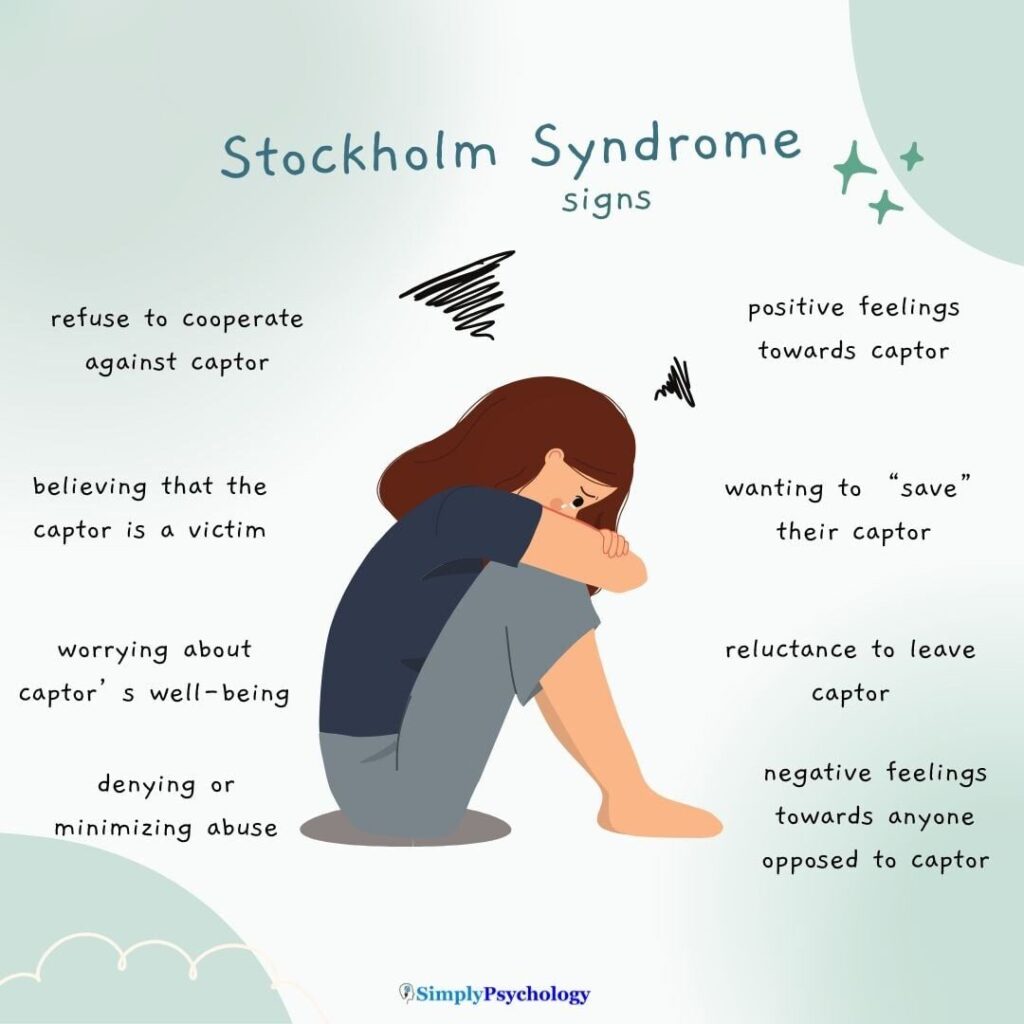
SIGNS OF STOCKHOLM SYNDROME:
- Positive feelings of affection towards captors
- Resistance/ negative toward police or figures that are against the beliefs of captors.
These forms the basis of all other symptoms experienced that include:
RISK FACTORS:
- Dependent personality traits- strong needs of reassurance, difficulty functioning independently
- People pleasing tendencies, need for attachment
- High emotional empathy
- Poor boundaries
- Childhood exposure to abuse relationships- can normalise unhealthy power and relationship dynamics
MYTH VS FACTS:
| MYTH | FACT |
| Only hostages experience it | It can happen in varying degrees and forms in even abusive relationships |
| The individual must be in love with the captor | It is emotional dependency and not a form of romantic love |
| Stockholm Syndrome is a recognised psychiatric disorder | It is NOT officially recognised in the DSM-5 |
| It means the abuser wasn’t that bad | Attatchment can even form despite severe abuse not because the abuser was kind |
| It is a rare phenomenon | It is common but just under-recognised |
WHY VICTIMS DO NOT LEAVE/DETACH:
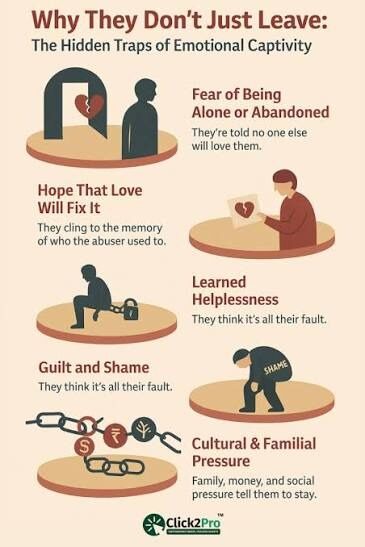
This is a common misconception, as leaving or detaching is not just a physical act- it requires breaking the deeply conditioned psychological bond. The emotional dependence is so real that sometimes the self identity of the individual may become intertwined with the abuser, making it difficult.
CARE AND RECOVERY:
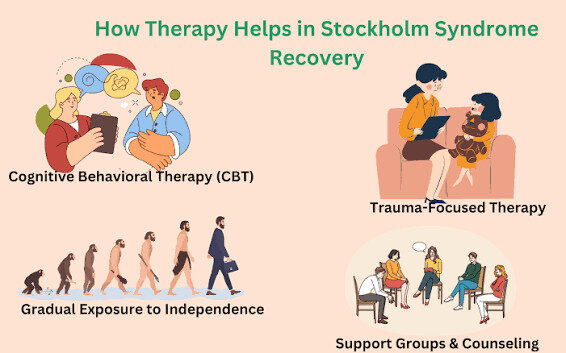
The process of recovering from Stockholm Syndrome is a patient one done with professional guidance. A variety of types of therapies help the individual to break this cycle. Before starting any form of psychological healing, the immediate danger to the individual should be addressed- ensuring safety and stability of the individual.
Therapy plays a central role in this sensitive phase. Cognitive behavioral therapy is a popular one that helps individuals process the distorted beliefs and also rebuild their sense of identity. Talk therapies and trauma-informed therapies also play a part. Social support plays an important role to provide emotional safety to the individuals.
STOCKHOLM SYNDROME VS TRAUMA BONDING
RELEVANCE IN MODERN TIMES:
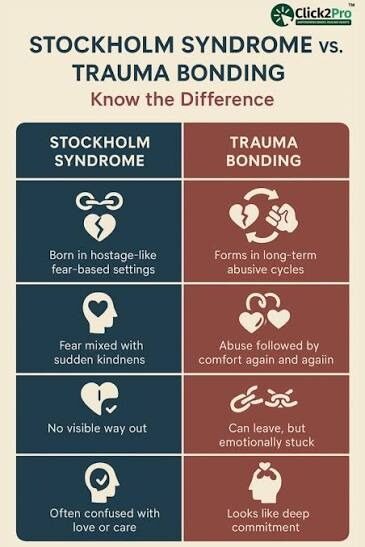
Although Stockholm Syndrome forms the very basic block of Trauma bonding, signs of this syndrome is seen in relationships where the victim has bonded through trauma especially in modern times. In these relationships, victims still stay emotionally attached to absuive partners despite physical and/or psychological harm. This happens due to cycles of reassurance, apologies and temporary kindness- creating a sort of unpredictibility that strengthens emotional dependence. This concept is discussed in cases of domestic abuse, child abuse, human trafficking or cult control because the dynamics include-
- Defending snd rationalising the abusive partner
- Intensive highs and lows in the relationship
- Viewing small acts of kindness as “love” after abuse
- Manipulation causing confusion and doubt
- Isolation from effective support groups like friends and families
AWARENESS BEING THE FIRST STEP TOWARDS INTERVENTION
Interventions and therapy help care and cure this syndrome though, however, the first step towards intervention is awareness. Awareness and early detection of Stockholm Syndrome and trauma bonding patterns are important as victims may not recognise the fact that they are emotionally trapped or being psychologically manipulated.
Early detection can help in severe escalation of psychological or even physical violence and reduce long term mental health effects such as depression, anxiety, PTSD. It can help victims seek support and improve access to counselling. Most importantly, it helps break cycles of what can become a toxic intergenerational cycle of abuse. Awareness doesn’t only help victims but also friends, families and healthcare workers that can help identify the warning signs earlier and prevent drastic outcomes.
CONCLUSION:
Stockholm syndrome highlights the complex human psychology and behaviour that presents itself in the face of threat and vulnerability. Recognising this is important not just to understand the victim’s point of view but also to provide them with empathy and safety to help them recover from it. Ultimately, this phenomenon reminds us that survival may not always be about resistance but also about adaptation. And healing begins when this adaptation is understood not misunderstood.
REFERENCES:
- https://www.history.com/articles/stockholm-syndrome
- https://my.clevelandclinic.org/health/diseases/22387-stockholm-syndrome
- https://www.metropolisindia.com/blog/preventive-healthcare/stockholm-syndrome
- Minu .S. Nair (2015); Stockholm syndrome -A self delusive survival strategy, Int. J. of Adv. Res., 3 (11), 385-388, ISSN 2320-5407. DOI URL: https://dx.doi.org/
- https://www.simplypsychology.org/stockholm-syndrome.html
- https://www.simplypsychology.org/cognitive-dissonance.html
- GUYTON AND HALL TEXTBOOK OF MEDICAL PHYSIOLOGY (15th edition)
- https://health.clevelandclinic.org/trauma-bonding