
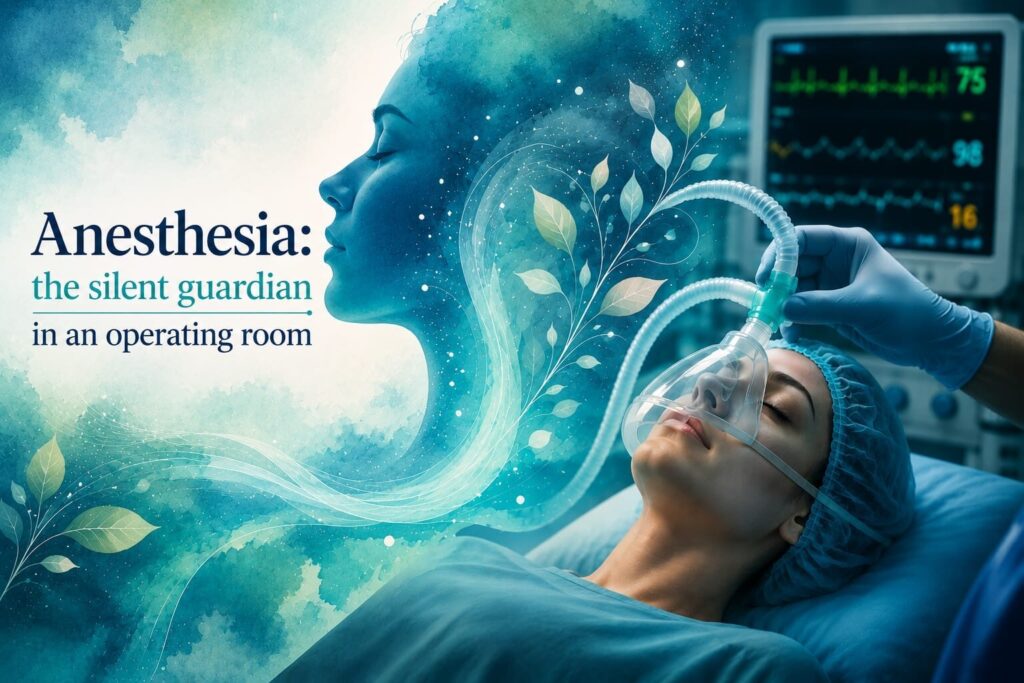
Close your eyes and imagine this- you have a surgery scheduled for today. you are wheeled into the operating room, heart pounding, worried about everything that can go wrong.
Suddenly you hear a voice say- “We will start the anaesthesia now.”
You feel your body going on high alert. Your mind starts filling with powerful thoughts like what if something goes wrong, what if I never wake up?
You feel convinced that anaesthesia will whisk you away into some foggy, uncontrollable void or worse, leave you paralysed, but aware.
Sounds familiar? You’re not alone. Millions dread anaesthesia more than the surgery itself. For many the operating room feels like a place of shadows haunted by what Ifs, about never waking up or feeling the surgeon’s blade while paralysed, but if you look past the clinical sterile drapes, you will find a different story- a masterpiece of human engineering.
What if I told you these fears are mostly myths and modern anaesthesia is one of medicine’s greatest triumphs, safer than driving to the hospital? So now it is time to replace the mystery with the facts, and the fear with the peace of mind you deserve.
What is anesthesia?
Anesthesia isn’t a single “drug” that knocks you out like a Hollywood movie rag.
Anesthesia is a temporary, medically induced state of controlled insensibility, preventing pain and discomfort during surgical and medical procedures.
Here’s the concept of working of anaesthesia through an example.
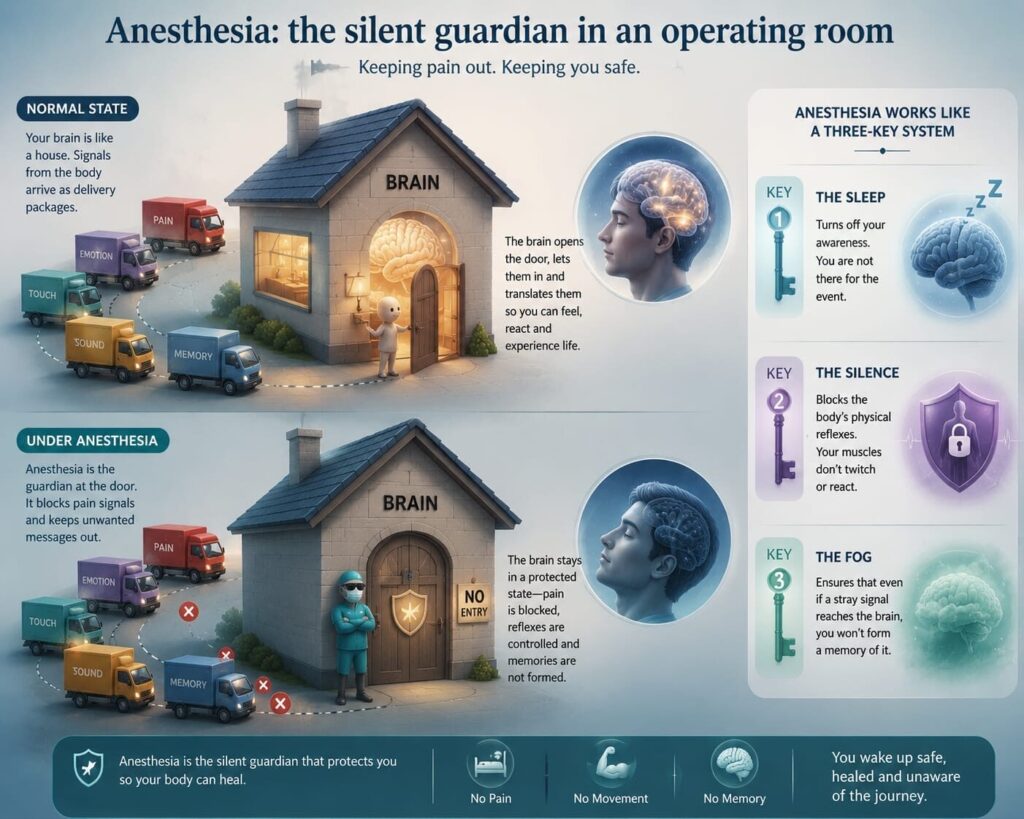
Imagine your brain as a house and the various signals coming to the brain of various feelings like pain, different emotions, et cetera, as delivery packages. When these signals come to the brain, it opens the door to let them in and translate it which makes the person feel them and experience them.
Now, when a person is under anaesthesia, these normal signals, especially of pain are blocked by the anaesthesia. Anesthesia as a guard, standing near the door of the house which does not let the pain signals pass. So basically, your brain is in a state, which cannot receive the delivery at that time. So as a result, the feeling of pain is blocked by it, therefore the brain does not feel pain during medical procedures.
Anaesthesia works like a three key system
- Key 1(the sleep)– this terms off your awareness, so you are not there for the event
- Key 2 (the silence)- this blocks, the bodies, physical reflexes, so your muscles don’t twitch or react to the surgery
- Key 3(the fog)- this ensures that even if a stray signal reaches the brain, you won’t form a memory of it
Types of anesthesia
Anaesthesia is a tailored medical cocktail expertly mixed by anaesthesiologists, who are the highly trained doctors who monitor you while you are unconscious.
The type of anaesthesia given depends upon the type of surgery, health, age, and other preferences.
The various types of anaesthesia include:
- Local anesthesia– this numbs a small section of your body. Providers commonly use local anaesthesia for minimally invasive procedures like cataract surgery. The patient is fully awake during the procedure.
- Sedation– this is also called twilight sleep. Sedation relaxes you to the point where you will nap but can wake up if needed to communicate. Examples of procedures often performed include wisdom tooth removal. The patient isn’t completely unconscious, but most likely will not remember the procedure.
- Regional anesthesia- this blocks pain in a larger part of the body like a limb or everything below your chest. Examples include drugs given during child birth to ease the pain.
- General anesthesia– this makes you unconscious and insensitive to pain or other stimuli. Generally, this kind of anaesthesia is given for more invasive procedures.
Is everything that we hear even real?
The fear of being under anesthesia is so much amongst people that many refuse to have a surgery just because they feel that the anesthesia will harm them. In reality, the evolution of anesthesia has made the surgeries so much more safer and smoother than ever before.
So, before you decide whether to undergo the surgery or not, it is important to differentiate rumours from reality-
| MYTHS | REALITY |
| Anesthesia will wear off too soon | One of the more common fears is that the anesthesia will stop working at some point during the procedure, and you’ll start feeling pain. But the way anesthesia works is that it is constantly applied, via inhalation or intravenously. You’ll be awakened when the anesthesiologist shuts off the flow of drugs at the end of the surgery. |
| People never wake up from anesthesia | A common and distressing belief is the fear of not regaining consciousness after surgery. This fear is often fueled by anecdotal reports or media portrayals, despite modern anesthesia being highly safe with stringent monitoring. While rare complications exist, they are extremely uncommon when managed by trained professionals. |
| You might reveal something personal | Another fear is that you’ll start blabbing personal secrets to your doctors and nurses. The reality is that patients don’t tend to say much that’s all that exciting after the drugs hit. It’s far more likely you’ll feel confused or start laughing rather than reveal earth-shattering secrets. |
| Once you are under anesthesia, the anaesthesiologists job is done | This is a common misunderstanding. Anesthesiologists are constantly monitoring you throughout the entire procedure to ensure your safety and comfort. They don’t just administer the anesthesia and leave. In fact, they continuously assess your vital signs, including heart rate, blood pressure, and oxygen levels, and make any necessary adjustments to ensure that you remain stable and unconscious (if under general anesthesia) during the surgery. The anesthesiologist is an essential part of your surgical team from start to finish. |
| If you have allergies, you can’t have anesthesia | Having allergies doesn’t automatically mean you can’t safely receive anesthesia. However, it is important to inform your anesthesiologist about all allergies you have, whether they’re related to medications, foods, or environmental factors. Anesthesiologists can adjust the medications used and take extra precautions to avoid any allergic reactions. |
| Local anesthesia isn’t as risky | There is always some risk, however small. But there’s no reason to think general anesthesia is any more dangerous than local anesthesia. The key is making sure the anesthesia application matches the patient and the procedure. |
| Anesthesiologists are just technicians | Non-medical people believe that anesthesiologists are not doctors but just operators or paramedics. This is a common and ambiguous statement as they are extensively trained medical experts. For an Anesthesiologist, to begin his career as Anesthesiologist, he/she must complete a basic five-year degree in medicine, 2-3 years of post-graduation in the department of anesthesia and an internship like other department physicians. So, they are not just technicians but successfully and perfectly trained medical specialists. |
| Anesthesia will always cause severe side effects | While it’s true that some people experience mild side effects, such as nausea or grogginess, after anesthesia, severe side effects are uncommon. Memory loss, particularly long-term, is very rare and typically occurs only in older patients after prolonged surgeries. Depending on factors like your medical history, age, and the type of procedure, different types of anesthesia can be chosen to minimize these side effects. |
| Elderly and children should not be given anesthesia | There is a persistent belief that anesthesia is unsafe for the very young or old. While these age groups may require tailored care, modern anesthetic practices are designed to be safe across all age groups, with specialized approaches for pediatric and geriatric patients |
How many people come out okay after anesthesia?
Patients dread anesthesia due to myths, but stats show it’s remarkably safe, with mortality dropping 99% since the 1940s to ~0.4–1.7 per 100,000 procedures in healthy adults.
The decline in the number of deaths due to anesthesia has been very significant (nearly 10 fold) due to the production of safer drugs and techniques.
The rate of awareness under anesthesia is 1 in 650.
And the rate of any medicational errors is 1 in 1000.
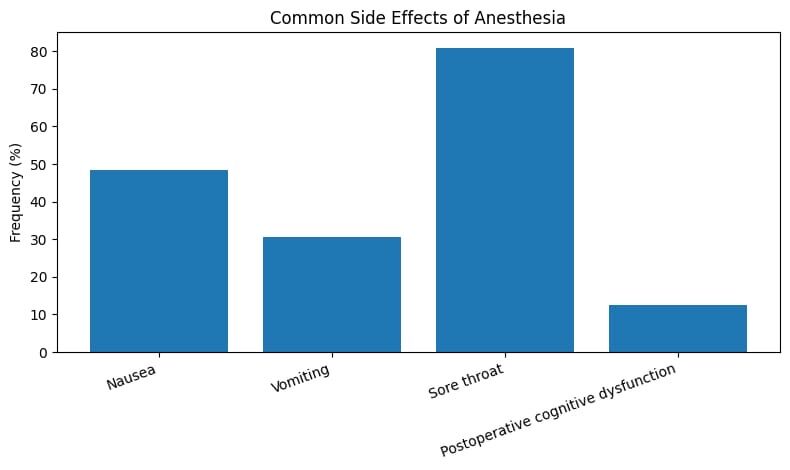
| Side Effects | Frequency |
| Nausea | 30–67% |
| Vomiting | 20–41% |
| Sore throat | ~81% (intubation) |
| Postoperative cognitive dysfunction (elderly) | 10–15% |
| Nerve damage (regional) | 1 in 1,000–5,000 |
Why is anesthesia so safe today?
Modern anesthesia is often described as one of the greatest safety success stories in medicine—and that isn’t an exaggeration. Decades ago, anesthesia carried significant risks. Today, it has evolved into a highly controlled, precise, and continuously monitored process, making serious complications rare for most patients. This transformation didn’t happen because of a single breakthrough, but due to multiple layers of improvement working together.
One of the biggest reasons for this safety is the presence of highly trained specialists. Anesthesiologists are not simply “putting patients to sleep.” They are doctors who are trained to manage the body’s vital functions under stress. Their role is constantly focused on patient safety.
Another major advancement is the use of sophisticated monitoring systems. In the operating room, a patient is never left unobserved.Any small change is detected immediately, allowing the anesthesiologist to respond in seconds. This real-time feedback has dramatically reduced the chances of complications going unnoticed.
Anesthesia today is also highly individualized. No two patients are treated the same way. Before any procedure, doctors carefully evaluate factors such as age, weight, medical history, allergies, and the type of surgery being performed. Based on this, they design a tailored anesthesia plan that minimizes risk and maximizes safety.
Finally, continuous research and global safety initiatives have played a crucial role. Anesthesiology is one of the few fields in medicine that has consistently focused on reducing risk through data, innovation, and training. Lessons from past complications have led to better techniques, improved equipment, and stronger safety cultures worldwide.
Taken together, these advancements mean that anesthesia today is not just about inducing sleep—it is about maintaining a carefully balanced, medically supervised state where every vital function is protected. While no medical procedure is entirely without risk, modern anesthesia has made those risks remarkably low, allowing patients to undergo surgeries with confidence and peace of mind.
As a patient, how can I help?
You hold real power to make your anesthesia experience smoother and safer—simple steps like honest communication and smart prep can cut anxiety and risks by up to 50%.
1. Before Surgery (Preparation)
- Follow Fasting Instructions (NPO): Do not eat or drink anything (including gum or water, unless permitted) for the specified time, usually eight hours for solid foods, to prevent dangerous aspiration.
- Stay Hydrated Prior to Fasting: In the days leading up to surgery, drink plenty of water. Well-hydrated veins make IV insertion easier and faster, reducing stress.
- Stop Smoking/Vaping: Try to quit or significantly reduce smoking at least 4–8 weeks before surgery. Smoking makes airways more reactive (leading to coughing) and slows healing.
- Disclose All Substances: Be honest about alcohol, recreational drug, and nicotine use. These impact anesthesia requirements and could cause serious reactions.
- List Supplements/Medications: Inform your team of all prescriptions, over-the-counter drugs, and herbal supplements (e.g., garlic or gingko), as some can increase bleeding or interact with anesthesia.
- Manage Chronic Conditions: Ensure conditions like diabetes and high blood pressure are well-controlled, as this leads to safer, smoother anesthesia.
2. On the Day of Surgery
- Relaxation Techniques: Practice deep breathing, meditation, or listen to calming music to manage anxiety. High anxiety can require more medication, which can lead to a rougher wake-up.
- Use Proper Hygiene: Brush your teeth and clean your mouth well. A clean mouth reduces the chance of bacteria entering your lungs if a breathing tube is used.
- Bring Documentation: Bring a list of your medications and any relevant health history for the anesthesiologist.
3. After Surgery (Emergence)
- Follow Post-Op Instructions: Take prescribed medications as directed and attend follow-up appointments.
- Early Mobilization: Get out of bed and walk as soon as your team says it is safe. This boosts recovery and helps clear medication from your system.
- Hydrate Immediately: Drink fluids (like water, herbal teas, or clear broths) to flush remaining anesthetic agents from your body, assuming you are not nauseous.
- Be Patient with Numbness: If you had local anesthesia, follow up with massage or light activity, if allowed by your doctor, to help sensation return faster.
Most importantly, be honest with your doctor. They are trying to heal you but they are not mind readers. Be honest with them so that the treatment can go smooth and you may heal faster.
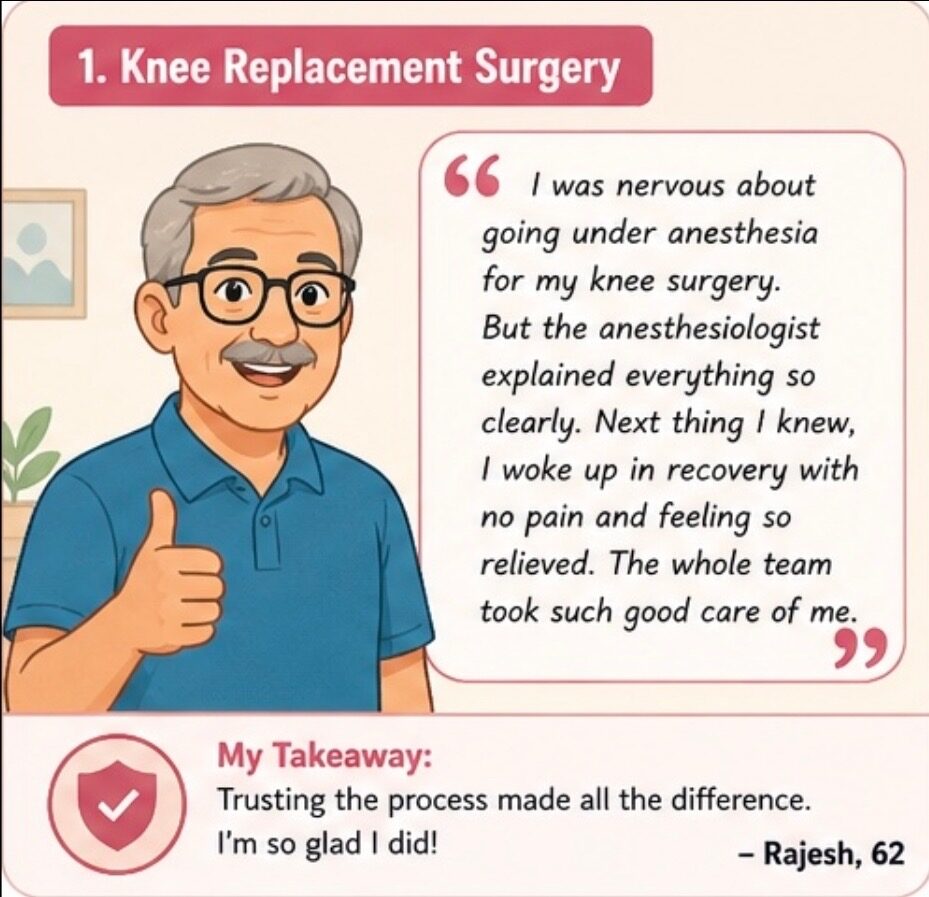
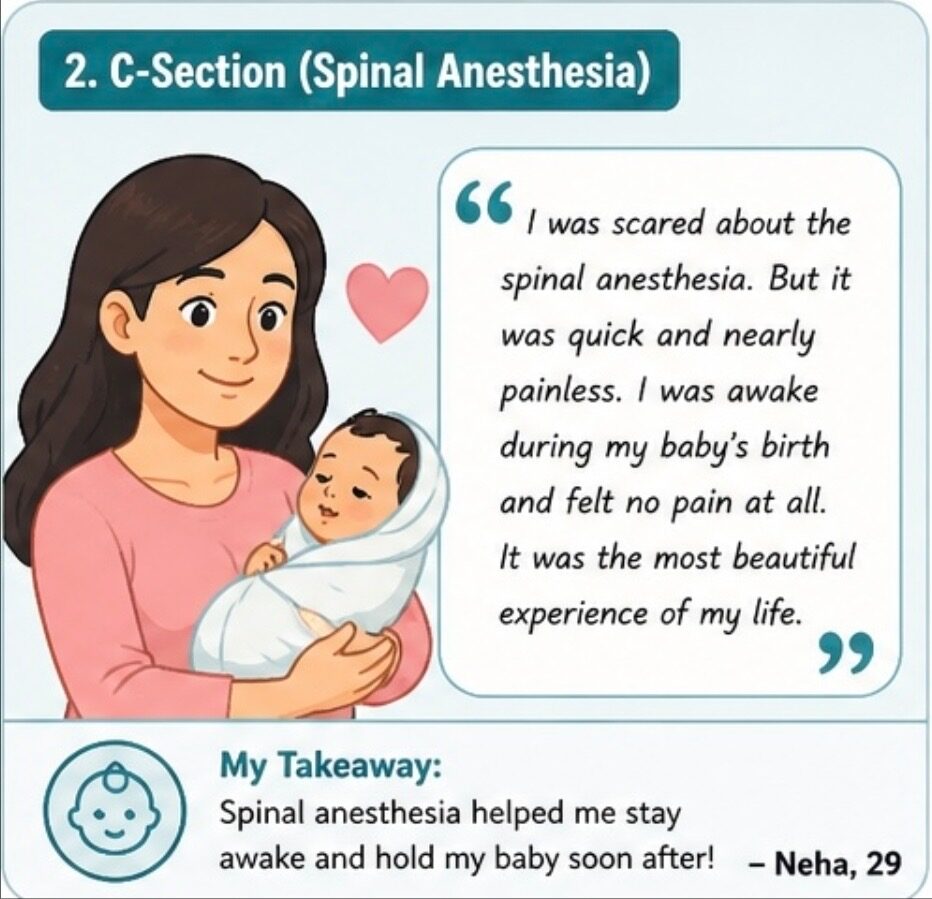
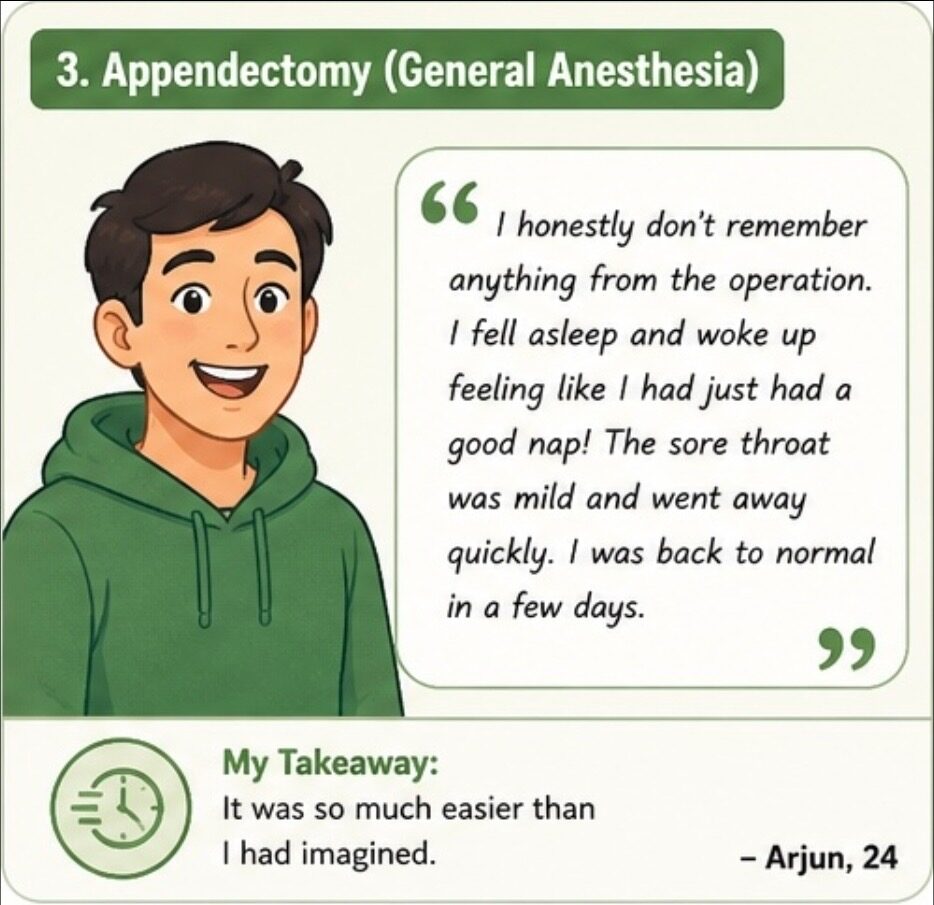
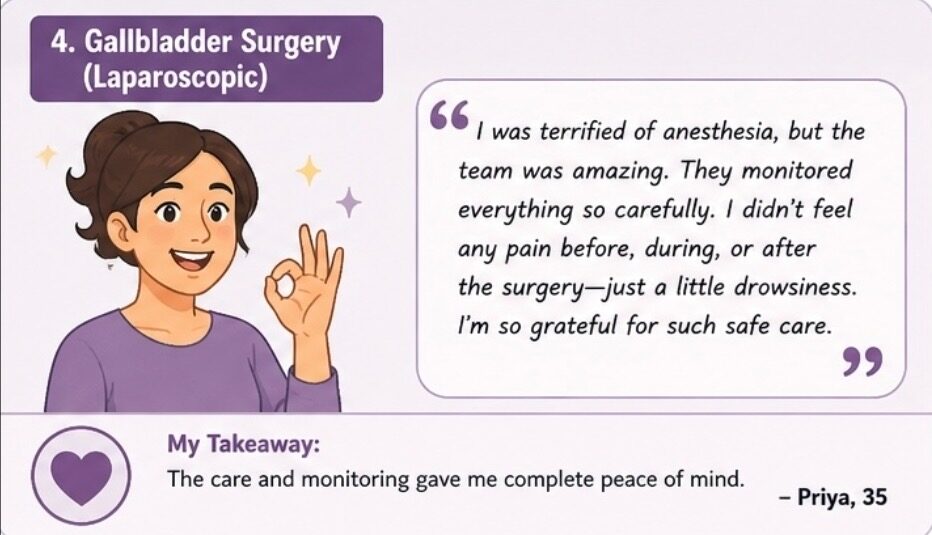
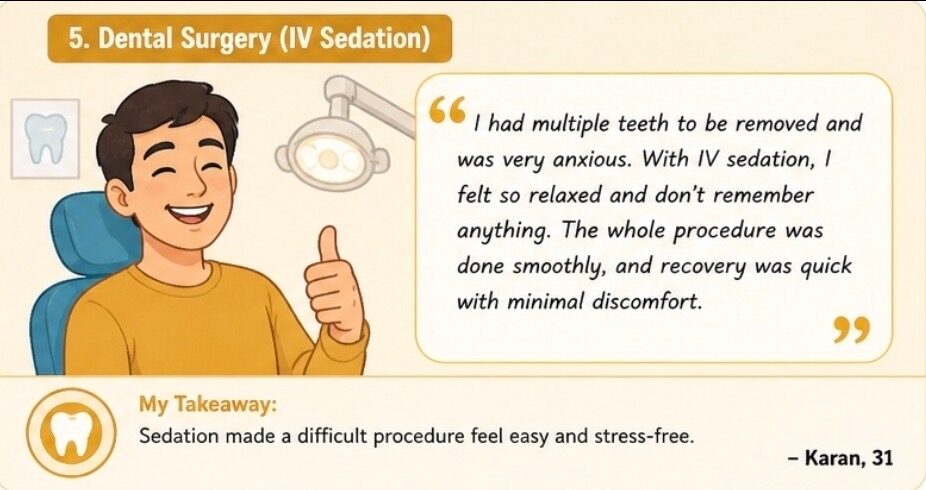
Voices from the other side of fear
The Bottom Line
Fear thrives in the unknown.
But once you understand what anesthesia really is- a controlled, monitored and highly precise medical practice, the fear loses its power.
When you finally open your eyes from that dreaded surgery, the world might feel soft, a little blurry and remarkably quiet. But you will feel relieved to know that you were with the team dedicated to your life. You will be thankful to have undergone the surgery and let your body recover with peace.
The fear you feel today is human. It is a natural response to the vulnerability of letting go. But as you prepare for your surgery, know that you are not stepping into a void but into a sanctuary of medical science.
Take a deep breath. Trust the science. Trust the team and trust when the lights come back on, the hardest part will be behind you.
You will wake up. Definitely.