

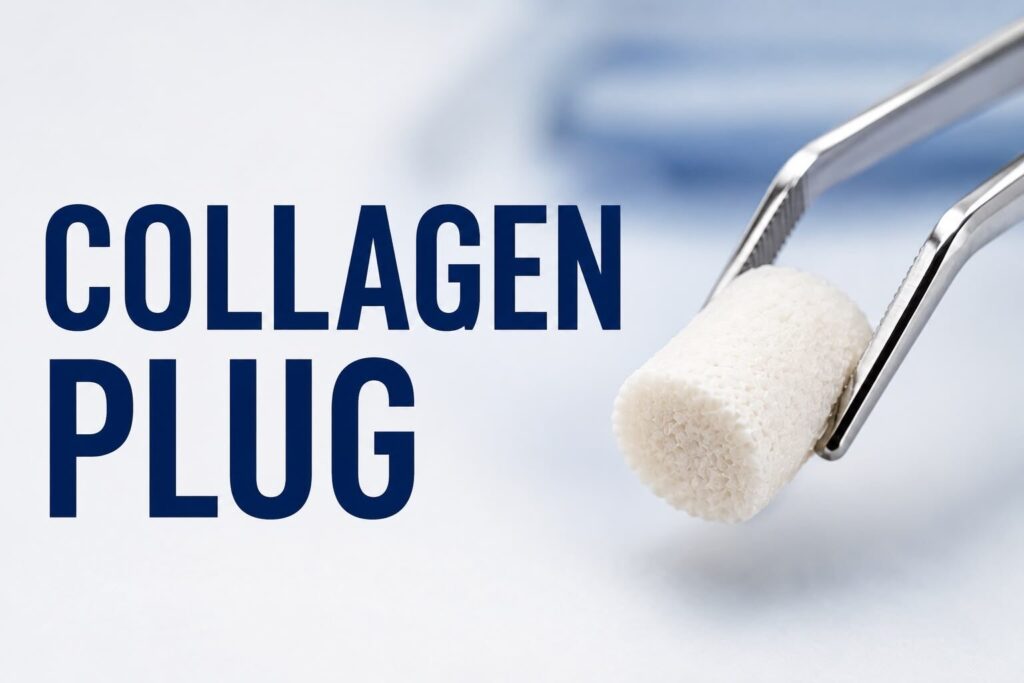
A collagen plug? Sounds pretty self-explanatory, right? That’s exactly what I thought too—until my impacted canine decided to become the main character of my dental history.
After the extraction, my dentist casually held up what looked suspiciously like a tiny piece of cotton and said, “We’re going to place this in the gap. It’ll help healing and eventually get reabsorbed into the bone.”
And I just sat there thinking: How is this fluffy little thing supposed to turn into part of my palate?
That tiny moment of confusion (and mild betrayal by cotton-looking objects) sent me down the rabbit hole of collagen plugs—what they actually are, how they work, and why dentists and surgeons rely on them so much for healing.
What’s a Collagen plug
A collagen plug is a soft, sponge-like material made from natural collagen. Doctors place it into a wound or extraction gap to protect the area, stop bleeding, and help new tissue and bone grow properly. It acts like a temporary support structure for healing and slowly dissolves as the body repairs itself.
From Plug to Bone
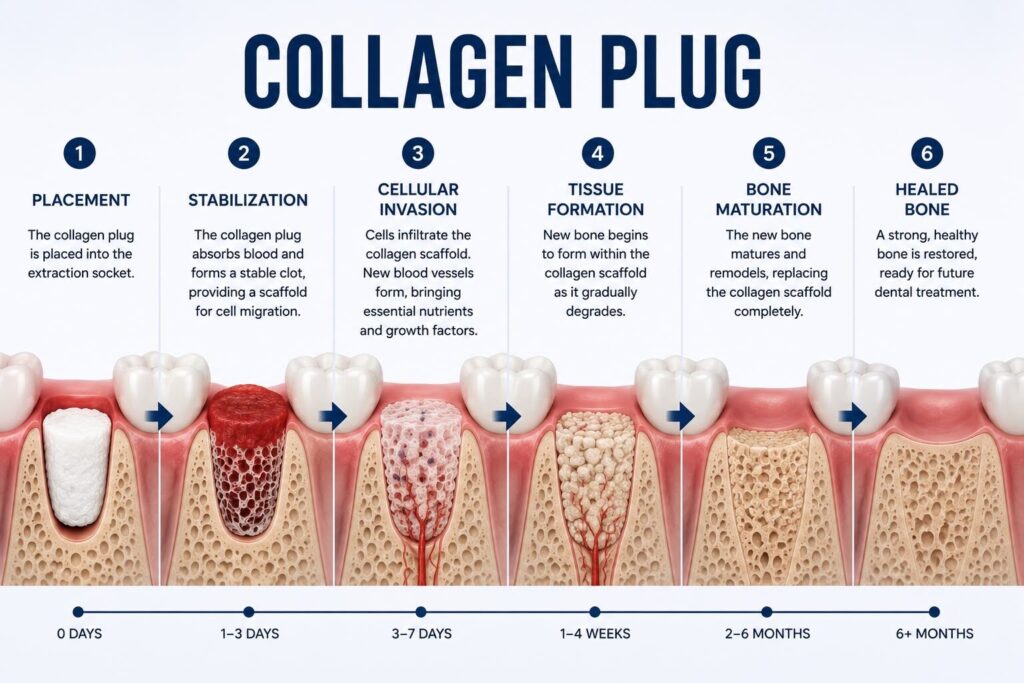
A pure collagen plug doesn’t magically turn into bone; instead, it acts as a biocompatible scaffold that the body’s natural healing cells use to build new bone. The plug is gradually broken down (resorbed) and replaced by the patient’s own tissue over a period of 4 to 6 months.
This transformation process occurs in three main stages:
1. Stabilization (Days 1–7)
- Clotting: The plug absorbs blood, stabilizing a protective blood clot in the empty space (such as a tooth extraction socket).
- Protection: It acts as a barrier, preventing unwanted soft tissue or skin cells from filling the space where bone needs to grow.
2. Infiltration (Weeks 2–8)
- Vascularization: New blood vessels (angiogenesis) begin to sprout into the porous collagen structure.
- Cell Migration: Bone-building cells (osteoblasts) migrate into the collagen matrix.
3. Bone Replacement (Months 3–6)
- Resorption: The body’s enzymes naturally break down and absorb the collagen plug.
- Mineralization: The osteoblasts lay down a new collagen framework of their own and fill it with calcium and phosphate minerals, hardening it into mature bone.
Composition & Creation
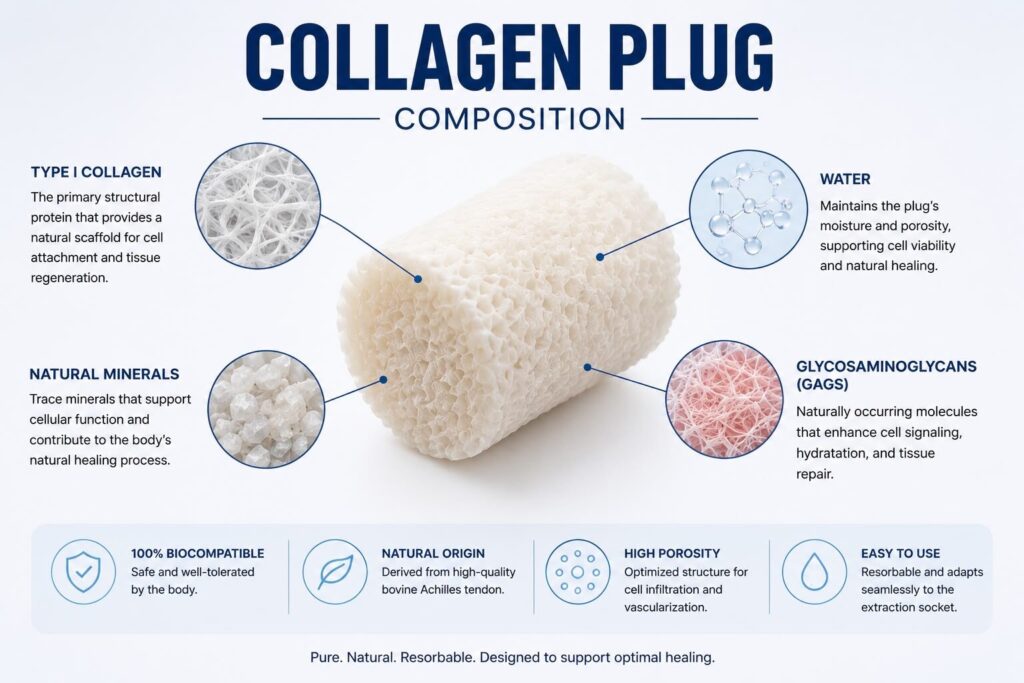
Collagen plugs are primarily composed of highly purified, porous Type I collagen, usually extracted from bovine (cow) tendons or porcine (pig) skin. In dentistry and surgery, they are often formulated as a pure matrix or combined with other bone-grafting minerals to stabilize blood clots, promote healing, and minimize bone loss.
Where is it used
Dental & Oral Surgery
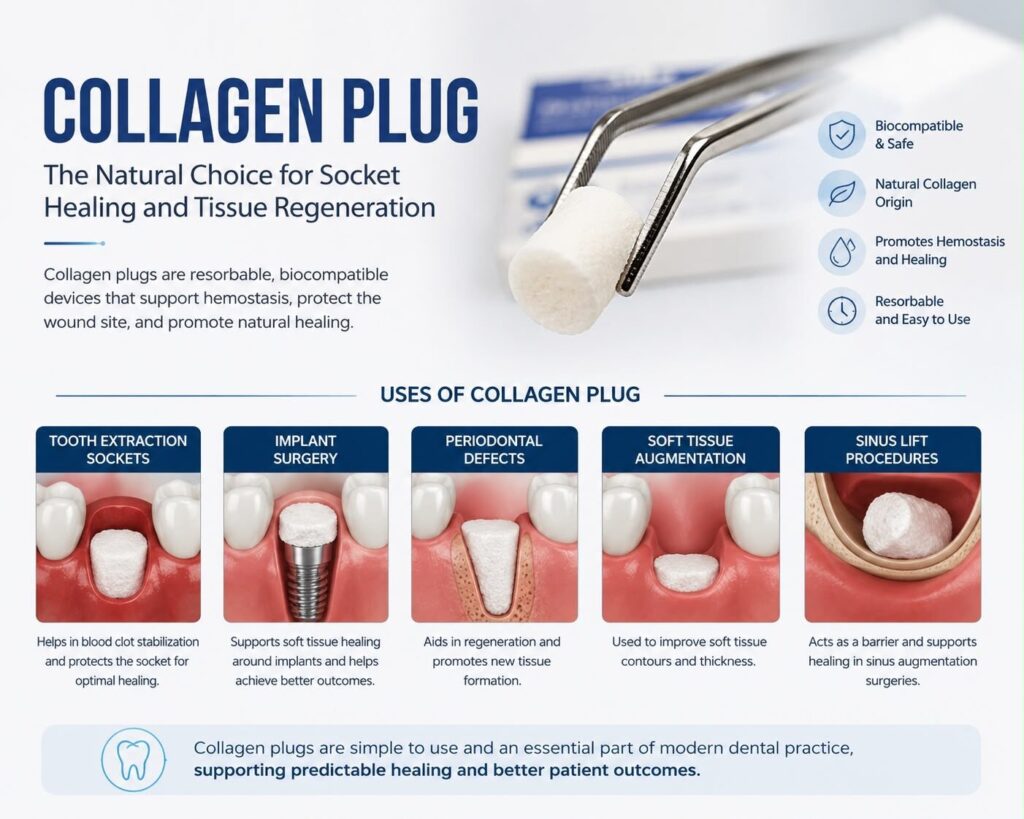
In dental procedures, collagen plugs are routinely used to manage wounds and promote healing:
- Extraction Sites: Placed directly into the empty socket after a tooth extraction to stabilize blood clots, stop bleeding, and reduce postoperative swelling.
- Ridge Preservation: Used to retain bone grafting materials inside the socket, preventing the alveolar bone from collapsing before future implants or dentures are placed.
- Wound Protection: Utilized to cover periodontal surgical wounds, biopsy sites, and oral ulcers, shielding the sensitive area while new granulation tissue forms.
Ophthalmology
In eye care, dissolvable collagen punctal plugs are used to treat chronic dry eye syndrome.
- Tear Retention: They are inserted into the tear ducts (puncta) to block tear drainage, keeping the eye’s surface moist.
- Diagnostic Trial: Because collagen plugs naturally dissolve within a few days to months, eye doctors often use them temporarily to see if a patient will benefit from long-term, silicone plugs without making a permanent change.
Under Usage
- Rapid Resorption: Collagen plugs can degrade too quickly (sometimes liquefying in a few days) to effectively protect bone grafts or maintain space. Surgeons often prefer slower-degrading synthetic materials, such as silk fibroin, or more robust xenografts.
- High Cost: In procedures like femoral artery closure, collagen plugs (such as Angio-Seal) significantly increase the cost of the procedure without always reducing complications compared to manual compression.
- Structural Limitations: In dental procedures, a simple collagen plug alone does not provide the mechanical strength or long-term barrier properties required to hold large bone defects in place without collapsing.
- The Healing Baseline: Studies have shown that the bone healing and ridge preservation achieved by using simple collagen plugs can be nearly identical to natural, un-intervened healing.
- Viable Alternatives: Often, standard compressive therapy, suturing techniques, or the use of platelet-rich fibrin (PRF) are favored, making collagen plugs an unnecessary or secondary expense.
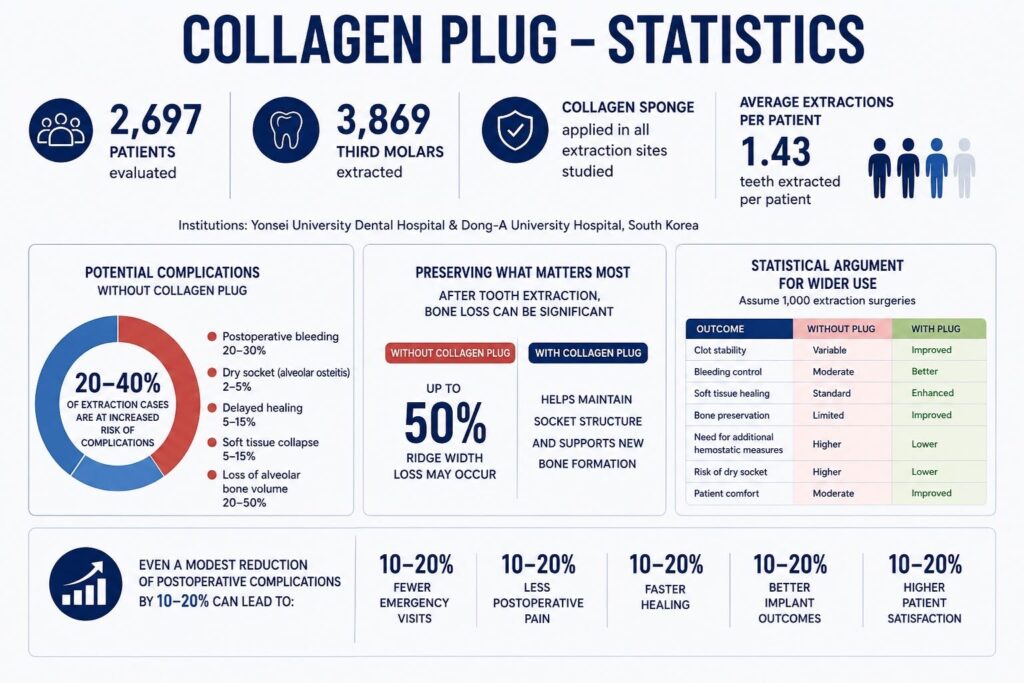
Statistical Argument for Wider Use
Assuming 1000 extraction surgeries:
| Parameter | Without Plug | With Plug |
| Clot stability | Variable | Improved |
| Bleeding control | Moderate | Better |
| Tissue healing | Standard | Enchanced |
| Bone preservation | Limited | Improved |
| Need for additional hemostatic measures | Higher | Lower |
Even a modest reduction of postoperative complications by 10–20% could translate into:
- Fewer emergency visits
- Less postoperative pain
- Faster healing
- Better implant outcomes
Proven Benefits Being Missed
- ↓ Time to ambulation (the act, action, or ability to walk and move about independently, with or without the use of assistive devices like canes or walkers)
- ↓ Patient discomfort post-procedure
- Effective even in obese patients (where manual compression is harder)
- It’s as efficient as a suture-based closure devices
So, the next time your dentist casually says, “We’ll just place a collagen plug,” remember—it isn’t a tiny cotton ball taking a nap in your extraction socket. It’s a hardworking little scaffold, busy stopping bleeding, inviting healing cells over, and helping new bones move in. While you’re at home enjoying ice cream and wondering if anything is happening, the collagen plug is quietly working overtime. Not bad for something that looks so simple. Small plug, big job, and a surprisingly impressive résumé!