


Almost every neighbourhood in India has stray dogs. The same neighbourhoods also have residents who feed these dogs and care for them like their own children. But nonetheless, there are also those who fear them to be pests and retell stories of rabid dogs viciously attacking innocent passerbys. When such duality exists around one creature, how do we choose a side? And from a public health point of view, how can we approach such a widespread issue of protecting human safety without being inhumane to the animals with whom we share the streets?
The Problem
During 2024 alone, “over 37 Lakh incidents of Dog Bites in India were reported, primarily due to stray dogs with the result that 54 persons died from rabies.” (Source). Concurrently with this statistic, another study ranked India among the best countries to be a stray dog, thanks to the current capture-sterilise-vaccinate-and return approach. If there is a middle ground to balance the health of our people while respecting the welfare of stray animals, it is one requiring a shift of perception and a better understanding of the root causes.
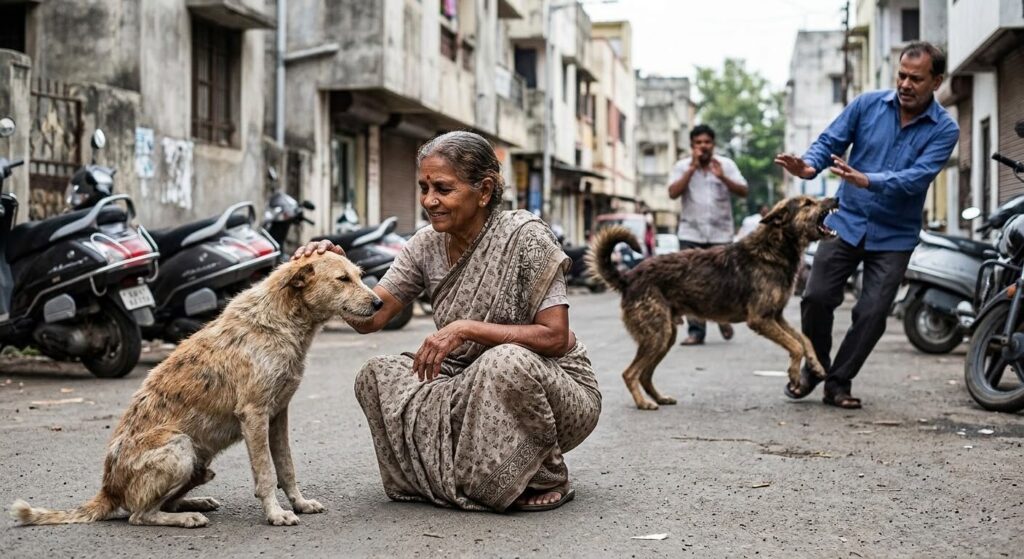
Systemic failure
- Lack of knowledge of appropriate interaction with dogs
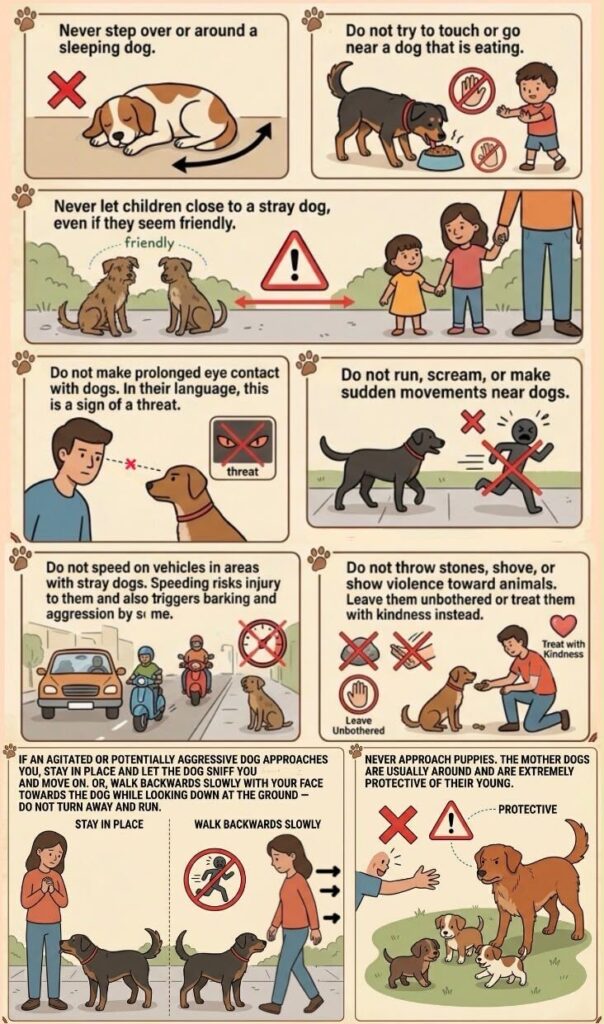
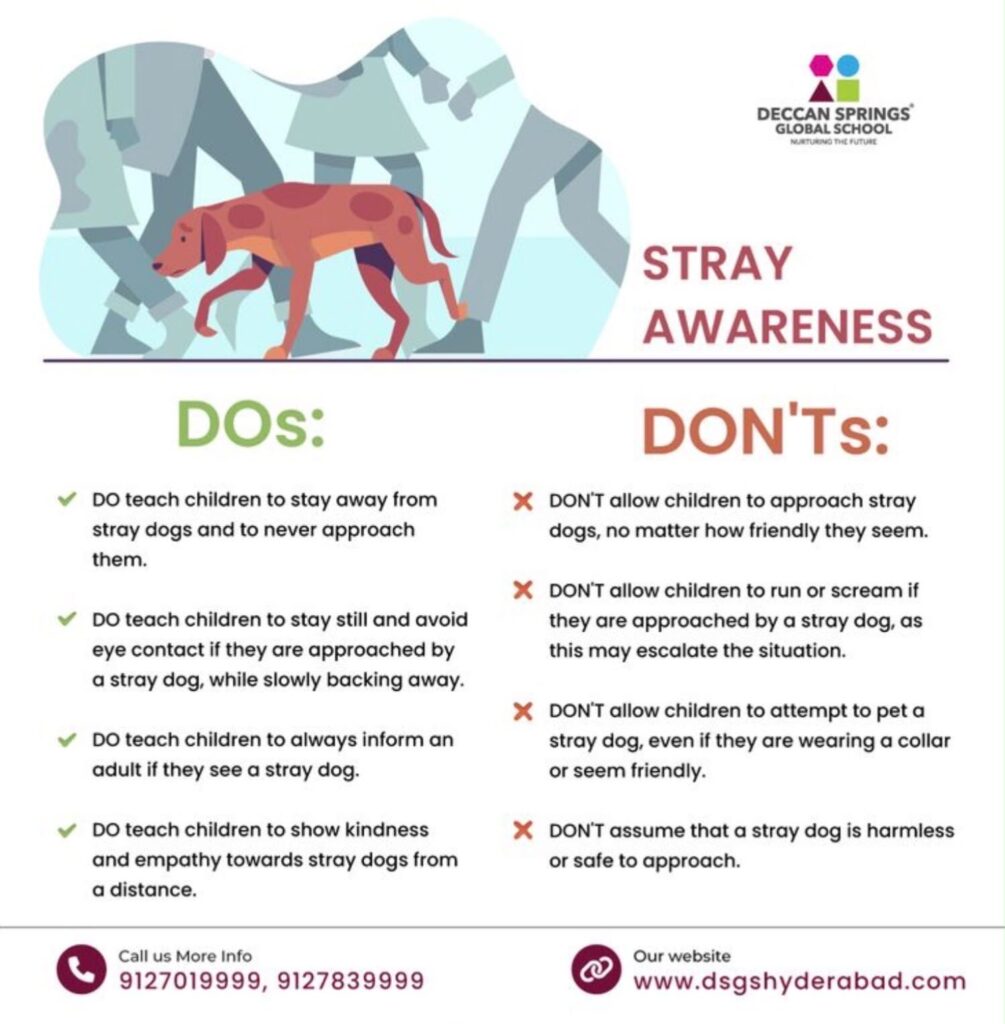
There is a certain etiquette to be followed in the presence of dogs that many people don’t bother to learn. It must be understood that as dogs don’t speak the same language as us, they rely heavily on behavior and actions to assess threats. Many dogs bite out of self defence when they feel that they are in danger — sometimes due to a misread action. Therefore, here are some basic manners to keep the animals at ease and minimise unwanted responses.
- Lack of rabies awareness
In the case of a dog bite, there are protocols to be followed. A category I wound includes any nibbling or licking by the animal of intact skin. If the bite or scratch breaks the skin without bleeding, it is a category II wound. If it bleeds, it is category III. For all categories, especially II and III, one must wash the wound under warm running water. Don’t rub the area with any soap or disinfectant, as this actually risks pushing the virus deeper into the lesion. Then, based on the wound severity, a rabies vaccination regimen, with or without additional tetanus shots and immunoglobulins, will be provided. For more details on the above, refer to the WHO factsheet.
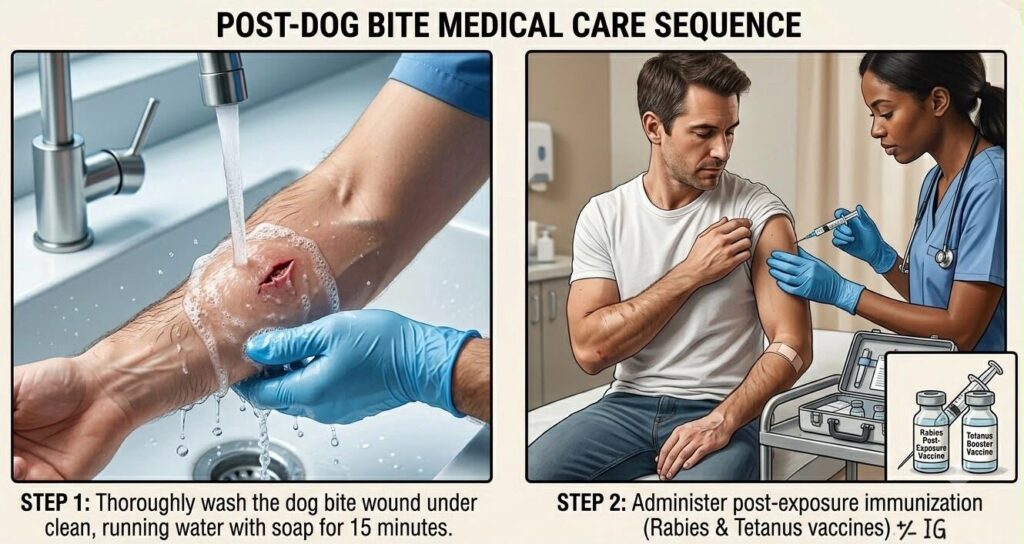
IG = Immunoglobulins. Injections only required for Category II and III bites.
- Waste dumps as dog breeding grounds
The trash piling up on corners of the streets and empty lands play a role in the stray dog menace. Containing leftover food or other edible waste, it attracts stray dogs who have a naturally sharp sense of smell. The dumps provide a food source for the dogs, essentially feeding them and attracting more of them. This can also result in the dogs residing in the areas and showing aggression towards human residents, who may be perceived as a threat by them. Thus, an increased effort to maintain cleanliness would easily solve this other problem as well.
- Inadequate veterinary services
Investing in regular vaccination and sterilization of the strays will reduce the incidence of rabies infections of both animals and humans. Quarantining any animal that has attacked a human for a minimum of 10 days for observation by a skilled veterinarian helps us to identify rabid animals and contain them, preventing viral spread. Sometimes, investing in the safety and prosperity of people comes with caring for those with whom we share our community.
- Cycle of abuse and aggression
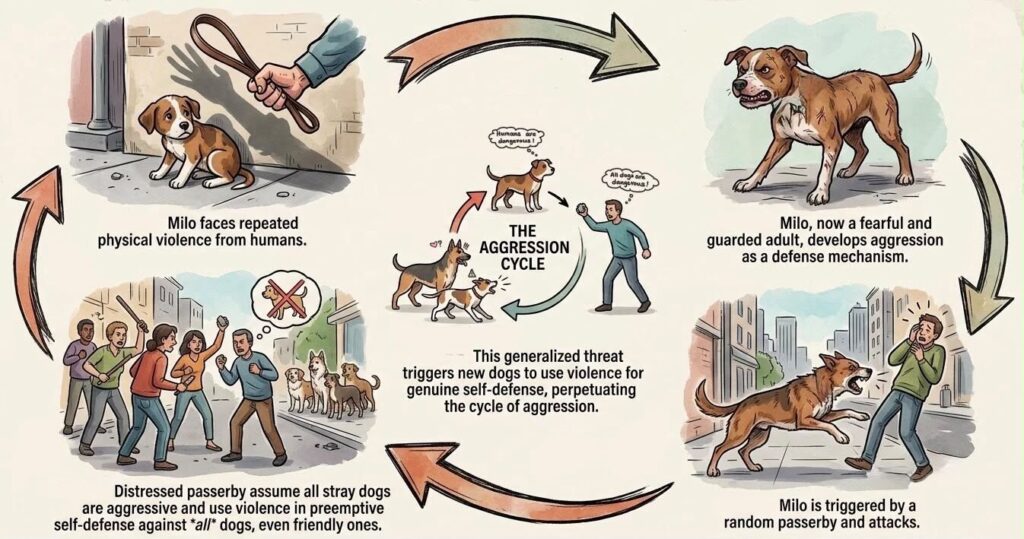
We all hold memories of experiences based on which we build judgements to protect ourselves. The same is done by dogs, too. When they experience abuse at a young age or witness damage to their family done by humans, they grow up to be fearful and defensive adult dogs. These traumatic experiences lower their threshold for violent reactions, resulting in aggression as a self-defence mechanism. On the other hand, a person who experienced or witnessed a relatively unprovoked dog attack forms a fear of all animals and becomes violent and defensive themself. And thus, the cycle continues. Neither side can be held at fault, as both behaviours stem from valid fears. But maybe, being the superior species with the capability of critical thinking, we can try to reach out first with empathy.
Positive Changes of Recent Times
It’s not all grim, though. Many steps have been taken in the right direction of late, which are proving to help create a better coexistence for both people and the stray animals. There is no denying that quite a few inhumane mass culling practices have been occasionally resorted to. But, the protests of compassionate people and leaders who value the lives of every being involved give hope for a future of peace.
- Vaccinations
- Regular vaccinations have been made mandatory for all pets, including yearly rabies vaccines. This not only protects the pets from harm but also mitigates viral spread.
- Vaccination drives are being organised regularly by the government. Veterinarians and animal specialists come to the community, safely capture strays, and vaccinate them before returning them to their original neighbourhood.
- Sterilization
- This helps control stray populations and reduce overbreeding of dogs.
- Though this may seem cruel at the outset, unwanted excessive breeding not only increases stray population beyond control. It also has detrimental effects on the newly born puppies, as there is intense competition for survival. Not to mention, the mother dogs usually suffer major health issues too, due to inadequate nutrition and infections.
- When a dog is sterilised and vaccinated, their left ear is notched in the shape of a ‘V’. This can help identify safe dogs and prevent repeat surgeries, thus reducing expenditure for animal welfare.

Dog having notched left ear
- Better animal control infrastructure
- There has been a rise of several humane nonprofit organisations which care for and rehabilitate any dogs which may be deemed unfit for society.
- Integrating such measures under central or state government efforts would build a more unified and stronger response team.
Next Steps — In Your Hands
- Teach the basics of dog behavior
From children to friends and neighbors, everyone benefits from learning this. Repeat key points and takeaways that people can easily recall when in an encounter with a stray dog.
- Learn and share the protocol followed in case of a bite
Regardless of pet or stray, a bite from any dog requires medical attention. Being well versed in the first aid steps further improves the chances of good recovery and damage control. Know the categories of dog bites and read about the vaccination schedules explained by the WHO here.
- Contribute to animal welfare and volunteer for awareness campaigns and vaccination drives
Keep up with local news and social media pages to know about latest efforts and try your hand at contributing to the cause. Tackling the issue head on gives great perspective and a deeper appreciation for the value of community.

There is hope for both people and the ones we so adoringly call “man’s best friend.” With an open mind and empathetic heart, we can strive to do justice for the victims of dog attacks and prevent future ones without resorting to inhumane methods. When objective safety measures are employed with kindness, there is hope of beautiful coexistence. After all, we have one earth and it belongs to all of us.
Sources: