

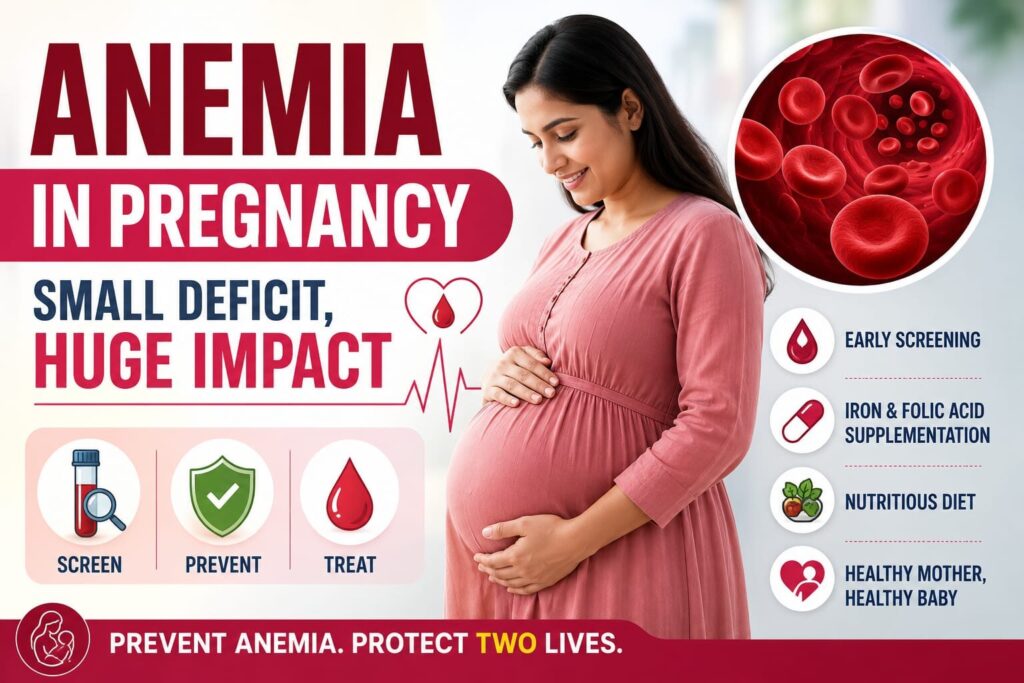
Anemia is a major global public health concern during pregnancy. A small deficit can translate into a massive negative impact on both mother and child. Although anemia is preventable and treatable the incidence and prevalence of anemia in pregnancy are unfortunately very high. Let us learn more about how to screen, prevent and also treat anemia in pregnancy
What is Anemia
Anaemia is a condition in which there is a low number of red blood cells or there is lower haemoglobin (Hb) concentration than normal. Haemoglobin is a protein responsible for transporting oxygen in the body and hence low haemoglobin leads to decreased oxygen supply to our body.
In pregnancy Hb less than 11g/dl is considered as anemia
Anaemia is graded as
Mild anemia: Hb 10- 10.9 g/dl
Moderate anemia: Hb 7- 9.9 g/dl
Severe anemia: Hb <7 g/dl
Prevalence of anemia in pregnancy
The prevalence of anemia worldwide is about 25 %, India has a very high prevalence of 58% in pregnant women which poses a significant health challenge translating into high maternal morbidity (short and long term health problems) and mortality (death due to complications of pregnancy and child birth). The mortality rate in India due to anemia in pregnancy is 40%(20% direct contribution and 20% indirect contribution).
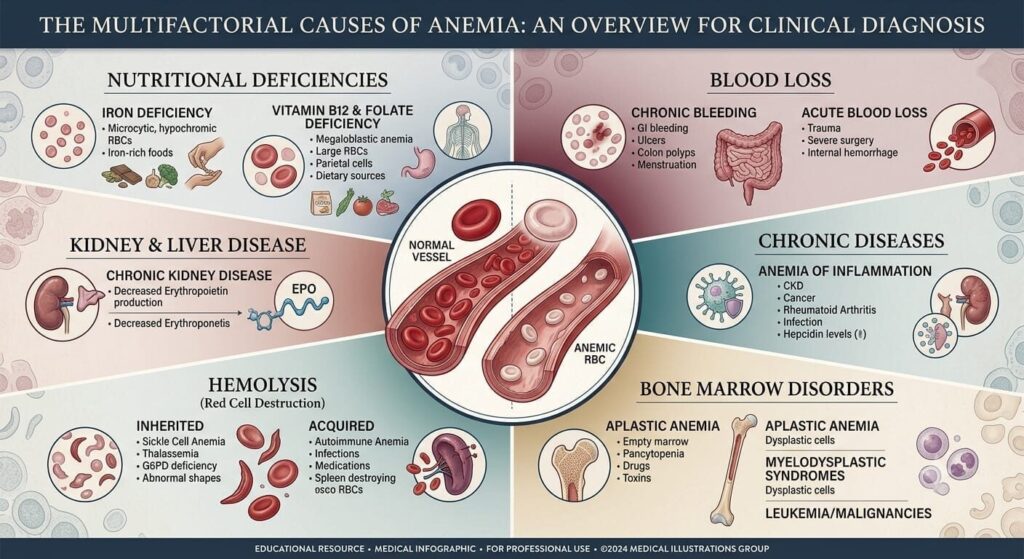
Major Causes of anaemia are:
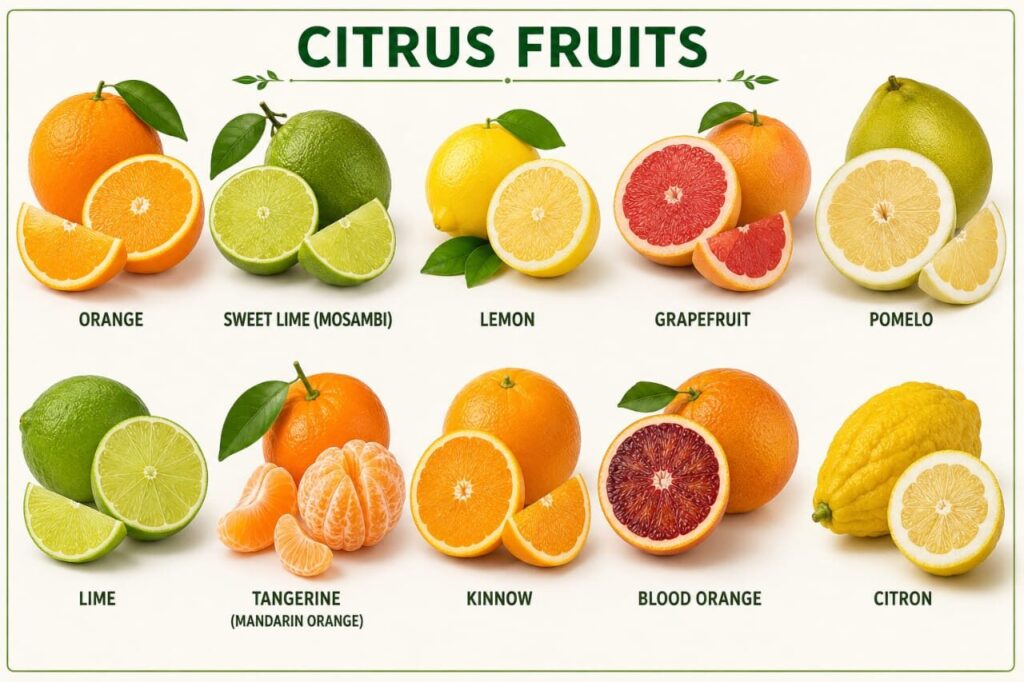
- Nutritional deficiencies : due to insufficient intake of food rich in iron, vitamin B12 and folic acid, insufficient intake of iron enhancers like citrus fruits in the diet and excessive intake of iron inhibitors like tea, coffee, calcium rich food in the diet)
- Hemoglobinopathies like thalassemia ( common genetic blood disorder, where the production of hemoglobin is decreased, leading to anemia ) and sickle cell anemia (Red blood cells are usually round and flexible, so they move easily through blood vessels. In sickle cell anemia, some red blood cells are shaped like sickles or crescent moons. These sickle cells also become rigid and sticky, which can slow or block blood flow)
- Blood loss ( during menstruation, pregnancy and during delivery)
- Parasite and Worm infestations
Who are at risk for anemia in pregnancy:
- If the woman is anemic before pregnancy
- Multiple pregnancies
- Short interpregnancy interval of less than 1 year
- Vegetarian diet (due to vitamin B12 deficiency)
- Teenage pregnancy
Symptoms
- Fatigue (tiredness)
- Shortness of breath/ breathing difficulty
- Tachycardia (increased heart rate)
- Swelling of legs
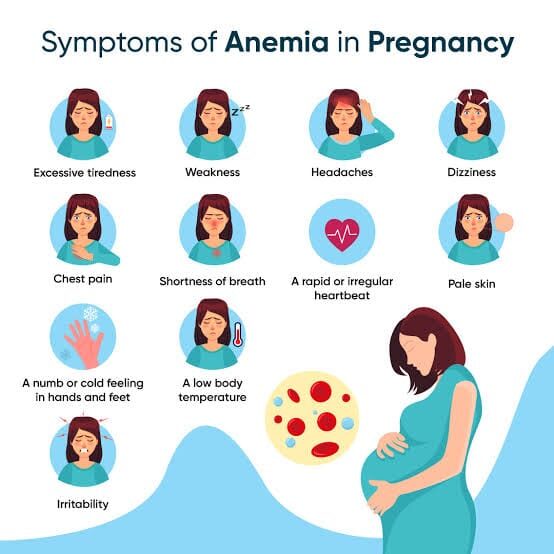
If you are experiencing the above symptoms visit a gynaecologist to avail early treatment and timely correction
Complications due to anemia in pregnancy
It is important to know about anemia and correct it timely as it can result in both maternal and fetal complications.
Maternal complications:
- PPH (Post Partum Haemorrhage – Excessive bleeding during and after delivery of baby)
- Preterm Labour (true labour pain before 37 weeks of completed of pregnancy)
- More prone for infections (as the immunity of the mothers becomes compromised)
- Maternal mortality (around 40% of maternal mortality is directly or indirectly linked to anemia)
- Cardiac failure
Fetal complications:
- Anemia
- IUGR (Intra uterine growth restriction)
- Preterm birth and complications secondary to it
Prevention
Anemia correction must be instituted right before the woman conceives during the preconceptional period and hence all women must be advised and encouraged to consult a Gynaecologist at least 3 months prior to their plan to conceive. In 70% of the pregnant women the cause for anemia is iron deficiency as the demand for iron increases significantly to support the growth and development of the baby hence,
- All pregnant women should receive a daily oral iron supplementation of 60 – 120mg of elemental iron. Women who do not tolerate daily oral iron due to side effects should at least receive intermittent supplementation with 120mg of elemental iron weekly. Iron is usually started after the first 3 months of pregnancy as generally women cannot tolerate iron in the first 3 months due to excess vomiting and is continued until the end of lactation.Minimum of 100 days of iron supplementation is mandatory according to guidelines. Iron is usually taken 30 mins before food or 2 hrs after food to maximise absorption but certain individuals experience gastritis such individuals can take iron after food.
- Pregnant women are also given folic acid from the first trimester or during the preconceptional period (3 months before conception) to avoid both neural tube defects and anemia.
- Tablet Albendazol is recommended twice a year for deworming
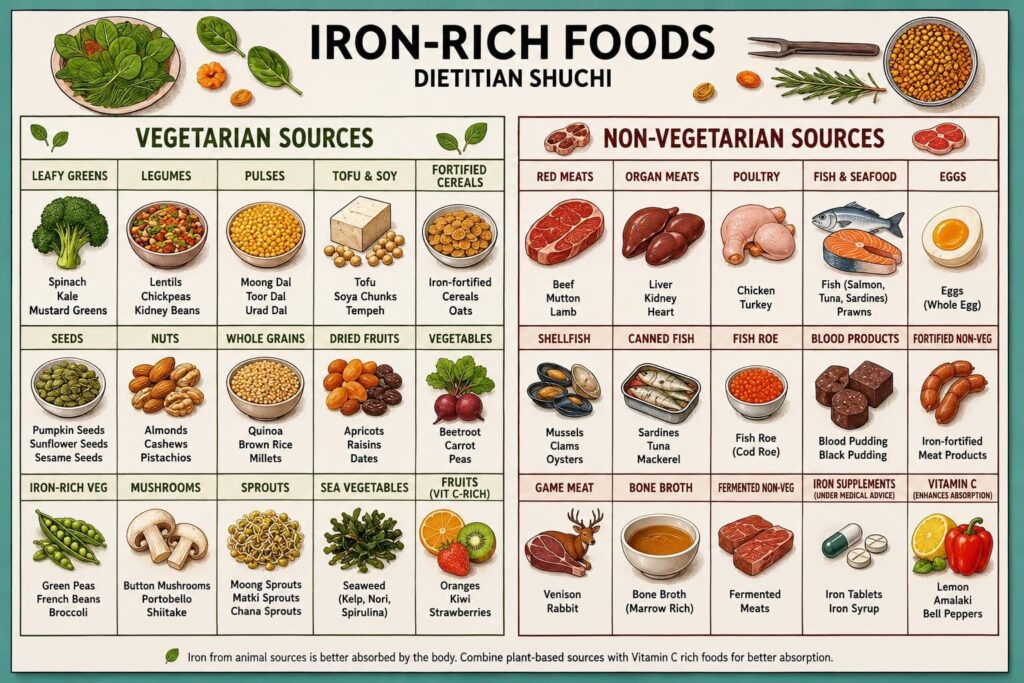
- Dietary modifications should also be made by increasing consumption of legumes (lentils, chickpeas, rajma, soy), dark leafy greens (spinach, methi), nuts/seeds (pumpkin seeds, sesame seeds, cashew), jaggery and iron fortified cereals. Iron obtained from these plants and fortified foods are called non heme iron with absorption rate of 2-10%. Non heme iron absorption can be increased 2-3x by adding amla, lemon, tomato, bellpepper to the food and taking citrus fruits and guava after food.Iron obtained from nonveg source is called heme iron with a better absorption rate of 15-35%. Best sources for heme iron are liver, red meat, poultry and fish. Avoid intake of certain iron absorption blockers along with iron rich food like milk, cheese, tea, coffee and whole grains
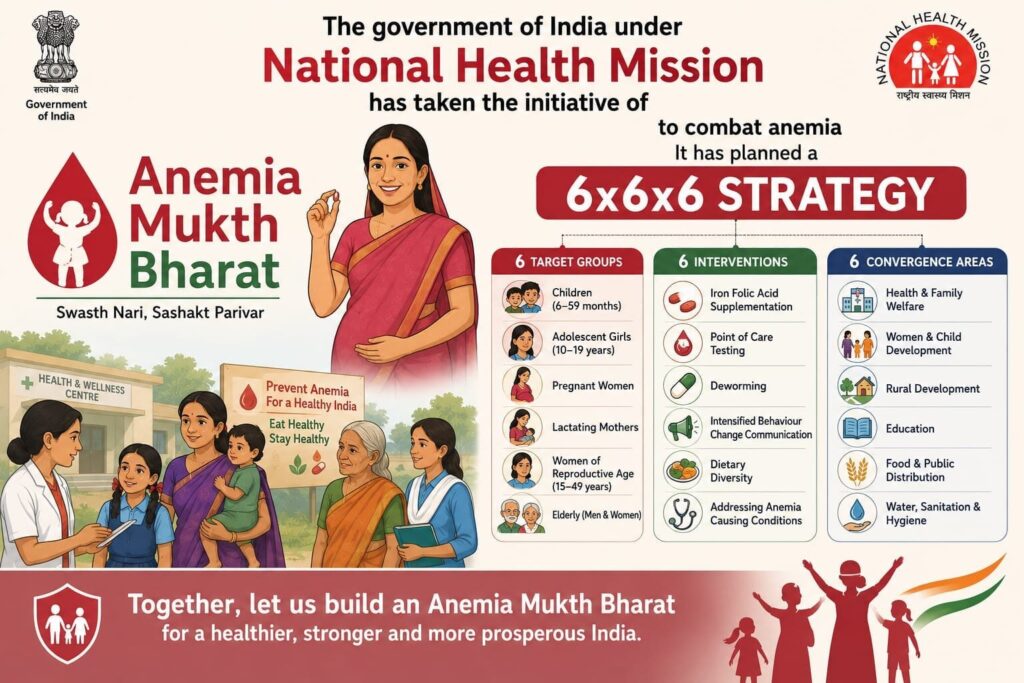
The government of India under National Health Mission has taken the initiative of Anemia Mukth Bharath to combat anemia It has planned a 6x6x6 strategy it targets
- 6 specific beneficiary groups : Children (6 to 59 months), Children (5 to 9 yrs), adolescent girls and boys (10 to 19yrs), pregnant women, lactating women, women of reproductive age (15 to 49yrs)
- 6 programs : iron and folic acid supplementation, periodic deworming, dietary advices and delayed cord clamping, digital testing of hemoglobin and addressing non nutritional causes of anemia
- 6 monitoring systems
Challenges
There are some common side effects associated with oral supplementation of iron like metallic taste, constipation, nausea, vomiting and stomach discomfort.These side effects occur in some individuals with varying severity. Most women stop taking the supplements as they are unable to tolerate these side effects.
How to overcome this challenge?
Doctors should ask the patients to take the iron supplements along with citrus fruits ( like` lemon, orange, sweet lime and amla), as vitamin C enhances the iron absorption. Additionally it is also advised to take plenty of water and increase fiber intake as it prevents constipation. If the side effects are still severe consult a specialist as there are newer formulations like microsomal iron which has increased tolerance and better absorption
Diagnosis of anemia:
Certain blood investigations are done in order to diagnose anemia like:
- Complete hemogram
- Peripheral smear
- Iron storage studies
- HPLC (high performance liquid chromatography)
Treatment of anemia
Treatment depends on the severity of anemia, cause of anemia and the duration of pregnancy.
Iron deficiency:
- In mild to moderate anemia an increased dose of oral iron is given and dietary modifications are advised.
- In severe anemia during early pregnancy injectable iron is preferred while in the later stages of pregnancy blood transfusion is the preferred mode of treatment.
- Note that injectable forms of iron and blood transfusion have risks of reaction and hence it has to be taken under supervision in a hospital which is well equipped to handle any emergencies.
B12 deficiency and folate deficiency: treated by giving supplementation of B12 and folic acid respectively
Women who remain anemic in spite of regular iron supplementation needs to be evaluated to rule out other causes of anemia
Conclusion
Preventing anemia in pregnancy goes a long way in ensuring safer pregnancy, healthier newborns and stronger mothers which in turn helps in building a strong nation. The role of prevention, early diagnosis and prompt treatment cannot be over emphasised. An integrated approach by clinicians, nutritionists and the community is the key to turning this potentially adverse but preventable condition into a rare one.
Bibliography
- D C Dutta
- https://nhm.gov.in/index1.php?lang=1&level=3&sublinkid=1448&lid=797
- FIGO Guidelines
- WHO Guidelines