

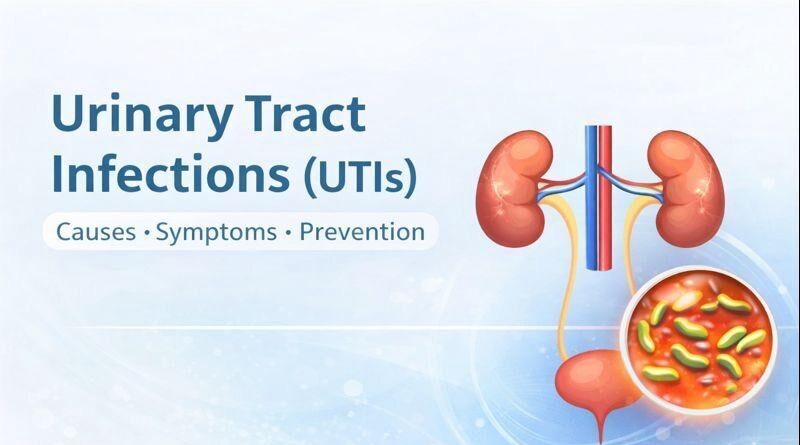
Urinary tract infections often begin with mild discomfort in the abdomen, an increased urge to urinate, and a burning sensation during urination. Unfortunately, many women ignore these symptoms, hoping that they fade off over time, while others may feel hesitant to address the problem.
According to the NIH, approximately 50-60% of women develop a UTI in their lifetime, making it one of the most common infections(accounting for nearly 25% of all infection cases).
“So, are UTIs just a ‘women’s issue’? Think again!
Although they are less common in men, they can still happen, and the symptoms and causes are just as bothersome.
Before diving deep, let’s understand what the urinary tract is.
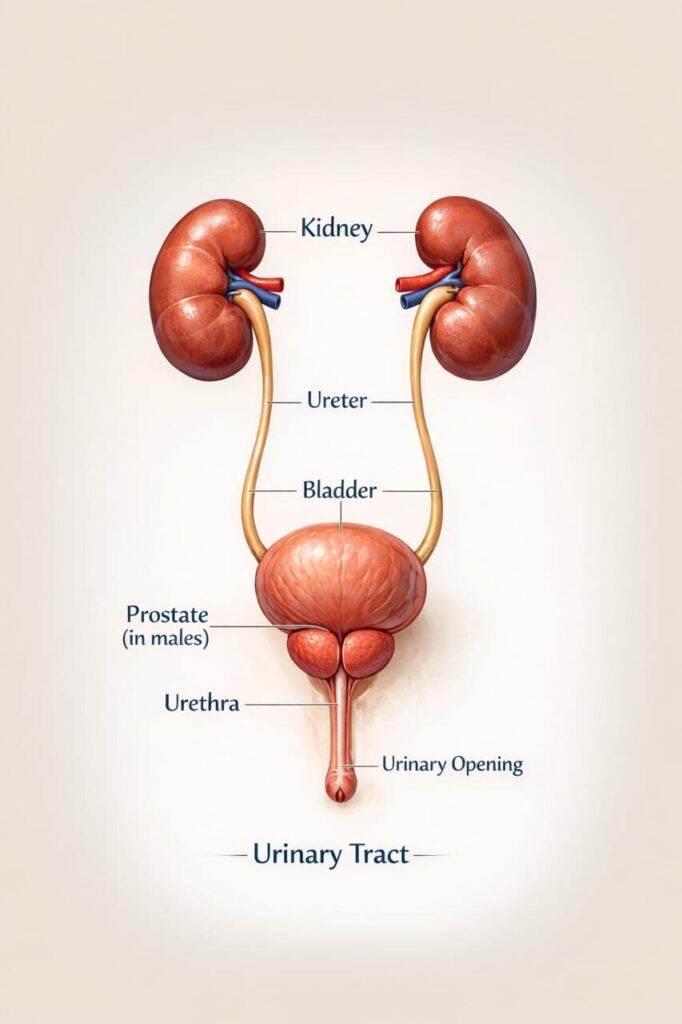
The urinary tract, also known as the urinary system, is a part of the excretory system responsible for filtering blood, removing toxins, and excreting waste in the form of urine.
The urinary tract comprises:
- A pair of kidneys
- A pair of Ureter
- Urinary bladder
- Urethra
Function of Urinary tract: Urine formation occurs in the kidneys,which then pass through ureter and get stored in the urinary bladder and finally excreted out through the urethra.
What is Urinary tract infection (UTI) ?
Urinary tract infection is an infection caused by bacteria in the urinary tract. It can be both asymptomatic (subclinical infection) and symptomatic (disease).
Are all UTIs the same?
UTIs are of different types based on their site of infection in the urinary tract :
- Pyelonephritis – Infection of the Kidneys.
- Cystitis (Uncomplicated UTI) – Infection of the Urinary Bladder.
- Urethritis – Infection of the Urethra .
- Complicated UTI – Infection extends beyond the bladder affecting the major systems of our body which results in systemic illness (Eg: Fever).
What is the science behind Urinary Tract Infection?
Urinary tract infections are caused by the entry of certain types of bacteria ( mainly Escherichia coli , others include Staphylococcus saprophyticus, Klebsiella, Enterococcus et cetera ) , fungi, and viruses into the urinary tract. These microorganisms then invade and cause infection.
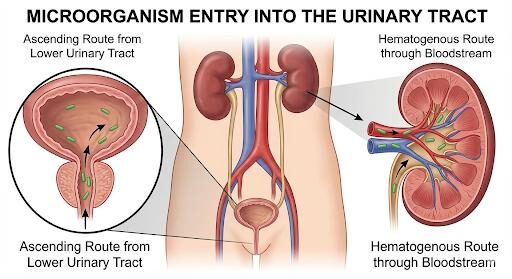
The microorganisms can enter the urinary tract through two routes:
1. Through the bloodstream
2. From the lower urinary tract
From newborns to the elderly: Who is most at risk for UTIs?
Upto 1 year of age (Infants ): Higher in males because male infants have congenital urinary tract anomalies ( defect in normal anatomy of the urinary tract) which leads to blockage or backflow of the urine which leads to bacterial accumulation and its multiplication in the tract.
1 -50 years of age : Higher in females mainly because of shorter urethra compared to males which facilitates easy bacterial entry into the urinary tract.
Above 50 years of age : Higher in males because of enlargement of prostate (Benign prostatic hyperplasia) . This enlarged prostate compresses the urethra leading to incomplete bladder emptying , creating a perfect ground for the bacteria to multiply and cause infection.
| Birth – 1 year | 1 year to 50 years | Above 50 years |

| Age group | Gender at risk | Reason |
| Birth – 1 year | Males | Congenital urinary tract anomalies |
| 1 year- 50 year | Females | Shorter urethra |
| Above 50 years | Males | Enlarged prostate |
Risk factors that promote the occurrence of UTI.
Sexual intercourse: Frequent sexual intercourse significantly increases the risk factor for UTI. The physical movements and friction associated with sexual activity facilitate the transfer of bacteria from the anus or the genitals to the urethra. It is crucial to highlight that bacterial transfer can also occur through oral sex and the use of fingers or sex toys.
Spermicide: Spermicide is a type of contraceptive that works by killing or immobilising the sperm and preventing them from reaching the ovum. Spermicide disrupts the normal vaginal flora. Spermicide is toxic to vaginal lactobacillus, thus is associated with an increased risk of vaginal colonisation of E. coli.
Catheterization: A post-operative urinary tract infection mainly occurs due to bladder catheterization during surgery. Catheters provide a conduit for bacteria to enter the bladder. Bacteriuria (presence of bacteria in urine) is inevitable with long-term catheterization.
Diabetes mellitus: A person with diabetes mellitus (increase in blood sugar level) will have a 2-3 fold higher rate of UTI than a person without diabetes mellitus. It is a condition which weakens the immune system.
Prevalence of diabetes mellitus provides a culture medium for the bacteria to grow. This leads to poor bladder function, obstruction in urinary flow, and incomplete voiding of urine, thus increasing the risk of infection.
In pregnant women: Pregnancy highly increases the risk factors for urinary tract infections. Due to the growth of the uterus, it increases the pressure and compresses the urinary bladder, thus leading to urinary tract infections. UTI is often detected in the first trimester (1 to 12 weeks), but is usually bothersome in the third trimester (28 weeks to birth).
Decreased estrogen: Estrogen supports Lactobacilli in the vagina, which keeps the vaginal pH acidic, thus preventing colonisation by harmful bacteria like E. coli. In postmenopausal women, there is a decrease in estrogen levels, simultaneously decreasing the lactobacilli count. So, vaginal pH becomes less acidic, making it easier for bacteria to colonise.
Poor intimate hygiene: Not cleaning the area after peeing or pooping, not changing the undergarments daily, and not washing the undergarments add up to the risk factors of UTI.
Holding urine for a longer duration: Persons who have good personal hygiene but do not urinate for a longer duration are also prone to urinary tract infections.
Anatomical deformities: It is a major risk factor in males. Prostatic hypertrophy (enlarged prostate) compresses the urinary bladder and leads to difficulty in emptying the bladder.
Pathogenesis
In the majority of UTIs, bacteria establish infection by ascending from the urethra to the bladder, continuing to reach the kidney, causing pyelonephritis (renal parenchymal infections). Any foreign body in the urinary tract, such as a urinary catheter or kidney stone, provides an inert surface for bacterial colonisation.
Note: Introduction of bacteria into the bladder does not lead to infection. Example: Bacteria often enter the bladder after sexual intercourse, but normal voiding and host defence mechanisms in the bladder eliminate these organisms.
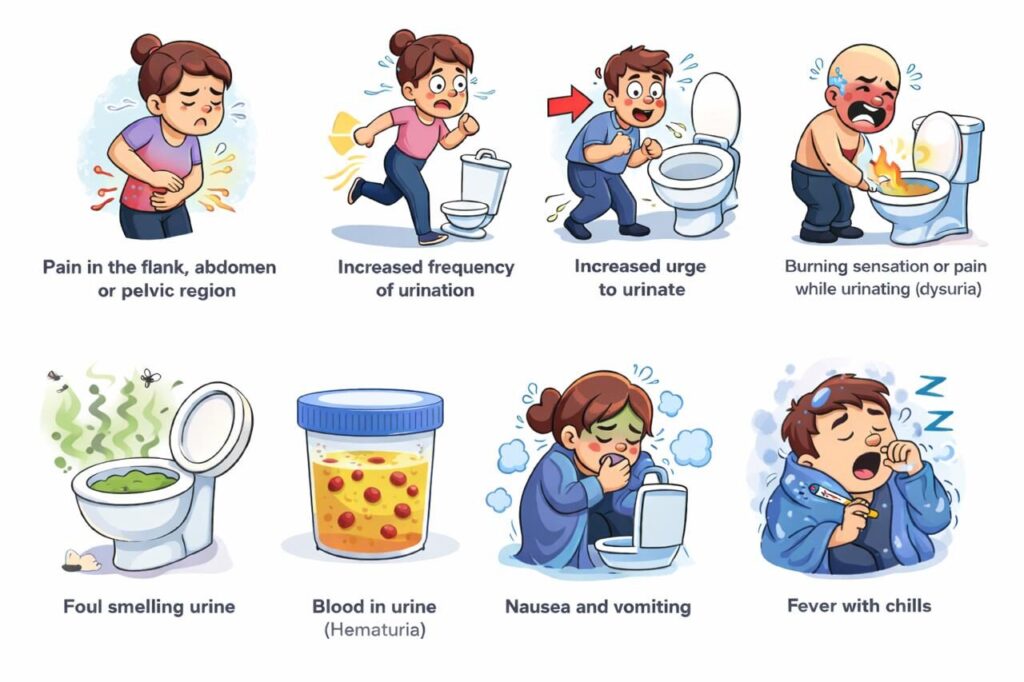
Symptoms of Urinary Tract Infection
- Pain in the flank, abdomen, or pelvic region
- Increased frequency of urination
- Increased urge to urinate
- Burning sensation or pain while urinating (dysuria)
- Foul-smelling urine
- Blood in urine (hematuria)
- Fever associated with chills
- Nausea and vomiting
- Extreme tiredness (fatigue)
Why are females more prone to UTIs?
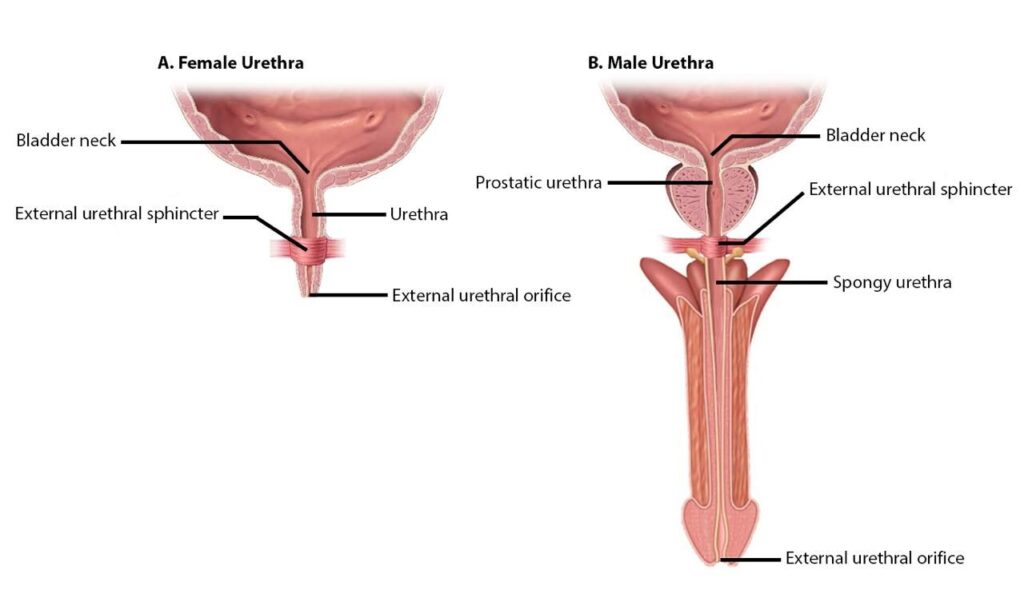
Females are more prone to UTI because of the anatomy of their urinary tract. Female urethra is shorter ( 3 to 4 cm) than male urethra (20 cm) so bacteria ascends faster in females . Female urethra is located in a very close proximity with anus so bacteria like E.coli can easily colonise in the urinary tract.
Recurrent UTI
The genetic background of the host influences the individual’s susceptibility to recurrent UTI ,at least among women. Women with recurrent UTI are more likely to have had their first UTI before the age of 15 years and have a maternal history of UTI.
About 20-30% of women who have had one episode of UTI will have recurrent episodes that usually occur within 2 weeks. The likelihood of recurrence decreases with increasing time since the last infection.
Misconceptions about UTI
Myth: Only females are at the risk of getting urinary tract infections.
Fact: Even men do get UTIs.
Myth: UTI occurs only when the person is maintaining poor personal hygiene.
Fact: A person with good personal hygiene also has high chances of getting infected but the risk factors varies.
Myth : UTIs are sexually transmitted infections.
Fact : UTI is not a type of sexually transmitted infection, but sexual activity is a risk factor for UTI.
Myth: UTI will always have associated symptoms
Fact : UTI can be asymptomatic also and this type of infection is called asymptomatic bacteriuria (ASB).
Myth: UTI will fade on its own.
Fact : Proper treatment is needed for UTI else the condition worsens.
Myth: Cranberry juice will cure UTI.
Fact : Cranberry juice helps in preventing or reducing the infection but not completely curing the infection.
Prevention
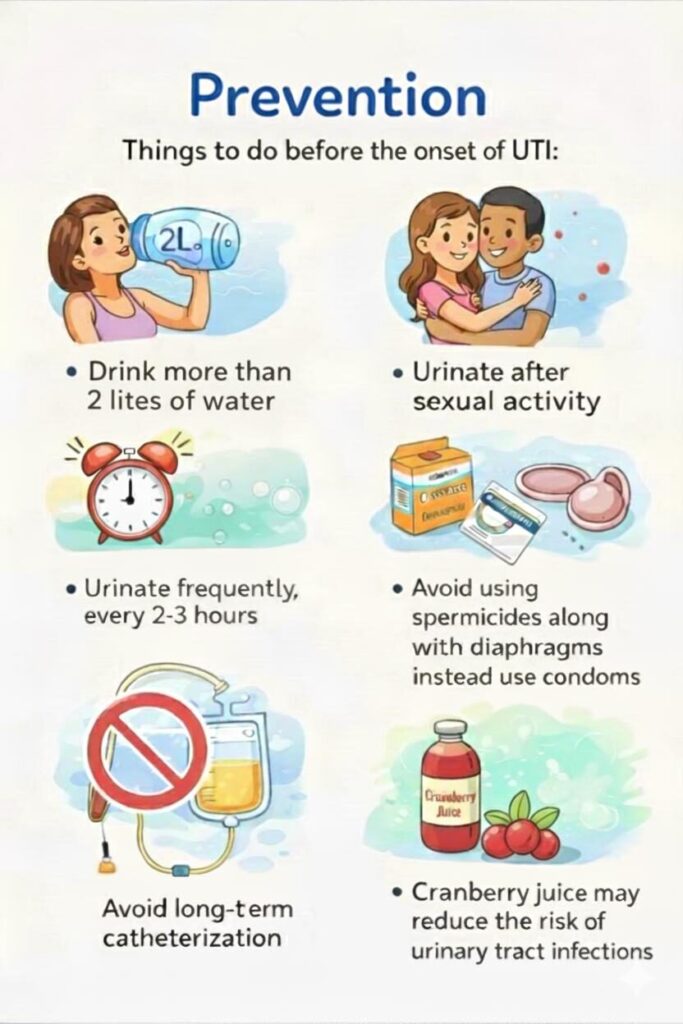
Things to do before the onset of UTI:
- Drink 2-3 liters of water per day.
- Urinate after sexual activity.
- Urinate frequently for every 2-3 hours.
- Avoid using spermicides along with diaphragms instead use condoms.
- Avoid long standing catheterization .
- Maintaining proper intimate hygiene.
- Use pH balanced and fragrance free soaps on genital areas.
- Cranberry juice may reduce the risk of urinary tract infections.
Diagnosis and tests
The physician might order the following tests to confirm whether it is a urinary tract infection or not:
Urine analysis: The patient is requested to collect their urine in a sterile specimen collection container and then the urine is analysed for the presence of any microbes or white blood cells( due to infection).
If the patient does not respond to the treatment then the doctor might order for an Ultrasound, Computed tomography (CT ) scan, Cystoscopy.
Management and treatment
When you encounter a urinary tract infection or symptoms pertaining to urinary tract infection, consult a urologist. Do not ignore the symptoms assuming that they will resolve on their own.
Antibiotics are usually prescribed and it is important to complete the course of given antibiotics as suggested by the doctor.
In case of a person with recurrent urinary tract infection, the bacteria might get adapted and become resistant towards the given antibiotics. So the antibiotics might fail to work. The doctor then might start on with alternative medications.
As you already know by now UTI is one of the most commonly occurring infections.If you have symptoms of UTI do not feel ashamed or embarrassed to talk about it. Most importantly do not ignore the symptoms. Early diagnosis and proper treatment prevents complications.
With proper care , right medication, proper hygiene and most importantly drinking sufficient amount of water, urinary tract infractions can be effectively treated and cured.
References
1. Harrison’s principles of internal medicine-21st-edition
2. Urinary Tract Infections (UTI) : Causes, Symptoms & Treatmenthttps://my.clevelandclinic.org/health/diseases/9135-urinary-tract-infections#additional-common-questions
3. Urinary tract infection in women-PMC https://pmc.ncbi.nlm.nih.gov/articles/PMC8077804/
4. Urinary tract infections(UTI) – Symptoms and Causes https://www.mayoclinic.org/diseases-conditions/urinary-tract-infection/symptoms-causes/syc-20353447
5. 7 Reasons Why Women Get More UTIs Than Men https://vpfw.com/blog/7-reasons-why-women-get-more-utis-than-men