

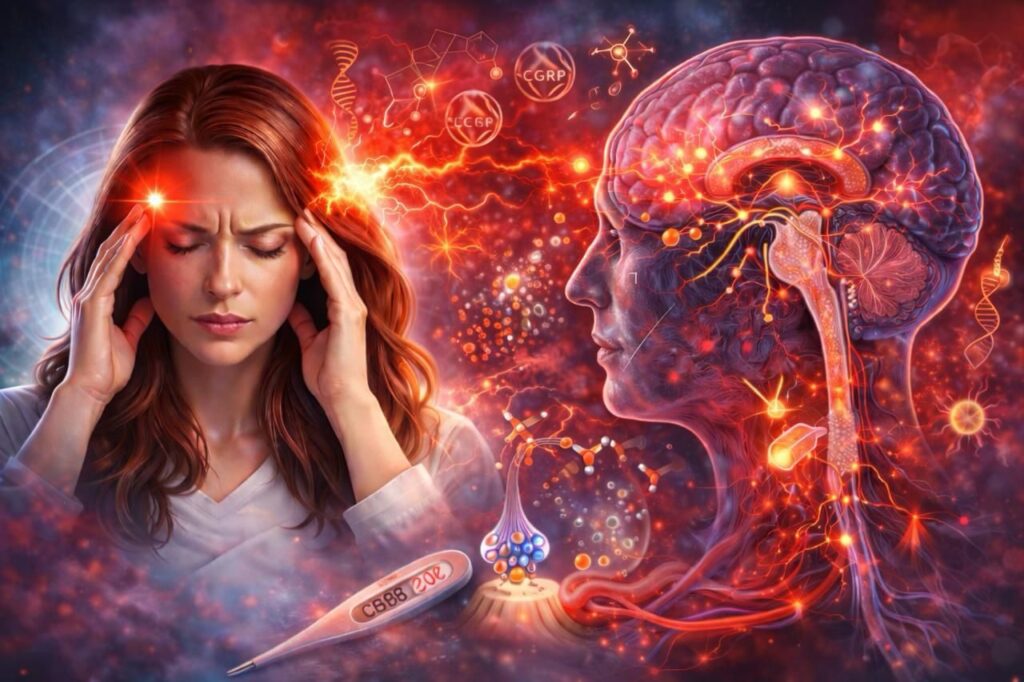
Did you have a headache which felt like your brain is thumping like your heart inside your skull, lights feel like needles, and the slightest sound feels painful? That’s migraine—a condition that’s more than just pain; it is a rollercoaster ride in your brain of the brain’s hidden signals, chemical messengers. It’s our brain barin sending us an SOS. Let’s together unravel the mystery behind this.
So ,what exactly is a migraine ?
A migraine is not an ordinary headache. It is a Neurological disorder which causes intense pulsating pain usually on one side of the head. If it is left untreated, it can last up to 4-72 hours. The pain can vary from moderate to severe, which is accompanied by many other symptoms. The pain can be that severe which can interfere with daily activities
Migraine is more than just a headache
| Feature | Migraine | Headache |
| Meaning | Migraine is a specific type of headache disorder | Headache is a general term for pain in the head region |
| Classification | It is a primary headache | Headaches are classified into primary and secondary types |
| Cause | Not caused by another illness in the body | May occur on its own (primary) or due to another illness (secondary) |
| Trigger by disease | Not triggered by an underlying disease | Secondary headaches are triggered by existing conditions like infections, sinus problems, etc. |
| Side of head involved | Usually affects one side of the head | Usually affects both sides of the head |
| Pattern of pain | Often occurs as repeated attacks | May be occasional or frequent depending on cause |
| Management | Requires specific migraine treatments | Often manageable with rest and common pain medicines |
| Treatment approach | Needs targeted therapy and trigger control | General treatment like rest, hydration, and analgesics is often enough |
Is migraine something that can happen to you?
• Migraine affects children of all ages, including infants
• Migraine often begins at puberty, mostly affecting between 35 and 45 years.
• Women are 2-3 times more likely to experience migraines than men. The age group which mostly gets affected is 20 to 35 years, mostly due to hormonal influences.
• In India, migraines account for 28.8% of headaches among the 41% outpatient population.
• 1 in 4 people in India suffer from migraines.
It is known that migraine runs in families, and 80% of people who have migraines have a close relative who also suffers from migraines. A child has a 50% chance of getting a migraine if one parent has a migraine and a 75% chance if both parents have migraines. There is no clear pattern on the genetic basis of migraines, but the triggers of migraines can be hereditary. Mostly, all migraines are affected by many genes (polygenic), but there is an exception: Familial hemiplegic migraine with aura, which is caused by a single gene (monogenic). The genetic variants are inherited in an Autosomal dominant manner, which means a person with FHM can pass it onto their children, having a 50% chance.
Some myths associated with migraine
1-Myth – Migraine is a bad headache.
Fact -its a Neurological disorder
2-Myth-migraine affects only causes one sided pain
Fact- it can be bilateral and can shift sides during attacks
3-Myth-only adults get migraine
Fact- Even children and teens are prone to it
4-Myth- Myth – Migraine is physiological or “just in the head.”
Fact- It can be biological and hereditary
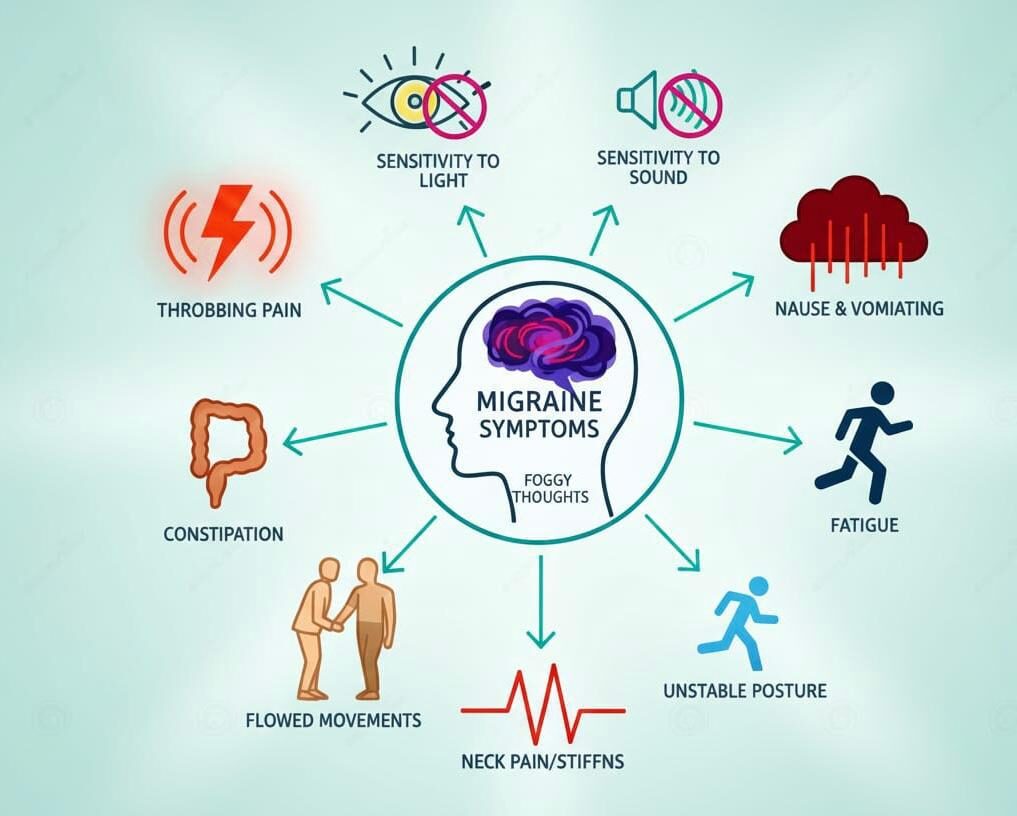
What does a migraine feel like?
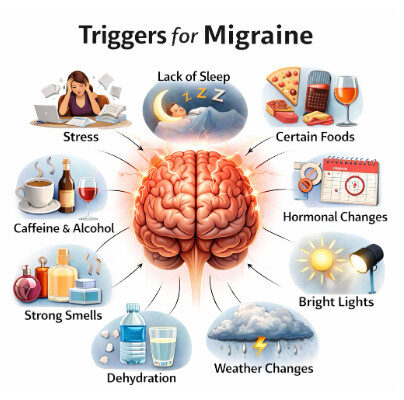
What are the triggers of migraine
Living with migraine and its everyday challenges
Migraine not only affects the head; it affects many parts of a person’s life.
1- Difficulty in working as the pulsating headache makes it hard to concentrate.
Reading and seeing the screen becomes difficult.
2- Difficulty in daily activities:
The most simple tasks like cleaning become really exhausting.
Physical movement can make the pain worse.
3-Bright lights loud noises increases the pulsating pain
4- Due to the pain people tend to isolate themselves they become irritable and they start having Anxiety
5- People start to avoid social gathering due to the noise and the light
6-Migraine can disturb sleep which creates a vicious cycle
Migraine affects the brain not just the head
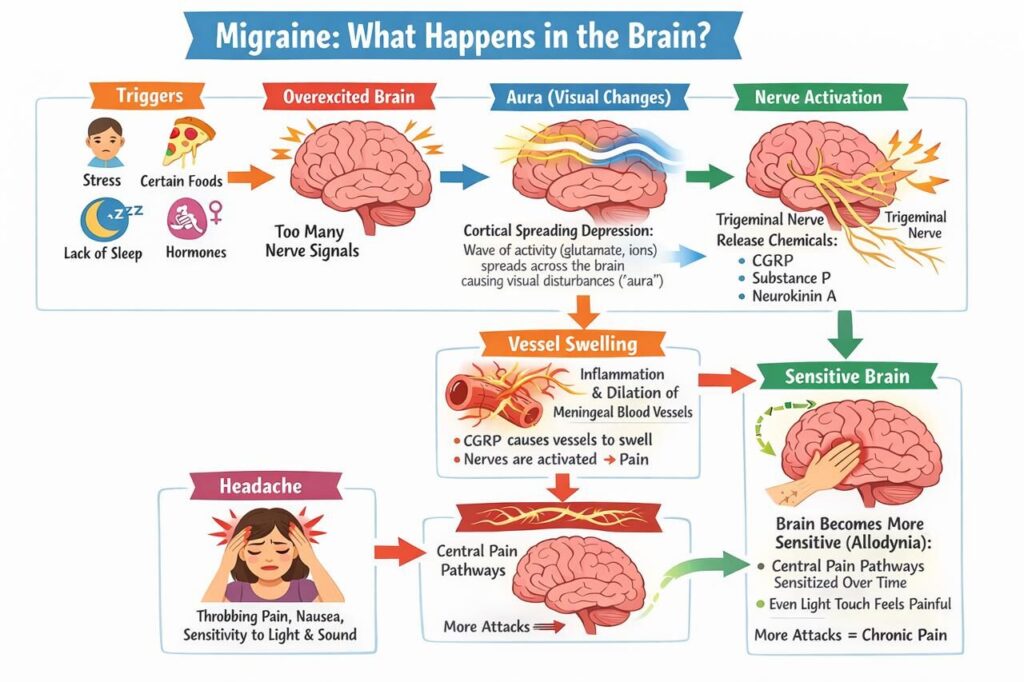
The migraine sequence
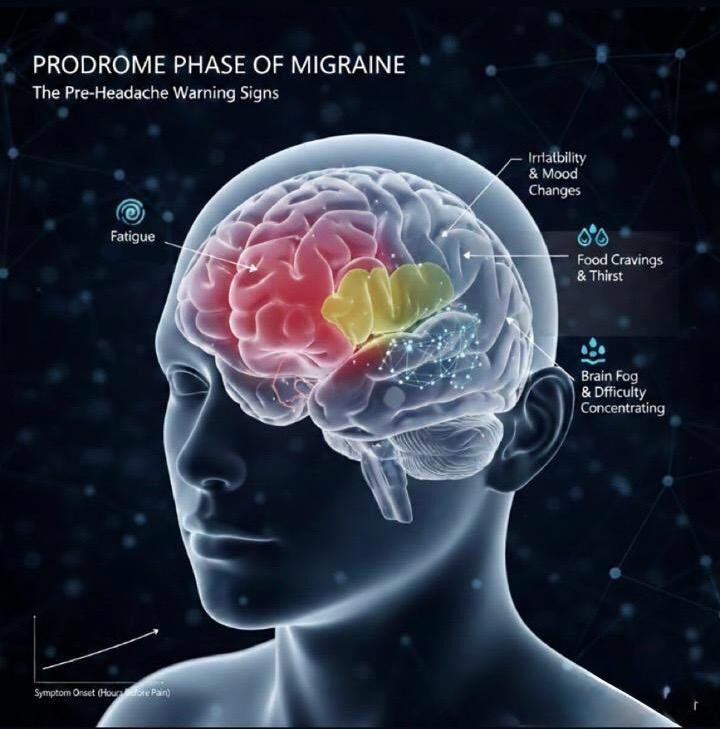
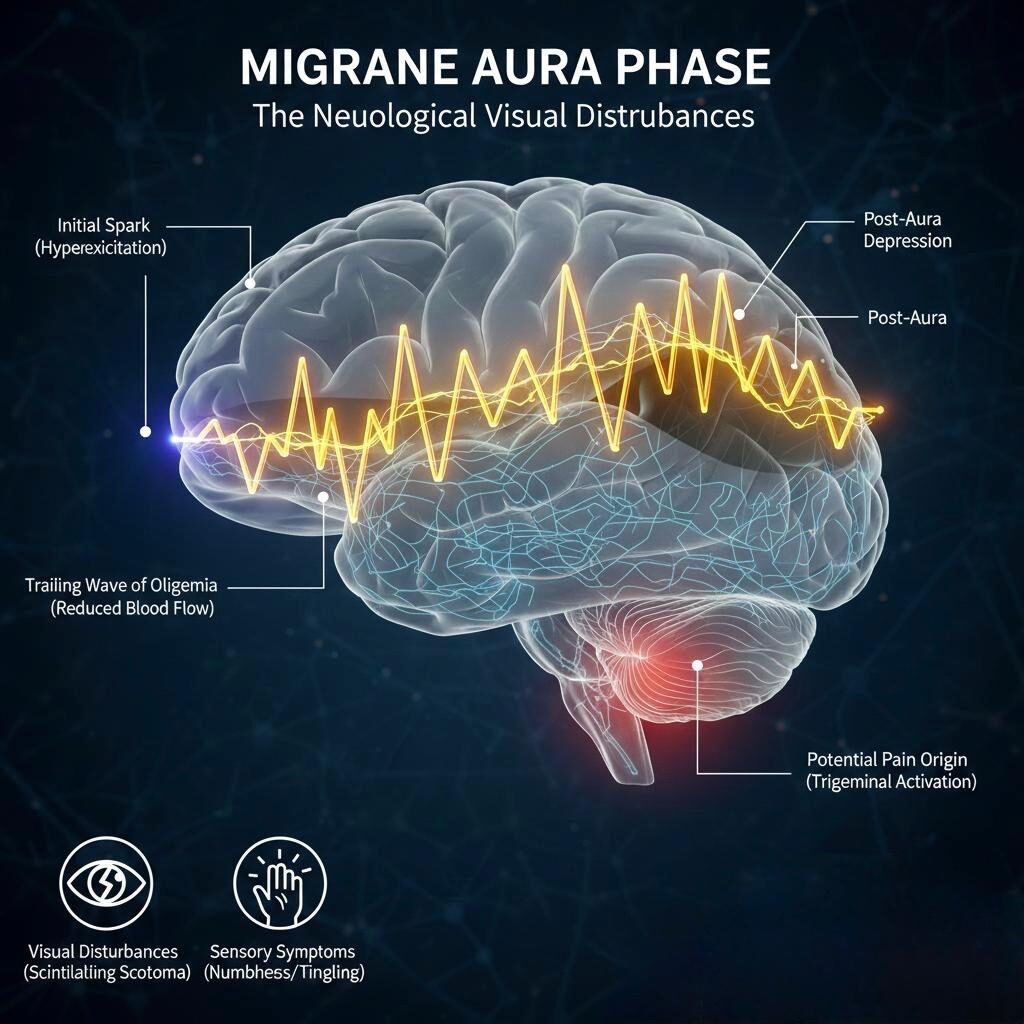
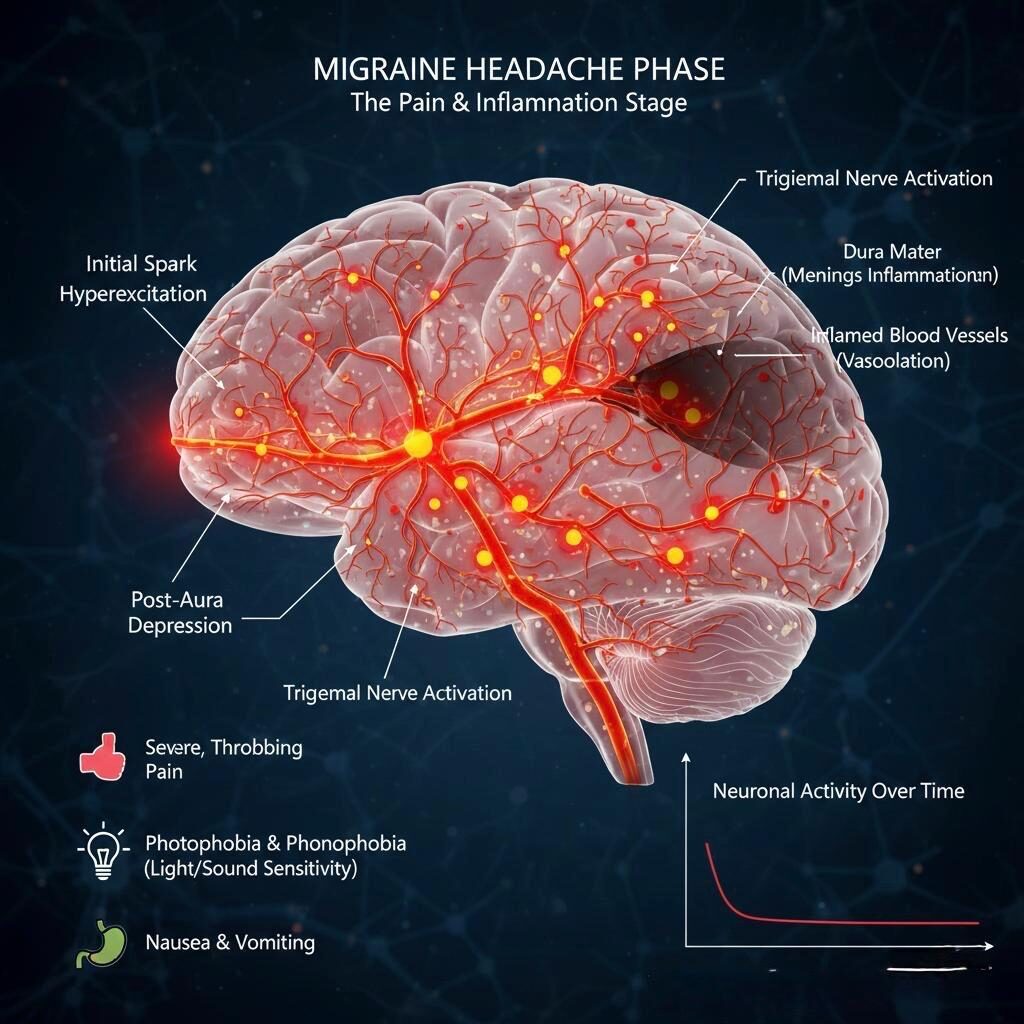
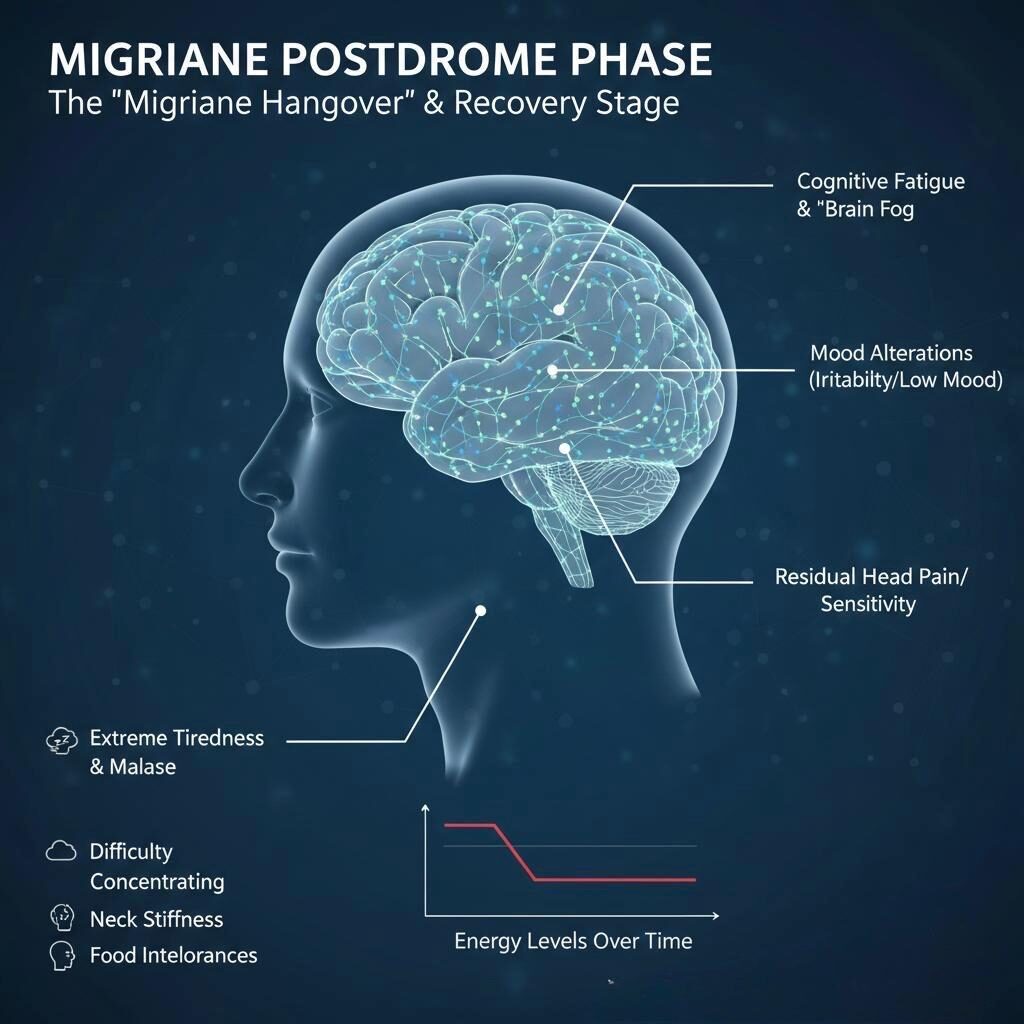
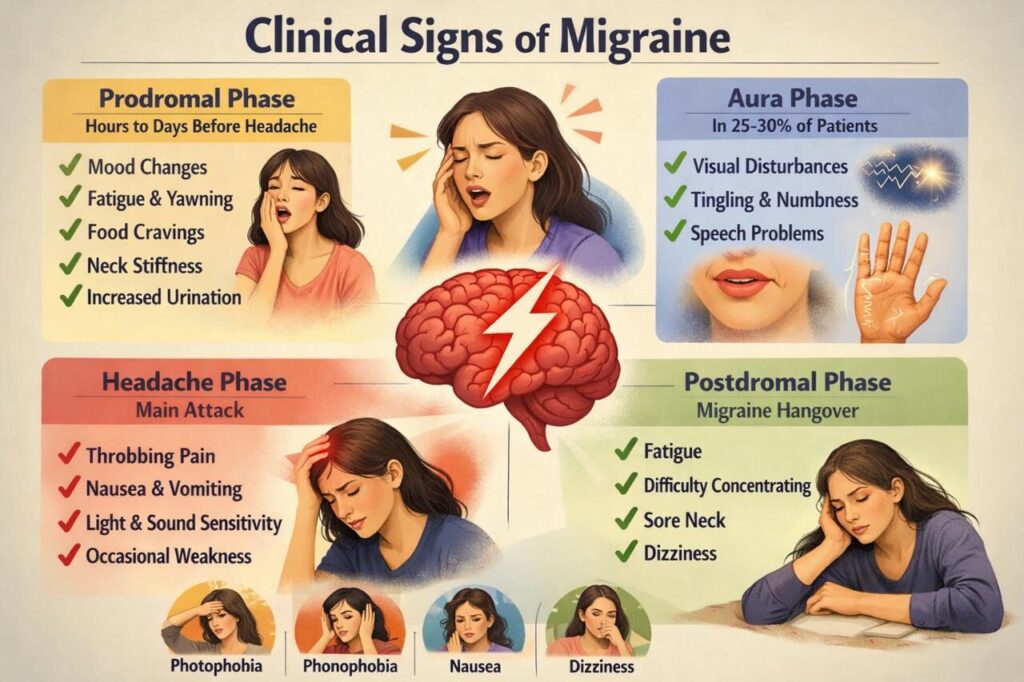
Migraine is not a simple headache it has multiple stages which develops into distinct phases.Each phase reflects the changes occurring in our brain not everyone experiences all the phases in a migraine attack.Understanding of the various stages of migraine help in better management of migraine. A typical migraine usually has 4 phases: prodrome, aura,headache and postdrome phase; each phase is characterised with different symptoms.
What does a doctor see?
Proactive care against migraine
If you get migraines you may not be able to prevent them completely. You can take steps to make them less often. Instead of treating migraine attacks after they begin, preventing migraine is better.Prevention might vary from person to person trying to figure out what triggers your migraine and how long it lasts there would be a pattern.
Prevention might include-
• Exercising regularly
• Managing stress
• Preventive medications
• Natural supplements
• Vitamins
Alarming signs when you have to see a doctor
You need to seek professional help when
- the frequency of the migraine increases
- impact daily life
- when the migraine does respond to meds
- fever
- weakness
- speech trouble
- heavily depended on pain killers
- thunderclap headache
- intense vomiting
Migraine isn’t just a pain its a stain
Currently there is no cure for migraine. There are many effective treatments and management struggles to relieve the pain and the symptoms and they reduce the frequency and the severity of attacks . The treatment plan are specific to each person visit a general physician for further guidance
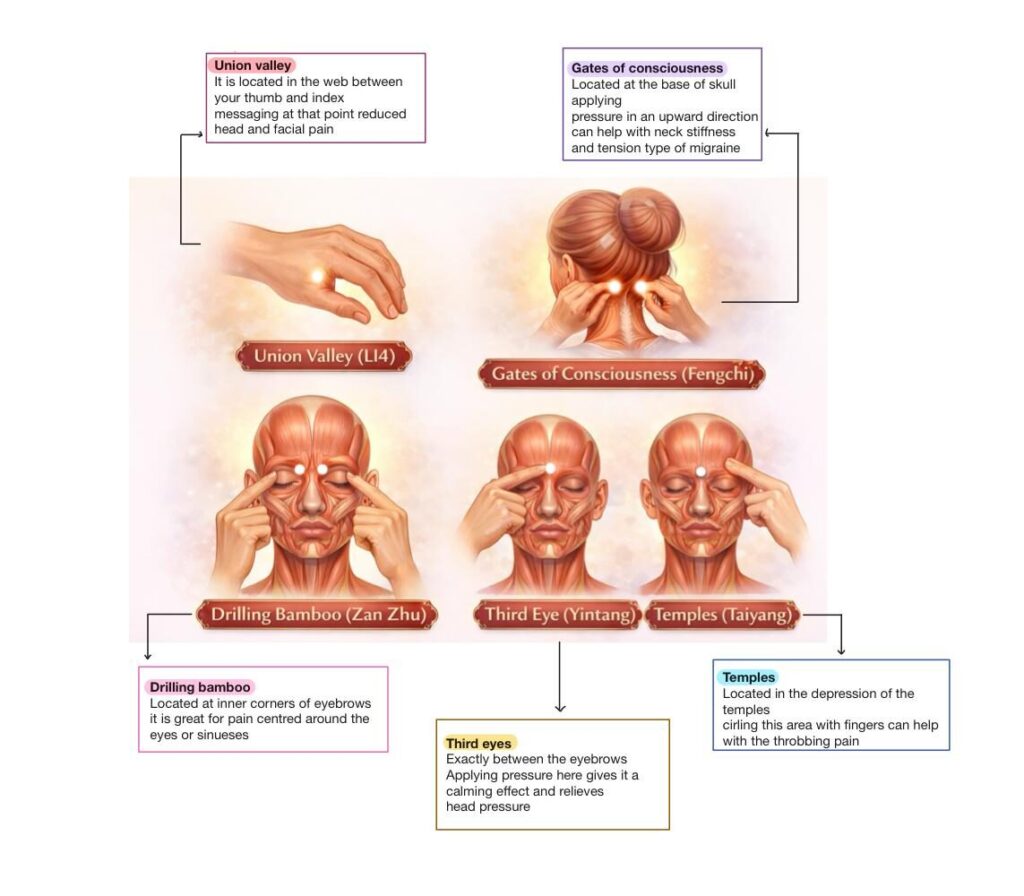
Different pressure points for migraine-
Migraines can be relieved using various medications and lifestyle management. Certain pressure points used in Acupressure can reduce the intensity of migraine and the frequency. They are located mainly in muscle and rich nerve supply areas such as head,face,neck and hands. Applying uniform and gentle pressure at these various points can reduce the intensity, help in muscle relaxation and regulate the pain signals going to the brain. These pressure points only help in the management of the migraine; it is not a cure for it to help in relief and reduce stress.
From a mystery to a relief
Migraine is more than a headache—it is a deeply personal struggle that can disrupt work, sleep, and everyday moments. For many individuals, a migraine attack is not limited to head pain alone but is accompanied by nausea, sensory sensitivity, mental fog, and exhaustion, making it a whole-body experience rather than a single symptom which makes the person vulnerable and weak .Behind the pain lies a complex interplay of overactive nerves, chemical signals, and brain sensitization together create a state where normal stimuli such as light, sound, or movement become overwhelming. By understanding these mechanisms and addressing triggers early, identifying personal triggers, recognizing warning signs, and applying preventive strategies can significantly reduce the frequency and severity of attacks., we can guide patients toward effective treatments, helping them regain control, restore balance, and reclaim the life that migraine has taken from them.
References: