

“Just one more rep.”
Raghav stared at the barbell, his muscles burning after a long workout. For months he had been pushing his limits in the gym, yet progress felt slow. A friend suggested a simple supplement that many athletes swear by, Creatine Monohydrate. Skeptical but curious, Raghav decided to try it. Within weeks, he noticed something different: heavier lifts, better endurance, and faster recovery.
Raghav’s experience is not unique. Around the world, athletes, bodybuilders, and fitness enthusiasts have turned to Creatine Monohydrate to improve strength, muscle growth, and performance. More pand more advances show that there is much more behind it than just muscle recovery. But what exactly is creatine, and why has it become one of the most researched and trusted supplements in sports nutrition?
What is Creatine Monohydrate?
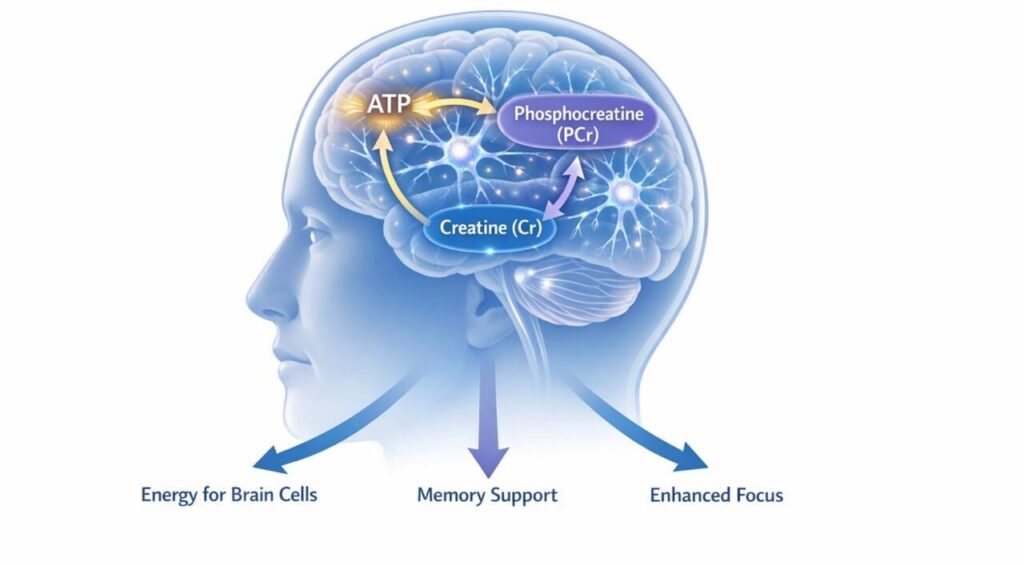
Creatine is a natural source of energy that helps your muscles flex (contract). It helps create a steady supply of energy in your muscles so they can keep working, especially while you’re exercising. Beyond improving strength and performance, creatine also supports brain function by helping supply energy to brain cells, which may aid in cognitive performance, memory, and mental clarity.
How is Creatine monohydrate synthesised?
Creatine monohydrate is manufactured in laboratories through a chemical process where sarcosine (a sodium-based compound) reacts with cyanamide inside a stainless steel reactor at high temperature and pressure. The mixture is then cooled to allow crystallization, followed by purification using a centrifuge. Finally, it is vacuum-dried and ground into a fine, easily dissolvable powder.
How Creatine Monohydrate works inside the body?
Creatine absorption and utilisation in the body are complex processes that involve digestion, transport, cellular uptake, and energy synthesis.
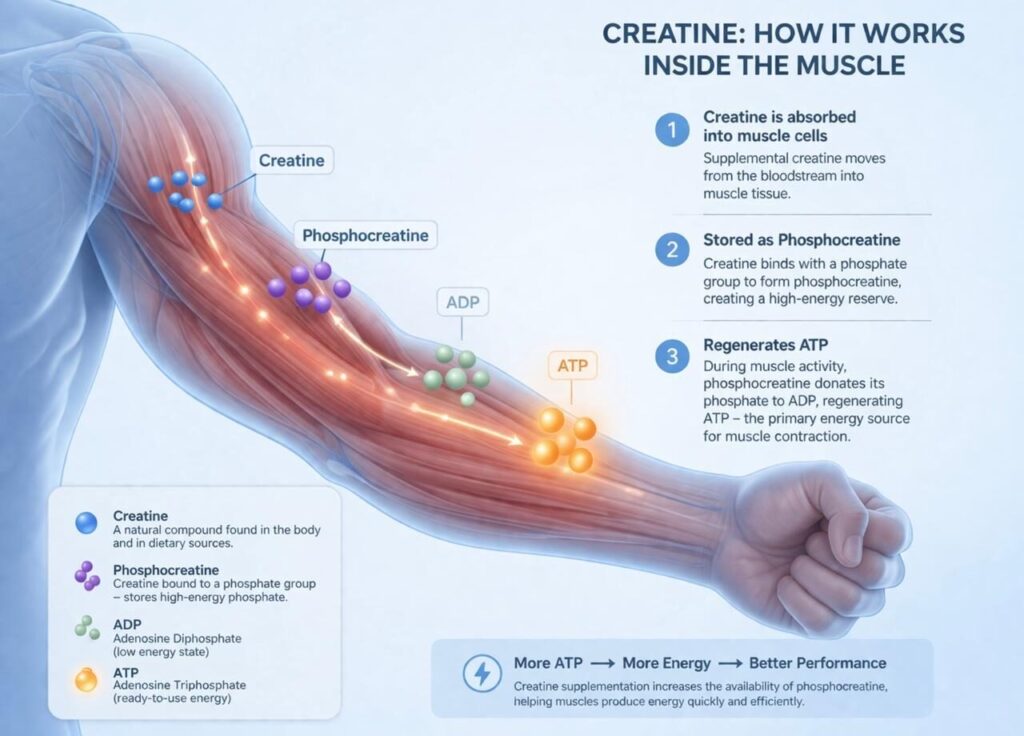
Most creatine is stored in skeletal muscles, where it combines with phosphoric acid to form phosphocreatine (also called creatine phosphate). This phosphocreatine plays a key role in producing adenosine triphosphate (ATP), the main energy source used by cells, thereby helping muscles maintain a steady energy supply during intense exercise or heavy lifting.
Creatine holds water into the muscles primarily due to it’s osmotic properties. Creatine is an osmotically active substance. This means it attracts water molecules. When creatine stores in muscle cells increase through supplementation, it leads to a higher concentration of solutes inside the cells. To balance this concentration, water is drawn from the extracellular space (outside the cells) into the intracellular space (inside the muscle cells), hence increasing the size of the muscles.
Before beginning creatine, like with any other supplement, consult with a healthcare professional, especially if you have any pre-existing medical conditions.
Creatine Monohydrate dosage?
Understanding both the loading and maintenance phases, along with factors like body weight, exercise intensity, and individual response, is essential for determining the appropriate creatine dosage.
The general recommendation for people who do take a creatine supplement is 3 to 5 grams per day. Studies show that loading up on a higher dose of creatine offers no advantages, you are just putting more stress on your kidneys. Otherwise, an adult dose of 3 to 5 grams of creatine daily is safe. However, people with kidney disease should consult with their doctor prior to taking it. Creatine is not an anabolic steroid, nor does it increase testosterone levels. Some people will retain a couple of pounds of fluid during the first week they start creatine supplementation. But this is temporary, and studies of long-term use do not show a persistent problem with holding onto extra water.
How to approach on taking Creatine Monohydrate for bulking
For bulking, creatine monohydrate is best approached in two phases to maximize its effect on muscle size and strength. You can begin with a loading phase, where you take about 20 grams per day, usually split into 4 doses of 5 grams throughout the day, for around 5–7 days, this helps rapidly saturate your muscles with creatine so you start seeing benefits faster. After this, move into the maintenance phase, where you take 3–5 grams daily to keep your muscle creatine levels elevated. While timing isn’t extremely strict, taking it post-workout with a meal (especially with carbs) may slightly improve uptake. It’s important to stay well-hydrated because creatine draws water into your muscle cells, and dehydration can reduce performance. Also, consistency is key taking it daily without long gaps ensures steady results, supporting better strength, recovery, and muscle growth over time during your bulking phase.
Approach to Dietary changes with Creatinine usage in Veg and Non vegetarians
When incorporating creatine into your routine, diet plays an important supporting role, and this slightly differs in veg and non vegetarians.
For vegetarians, natural dietary creatine intake is typically low, as it is mainly found in non vegetarian sources like fish and red meat. It is important to maintain a balanced diet rich in plant based protein (lentils,soya,tofu,beans,milk,etc). Supplementation has a more noticeable impact in vegetarians.
- Focus on Plant Proteins: Use lentils, chickpeas, and tofu to manage protein needs without excessive creatinine buildup.
- Manage Kidney Function: Focus on fiber rich, whole-grain foods (e.g., brown rice, oats) to support overall kidney health.
- Maintain Potassium levels: If kidney function is compromised, monitor intake of high-potassium foods like bananas and oranges.
For Non vegetarians, dietary creatine intake is already present through food such as red meat, chicken,etc.
- Reduce Cooked Red Meat & Seafood: Cooking converts creatine in animal muscles to creatinine. High consumption of steak or red meat can cause a significant, albeit temporary, rise in serum creatinine levels.
- Moderate Total Protein Intake: High-protein diets can strain kidneys. A moderate, calculated intake is recommended.
- Opt for Leaner Proteins: When consuming meat, choose lean options like chicken or fish in moderation.
- Avoid Cooked/Processed Meats: Limit processed meats (like sausages) as they can be high in both sodium and pre-formed creatinine.
For both, vegetarians and non vegetarians,
- Increase Fiber Rich Foods: A high fiber diet aids in digestion and can lower creatinine levels. Focus on fresh fruits (apples, berries) and vegetables (cabbage, carrots, onions).
- Hydration: Proper hydration is essential to help the kidneys filter out waste. Dehydration can cause a temporary rise in creatinine.
- Limit Salt Intake: Reduce sodium to 1 teaspoon or less daily to manage blood pressure.
- Avoid Creatine Supplements: Avoid using creatine for athletic performance, as it can cause a significant rise in blood creatinine levels.
- Boil/Soak Vegetables: Soaking vegetables, particularly those high in potassium like potatoes and leafy greens, can reduce their potassium content.
Areas of Creatine use.
- Strength, muscle size & performance: Creatine helps athletes perform more reps or sprints, leading to increased strength, muscle mass, and overall performance. It’s especially useful for high-intensity, intermittent activities requiring quick recovery.
- Injury prevention: May reduce dehydration, muscle cramps, and risk of injuries involving muscles, bones, ligaments, tendons, and nerves.
- Rare creatine-metabolizing syndromes: In children with certain creatine deficiency disorders, supplementation can improve some symptoms.
- Cognition & brain health: May enhance performance in cognitive tasks, particularly in older adults.
- Sarcopenia & bone health: Can help counter age-related loss of muscle mass and bone density.
- Heart failure: Current evidence is insufficient to support creatine as a treatment.
- Skin aging: Early studies suggest creatine-based creams may reduce wrinkles, skin sagging, and sun damage when used consistently.
Side effects for using it for too long
Long-term use of creatine monohydrate is widely regarded as safe and effective for healthy individuals, with research showing no harmful impact on kidney or liver function even after several years. Any side effects reported are typically mild, such as weight gain due to water retention, occasional digestive discomfort, and possible muscle cramps.
Why is it the most extensively used supplement in the fitness industry?
Creatine’s effectiveness in enhancing short-term exercise performance is well established. A 2003 review by Kreider found that around 70% of studies reported improvements in performance. However, the extent of these benefits can vary depending on factors such as dosage, the individual’s training level, and exercise conditions like intensity and duration. An overview reveals that performance increases of 10%–15% are typically observed. More specifically, 5%–15% improvements in maximal power and strength, anaerobic capacity, and work performance during repetitive sprint performance are commonly reported, whereas improvements in single-effort sprint performance have been indicated to range from 1%–5% improvements.
Benefits beyond muscles; Cognitive and general health
Creatine is widely recognized for enhancing physical performance, but it also provides additional health benefits:
- Brain Function: Like muscles, the brain relies on ATP for energy. Creatine supplementation may help improve cognitive functions such as memory, reasoning, and mental clarity, especially in older adults or during sleep deprivation.
- Bone Health: Some studies suggest that creatine may support bone health, although more research is needed to confirm this effect.
- Support for Specific Populations: Creatine may be beneficial for individuals with certain health conditions; however, consulting a healthcare professional is important before starting supplementation, particularly if there are existing medical concerns or medications involved.
Myth’s and stories around Creatine Monohydrate.
There are many myths and misconceptions which revolve around creatine, below are some
Myth 1: Creatine makes females bulky
Creatine alone does not cause muscle gain or “bulking.” Muscle growth requires consistent training, proper diet, and recovery. Creatine simply enhances energy availability, helping you perform better (more reps, strength, intensity), which over time may support muscle growth.
Myth 2: Creatine causes bloating
At recommended doses (3–5 g/day), creatine is unlikely to cause bloating. Minor bloating may occur during high-dose loading phases, but loading is not necessary for results.
Myth 3: Creatine causes cramps
There is no strong scientific evidence linking creatine to muscle cramps. Most claims are based on theories, not proven facts.
Myth 4: Creatine causes dehydration
Despite common belief, research (including from sports nutrition bodies) shows creatine does not cause dehydration when used properly.
Myth 5: Creatine harms kidneys
Creatine is safe for healthy individuals when taken in recommended amounts. Issues may arise only in people with pre-existing kidney conditions, as their ability to filter waste is already impaired.
Conclusion
Creatine isn’t magic, it was never meant to be. It doesn’t replace discipline, consistency, or effort. Instead, it quietly supports them. It works in the background, helping you push a little harder, recover a little better, and show up a little stronger each day.In the end, progress isn’t built on supplements alone, but on the choices you make repeatedly, training when it’s tough, resting when it’s needed, and staying patient when results take time. Creatine simply becomes a small part of that larger journey.And maybe that’s what makes it meaningful not what it does instantly, but how it supports what you’re willing to build over time.