

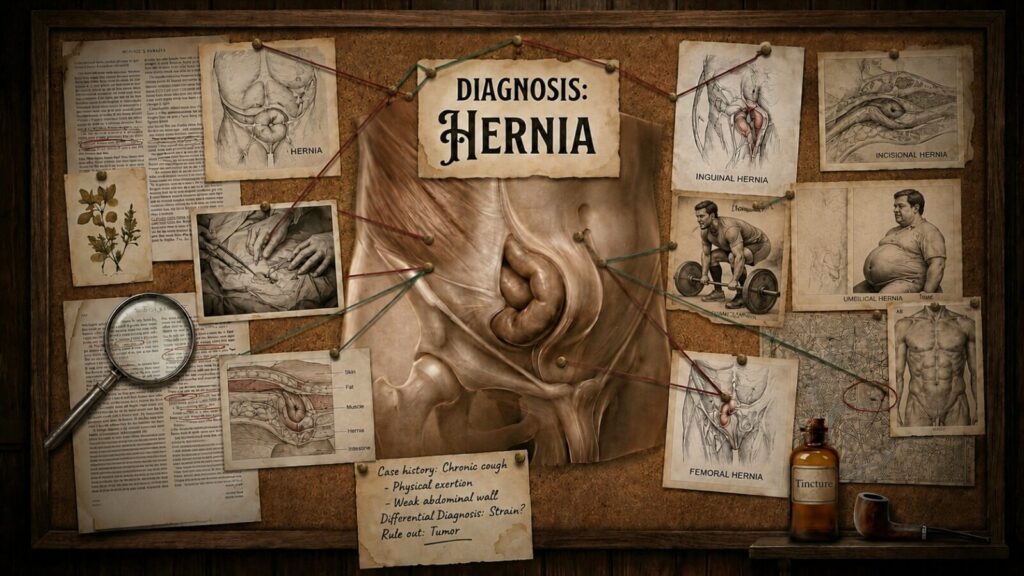
“Have you ever noticed a small swelling in your abdomen or groin that appears when you strain or cough? Although it might seem harmless, it could be your body’s way of signaling a hernia.”
Although India ranks among the countries with the highest number of hernia cases, with an estimated 2.45 million incident cases of inguinal, femoral and umbilical hernia, there is very little understanding of this issue. Let’s dwell deep into this very vast topic of hernia through this article.
What is hernia?
Hernia is a condition which occurs due to a breach in the anterior abdominal wall due to which the abdominal contents protrude out through that opening or weakness. It usually appears as a bulge or a lump which could either be reversible or irreversible on application of pressure.
Video: What Is a Hernia and How Is One Repaired?
What are the types of hernia?
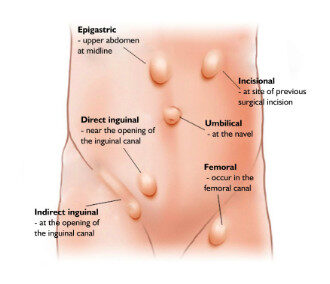
The most common types of hernia include
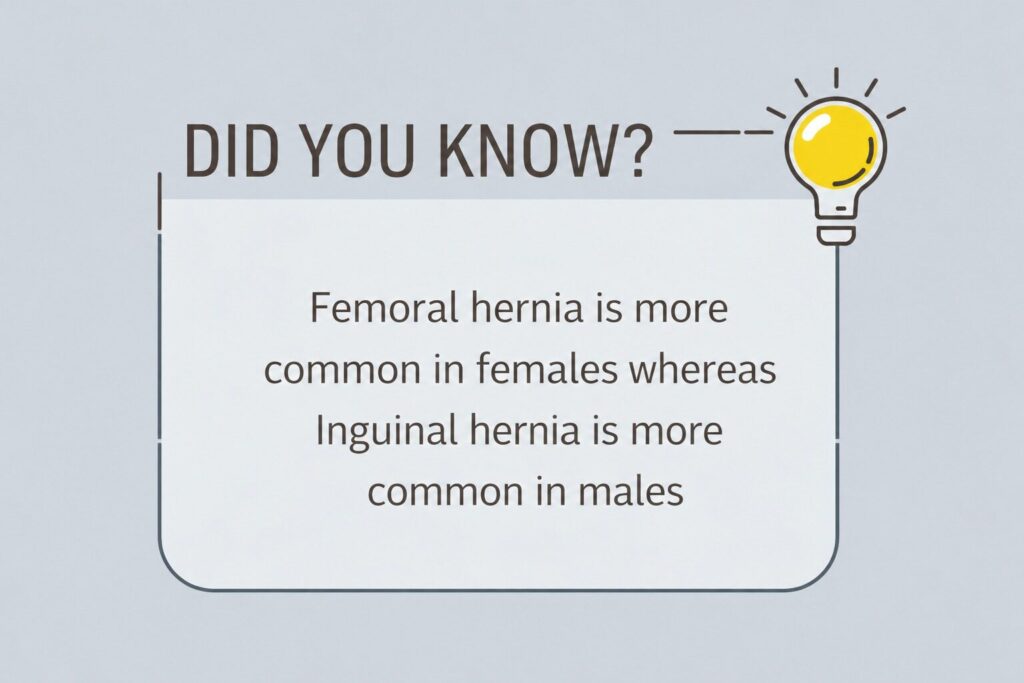
INGUINAL HERNIA: It constitutes the most common type of hernia that predominantly occurs in men wherein your abdominal contents escape through a passages present in the groin called inguinal canal.
FEMORAL HERNIA: This type of hernia occurs most commonly in females in which the bowel contents or fat pass through a weakening in the lower abdominal wall into the femoral canal.
UMBILICAL HERNIA: This type of hernia occurs when your bowel pushes through the umbilicus. Although it is mostly congenital i.e. from birth, it may also develop due to other conditions like pregnancy or obesity.
INCISIONAL HERNIA: An incisional hernia occurs when tissue protrudes through a former incision in your abdominal wall that weakened over time. It’s a common side effect of the abdominal which is often reversible.
HIATAL HERNIA: This occurs when the upper part of your stomach passes through a defect in the diaphragm. If this condition occurs from birth then it is commonly referred to as “Congenital Diaphragmatic Hernia”.
Causes and risk factors
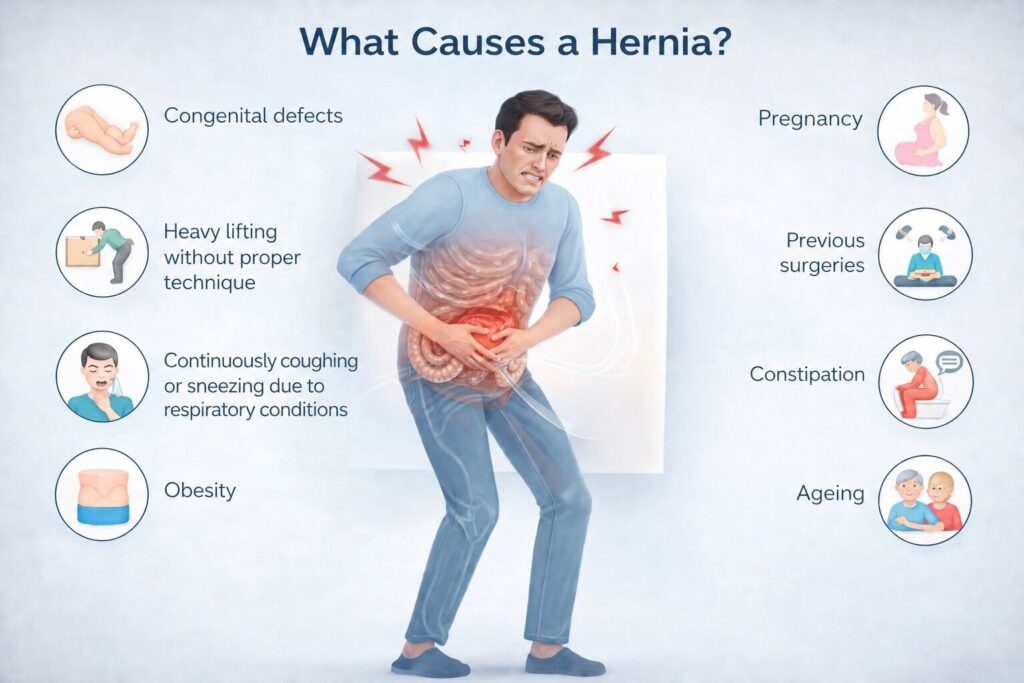
Although the exact cause of hernia cannot be determined except in cases of incisional hernia, it is caused by a combination of both increased intra abdominal pressure and consequent weakening of the muscle wall. This defect could either be congenital or acquired.
The most common causes of acquired hernia include:
- Obesity
- Pregnancy
- Previous abdominal surgeries
- Premature birth
- Physical exertion- Lifting heavy weights
- Persistent coughing or vomiting
- Nutritional deficiencies
The major predisposing factors that pushes you at risk of developing hernia are as follows:
- Gender: Male are 8 to 10 times more at risk of developing hernia as opposed to female.
- Smoking: If you are an ardent smoker then beware you might be putting yourself at risk to developing not only lung cancer but also hernia.
- Age: Hernia is mostly common in people over the age of 65 years primarily due to weakening of your abdominal muscles.
- Connective tissue disorders: such as Ehler danlos syndrome or Marfan’s syndrome innately predisposes you to developing hernia.
- History: Having a previous hernia in childhood increases the risk of forming another inguinal hernia later in life.
Warning signs of Hernia that you shouldn’t ignore
What are the first signs of hernia?
One of the few initial striking signs of any hernia is a visible lump or swelling that could protrude out while exercising, coughing or sneezing.
In case of congenital hernias the lump could be visible when the baby is crying, pooping or even sneezing.
Other associated symptoms include
- Excruciating and redness around the swelling
- Fever
- Nausea and vomiting
- Internal hernias like diaphragmatic hernia are also associated with difficulty breathing and chest pain
- Constipation
- Unable to pass gas
- Heart burn or gastric reflux
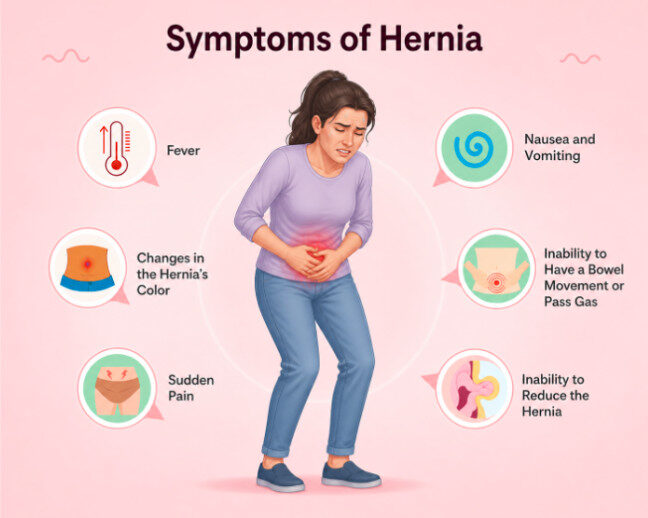
More often than not, hernias could be asymptomatic and are detected only on examination for other conditions.
What does a hernia feel like?
There is a constant sensation of heaviness or pressure in the abdomen which increases on standing, coughing or straining oneself. This may reduce or disappear when lying flat.
Can hernia go away on its own?
It is highly unlikely for your hernia to reduce without any medical intervention. Often the hernia grows in size and becomes more painful and problematic with time.
Strangulated hernia: A medical emergency
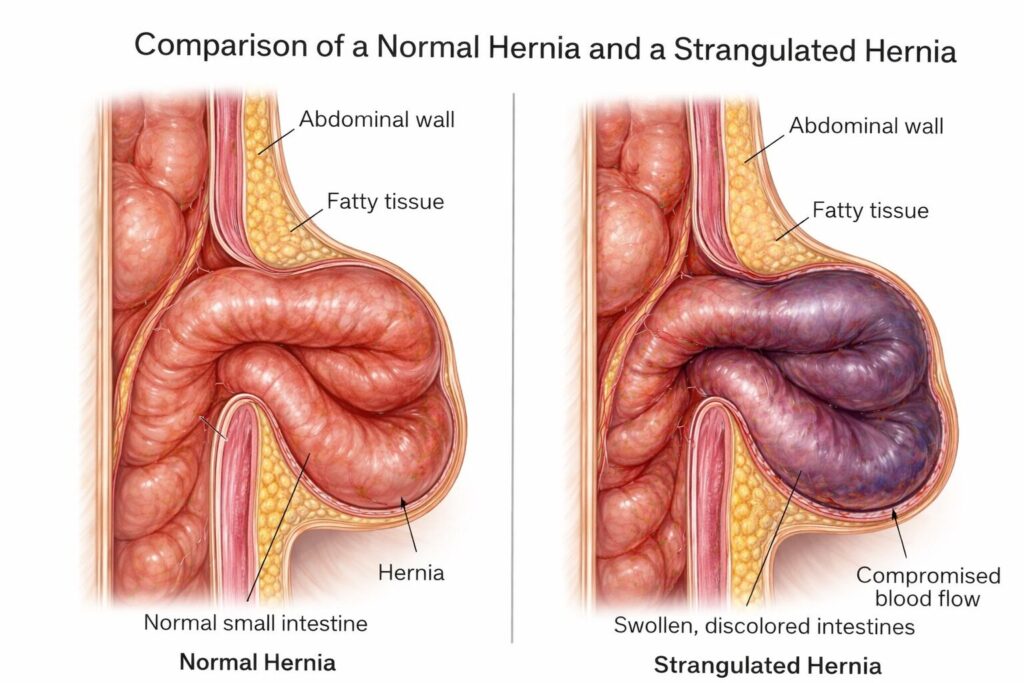
Strangulated hernias occur when blood supply to a herniated tissue is abruptly cut off. This leads to tissue death and necrosis. These could present as emergencies and immediate action is to be taken to prevent complications. One of the alarming changes that one comes across in cases of strangulated hernia, along with the associated symptoms as discussed before, is discoloration (the bulge turns red, purple or black over time) in the affected region. Such signs shouldn’t be ignored and must be addressed with immediate attention.
When to see a doctor?
It is time for you to consult a doctor if you notice a new, persistent or enlarging bulge in the abdomen which hampers your day to day activity. In case this lump is associated with pain or redness, tend to the issue with immediate attention.
Diagnosis
A hernia is primarily diagnosed through a physical examination, where a doctor checks for a bulge in the abdominal or groin area, often asking the patient to stand, cough, or strain. If the hernia is not palpable, imaging tests like ultrasound, CT scan, or MRI may be used.
Treatment and Management of hernia
The definitive treatment in case of hernia is a surgery. Although there is a lot of stigma attached with surgical procedures, hernia repair surgeries have proven to be extremely safe with a success rate of over 90% and very low mortality rate for planned procedures.
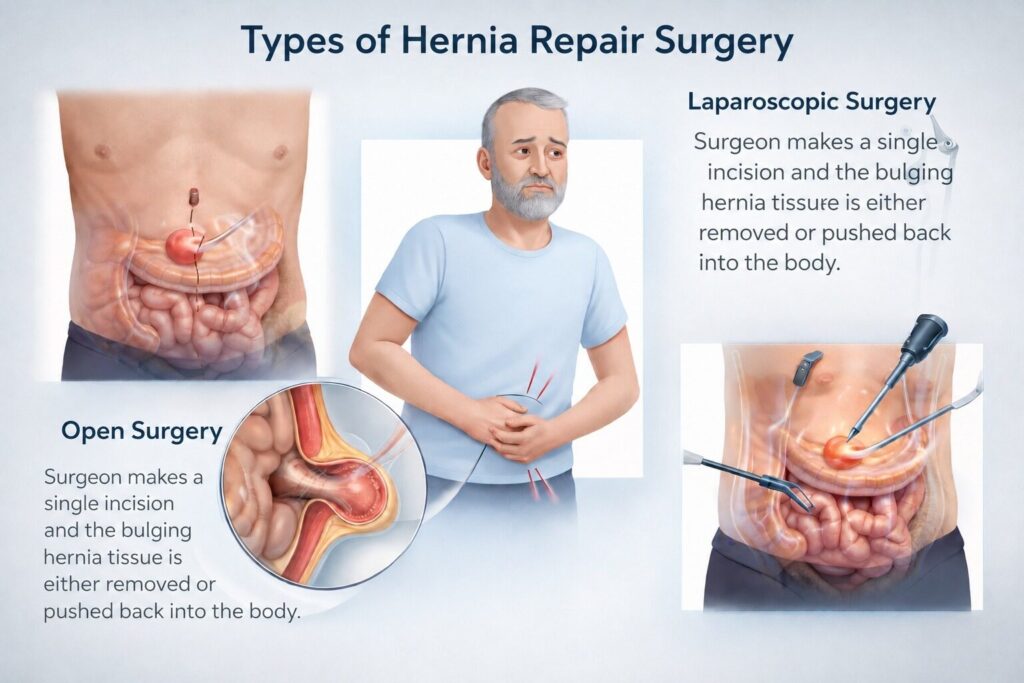
The two main methods of approaching hernia surgery include:
- Herniorrhaphy where an incision is made over the hernia and the hernia contents are then returned back to its original location after which the cut ends of the muscle are stitched back.
- Hernioplasty is a procedure wherein a synthetic, sterile mesh to reinforce the weakened muscle wall, reducing the risk of occurrence of another episode.
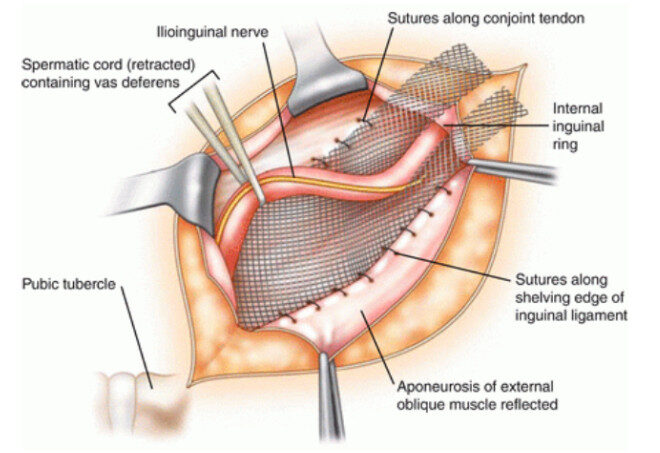
In order to perform these surgeries the surgeon could either opt for an open or laparoscopic surgery
Is there any other option available apart from surgeries?
Medically speaking, there is no other option that can either repair the muscle weakening or reduce the hernia. But certain supportive therapies could be adopted that help you manage the condition.
- External supports such as Truss or hernia belts can be worn in selected cases of inguinal and umbilical hernia. Strictly consult your physician before using such belts as overuse could lead to undue complications.
- Lifestyle and dietary modifications
- Meditations such as painkillers for pain management, antacids, proton pump inhibitors for gastritis in cases of hiatal hernia.
- Ayurveda, Homeopathy and other alternative therapies also help to manage the symptoms but are not clinically proven to help control hernia.
Reassurance and Recovery
A hernia is a very common and manageable condition, and many people recover well with appropriate care. In most cases, treatment, especially surgery, is safe and often allows a quick return to normal daily activities. Listening to your body is crucial. If you notice any changes or discomfort, reaching out to your physician immediately can make a huge difference. With proper care, lifestyle adjustments, and timely treatment, the long-term outlook for hernia patients is generally very good.
REFRENCES:
1.“Hernia: What It Is, Symptoms, Types, Causes & Treatment”, published by Cleveland Clinic on February 7, 2023.
Source: https://my.clevelandclinic.org/health/diseases/15757-hernia
2. “Hernia: Types, Causes, Symptoms, and Treatment”, written by Deanna Altomara and published by WebMD, medically reviewed on May 16, 2024.
Source: https://www.webmd.com/digestive-disorders/understanding-hernia-basics
3.“Hernia Repair Surgery: Purpose, Recovery, and More”, published by Cleveland Clinic on April 24, 2022.
Source: https://my.clevelandclinic.org/health/procedures/17967-hernia-repair-surgery
4. “Inguinal Hernia: Symptoms & Causes”, published by Mayo Clinic on August 26, 2023.
Source: https://www.mayoclinic.org/diseases-conditions/inguinal-hernia/symptoms-causes/syc-20351547
5.“NCBI Bookshelf”, published by the National Center for Biotechnology Information (NCBI), National Library of Medicine.
Source: https://www.ncbi.nlm.nih.gov/books/NBK395554/