Introduction
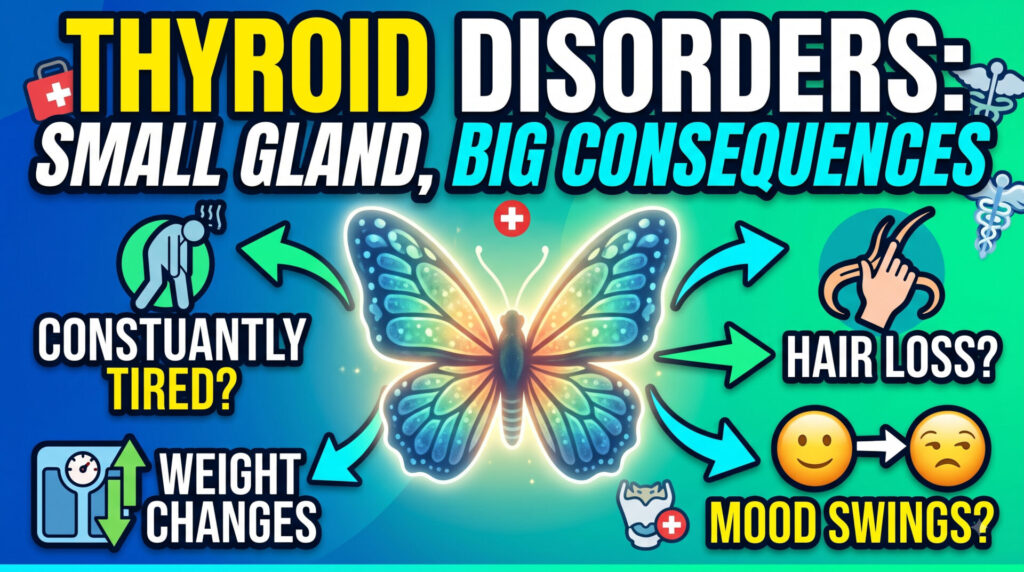
Feeling constantly tired despite getting enough sleep? Losing weight without trying—or gaining weight for no clear reason? Experiencing hair loss, mood changes, palpitations, or unusual sensitivity to heat or cold? These seemingly unrelated symptoms may all point to one small gland with a big responsibility: the thyroid. Understanding thyroid disorders is the first step towards early diagnosis, effective treatment, and a healthier life.
There are countless things in our body that need to stay in perfect balance, and one of the most important is our thyroid function.
Even a slight imbalance—whether an excess or deficiency of thyroid hormones—can affect nearly every organ system, leading to a wide range of symptoms that are often overlooked or mistaken for other conditions.
Around 2.9% of the Indian population is affected; that is, about 3 in every 100 people in India have some thyroid disorder.
What are thyroid disorders?
A thyroid disorder is a general term used to describe any abnormality of the thyroid gland. It may involve excess or underproduction of hormones that affect normal body functions.
Structure
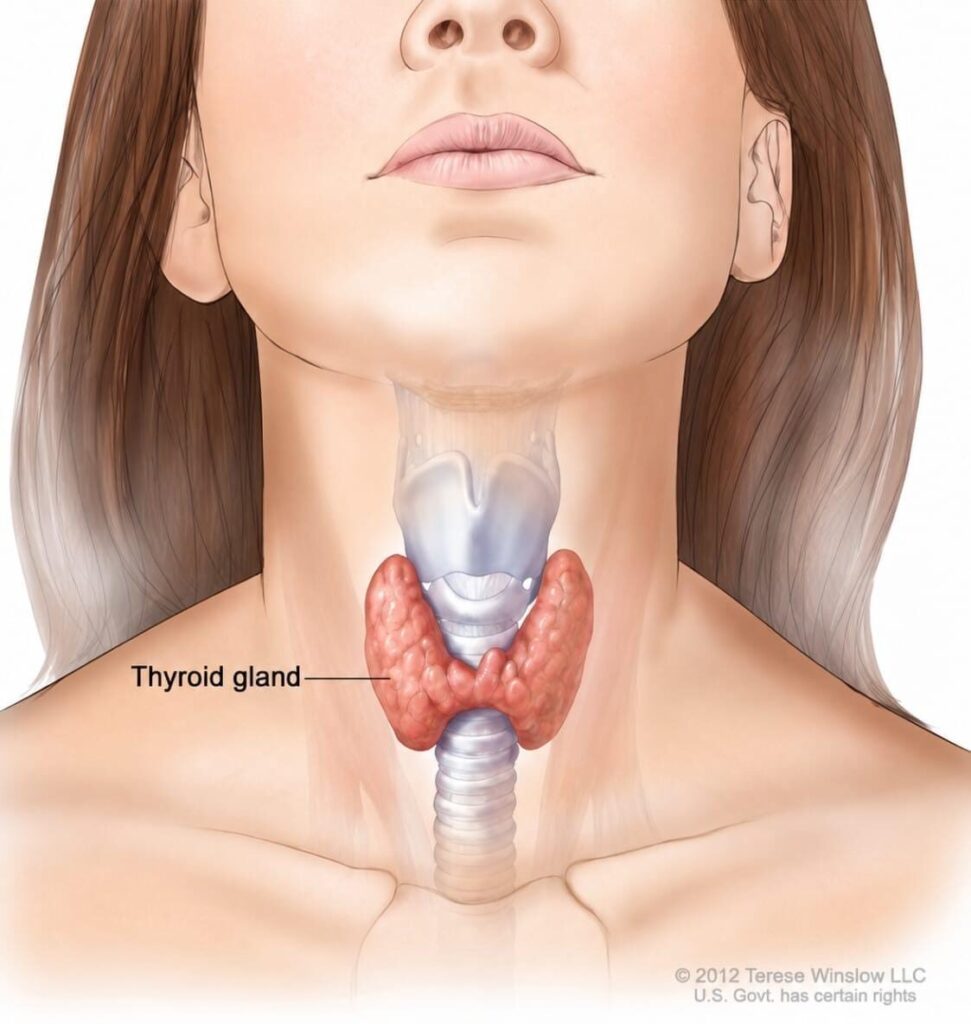
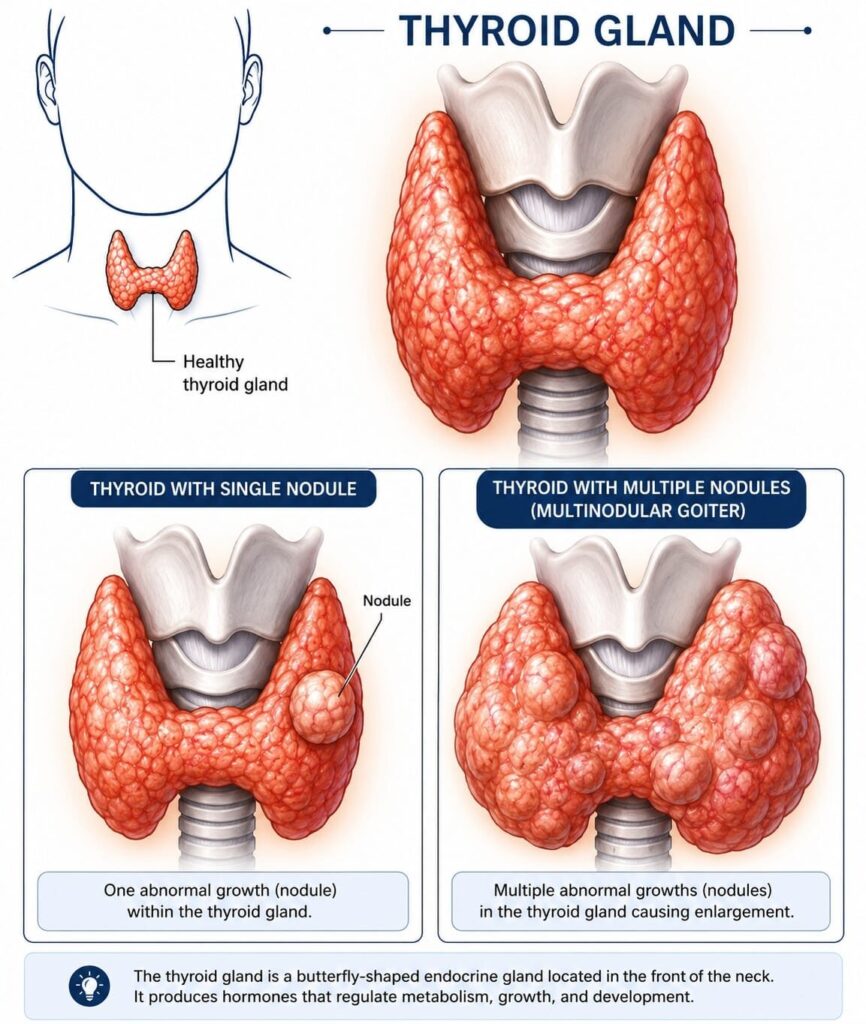
The thyroid gland is a butterfly-shaped gland that is located in the front of the neck, just below the Adam’s apple (prominence of the thyroid cartilage) and above the collarbone. It wraps around the windpipe (trachea).
Types of thyroid disorders
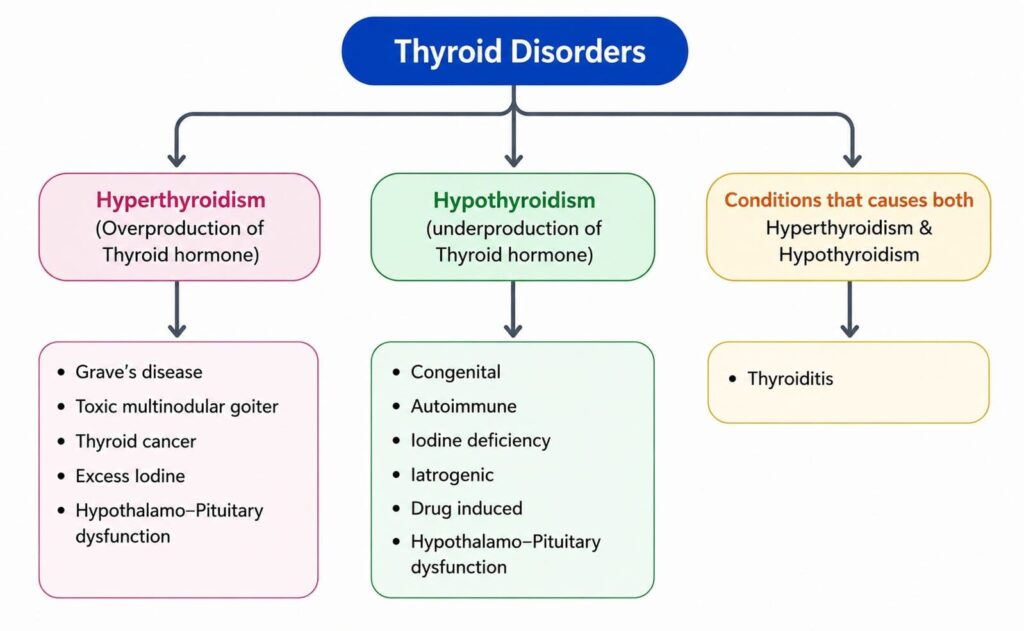
Causes
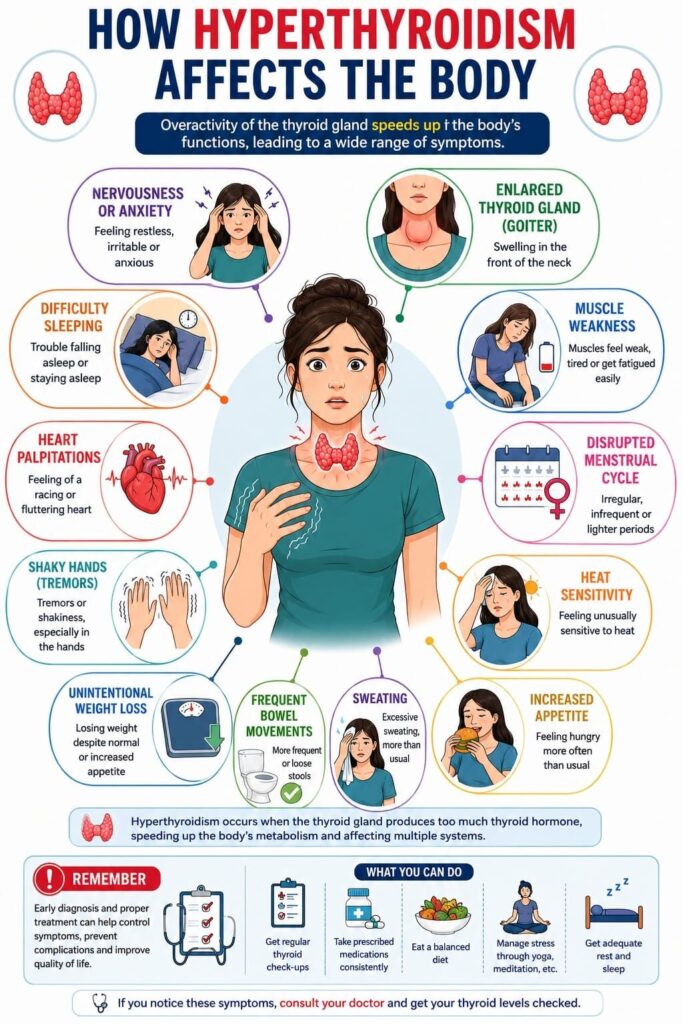
Hyperthyroidism: Overproduction of thyroid hormone (>14.0 µg/dl)
(Caution note: These values can differ in different testing centers. Do not use this article’s values for any final diagnosis. Please consult a physician for a diagnosis.)
- Graves’ disease
Graves’ disease is the most common cause of hyperthyroidism. It is an autoimmune thyroid condition in which the body’s immune system attacks its own thyroid cells by producing autoantibodies against them that stimulate the cells in the thyroid gland to make too much thyroid hormone.
Risk factors:
- More common in younger women.
- Graves’ disease can run in families.
- Toxic nodule or toxic multi-nodular goiter
A toxic nodule means that there is one area of your thyroid (a nodule) making too much thyroid hormone (also called a hot nodule). A toxic multi-nodular goiter means that there are several nodules producing excessive thyroid hormone.
- Thyroid cancer
Rarely, thyroid cancer (especially a functioning follicular carcinoma or toxic thyroid carcinoma) may produce excess thyroid hormone and cause hyperthyroidism (thyrotoxicosis).
Risk factors:
- Exposure to radiation.
- People with thyroid nodules.
- Excess Iodine
When you have too much iodine in your body, your thyroid makes more thyroid hormones than you need.
Risk factors:
- Certain medications, such as AMIODARONE.
- Elderly patients with multi-nodular disease.
- Hypothalamo-Pituitary dysfunction
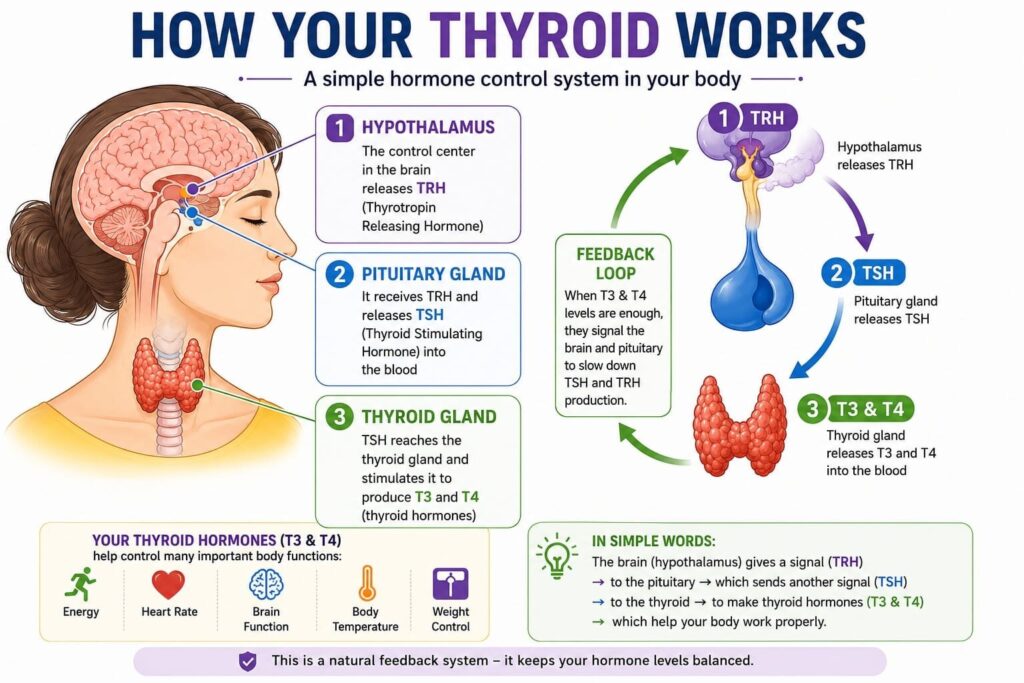
Due to excess stimulation from the hypothalamus (thyroid-releasing hormone) or pituitary (thyroid-stimulating hormone) to the thyroid gland, which leads to increased secretion of thyroid hormone.
Symptoms
Hypothyroidism: Underproduction of thyroid hormone (<4.8 µg/dl)
- Congenital (present from birth):
Some babies are born with a thyroid that is not fully developed or does not work properly. If untreated, congenital hypothyroidism can lead to intellectual disability (low IQ) and growth failure when a baby does not grow as expected. Early treatment can prevent these problems.
- Autoimmune
The body’s immune system attacks its own thyroid cells by producing autoantibodies against them.
Risk factors:
- Females.
- The incidence of the disease increases with age.
- Hashimoto’s thyroiditis: It is an autoimmune disease that results in destruction of the thyroid gland and gradual and progressive thyroid failure.
- Postpartum thyroiditis: It is a transient autoimmune phenomenon that occurs following pregnancy, within 1 year of delivery, miscarriage, or abortion. It is caused by an autoimmune process similar to Hashimoto’s thyroiditis. It may cause hyperthyroidism or hypothyroidism, or the two sequentially.
- Iodine deficiency
As iodine is necessary for the production of thyroid hormone, deficiency of iodine in the diet can lead to underproduction of thyroid hormone and thereby cause hypothyroidism.
Risk factors:
- Countries that do not have iodized salt widely available.
- Foods like cruciferous vegetables: broccoli, cabbage, kale, cauliflower, and Brussels sprouts; cassava and sweet potatoes; and soya products.
- It is endemic in mountainous areas.
Iatrogenic Hypothyroidism
This can be caused by either surgery or destruction of the thyroid gland due to radiation as a treatment for hyperthyroidism.
Drug-induced Hypothyroidism
Some drugs given to decrease thyroid secretion (e.g., methimazole and propylthiouracil) can cause hypothyroidism.
Some drugs that are used to treat other conditions can also cause hypothyroidism (e.g., amiodarone, lithium, and p-aminosalicylic acid).
Hypothalamo-Pituitary dysfunction
Due to a lack of stimulation from the hypothalamus (thyroid-releasing hormone) or pituitary (thyroid-stimulating hormone) to the thyroid gland, which leads to decreased secretion of thyroid hormone.
Symptoms
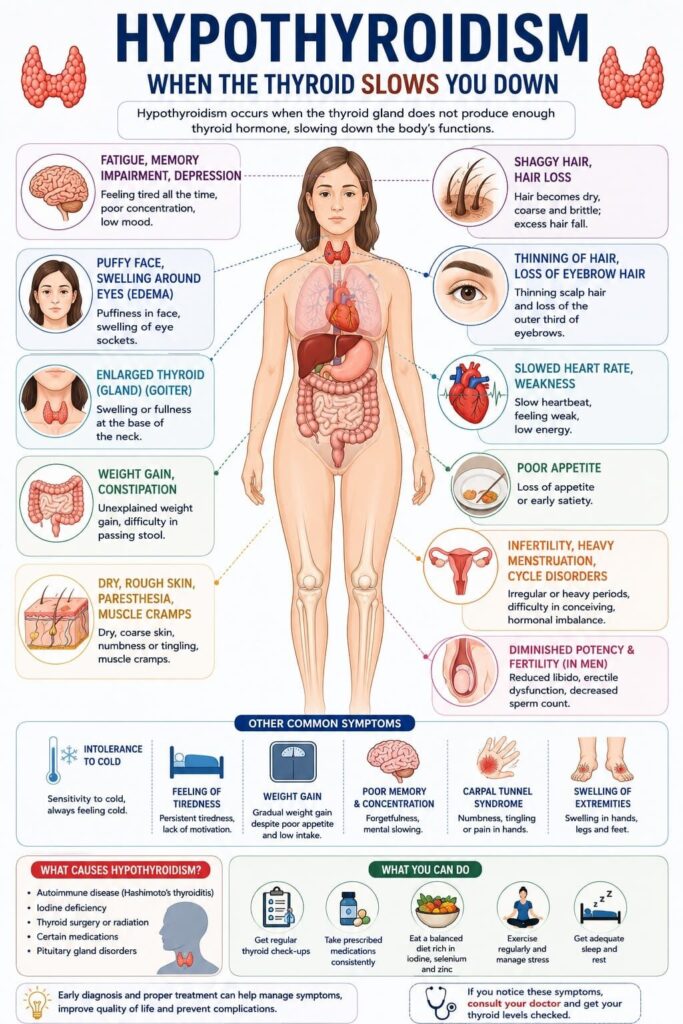
Conditions that cause both hyperthyroidism and hypothyroidism
Thyroiditis
It refers to inflammation (inflammation is the body’s natural defense reaction to injury or infection, characterized by redness, heat, swelling, pain, and sometimes loss of function) of the thyroid gland.
It is a diverse group of disorders; the three most common are:
- Hashimoto’s thyroiditis: It is an autoimmune disease that results in destruction of the thyroid gland and gradual and progressive thyroid failure. It is usually associated with some degree of hypothyroidism, but in some patients, it may be preceded by transient thyrotoxicosis or hashitoxicosis (thyroid overactivity).
- de Quervian’s thyroiditis (painful thyroiditis): It is believed to be triggered by a viral infection, most commonly affecting the upper respiratory tract. It is seasonal, especially in the summer.
- Chronic lymphocytic thyroiditis (Postpartum thyroiditis): It is also known as silent or painless thyroiditis. It is a transient autoimmune phenomenon that occurs following pregnancy, within 1 year of delivery, miscarriage, or abortion. It is caused by an autoimmune process similar to Hashimoto’s thyroiditis. It may cause hyperthyroidism or hypothyroidism, or the two sequentially.
Diagnosis
(Caution note: These values can differ in different testing centers. Do not use this article’s values for any final diagnosis. Please consult a physician for a diagnosis.)
Your doctor will ask you about your symptoms and medical history and will examine you.
- During the examination, they’ll gently feel your thyroid gland to check if it’s enlarged or if there are noticeable nodules.
- The doctor will also require a few scans and tests, which include:
- TSH (Thyroid-stimulating hormone):
Normal range: 0.3–6.0 µIU/ml
Females in pregnancy – I Trimester: 0.1–2.5 µIU/ml
II Trimester: 0.2–3.0 µIU/ml
III Trimester: 0.3–3.0 µIU/ml.
- T3 (TRIIODOTHYRONINE): 0.5–2.0 ng/ml
- T4 (THYROXINE – TOTAL): 4.8–14.0 µg/dl.
- Thyroid antibody tests: Measuring levels of thyroid antibodies may help diagnose an autoimmune thyroid disorder like Graves’ disease, Hashimoto’s thyroiditis, etc.
- Ultrasound of the thyroid: Most often used to look for, or more closely examine, thyroid nodules to check if they are cancerous.
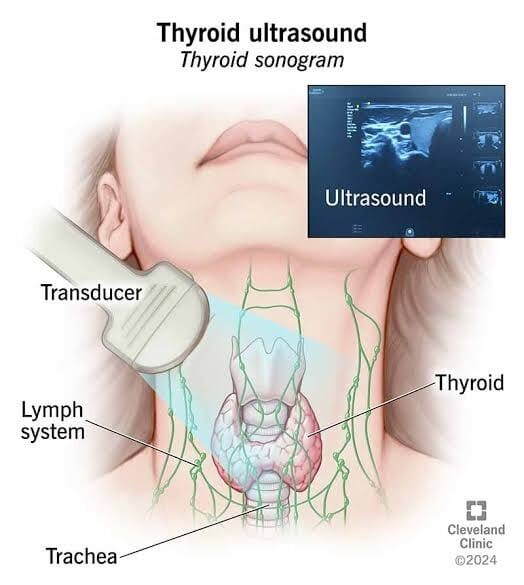
- Thyroid scan: Also called an uptake scan, it uses a small amount of radioactive material called a radiotracer, a special camera, and a computer to provide information about your thyroid’s size, shape, position, and function.
- Biopsy: A needle biopsy is a procedure to remove some cells or a small piece of tissue from the body using a needle. The sample removed during a needle biopsy is sent to a lab for testing.
Treatment
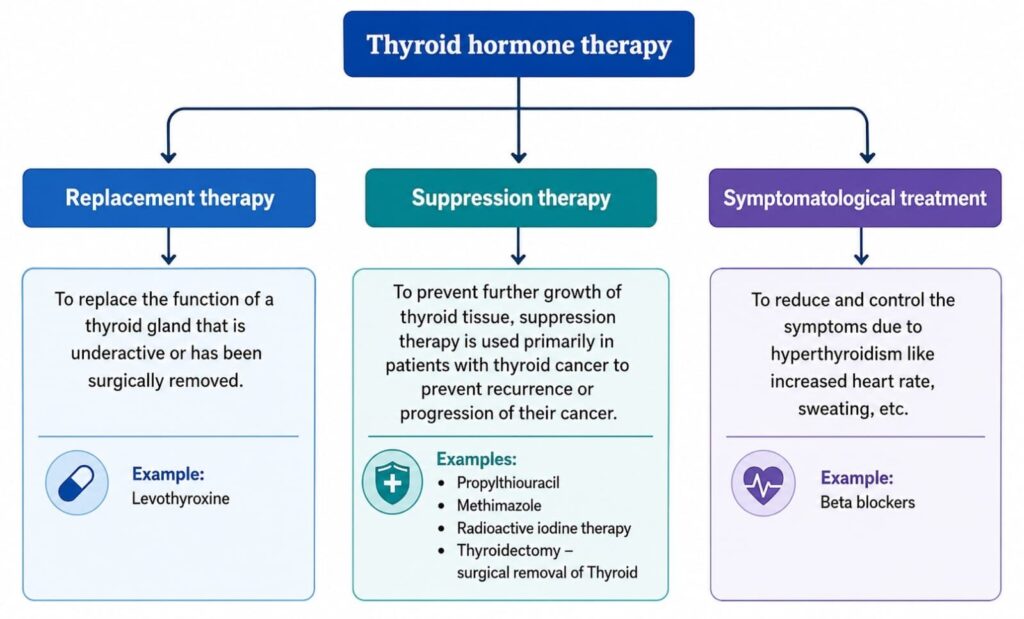
- Lifestyle modifications like a balanced diet, exercise, and yoga can also help in maintaining normal thyroid hormone levels.
Prognosis
Thyroid disorders can affect many organs in our body, but with proper treatment and regular follow-up, you can lead a normal life.
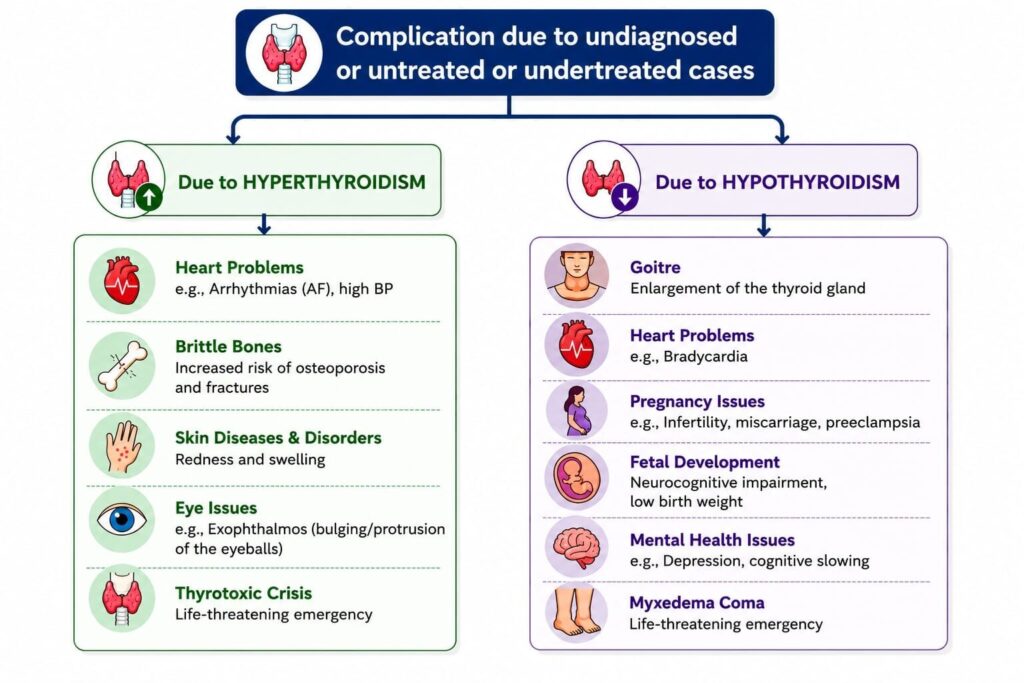
Prevention
Not all thyroid disorders can be prevented, such as those caused by genetics (congenital hypothyroidism) or autoimmune conditions (Graves’ disease, Hashimoto’s thyroiditis).
Some of those that are preventable are:
| Condition | How can it be prevented |
|---|---|
| Excess iodine causing hyperthyroidism | Avoid foods like iodized salt, saltwater fish, shellfish, shrimp, oysters, and dairy products. |
| Iodine deficiency causing hypothyroidism | Avoid foods like cruciferous vegetables: broccoli, cabbage, kale, cauliflower, and Brussels sprouts; cassava and sweet potatoes; and soya products. |
- Maintain a balanced diet with adequate iodine.
- Manage stress levels.
- Get regular health checkups.
- Avoid self-medication.
- Follow medical advice for existing conditions.
When to approach a doctor
If you have the above-mentioned symptoms of hypothyroidism or hyperthyroidism, consult a doctor. It’s important to get a proper diagnosis and start appropriate treatment.
If you know that a biological family member has a thyroid disease, be sure to inform your doctor so they can add it to your medical record. Thyroid diseases often run in families, which is helpful for proper diagnosis.
References
- Harrison’s Principles of Internal Medicine
- Kumar & Clark’s Clinical Medicine
- Robbins & Cotran Pathologic Basis of Disease
- https://my.clevelandclinic.org/health/diseases/8541-thyroid-disease
- Source: Mayo Clinic https://share.google/ThTFfdAjMCDlBHUCg
- Source: MedlinePlus (.gov) https://share.google/qRmvqg0yzh9AIuoTB
- Source: Johns Hopkins Medicine https://share.google/GwItsrxsQlkzC93qg
- Source: National Institutes of Health (NIH) | (.gov) https://share.google/fDVuYKe4QGeaoPsQO
- Source: Johns Hopkins Medicine https://share.google/GwItsrxsQlkzC93qg
- Source: Medical News Today https://share.google/0L8JXujbmLbEEy5KI
- Source: ScienceDirect.com https://share.google/WOlwOi1Nb3SLxMSjP
- Source: Longdom Publishing SL https://share.google/eLm0AG0kZLNugnp4B
- Source: Healthdirect https://share.google/MEZ2uWDsVJgAmXYFO
- RJPPD – Thyroid Disorder: An Overview https://rjppd.org/AbstractView.aspx?PID=2020-12-1-1
- https://pubmed.ncbi.nlm.nih.gov/25668600/
- https://www.pib.gov.in/Pressreleaseshare.aspx?PRID=1796440®=48&lang=2
- Dhir G, Jain V, Merritt A. Thyroid Disorders. Prim Care. 2024 Sep;51(3):405-415. doi: 10.1016/j.pop.2024.04.001. Epub 2024 May 23. PMID: 39067967.