


Chai, in India, is more than just a beverage. It is a way of life. Across homes, offices, trains and tiny tapris, it fuels connections and camaraderie. Early morning conversations brew alongside the teapot, amidst the clinking of cups and the pouring of chai. Colleagues trauma-bond over their ‘usual’ order at the bustling chai stall, an order their favourite chai walla bhaiya knows all too well. Whether it’s a cozy afternoon with a friend or a corporate meeting, chai is ever-present!
Now, you’ve just woken up, it’s a beautiful day out (or so you hope), and the only thing you can think about is the holy ritual of that first cup of tea, unstirred by worldly bothers. You’re about to take that first glorious sip of bed-tea…BUT HOLD UP.
The intrusive ad lady is back. Only this time, instead of “Kya aapke toothpaste mein namak hai?”, she wants to know: “Kya aapke tummy mein kuch solid hai?”
This is a far more pressing question.
Drinking your morning tea on an empty stomach is not necessarily harmful for everyone, but it can cause digestive discomfort in some people.
Effect on digestion
Introducing tannins and caffeine in the form of tea, after your stomach is in an acidic state after having been in a state of fasting for 6-8 hours, could have some uncomfortable consequences.
- Digestive discomfort (Angry gut!) :
Tea contains caffeine, which can stimulate gastric acid secretion in some people. On an empty stomach, this may contribute to symptoms such as acidity, reflux, nausea or bloating, particularly in people who are already prone to them.
- Nutrient malabsorption ( Absorption ghosted!)
Tannins are natural plant compounds present in tea.
Tea polyphenols, including tannins, can bind non-heme iron and reduce its absorption. Think of tannins like those clingy, melodramatic characters who’d want to stick by their beloveds, implications be damned!
A controlled trial found that drinking tea alongside a meal, as compared to water, reduced non-heme iron absorption by 37%. Introducing even a one-hour gap could cut this inhibition in half.
For people who are already managing low ferritin levels, the timing of your tea might be worth paying attention to.
- Morning spike of cortisol:
Thanks to your circadian rhythm, cortisol levels naturally peak when you wake up to help you feel alert. Adding caffeine to the mix can temporarily increase cortisol and adrenaline levels, which may leave some people feeling jittery, slightly anxious, or aware of a racing heart after that first cup.

Why do so many people depend on their morning tea?
Caffeine & Brain Chemistry
- Caffeine blocks tiredness: Adenosine is a brain chemical that promotes sleepiness and relaxation. Caffeine resembles adenosine and blocks its receptors, making you feel more alert, less tired, and better able to focus.
- Your brain adapts: With regular caffeine intake, the brain responds by upregulating the number of adenosine receptors. So when you suddenly skip your chai, there’s more adenosine activity than your brain is used to—cue the sluggishness, drowsiness, and inability to focus.
- And then comes the headache: Caffeine normally narrows blood vessels in the brain. When you stop taking it, those vessels widen again, increasing blood flow and potentially triggering the classic caffeine-withdrawal headache.
- It’s your brain recalibrating: These symptoms aren’t usually harmful, but they can be unpleasant. So if you’re wondering why missing one cup of chai suddenly makes you feel like a different person, it’s not just in your head—well, technically, it is.
- A little mood boost: Caffeine also affects dopamine, the brain’s reward chemical, which may be part of why that first cup feels so satisfying.
Habits & Comfort
- The daily ritual: Boiling the water, making the chai, and holding that warm cup can become a comforting signal that it’s time to start the day.
- A little pause: A chai break gives you a few minutes to slow down, collect your thoughts, and step away from your phone or work.
- When it becomes a habit: Having chai at the same time every day can train your body to expect it. Skip it, and you might find yourself with a headache or feeling unusually sluggish
A Smarter start to the day
Now, before you come at me for dampening the spirits of my fellow chai lovers, let’s look at how we can optimize our tea habits for a much happier gut.
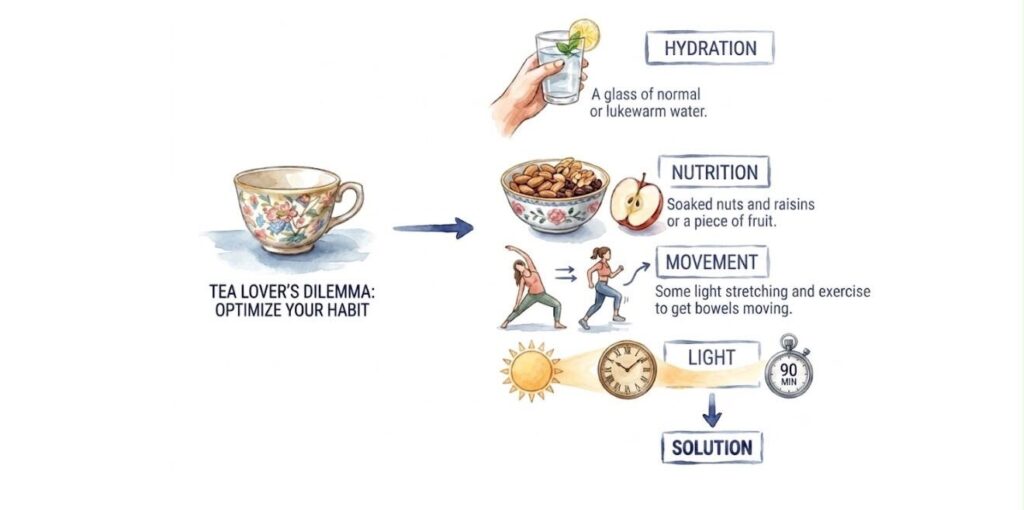
Here is what your body is asking for, before drinking your tea:
- Hydration: A glass of normal or lukewarm water.
- Nutrition: Soaked nuts and raisins or a piece of fruit.
- Movement: Some light stretching and exercise to get your bowels moving.
- Light: To set the circadian rhythm (biological clock), supporting hunger cues throughout the day.
- Pause: Wait 60-90 minutes before your first cup. This gives some time for your cortisol spike to settle and the digestive system to activate.
But chai isn’t all bad
Now that we’ve tackled the empty-stomach drama, let’s spill the tea on the actual goodness brewing in your cup, because yes, your beloved chai comes with some pretty stellar health perks too!
- Tea contains antioxidants like catechins and polyphenols: Antioxidants are basically the cops of the body, chasing down “free radicals”–-electron-stealing cellular vandals that can cause oxidative stress and damage.
- It can boost cognitive function: Adding cinnamon may help with attention and memory, while the caffeine and L-theanine in black tea can support focus and alertness. Turns out, those chai breaks were brain food in disguise?
- Tea (both green and black), being rich in flavanoids, can reduce the risk of cardiovascular disease, control weight gain, increase bone density, antibacterial and antiviral activity, and improve oral health.
- May help reduce bloating: Ginger in chai may help with constipation and digestion. Since poor digestion and fermentation can contribute to bloating, ginger may help ease these symptoms.
- May soothe a sore throat: Black tea contains polyphenols such as theaflavins, which may offer protective health benefits. Honey, another common chai ingredient, can also help soothe a sore throat.
Though moderate intake is healthy for most people, drinking too much could lead to negative side effects, such as anxiety, headaches, digestive issues, and disrupted sleep patterns.
The verdict
Tea is not the villain it is made out to be. Moderate consumption can be part of a healthy diet, and it comes with its own set of benefits. The bigger issue is how and when you drink it. Maybe don’t make an empty stomach your chai’s first date.
If that first cup on an empty stomach leaves you with an angry gut, maybe give your stomach some food first. And if iron absorption is a concern, keep your tea away from your meals.
So go ahead—put the kettle on. Chai pe charcha, anyone?